

Top 10 Bioplastics innovations of 2025
Last update on Mar 2, 2026
When you hear the term "bioplastics," the first thing that comes to mind is the distinction between bio-based and biodegradable. These two terms are often confused concepts that represent different approaches to making plastics more sustainable. Let’s begin our bioplastics discussion by highlighting their perspective.
Biobased means “from nature to plastic.” Traditional plastics are derived from petroleum or natural gas. While biobased plastics or bioplastics are derived from renewable biomass sources, such as cornstarch, sugarcane, sugar beet, cellulose, or vegetable oils. Biobased thermoplastic product families can be found in a wide range of applications. They can contribute to a reduction in CO2 and other greenhouse gas emissions compared to conventional fossil fuel-based plastics.
Biodegradable stands for the potential degradation of a plastic by the action of microorganisms (such as bacteria, fungi, algae) to carbon dioxide (and/or methane), water, mineral salts and biomass. In a composting environment, biodegradable bioplastics will degrade into CO2 and water, caused by bacteria or other biological means. The European standards, for example, consider a material to be biodegradable if it degrades by at least 90 % within six months.
Some traditional plastics with biobased content include:
| Typical bioplastics that are biodegradable include:
|
Key end-use applications of bioplastics include packaging, automotive & transportation, electronics, healthcare, textile, agriculture, and others. Looking for the best suitable bioplastic for your needs? Our comprehensive guide will help you make the right choice of bioplastics.
Let's now take a look at the role of Artificial Intelligence (AI) in bioplastics development that is being driven by researchers at the U.S.-based National Renewable Energy Laboratory (NREL) and the Los Alamos National Laboratory’s Materials Science and Technology Division, Bioscience Division, and Chemistry Division.
Bioplastics, especially PolyHydroxy Alkanoates (PHAs), offer a sustainable alternative to fossil fuel-based plastics. PHAs have a wide range of chemical structures, but finding a proper replacement for conventional plastics has been time inefficient and costly. To overcome this challenge, polymer scientists are using Artificial Intelligence (AI) that envision properties, analyze large databases, and identify PHA based polymers that are very comparable to traditional plastics, faster and more efficiently. Machine learning tools can screen a vast chemical dataset using the following three steps:
- Data collection and model training
These models focus on key properties such as thermal, mechanical, and gas permeability. They have learned features like glass transition temperature, melt temperature, heat degradation temperature, Young’s modulus, tensile strength, and elongation. - Defining a search space
The NREL and Los Alamos R&D teams have built a candidate set of 1.6 million polymers by combining 550 PHA variants with 15 conventional polymers in various ratios. - Predictive modeling
Three multitask neural networks analyzed the candidate set. Each focused on a specific property: thermal, mechanical, or gas permeability. The models predicted how PHAs and copolymers could replace plastics such as PolyEthylene (PE), PolyPropylene (PP), PolyVinyl Chloride (PVC), and PolyStyrene (PS). They also predicted replacements for PolyEthylene Terephthalate (PET) and PolyAmide (PA, or Nylon) 6.
To confirm that AI-developed materials were acceptable for common applications, a two-step approach was used as follows:
- Nearest-neighbor search
Researchers compared predicted properties of bioplastic candidates with those of common plastics, shortlisting the closest matches. - Feasibility assessment
The research teams evaluated the synthesizability of candidates, focusing on those with known biosynthetic or chemical synthesis pathways. The models identified 15 promising PHA based materials that could replace petroleum-based plastics. All top candidates had aromatic side-chain groups that improved their mechanical properties. Further study demonstrated that microorganisms like Pseudomonas Oleovorans can naturally produce PHAs with these features, making biosynthesis a practical production method. Furthermore, blending PHAs with conventional polymers showed great potential. Copolymers of PHAs and traditional plastics were more flexible, stronger, and thermally stable.
Check out five bioplastics material technologies, followed by five application innovations in detail.
Latest material technologies in bioplastics
Attain mechanical properties and marine biodegradability with cellulose fiber molding material by Panasonic
Japan’s Panasonic HD electronics firm has developed a highly concentrated cellulose molding material, with plant derived resin, that has full ocean and river marine biodegradability. By adding high percentage concentrated, plant derived cellulose fiber to marine biodegradable resins, Panasonic HD has successfully developed a molding material that achieves excellent PolyPropylene (PP) like mechanical flexural elasticity and bending strength properties in tandem with marine biodegradability.
The Japan Bioplastics Association has certified this cellulose fiber molding material as a "Marine Biodegradable & Biobased Plastics.” Panasonic HD plans to start selling this material by 2027 and is targeting many applications such as home appliance housings, automotive interior parts, consumer goods, and food and beverage containers. This novel material was exhibited and well received by global attendees at the Consumer Electronics Show (CES) 2025 in Las Vegas, USA from January 7 to 10, 2025.

There has been continual R&D work since 2015 by Panasonic HD on reducing its use of fossil fuel based plastic resins. They have achieved firsts in a composite processing technology that incorporated cellulose fiber at a biomass content concentration of 55 % starting in 2019, followed by increasing the amount of cellulose fiber up to 70 % in 2022, and currently to over 90 % in 2025. They have further enhanced the biodegradability of this cellulose fiber material in natural environments by developing a fully biodegradable molding material using bioplastic resins such as PolyLactic Acid (PLA).
| Property | Marine biodegradable material (New) | Biodegradable material (Developed in 2022) | Polypropylene (PP) |
| Flexural elasticity | 4.8 | 3.5 | 1.0 |
| Bending strength | 1.1 | 1.5 | 1.0 |
Mechanical properties of cellulose fiber molding material (Source: Panasonic HD)
In summary, the key cellulose fiber molding material features are:
- Development of high-concentration cellulose fiber molding material with marine biodegradability.
- Achieving both durability and marine biodegradability comparable to PP.
- Flexural elasticity and bending strength value competitive to PP.
Achieve flammability and sustainability benefits with flame retardant PLA by Floreon
Floreon, a technology spin off from research at the University of Sheffield in the United Kingdom, has won the 2024 Innovation in Bioplastics Award from the U.S. based Plastics Industry Association (Plastics).
‘Plastics’ honored Floreon for its Therma-Tech grade, halogen-free, fire-resistant PolyLactic Acid-(PLA) based compound. It is the world’s first bioplastic to achieve U.S. Underwriters Laboratory, UL94V-0 flammability certification and is an alternative to flame retardant Acrylonitrile Butadiene Styrene (ABS). Target applications are focused on electronics, automotive, and construction. Furthermore, it is chemically and mechanically recyclable. Finally, it has up to seven times lower carbon footprint than a fossil fuel-based ABS plastic.
Floreon has also developed a Dura-Tech grade PLA compound as an alternative to ABS when fire resistance isn’t needed. It also offers a Bio-Tech compostable and recyclable PLA grade, which is advantageous for construction, automotive, electrical, medical, food contact, consumer product, and 3D printing applications. It meets ‘OK Compost Certification’ and is fully biodegradable in industrial composting facilities. It is also certified to EN13432 by certification body TUV Austria.
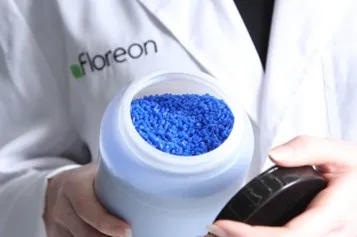
Using plants to take carbon dioxide directly from the air Floreon converts it into sugars that can be used as feedstock for their PLA materials.
The three Floreon grades can be summarized as follows:
| Floreon Therma-Tech | Floreon Dura-Tech | Floreon Bio-Tech |
|
|
|
Obtain sustainable flexible packaging with novel PHA-based films by CJ Biomaterials
CJ Biomaterials, Inc, a division of South Korea-based CJ CheilJedang and a primary producer of PolyHydroxy Alkanoate (PHA) biopolymers, has introduced two groundbreaking PHA based compounds developed for blown, cast, and Machine Direction Orientation (MDO) plastic film applications. These new compounds, PHACT™ CA1270P (clear) and PHACT™ CA1240PF (opaque), are a major advancement in sustainable flexible packaging.
Partnering together with NatureWorks, they combined NatureWorks’ Ingeo™ PolyLactic Acid (PLA) with CJ Biomaterials’ PHA biopolymers to create these two new, cost performance, competitively priced PHACT® compounds. They represent compostable alternatives to traditional plastic films. Thus, these compounds are helpful in diverting food waste away from landfills. Both compounds are industrially compostable, and additionally CJ Biomaterials’ PHACT® CA1240PF is home compostable.
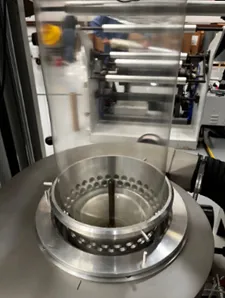
Blown PHA PHACT film compound (Source: CJ Biomaterials)
Both PHA PHACT film compounds are suitable for a wide range of packaging applications such as snack food and produce packaging, frozen food bags, food waste bags, and grocery/retail shopping bags. They also have 50 % lower carbon footprints compared to fossil fuel based Low Density PolyEthylene (LDPE), Linear Low-Density PolyEthylene (LLDPE), PolyPropylene (PP), and PolyEthyleneTterephthalate (PET), which are traditionally used in film packaging.
In testing, both PHA compounds have exhibited superior stiffness, strength, tear, and puncture resistance, in turn making various packaging applications very durable. Global consumer product brand owners are very attracted to these CJ Biomaterials PHA-based compounds and see substantial benefits in alleviating their plastic waste challenges, and reducing their climate related, greenhouse gas emissions.
Improve environmental impact with Nylon 6/10 bioplastic by Radici Group
Bionside™ is part of the Radilon®-brand Nylon 6/10 product line from Bergamo, Italy based Radici Group polymer producer. The new resins use castor oil seeds as a raw material, and reduce the impact of environmental CO2 emissions. The castor oil seeds used to make Bionside™ don't compete with human or animal food production, are drought resistant, and provide an attractive income source for farmers. Current Bionside™ applications include cooling line connectors, cooling pipes, monofilaments, and vacuum brake booster hoses. It provides excellent chemical resistance. Radici has developed 30 Bionside™ grades to date for a wide range of extrusion and injection molding applications.
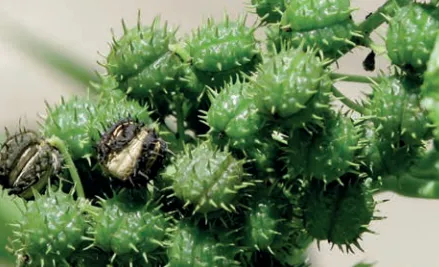
Key advantages of Bionside™ PA6/10 include:
- Improves environmental performance, where bio-sourcing represents an important commitment to fossil fuel dependency reduction. Biobased renewable polymers are a viable alternative to fossil-fuel based polymers due to their lower CO2 emissions.
- Achieves targeted technical performance, thanks to their chemical structure, whereby bio-based polyamides (nylons) can offer particularly high levels of performance, making them a very suitable material option for high performance industrial applications.
- Utilizing renewable sources, where Bionside™ is crafted using renewable raw materials, primarily derived from the oil extracted from castor beans. The castor plant is cultivated in semi-arid regions globally, requiring minimal water to thrive. This approach not only reduces water consumption but also supports sustainable agricultural practices, making Bionside™ an ecofriendly alternative for industries seeking to reduce environmental impact without compromise to application quality and performance.
Bionside™ is a very good solution for many industrial enduses where sustainability in tandem with high performance is required. It has countless applications in automotive, power tools, water management, electrical/electronic, furniture, and sports accessories.
Get high performance, faster speed with 3D printing PLA grade by NatureWorks
NatureWorks has commercialized Ingeo™ Biopolymer 3D300, their newest specially engineered PolyLactic Acid (PLA) 3D printing grade. It delivers faster print speeds while maintaining excellent surface finish and detail, significantly reducing print time and overall production costs. It can be used for prototyping, functional parts, or creative designs.
It joins three other Ingeo 3D Printing grades as follows:
- Ingeo™ Biopolymer 3D700 - Ideal for large format additive manufacturing, significantly reducing part warping, minimizing print failure.
- Ingeo™ Biopolymer 3D850 - This grade has faster crystallization rates leading to enhanced 3D printed part heat resistance and toughness.
- Ingeo™ Biopolymer 3D870 - Delivers 3D printed parts with heat resistance and impact strength similar to Acrylonitrile Butadiene Styrene (ABS).
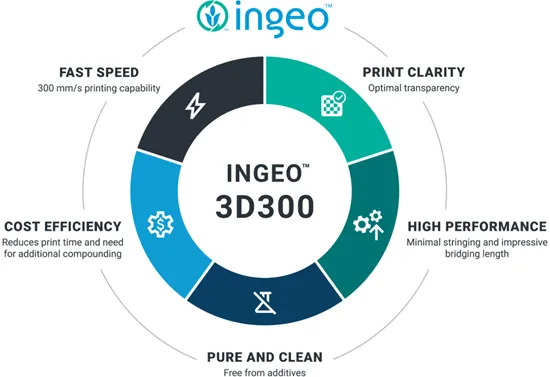
Key benefits of Ingeo™ Biopolymer 3D300 include:
- Fast printing speeds up to 300 millimeters per second in neat form, with no enhanced additives needed.
- Optimal print clarity transparency streamlines part coloring/matching, achieving very desirable color results.
- Delivers minimal 3D printed stringing with superior bridging length, even at high printing speeds.
- Guarantees higher quality finished printed parts due to an additive free, cleaner base resin.
- Reduces print times significantly, by decreasing the need for added PLA compounding, in turn lowering manufacturing costs, leading to faster 3D part turnaround times, and ultimately improved profitability.
Additionally, Ingeo™ Biopolymer 3D300 monofilaments have other noteworthy 3D printing features including precise detail, good adhesion to 3D buildup plates without heating, less warping or curling, low greasy or oily odor, and suitability for many different types of 3D printer machines.
Innovative applications of bioplastics
Biodegradable bioplastic mulch film based on PLA
French start-up Carbiolice has established a strong development relationship with agricultural film manufacturer Barbier Group to develop a new PolyLactic Acid (PLA) based mulch film. Carbiolice has developed an ‘Evanesto’ enzymatic additive that:
- When added to PLA compounds, enables PLA mulch film to biodegrade faster at ambient temperatures at its end-of-life.
- Act as catalyzing agents, that in turn activates, depending on additive loading concentration, mulch film disintegration, leading finally to quick assimilation by agricultural field compost microorganisms.
Furthermore, the ‘Evanesto’ additive is based on a heat-resistant enzyme by Carbiolice supplier developer Novozymes that has a designed inactive time period tailored to a given mulch film’s desired useful life.
The overall development goal here is to create a mulch film with higher PLA content. This was achieved by compounding with the ‘Evanesto’ additive, which allows for a 25-45 % PLA content to be achieved. With this compounding range capability, it is possible to tailor the in-soil time length of mulch film biodegradability, specific to a given agricultural crop type.
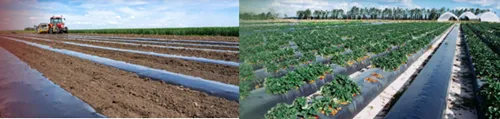
The United Nations Food and Agriculture Organization (FAO) has published a report assessing the sustainability of agricultural plastic products, recommending the replacement of non-biodegradable, conventional polymers with biodegradable bioplastics. The FAO analyzed 13 specific agricultural products, where 6 out of 13 assessed products recommended PLA bioplastics to be used.
Also, EUropean BioPlastics (EUBP) has stated that biobased and soil biodegradable mulch films help both in reducing dependence on fossil fuel carbon sources by using renewable carbon instead, and by playing a valuable role in reducing residual plastic pollution left in soil, that in turn can significantly impact agricultural productivity.
High-end vehicle seat back based on natural flax fiber composite
Swiss-based Bcomp, the global leader in high-performance, natural fiber automotive composites has received the 2024 Altair Enlighten Award in the Sustainable Process category with BMW M GmbH, performance car subsidiary of BMW Group for the BMW M Visionary Materials Seat.
The seatback is made of a fully biobased, high-performance Bcomp natural flax fiber reinforced ampliTex™ PolyPropylene (PP) matrix resin composite. By combining the structural and aesthetically pleasing visual properties of the composite in one injection molding step simultaneously makes overall manufacturing more efficient and material simplified.
The seat back is a development project designed and engineered by long-time collaborators, BMW M and Bcomp, together with BMW Designworks, Automotive Management Consulting, Gradel Lightweight Sàrl (structural analysis), and Lasso Ingenieurgesellschaft (project management).

The seat back application focus is on Design for Circularity, that translates into not only using natural flax fiber and recycled PP, but includes overall application Design for Disassembly in all related parts from the start of product design. This approach emphasizes fewer complex assemblies and monomaterials that enable end-of-life recyclability. Further, flax fibers are CO2 neutral and compared to carbon fibers in broad automotive use currently will reduce manufacturing emissions by 85-90 %. Equally important, Bcomp flax fiber/PP composites will reduce seat component weights by 50 %, due to their high stiffness at low density property balance capability.
BMW M and Bcomp have previously developed high end road and race car applications such as interior and bodywork components for the BMW M4 GT4, bodywork for the BMW M4 DTM, and cooling shafts for the BMW iFE.20 in Formula E.
Automotive leather alternative based on biobased hemp fiber
Automotive giant Volkswagen of Wolfsburg, Germany has established an R&D development relationship with textiles manufacturer startup Revoltech GmbH of Darmstadt, Germany. They use biobased, industrial hemp fiber to create an imitation leather for car interior applications such as central console covers, wrap around dashboard surfaces, and side door paneling. It is anticipated to be used as a surface material in Volkswagen models starting in 2028.
The leather alternative is made from 100% biobased hemp generally cultivated for the food industry. It has been transformed into an all-natural, single-layer surface material called LOVR (Leather-free, Oil-free, Vegan, and Residue based). The hemp fibers and a fully biobased adhesive are combined using a distinctive technology and processed to become an automotive interior surface material. It can be recycled or composted at the end of its service life.

LOVR is not only sustainable, it’s regenerative. It is a unique, high-performance material made from biobased hemp residues. It’s simultaneously both biodegradable and recyclable, truly circular in concept.
So why use hemp? Hemp is a sustainable powerhouse. It delivers high yields, requires no harmful pesticides, acts as a natural carbon sink, and is sourced from fields in Europe for Volkswagen and Revoltech industrial purposes. Versatile and reliable, tailored to needs, LOVR offers options for colors, finishes, and enhancements, making it adaptable for various applications.
LOVR is durable due to its single layer structure. This makes it ideal not only for automotive surface interiors, but also footwear and personal accessories like watch bands, wallets, change purses, and key chains. LOVR at a glance:
- Plant based
- Plastic-free
- Biodegradable and recyclable
- Minimum carbon emissions
- Scalable and versatile
Home-compostable extrusion coating for paper-based food packaging
BASF has certified a new extrusion coating resin, ecovio® 70 PS14H6. This resin contains 70-80 % biobased content according to ASTM D6866. The grade provides excellent liquid and grease barrier properties. It also has high thermal stability. BASF’s ecovio® biopolymer is compostable certified according to the DIN EN 13432 standard. It is a blend of BASF’s PolyButylene Adipate Terephthalate (PBAT) ecoflex® resin and renewable raw plant materials. Home-compostable ecovio® 70 PS14H6 provides efficient end-of-life options for paper packaging.
BASF’s biopolymer coating resin performs competitively against fossil fuel-based PolyEthylene (PE) material equivalents. It is excellent in processing, sealability, and adhesion to substrates. This ecovio® 70 PS14H6 grade is food contact-approved and very adaptable to existing paper and paper board coating processes. It enhances disposal options and is very useful for molding dairy product cups and boxes, trays, and dry food wraps.
The BASF ecovio® 70 PS14H6 home-compostable grade shows better performance than existing competitive biopolymers. It allows coating of paper and paper board packaging in food applications, and achieves very good barrier properties compared to traditional plastic single or multi-layer extrusion coatings without the need for additional adhesive interlayers. The paper coating can be done with coating line speeds comparable to PE. The material has excellent paper sealing and printing properties. It can also be used to manufacture very thin coatings.

Other typical ecovio® 70 PS14H6 applications include organic waste bags, cling film, fruit and vegetable bags, as well as agricultural mulch films. Food waste is reduced, nutrients are returned to the soil by means of greater volumes of compost, and the accumulation of persistent microplastic in agricultural soil is avoided.
Durable coffee cups upcycled from renewable coffee grounds
Germany-based innovation company Kaffeeform is revolutionizing the coffee packaging market with its unique sustainability approach. It is transforming left over, high volume, used coffee grounds blended with PolyLactic Acid (PLA) biopolymer matrix into everyday coffee cups.
In the last five years, Kaffeeform recognized the raw material filler potential of coffee grounds at 50-70 % loadings with PLA biopolymers. Ultimately, a lengthy R&D program led to not only to a highly filled biopolymer compound, but to an equally successful, compression molded, finished coffee cup manufacturing process. This technology lends itself to other food packaging saucers, trays, boxes, and clam shells.
These products are design stylish, everyday functional, and ecofriendly compared to existing fossil fuel-based plastic, single use packaging. The Kaffeeform trademarked ‘Weducer’ cups currently come in two sizes and light/dark color combinations that perfectly combines design aesthetics with sustainability.

The current widespread use of traditional plastic-coated paper cups brings with it a significant, unrecyclable, waste disposal problem, despite the paper cup’s apparent ecofriendly appearance. Thus, billions of paper cups annually end up in landfills, whereas Kaffeeform’s, easy to wash, reusable cups, can also be reground and recompounded into new items at the product’s end-of-life.
Finally, Kaffeeform’s coffee grounds technology will not only transform coffee cup packaging, but will equally promote coffee grounds upcycling, significantly reducing this high-volume waste product in the coffee industry.
Conclusion
The most recent available Plastics Europe data and analysis defines total global plastics production at 413.8 million metric tons, global mechanical and chemically recycled plastics at 36.5 million metric tons, and global bioplastic derived plastics at 3.0 million metric tons. Also, from a difference reference point according to the latest market data compiled by European Bioplastics in cooperation with the nova-Institute, their bioplastics estimate is roughly 0.5 % of the approximately 400 million metric tons of plastic produced annually.
List of top 15 global bioplastic suppliers:
|
Key bioplastic market trends:
- The rapidly growing bioplastic market in the U.S. is driven by stringent environmental regulations in tandem with strong consumer awareness. The rising demand for sustainable packaging solutions in the food and beverage industry has been a major contributor to this growth.
- Asia Pacific region bioplastic growth is driven by increasing market demand focused on major end-use application areas such as automotive and consumer products coupled with advances in manufacturing infrastructure and rising personal disposable incomes. More specifically, China’s bioplastics market will grow substantially due to rising demand across packaging, automotive, agriculture, consumer goods, building and construction, and textile applications.
- The European bioplastics market accounted for the largest sales revenue share of 44 % in 2024. In Europe, stringent environmental regulations harnessed to a dedicated circular economy model are key bioplastic market drivers. The market will see bioplastics growth across textiles, automotive, packaging, consumer products, and medical devices.