

Bioplastics 101: Making the right biopolymer choice
Last update on Apr 13, 2026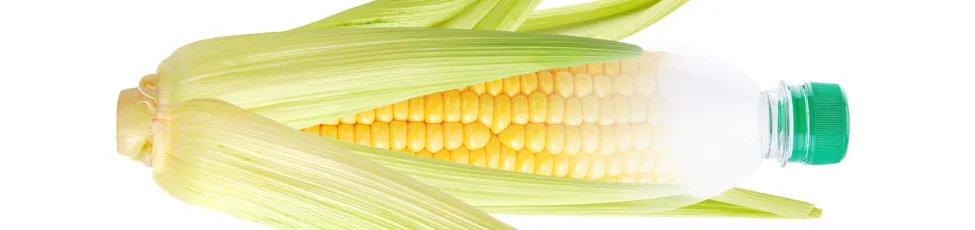
Growing environmental concerns about fossil fuel–based plastics have led to the search for more sustainable materials. Bioplastics are derived partially or entirely from renewable biological resources and have emerged as promising alternatives. They help reduce dependence on conventional plastics. Thus, lower environmental impact.
The bioplastics industry is expanding rapidly. There is an increase in production capacity, and new material innovations are entering the market. However, selecting the right biopolymer for a specific application can be challenging. This is due to the wide variety of available materials, with unique properties and end-of-life options.
This guide provides an overview of biopolymers, their key types, properties, and applications. It aims to help material scientists, product developers, and sustainability professionals make informed material choices. You will also gain insights into industry trends, sustainability considerations, and key factors to evaluate when transitioning from traditional plastics to bioplastics.
| Sustainability Path #1 — Use Materials of Bio-based Origin |
|
What are bioplastics?
Bioplastics are a category of polymers that are derived from renewable biological sources. These could be plants, crops, or microorganisms. Traditional plastics are produced from fossil fuels like petroleum and natural gas.
Unlike traditional plastics, biopolymers provide a sustainable alternative. They utilize resources that can be replenished. According to European Bioplastics, a bioplastic can be either bio-based, biodegradable, or both.
Bio-based or bio-derived plastics
The term 'bio-based' means that the material is (partially) derived from biomass (plants) or microorganisms. Renewable biomass includes corn, sugarcane, potatoes, and tapioca. Select from 320+ bio-based polymers available on our platform.
Biodegradable or compostable plastics
These plastics can break down into natural, non-toxic substances under specific environmental conditions. Biodegradation can occur through the action of microorganisms, heat, and moisture. It is important to note that not all bioplastics are inherently biodegradable. The chemical structure of a material influences biodegradation. Choose from 100+ biodegradable polymers available in our Master Catalog.

Key technical properties
The properties of biodegradable polymers can vary. This is because different polymers have different chemical structures. The table below depicts the summary of the mechanical properties of biodegradable polymers3.
Biopolymers | Density | Melting point | Tensile strength | Tensile modulus | Elongation at break |
1.21 - 1.25 | 150 - 162 | 21 - 60 | 350 - 3500 | 2.5 - 6 | |
1.18 - 1.26 | 168 - 182 | 40 | 3500 - 4000 | 5 - 8 | |
PHBV | 1.23 - 1.25 | 144 - 172 | 20 - 25 | 500 - 1500 | 17.5 - 25 |
1.26 - 1.32 | 96 - 114 | 19 - 36 | 324 - 647 | 200 - 807 | |
1.11 - 1.15 | 58 - 65 | 21 - 42 | 210 - 440 | 300 - 1000 | |
1.25 | 110 - 115 | 36 | 80 | 820 | |
1.26 | 55 | 21.5 | 830 | 330 | |
PEF | 1.56 | 213 - 235 | 76 | 1900 | 450 |
0.92 | 110 | 10 | 177 | 700 | |
0.1 - 1.16 | 161 - 170 | 30 - 40 | 1100 - 1600 | 20 - 400 |
Table 2: Mechanical properties of various biodegradable polymers3
Traditional petroleum-based plastics are struggling to meet the requirements for most instant foods. For example, coffee or fresh meat. Industrially, multi-layer films made of various polymers show an excellent oxygen or water vapor barrier like, PET and PP. They are fabricated to obtain films to be used for food, such as instant coffee packaging.
For biodegradable polymers, the barrier performance is out of the range of an excellent oxygen or water vapor barrier. Combining different biodegradable polymers to form a multi-layer film will not meet food-packaging purposes. Thus, chemical/physical modifications or novel structural designs are required.
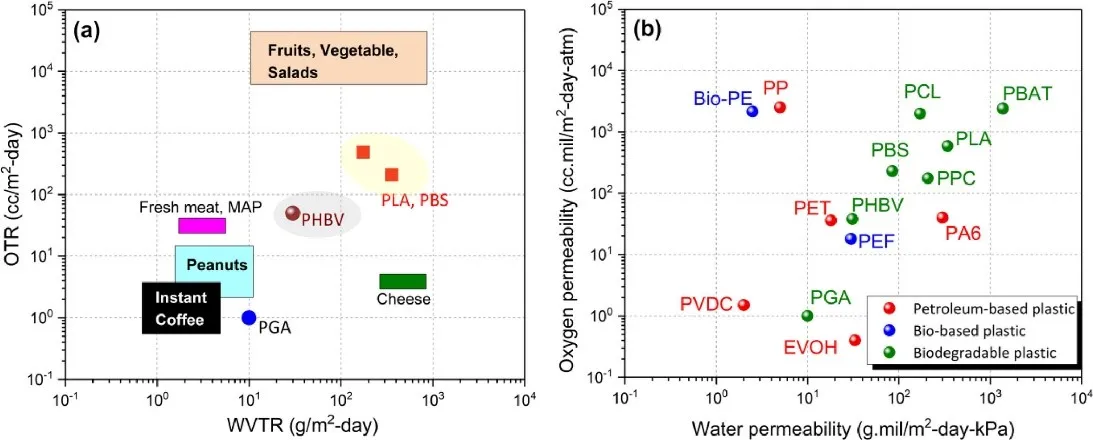
Requirements of barrier properties for different food packaging applications and a comparison between oxygen/water transition rate of selected biodegradable polymers at 25 μm and food packaging barrier requirements4
These values are approximate and can vary based on various factors. For example, the specific formulation, processing conditions, and the presence of additives. Additionally, some properties, such as the glass transition temperature, may have a range. This is because they can depend on the specific grade or formulation of the polymer. It is recommended to refer to the material datasheets provided by manufacturers for precise technical information.
To better understand the diversity and applications of biopolymers, the following section outlines their main types, key characteristics, and applications.
Types of biopolymers
Based on the origin of biopolymers, they can be grouped into several categories. Each of these categories is discussed in detail below.
Renewably sourced
- Polylactic acid (PLA): It is derived from renewable resources such as corn starch or sugarcane. PLA is biodegradable, compostable, and has similar mechanical properties to traditional plastics. It is widely used in packaging materials, disposable cutlery, textile fibers, and 3D printing. Check out the complete guide on PLA.
Polyhydroxyalkanoate (PHA): It is produced by various microorganisms through the fermentation of sugars. PHA is biodegradable and possesses a wide range of material properties. PHA is used in packaging, agricultural films, medical devices, and in the production of biodegradable plastics. Read the in-depth guide on PHA.
- Polyhydroxybutyrate (PHB): It is produced by bacterial fermentation of glucose or starch. PHB is a fully biodegradable and bio-based plastic. Its mechanical properties are comparable to polypropylene. PHB is used in biodegradable plastic bags, containers, sustainable packaging, etc.
Polyethylene furanoate (PEF): It is derived from plant-based sources, such as sugar beets or corn. PEF has excellent barrier properties and is considered a sustainable alternative to PET. PEF is used in beverage bottles and food packaging to enhance shelf life and reduce the carbon footprint.

Biodegradable
Polybutylene succinate (PBS): It is produced from succinic acid. This can be derived from renewable resources. PBS is biodegradable and has good mechanical properties. Thus, it is used in applications like packaging films, agricultural mulch films, and disposable items.
- Polybutyleneadipate-co-terephthalate (PBAT): It is a biodegradable biopolymer with good toughness. It can be used for packaging film and agricultural mulch film applications.
- Polycaprolactone (PCL): It is a biodegradable synthetic polymer with a low melting point and good elongation. PCL is primarily used for biomedical applications, including drug delivery devices, sutures, and adhesion barriers.
- Polytrimethylene terephthalate (PTT): It is derived from bio-based 1,3-propanediol. This can be produced from plant sugars. PTT exhibits good elasticity and resilience, making it suitable for textile applications.
Non-biodegradable
Bio-based polyethylene: It is produced using renewable resources. Here, the sugars from renewable sources are converted into ethylene, the building block of polyethylene. Bio-based PE shares similar properties with traditional fossil-fuel-based PE. This makes it a more sustainable alternative while maintaining versatility in various applications.
Bio-based polypropylene: It is manufactured using bio-based propylene. This is derived from plant-based sources like sugarcane or other biomass. Bio-based polypropylene exhibits similar properties to traditional polypropylene. This offers a balance between performance and environmental sustainability.
Bio-based polyvinyl chloride (PVC): It is produced from renewable feedstocks like ethanol. This emanates from plant-based sources like sugarcane, corn starch, or other biomass. Bio-based PVC demonstrates comparable durability, flexibility, and performance characteristics to conventional PVC. It is used in pipes, cables, floorings, medical devices, and packaging.
- Bio-based polyethylene terephthalate (PET): It is manufactured from monoethylene glycol (MEG) from plant-based sources like sugar cane. Bio-based PET exhibits identical mechanical and chemical properties to traditional PET. It is a more sustainable alternative for various packaging, such as beverage bottles, food containers, etc.
- Bio-based polyamide (PA): It is synthesized from bio-based monomers obtained from castor oil. Bio-based PA offers similar strength, stability, and versatility as conventional PA. It is used in automotive parts, sports equipment, electronics, fibers for textiles, etc.
Polysaccharide-based
- Starch blends: These polymers are blended with other biodegradable polymers to enhance their properties. Starch blends can exhibit good mechanical properties and are biodegradable. They are used in packaging, disposable cutlery, and agricultural applications.
- Cellulose: Cellulose-derived biopolymers are produced by modifying biomass-derived cellulose with acetic acid. It has been used in optical films, filtration membranes, eyeglass frames, and combs. For example, cellulose acetate.
- Alginate: Alginate is extracted from brown seaweed. It is biodegradable and biocompatible. It forms gel-like structures. Alginate is used in the food industry for encapsulation, wound dressings, and as a component in biodegradable films.
Other types of biopolymers
- Polyglycolic acid (PGA): It can be synthesized from renewable resources-based glycolic acid. It has a use in implantable medical devices because of their biocompatible nature.
Polypropylene Carbonate (PPC): It is produced through the copolymerization of CO2 with one or more epoxides. They feature numerous benefits over traditional petroleum-based plastics. PPC can decompose into CO2 and water in many types of atmospheres and leave no residue. They are amorphous, clear, processable, and offer long-term mechanical stability.
- Polyvinyl Alcohol (PVA): It can be derived from renewable resources such as corn or sugarcane. PVA is water-soluble, biodegradable, and has good film-forming properties. It can be used in packaging films, adhesives, and as a component in biodegradable bags.
Commercially available biopolymer brands
The commercially available biopolymers are adopted across various industries (refer to Table 1). With increasing research and development in the field of biopolymers, more sustainable alternatives are likely to emerge. This contributes to a greener and more environmentally friendly future.
Natural biopolymers from polypeptides and polysaccharides are used in packaging. They offer sustainability and biodegradability, especially paper-based packaging made of lignocellulose fibers. Another kind of natural packaging material is lipid-based film, such as fatty acid and wax coating. Being hydrophobic, they are used as water barrier films for food or as water-resistant coatings for plastics and paper-based packaging.
| Polymer/Blends | Brand name | Supplier | Application |
| PLA | Ingeo™ | NatureWorks | Bottles, fibers, film, 3D printing, and packaging |
| Bio-PET | Eastlon | FKuR | Transparent packaging and bottles |
| PHAs | - | Danimer Scientific | Straws, cups, lids, bottles, produce bags, shopping bags, utensils, diaper linings, plates, wipes, toys, trash bags, seals, and labels |
| PBS | BioPBS™ | Mitsubishi Chemical Corporation | Disposable tableware, paper cups, and gas barrier packaging |
| PBAT | ecoflex® | BASF | Packaging, mulch film, paper coating |
| PCL | - | Nomisma Healthcare Pvt. Ltd. | Biomedical application |
| PPC | QPAC® | Empower Materials | Binder and plasticizer |
| PEF | - | Avantium | Bottles, fibers and film |
| PLA/PBAT | Bio-Flex® | FKuR | Consumer goods, packaging |
| PLA/PBAT | Compostables | Cereplast | Packaging |
| PLA/PBAT | ecovio ® | BASF | Packaging |
| Starch/PBS | Bionolle™ | Resonac (formerly Showa Denko) | Packaging |
| Starch/PBS | Biograde | Biograde | Packaging |
| Starch/PBAT | Terraloy™ | Teknor Apex | Consumer goods, packaging |
| Starch/PBAT | Biolice | Limagrain | Packaging |
| Starch/PBAT | Compostables | Cereplast | Packaging |
| Starch/PBAT/PCL | Mater-Bi | Novamont | Consumer goods |
| PHA/PLA blend | - | Danimer Scientific | Blow mold bottles |
Table 1: Commercial grades of biopolymers and application areas
While the diversity of biopolymers highlights their technical versatility, their growing adoption is shaped by market demand and sustainability goals. The following section explores key market trends and the role of bioplastics in advancing circular material systems.
Industry trends and circularity aspects
Anticipated growth in the coming years
Currently, bioplastics represent less than 1% of the more than 390 million tons of plastic produced annually. Global bioplastics production capacities will double from 2.31 million tonnes in 2025 to about 4.69 million tonnes by 2030. This is based on the latest market data,1 compiled by European Bioplastics in cooperation with the nova-Institute.
Currently, biodegradable plastics include PLA, PHA, starch blends, and others. There is a strong global development of bio-based and biodegradable polymers. This includes polyhydroxyalkanoates (PHA) and polylactic acid (PLA), polypropylene (bioPP), as well as a steady growth of polyethylene (bioPE). Thus, the production capacities will continue to increase significantly within the next 5 years.1.
There is significant variation in some parts from one polymer to another, ranging from 28% to 100%. The comparison between the production capacities and actual production in 2025 shows that the bioplastics industry is currently producing at an average of 72% of global capacity. This comes down to 1.67 million tonnes production vs. 2.31 million tonnes production capacities. The European bio-based bioplastics industry is producing at an average of 73% of capacity.1.
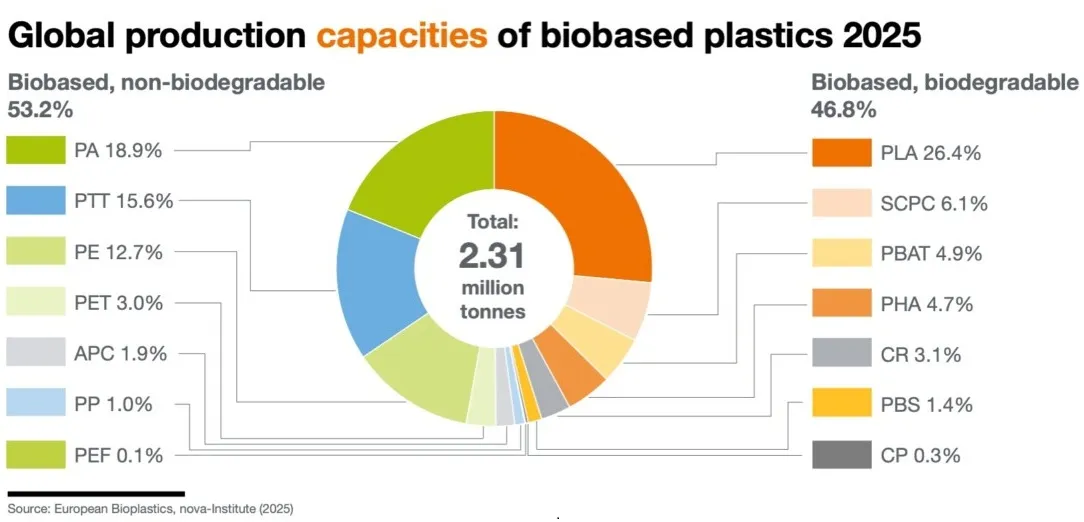 | 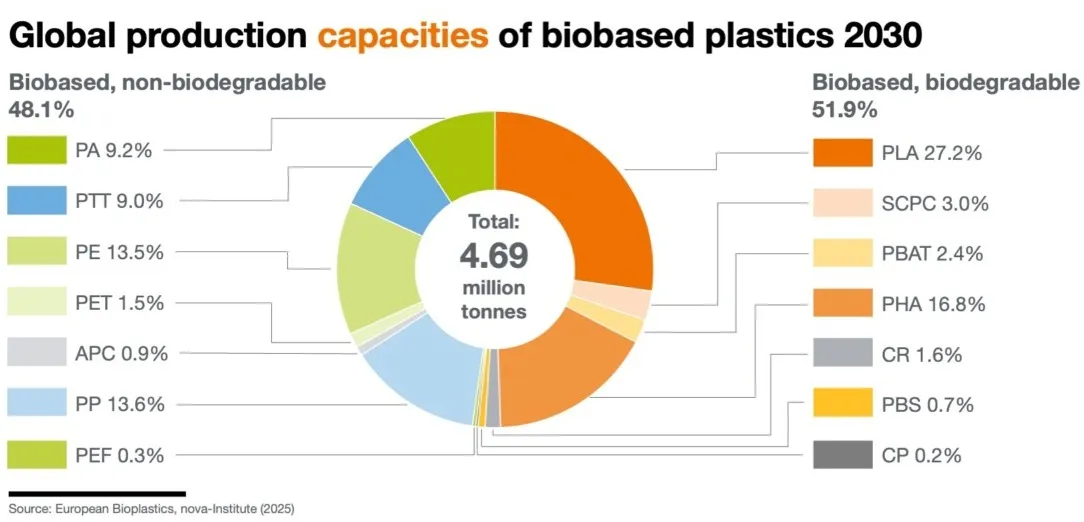 |
Global production capacities of bio-based plastics - 2025 (L); Global production capacities of bio-based plastics - 2030 (R)
(Source: europeanbioplastics)1
Biopolymers are used in an increasing number of markets. This ranges from packaging, catering products, consumer electronics, automotive, agriculture/horticulture, and toys to textiles and several other segments.
- Packaging remains the largest market segment for bioplastics. It includes 41.3% (0.95 million tonnes) of the total bioplastics market in 2025.
- In contrast, the automotive & transport application has grown to 0.24 million tonnes and now accounts for 10.3% of applications.1.
End-of-life pathways of biopolymers
Today, the world is increasingly concerned about environmental impact. Hence, the choice of materials plays a pivotal role in shaping a sustainable future. One of the key considerations is how these materials handle their end-of-life scenarios. This refers to whether they biodegrade, can be composted, or are recyclable. Below is a general overview of these properties.
Biodegradability: The natural process of breakdown
Biodegradability refers to the ability of a material to break down into harmless compounds naturally. This can occur under the influence of microorganisms. This process is crucial for minimizing environmental impact and reducing waste accumulation. Certain bioplastics, such as those based on PHA, are designed to be readily biodegradable. These materials can be broken down into natural components.
Breakdown of materials contributes to a cleaner and healthier environment. Biodegradability can be influenced by factors like material composition, environmental conditions, and the availability of specific microorganisms. Some bioplastics may face challenges in degrading efficiently in certain environments.

Compostability: A natural form of transformation
Compostability refers to the ability of a material to undergo biological decomposition in a compost environment. This results in the production of compost. Compost is an organic matter rich in nutrients. Certain bioplastics are compostable under industrial composting conditions. This includes specific formulations of PLA, PBS, and PBAT.
Compostable polymers break down into nutrient-rich compost, contributing to soil health. Industrial composting facilities provide optimal conditions. However, home composting of certain bioplastics may not be as effective. This is due to varying conditions (temperature) and the absence of specialized microorganisms.

Recyclability: Closing the loop
Recyclability is the ability of a material to be collected, processed, and reused in the production of new items. Efficient recycling is vital for creating a circular economy and reducing resource depletion. The ease of recycling bioplastics is influenced by factors such as:
- compatibility with existing recycling infrastructure,
- material purity, and
- availability of recycling facilities equipped to handle bioplastics
The recycling capabilities of bioplastics may vary. Some, like PLA, can be recycled through specific processes. However, challenges exist in traditional recycling facilities designed for conventional plastics.

The growing market demand and sustainability focus are accelerating the shift from conventional plastics to bio-based alternatives. Let's understand the things we need to analyze to make the switch.
A switch from traditional plastics to bioplastics
Markets served by biopolymers
- (2025). Bioplastics Market Development Update 2025. European Bioplastics.
- Posen, I. Daniel, et al. "Greenhouse gas mitigation for US plastics production: energy first, feedstocks later." Environmental research letters 12.3 (2017): 034024.
- Muthuraj, Rajendran. Biodegradable polymer blends and their biocomposites: compatibilization and performance evaluation. Diss. University of Guelph, 2015.
- Wang, Jinwu, et al. "Moisture and oxygen barrier properties of cellulose nanomaterial-based films." ACS Sustainable Chemistry & Engineering 6.1 (2018): 49-70.
- (2020). Bio-based plastics in the automotive market– clear benefits and strong performance. European Bioplastics.
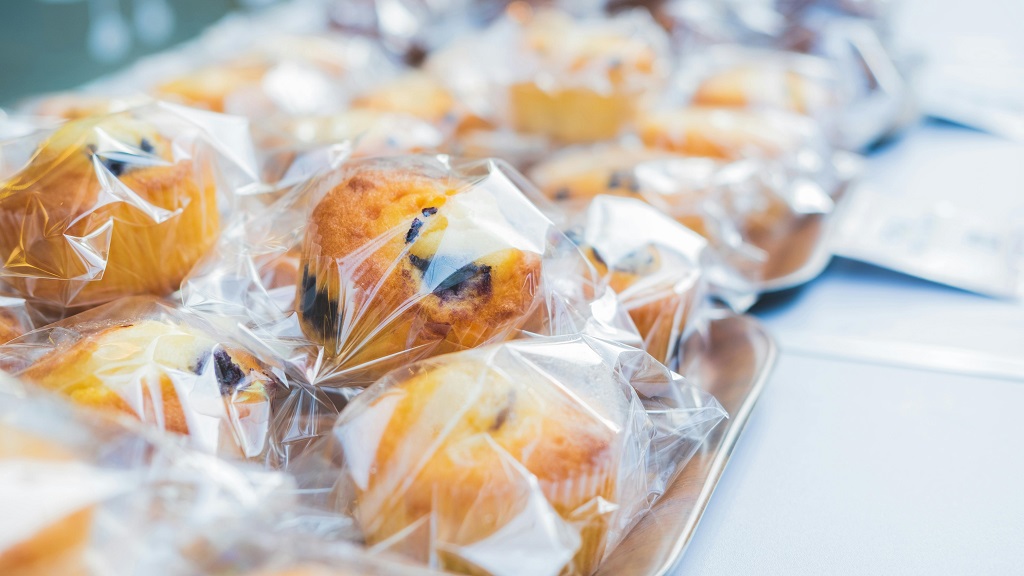
Bioplastic films are used in food packaging applications
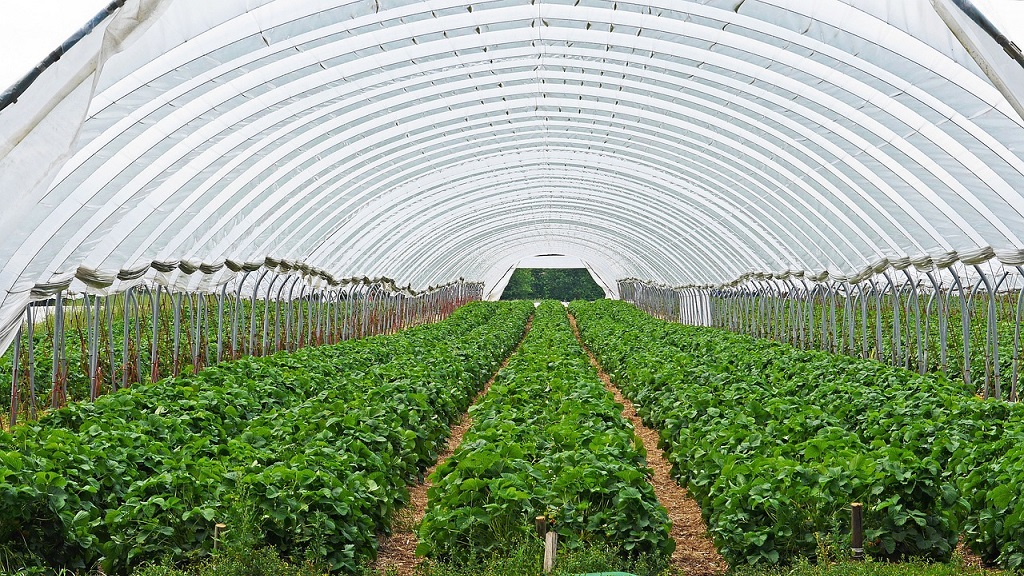
Biodegradable mulch films made from bioplastics are used in agriculture

Bioplastics used in medical devices provide sustainable solution in healthcare sector