

Polylactic Acid (PLA): How to select the right grade?
Last update on Apr 22, 2026
Concerns about cutting down carbon footprints and relying less on petrochemicals are shaping conversations everywhere. With this shift, it’s no surprise that the plastics industry is leaning more toward biopolymers.
Among them, Polylactic Acid (PLA) plastic stands out. Its ability to degrade efficiently, along with its versatile and biocompatible nature, has allowed it to replace many traditional polymers.
This guide answers questions like:
- What key properties define PLA plastic, and how can these properties be improved?
- How does the life cycle of PLA plastic unfold from origin to end-of-life and which pathways enable its synthesis?
- Where is PLA plastic used, and which international regulations does it meet?
- How is PLA processed, and what makes these methods suitable for so many applications?
This guide breaks down what makes PLA a versatile biopolymer and shows how to identify the PLA grade that best fits a specific requirement.
Polylactide (PLA): Structure, properties, and key characteristics
What is Polylactide (PLA)?
Polylactide or PLA (also known as polylactic acid or lactic acid polymer) is a versatile commercial biodegradable thermoplastic. It is based on lactic acid.
Lactic acid (LA or 2-hydroxypropionic acid) is the most widely occurring hydroxycarboxylic optically active acid. This chiral molecule exists as two enantiomers – L- and D-lactic acid. Lactic acid monomers can be produced from 100% renewable resources, like corn and sugarbeets.

The Enantiomers of Lactic Acid (Source: ResearchGate1)
PLA plastic has different stereoisomers, such as:
- Poly-L-lactide (PLLA)
- Poly-D-lactide (PDLA), and
- Poly-DL-lactide (PDLLA)
Polylactic acid plastic has been able to replace conventional petroleum-based thermoplastics. This is due to the excellent combination of properties it possesses.
Polylactide is one of the most promising biopolymers used today and has a large number of applications. This includes medical and healthcare, packaging, automotive applications, etc.
What are the properties of polylactic acid plastic?
PLA is a bio-based, biodegradable, and biocompatible polymer. It has proved itself to be a promising alternative to petroleum-based polymers. Its properties are on par with widely used polymers like polyethylene terephthalate (PET), polyvinyl chloride (PVC), etc. The high-performance PLA plastic grades are an excellent replacement for polystyrene (PS), polypropylene (PP), and acrylonitrile butadiene styrene (ABS) in demanding applications.

The commercial viability of PLA material is sometimes limited by its high production costs compared to its petroleum-based counterparts. Optimization of LA and PLA material production processes, and with an increase in PLA plastic demand, a reduction in its price can be achieved.
Here are some of the key properties of polylactide:
- Crystallinity: Most of the commercial L-PLA products are semi-crystalline polymers. It is desirable that polylactide should have some crystalline content to benefit the quality of the finished product.
- Melting and glass transition temperature: They have a high melting point of 180°C and a glass transition temperature (Tg) in the range of 55 - 60°C.
- Strength: Polylactide is a high-strength and high-modulus thermoplastic with a good appearance. It has high stiffness and strength, comparable to polystyrene (PS) at room temperature.
- Processability: Polylactic acid plastic can be easily processed using common techniques like injection molding, extrusion, blow molding, and 3D printing. This makes it versatile for a wide range of manufacturing processes.
- Energy consumption: Less energy is required in the production of PLA material as compared to other plastics. They have better thermal processing.
Further development of composites, nanocomposites, and biocomposites is expanding the properties and potential applications of PLA plastic.
Strategies to improve polylactide properties
The properties of PLA plastic can be altered or improved by the use of additives and developing polymer blends. Some of the examples are:
Plasticization
Lactide monomer is an excellent plasticizer for polylactide, however, it tends to migrate to the polylactide surface. Other plasticizers such as citrate esters & low-Mw PEG have shown only modest improvements in toughness. This is accompanied by a dramatic loss in tensile stress at break and tensile modulus.
Mineral fillers
They provide substantial improvement in the impact toughness of PLA. For example, ppt CaCO3 at 30% loading.
Impact modifiers
They can improve polylactide properties. However, adding them will compromise the compostability of the polylactide.
Polymer blending
PLA/PCL blends are also degradable polyester. Due to its low Tg, it exhibits rubbery characteristics with an elongation at break of approximately 600%. This makes it an ideal candidate for toughening polylactide. Polylactic acid plastic blends with PHA have shown significant improvement in impact toughness. They exhibit a modest decrease in modulus and strength. They do not compromise the bio-based content and compostability of PLA plastic.
The development of PLA nanocomposites using nanoscale fillets represents a better alternative to traditional composites. Due to their high surface area, improved matrix adhesion, and aspect ratio these nanofillers (colloidal silica, clay platelet) offer enormous advantages over traditional macro- or micro-particles (e.g., talc, glass, and carbon fibers). For example, PLA-clay nanocomposites show improved mechanical, barrier, optical, and thermal properties.
 |
With a clear understanding of how PLA properties can be enhanced, it’s time to see how this versatile biopolymer is made and how it moves through its entire life cycle.
Polylactide (PLA): Lifecycle and production pathways
What are the major phases in the life cycle of polylactide?
The life cycle of polylactic acid (PLA) polymers can be divided into four main stages:
- Feedstock production: PLA is made from renewable resources such as cornstarch or sugarcane. These crops are grown, harvested, and processed to produce lactic acid, the monomer from which PLA plastic is made.
- Polylactide production: Lactic acid is polymerized to form polylactide. This process involves a series of chemical reactions that combine lactic acid molecules to form long chains. The properties of the PLA polymer can be controlled by varying the polymerization conditions.
- Polylactide processing: Polylactic acid plastic is a versatile material that can be processed into a variety of products. For example, films, sheets, fibers, and molded parts. The processing method depends on the desired product properties.
- Polylactide end-of-life: PLA plastic can undergo landfilling, composting, anaerobic digestion, or recycling.
- Landfilling - PLA plastic is a relatively stable polymer and can persist in a landfill for hundreds of years.
- Composting - Here, the PLA plastic is broken down into compost, which can be used to improve soil quality.
- Anaerobic digestion - PLA plastic can be digested anaerobically along with other organic wastes. The biogas can be used to generate electricity or heat.
- Recycling - PLA plastic can be recycled into its monomer components, which can then be used to make new PLA materials.

Looking for PLA plastic grades to ease your end-of-life concerns? Our platform lets you request samples, access technical datasheets, and select the right grades with ease:
 |  |
Major pathways of polylactide production
Polylactic acid plastic is an aliphatic polyester that can be obtained using different routes:
Direct polycondensational reaction (DPR)
It usually leads to low molecular weight polymers. They can then be converted to higher molecular weight polymers by the addition of chain coupling agents.
Ring-opening polymerization (ROP)
PLA is produced by the formation of lactide monomer at first. The formed lactide is then put through ROP usually using metal alkoxides as catalysts. This results in high molecular weight polyester – Polylactic acid plastic.
Azeotropic dehydrative condensation (ADC)
Organic solvents are introduced into the reaction mixture to ease the removal of water. As a result, it produces a higher molecular weight product.
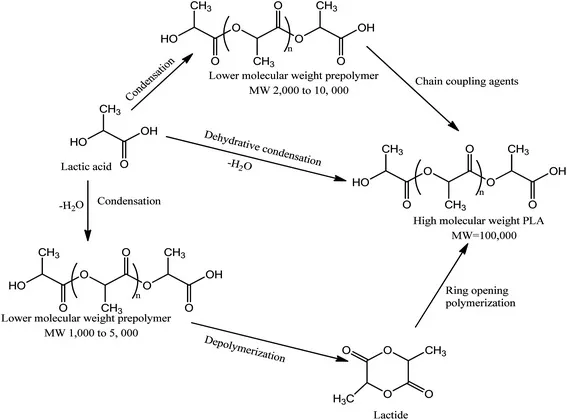
Process of PLA Plastic synthesis (Source: Royal Society of Chemistry2)
Currently, the first two methods are the most used techniques for industrial production. ROP currently dominates as the process of choice for industrial PLA plastic production. This is due to low time consumption and a high molecular weight final product. This makes it probably the most used and viable method to produce PLA material. High temperatures and low pressure must be still used to achieve the final product.
However, new methods such as polymerization using microwave irradiation and ultrasonic sonochemistry could lead to faster and cheaper production of PLA plastic.
Now that we’ve seen how PLA is made and moves through its life cycle, it’s clear why this polymer is so versatile. Next, let’s explore how it can be transformed into films, fibers, molded parts, and more.
Processing Polylactide: Methods and conditions
Polylactic acid plastics can be easily processed like other thermoplastics through conventional processing techniques. These include injection molding, film extrusion, blow molding, thermoforming, fiber spinning, etc., to yield molded parts, films, or fibers.
Requirements for PLA processing by injection molding
PLA resins can be successfully dried using the standard drying systems. Advised conditions for standard desiccant-based column dryers are:
- A pre-drying of 2 to 4 hours at 45°C up to 90°C
- A moisture level lower than 250 ppm will help keep the melt viscosity stable over time at elevated temperatures
- Typical desiccant dryer regeneration temperatures exceed the melting point of PLA resins
- To prevent issues with pellet bridging, sticking, or melting, the drying system should be verified. This ensures adequate temperature control during operation and regeneration cycles since valve leakage is common in many systems.
Colorants and slip agents can be added as a masterbatch at 15 - 30 wt% in PLA. This is done by dry blending with the neat resin in the required amount and adding the blend to the injection molder. The addition of colorants has been successfully done using liquid injection technology as well. Since polylactic acid plastic is not compatible with most incumbent materials, it is important that all additive masterbatches use PLA material as a carrier.
Polylactide injection molding grades are compatible with the use of hot runner systems. Typical conditions for injection molding are as follows:
| Conditions | Values |
| Adapter temperature | 185 - 200 °C |
| Dew point | (-)40 - (-)35 °C |
| Die temperature | 185 - 200 °C |
| Drying temperature | 45 - 100 °C |
| Feed temperature | 165 - 185 °C |
| Melt temperature | 154.4 - 243.3 °C |
| Mold temperature | 10 - 105 °C |
| Nozzle temperature | 171.1 - 220 °C |
| Back pressure | 0.345 - 1.724 MPa |
| Injection pressure | 55.16 - 137.9 MPa |
| Moisture content | 0.01 - 0.025% |
| Screw speed | 20 - 200 rpm |
| Drying air flow rate | 14.16 l/pm |
Plate-out of lactide can occur over time if injection speeds are too low, and/or mold temperature is too cold. Another concern is that PLA shear thins slower and to a lesser extent than resins like PS, PE, and PP. Because of this, the filling of the mold is a concern, especially for thin-walled products like drinking cups. It is possible to overcome this issue by finding the right melt temperature and injection speed necessary to fill the part.
Usually, one will have to raise the melt temperature, which can have an adverse effect on the cooling time of the part while in the mold.
 |
PLA fiber melt spinning grade processing
Polylactide fiber melt spinning grades are designed for extrusion into mechanically drawn staple fibers. This is done by using conventional fiber spinning and drawing equipment. They can be used as a low-melt binder polymer in a sheath-core configuration.
- General-purpose screws with L/D ratios of 24:1 to 30:1 and 3:1 compression ratios are recommended
- Typical melt spinning temperatures are 220 - 240°C.
- The recommended moisture content to prevent viscosity degradation and potential loss of properties is < 0.005% (50 ppm).
- Typical drying conditions are 8 to 12 hours at 40°C - 50°C.
Like PET, the polylactide fiber melt spinning grades require either high filament velocity or drawing and controlled heat setting to control shrinkage. In-line drying capabilities are essential to process PLA injection stretch blow molding grades.
PLA heat seal layer processing
Polylactide (PLA) heat seal layer processing is a technique used to improve the heat sealability of PLA films. They can be coextruded with other PLA resin to form a sealant layer for biaxially oriented PLA film. It requires drying prior to processing and in-line drying. PLA polymers can be processed on conventional extruders.
Several process conditions to comply with for heat seal layer processing of PLA plastics are given as follows:
| Conditions | Values |
| Moisture content | < 0.025% (250 ppm) |
| Drying | 4 hours at 11 °F (45 °C) |
L/D ratio Compression ratio | 24:1 to 30:1 2:1 to 3:1 |
| Melt temperature | 210 °C |
| Feed section | 180 °C |
| Compression section | 190 °C |
| Metering section | 200 °C |
| Die | 190 °C |
Screw cooling capabilities through the feed section are necessary to prevent the resin from sticking to the screw root. Smooth barrels are recommended. This grade is suitable only as a heat seal layer in a coextrusion process. Processing polylactic acid plastic as a monolayer film is not recommended.
Processing requirements for PLA high heat films
Polylactide extrusion grade can be converted into a biaxially oriented film at up to 150 °C (300 °F). PLA resins can be successfully dried using standard drying systems. They can also be processed on conventional cast tenter equipment.
| Conditions | Values |
| Drying | 4 hours at 80 °C (175 °F) |
| Moisture level | < 250 ppm (0.025%) |
L/D ratio Compression ratio | 24:1 to 30:1 2.5:1 to 3:1 |
| Melt temperature | 200 - 220 °C |
| Feed section | 180 °C |
| Compression section | 190 °C |
| Metering section | 200 °C |
| Die | 200 °C |
Polylactide spun-bond processing
Polylactide spun-bond grades process on conventional spun-bond equipment.
- General-purpose screws with L/D ratios of 24:1 to 30:1 and 3:1 compression ratios are recommended.
- Typical melt spinning temperatures are 250 - 300 °C.
- The recommended moisture content to prevent viscosity degradation and potential loss of properties is <0.01%.
- Typical drying conditions are 2 - 4 hours at 50 - 60 °C.
PLA filaments for 3D printing
3D Printing using PLA filaments is a promising way to produce complex biomedical devices by computer design. This process opens new developments using patient-specific anatomical data. It can also be used in a wide range of industrial and architectural applications. PLA printing was found feasible for such applications mainly by using direct or indirect 3D printing and fused deposition modeling technologies.
Select PLA plastic grades compatible with various processing methods available in our master catalog:
 |  |  |
Commonly available physical forms of PLA
Several different forms of PLA materials are available in the market today. The specific form that is used for a particular application depends on the desired properties of the final product. Commonly available forms of PLA are as follows:

Pellets: PLA pellets are small, cylindrical pieces of PLA. They can be melted and molded into complex shapes. This makes it suitable for injection molding, extrusion, and thermoforming.
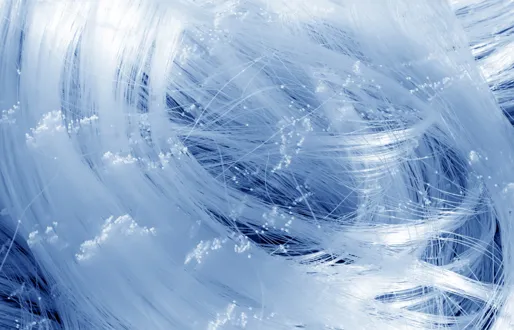
Filament: PLA filament is a thin strand of PLA. It can be extruded into a strand that can be deposited layer by layer to create a three-dimensional object. Thus, it is commonly used in 3D printing.

Film: PLA film is a thin sheet of PLA. It is transparent, flexible, and acts as a barrier to moisture and gases. Thus it is commonly used for packaging.

Sheet: A PLA sheet is a thicker sheet of PLA. It can be heated and molded into a variety of shapes and thus is commonly used for thermoforming and other applications.

Fiber: PLA fiber is a long, thin strand of PLA. The soft, strong, and wrinkle-resistant properties of PLA fibers make them suitable for use in textiles and other applications.

Foam: PLA foam is a lightweight, porous material. Its lightweight, shock-absorbing, and insulating nature makes it suitable packaging.
Searching for the right PLA grade? Use the "Appearance" facet on our platform to explore 500+ commercial PLA options from our master catalog. Choose from available physical forms: pellets, filaments, films, sheets, fibers, and foams and download technical datasheets or request samples with ease!
With all the ways PLA can be processed-from injection molding and extrusion to 3D printing-it’s easy to see how widely it can be applied. Next, let’s explore the advantages it offers and the challenges to keep in mind.
Advantages and challenges of PLA
Regulatory compliance and labels
Key applications
- Teixeira, Eblagon, Miranda, Figueiredo. (2021). Chemical structure of lactic acid stereoisomers: L-(+)-lactic acid is also known as (S)-lactic acid and D-(−)-lactic acid, also known as (R)-lactic acid. Figure in: Towards Controlled Degradation of Poly(lactic) Acid in Technical Applications. ResearchGate.
- Mekonnen, Mussone, Khalil, Bressler. (2013). Progress in bio-based plastics and plasticizing modifications. Journal of Materials Chemistry A.

PLA biocomposites are proposed for use in cover spare wheel or translucent roof in hybrid concept vehicles.
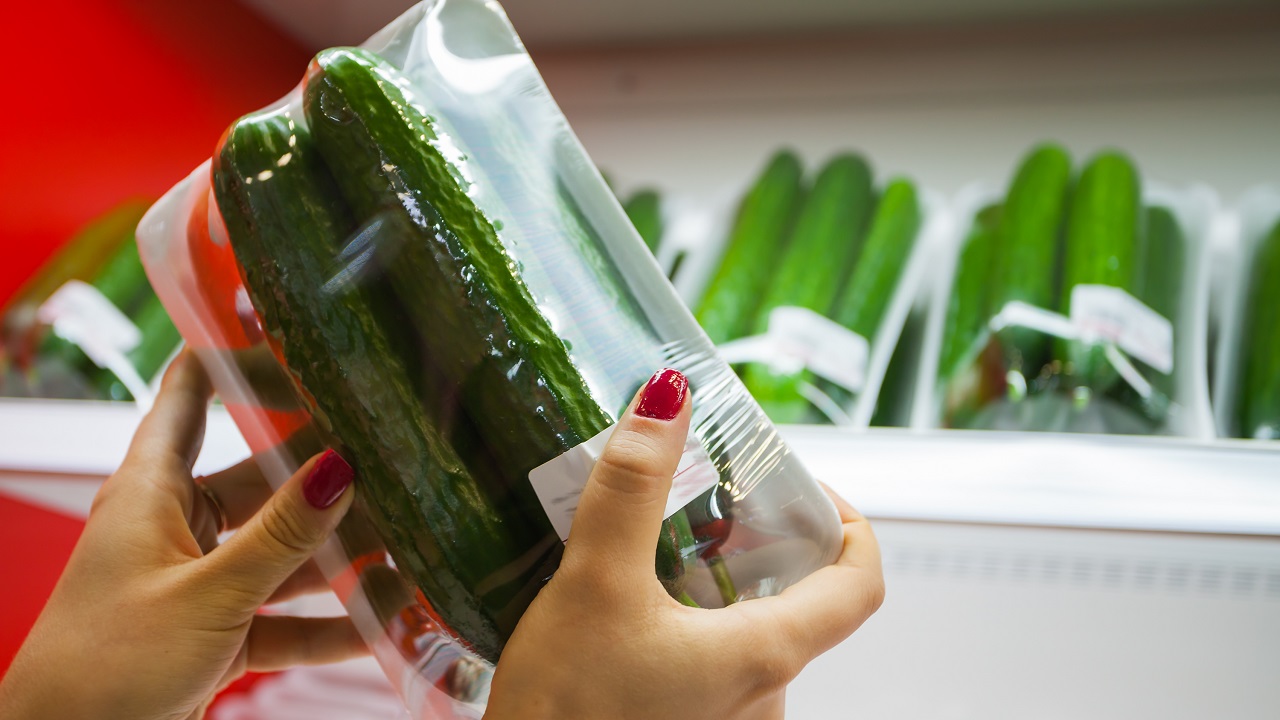
PLA is used as a food packaging polymer for short shelf life products such as fruit and vegetables

PLA has been investigated for membrane applications (e.g. wound covers), implants and medical devices