

Ingredient Selection & Standard Test Methods for Digital Inkjet Printing Inks
Last update on Jul 10, 2025
This is because unlike printing on paper or other substrates, the textile material will be subjected to repeated washing using various detergents, and the color ought to be fast to washing, rubbing, and sunlight. These factors make ink formulation for digital textile printing quite complicated. In order to solve your problems, learn more about how to select the right ingredient for inkjet ink formulation here.
Ingredient Selection for Inkjet Ink Formulation
The formulation and chemistry of the ink determine:
- The printing quality, and
- The jetting characteristics
In digital textile printing, the ink remains the single most important component of the system besides the fabric pre-treatment. This is because, unlike printing on paper or other substrates, the textile material will be subjected to repeated washing using various detergents, and the color ought to be fast to washing, rubbing, and sunlight.
These factors make ink formulation for digital textile printing quite complicated. Therefore, here we will provide an ideal inkjet ink formulation for various types of inks that can be used for digital textile printing. The formulation may vary based on the inkjet machine manufacturer, and also, the effect desired by the printer; however, the items listed for each category of ink are quite exhaustive.
| Inkjet Ink Preparation | Vehicle | Additives | Polymers |
| Function | Act as a carrier | Impact special functions | Enable the binding of the functional molecules to the substrate after printing |
| Example |
|
|
|
Ordinarily, inkjet inks are described in terms of their carrier fluids, but in others, the naming is based on their properties. Some of the commonly found inkjet ink types in the digital inkjet market and their suggested composition are mentioned below.
Water-based Inks
The table below gives a typical composition of water-based ink that can be used in a wide variety of inkjet printers purposely for graphics and digital textile printing. These inks are used in printing onto coated substrates and the water is absorbed quickly into the coating and the dye or pigment is fixed to the surface of the coating to give a sharply defined image.
| Component | Function | Concentration (%) |
| Deionized water | Aqueous carrier medium | 60 - 90 |
| Water soluble solvents | Humectants, viscosity controller | 5 - 30 |
| Dyes or pigments | Provides color (Chromophore) | 1 - 10 |
| Surfactants | Wetting agent, penetrating agent | 0.1 - 10 |
| Biocides | Prevents growth of biological organisms | 0.05 - 1 |
| Buffers | pH controller | 0.1 - 0.5 |
| Other additives | Chelating agent, binder, defoamer, etc. | > 1 |
Specifically, for digital textiles printing, the components, and more importantly, the concentrations above may vary depending on:
- The type of base (water, oil, organic medium)
- The printing machine manufacturer, and
- The mode of after-treatment such as curing (for pigmented inks) or steaming

Solvent-based Inks
The composition can be similar to the components in table above. Solvent inks are cheap, durable, and give good coverage on non-porous vinyl and other graphic arts substrates but their use on the textile substrate is not encouraged.
Also, they are not environmentally friendly and sometimes give off strong, often toxic, odors as they dry; thus, requiring special ventilation systems. Their durability on a product still makes them a viable option for the printing of posters and signage for outdoor use. Their corrosive nature requires special print heads and affiliate devices.
» View All Raw Materials for Solvent-based Inkjet Inks
Latex Inks
Latex ink is composed of approximately 70% water and 30% additives. All other components in water-based inks can be included in this system, but the latex component is usually higher than the other ingredients besides water. These inks give:
- Good durability and
- Good environmental health
Latex inks require no drying mechanism because as the liquid evaporates, the latex polymers coalesce and fuse together, encapsulating the colorant leaving a continuous layer of latex polymer, encapsulating, and protecting the pigment.
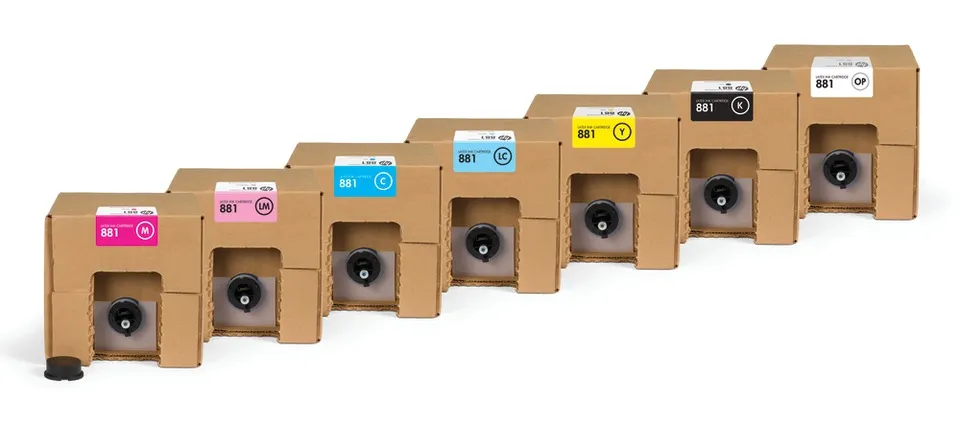
Third Generation Latex Inks by HP
Oil-based Inks
Other additives in table above may be added based on the expected results and the type of printer to be used. The varnish is usually vegetable oil, which increases the glossiness when the substrate dries.
Oil-based inks are suitable for printing on porous substrates such as plain paper, coated paper, and cardboard but not on textiles. These inks are most commonly used in:
- Coding,
- Markings, and
- Some paper-based wide-format graphic applications
UV-cured Inks
This type of ink represents the fastest-growing segment of the industrial printing ink market. These inks are cured when photoinitiators interact with high-intensity ultraviolet light.
UV inks are environmentally friendly. They and are used for printing onto non-porous substrates and are used mainly in graphics and digital textile printing. Their versatility makes them user-friendly in most print heads.
Other Varieties of 'Ink'
Hot melt, or phase change inks are composed primarily of colorants and polymers that undergo a rapid phase change when heated. The heating in the printhead keeps them liquid and once jetted, solidify on the substrate. These inks are used in the coding and marking and packaging segments but not on textiles.
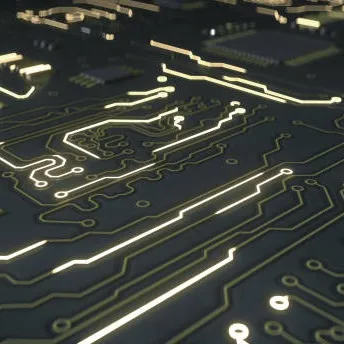
Other Functional Fluid ('inks') that can be printed by specially designed printers such that when laid on a substrate, performs a special function such as in the case of metallic or conductive functional fluids printed on circuits. In this case, the functional fluid consists of nanometer-size particles of conductive metals such as silver and copper held in suspension in a carrier fluid. Once printed these inks are then sintered (heated until the tiny particles adhere to each other).
Other functional fluids include:
- Optical polymers
- Conductive and semi-conductive polymers
- Transparent conductors
- Dielectric and resistor materials, solders, and epoxies
Introduction to Inkjet Printing Technology
Modern printing technologies are based on digitizing information and representing the information through a non‐contact printing system onto substrates. Unlike the other forms of printing, the colorants to be printed are in the form of inks having low viscosity rather than pastes, or powders.
In principle, inkjet printing consists of the deposition of small jets (as ink droplets) of colored ink on substrates. The most common method of digital printing is through inkjet printers.
In the printing process, the jet of ink being printed is controlled by a computer (printing software) as determined by the digital image. The quality of the print is defined by the resolution of printing by 'dots per inch' (dpi).
Inkjet Color Palette and Spot Colors
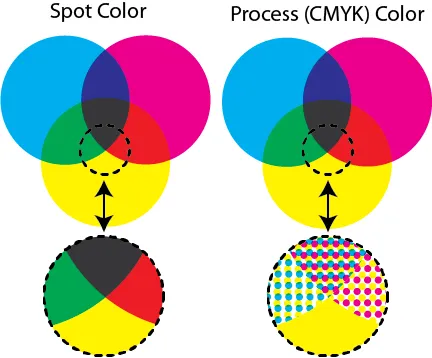
Inkjet printing is based upon the colors - cyan, yellow, magenta and black (CYMK), rather than the traditional primary colors - red, green and blue (RGB) used in dyeing.
Although the color palette is quite restrictive, nevertheless, 'spot' colors can be added by the printer since print heads offer the capability of dispensing 6, 8 or even 12 colors during printing. In most cases, the 'spot' colors tend to be orange or green but can be colors specified by the client if their design is based upon a specific shade.
Inkjet printing appears simple, however, inkjet inks ought to meet certain important physicochemical requirements which make their chemistry and formulation extraordinary. The important physicochemical factors that influence the ink formulation are:
- Storage stability
- Jetting performance
- Color management
- Wetting/surface tension
- Adhesion, and
- Environmental health
Let's explore the ingredients & latest trends that make the chemistry of various digital inkjet inks extraordinary.
Conventional Emerging Trends in Inkjet Printing
The traditional & emerging applications of inkjet printing include:
| Traditional | Emerging |
|
|
In textile, it is envisioned that digital inkjet will overtake the conventional textile printing systems such as flatbed or rotary screen printing, which is the most commercial form of textile printing. Unlike the traditional methods of textiles printing with rollers or rotary screen screens, inkjet printing does not require screen manufacture, which cuts down costs considerably.
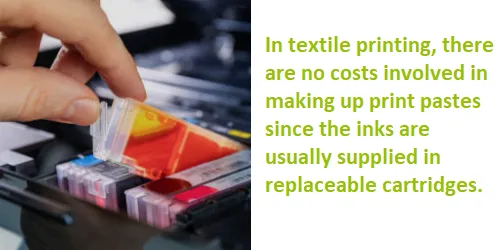
Also, machine set‐up time for print registration is much faster and easier compared to the most advanced conventional systems in the industry. More importantly, there are no costs involved in making up print pastes since the inks are usually supplied in replaceable cartridges.
The initial low printing speed associated with inkjet printing and the associated high cost of ink has become history over the last 5 years due to the significant developments in inkjet printing speed. This, together with the trend towards printing short runs and mass customization has made inkjet printing more viable compared to the traditional textile printing systems.
Currently, with printing speeds of up 3,500 m2/h by MS LaRio; it is not hard to imagine that within the next few years, developments in the technology in inkjet textile printing machines will exceed the speeds of rotary screen-printing machines besides their advantage of low effluent production and less space requirement for operations.
Now that you've learned about the ingredient selection for inkjet inks along with the traditional & current trends, let's walk through the standards test methods for pigmented inks.
Why Pigmented Inks Instead of Dye-based Inks?
The desire to develop a universal ink which can enable inkjet printing on chemically diverse textile materials can be achieved by the use of pigments inks because of the mechanism of adhesion to varied substrates.
Standard Test Methods for Pigmented Inkjet Inks
For most inkjet inks containing pigments, it is important that the specific physicochemical properties remain constant over time. Hence, the tests listed below are used to determine the jetting behavior, the tendency of aggregation, thermal, and storage stability. The tests are in no way exhaustive but only suggestive. More tests could be conducted based on:
- The type of pigment (encapsulated or not, organic or inorganic)
- The effect required, and
- The specific properties of the print-head technology available
However, the following tests are essential for the proper functioning of pigmented inkjet inks.
 |  |  |  |
| TEST METHODS FOR PIGMENTED INKJET INKS | |||
 |  | ||
Particle size and particle size distribution of the pigment particles within the inkjet ought to be measured to prevent possible aggregation. These can be determined by the Dynamic Light Scattering method.
Zeta Potential
The zeta potential of the pigment determines the surface charge relative to conductivity and dielectric properties and this can be measured by Zeta Potential Analyzer.
Viscosity
The viscosity of the ink, which determines to a large extent the flow/jetting properties can be tested by a rheometer or viscometer.
Surface Tension
The surface tension determines the rate of wetting and spreading of the ink on a substrate. This property can be determined by an automatic surface tensiometer.
Morphology
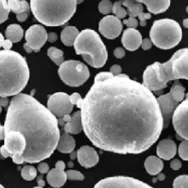
The morphology of the pigment particles in a pigmented inkjet ink system can be observed by a transmission electron microscope. The morphology of the pigment particles in the system affects the gloss or otherwise of the ink when printed.
Tendency of Aggregation
The tendency of aggregation by pigment particles in a pigmented inkjet ink during storage can be evaluated by a freeze-thaw stability test in which the ink is frozen at -10°C for 24 h, and the thawed at 60°C for another 24 h.
Similarly, the thermal stability of the pigment ink can be tested by heating at 60°C for 24 h after which the particle size and its distribution within the system is are tested and compared to the initial results.
Propensity of Phase Separation
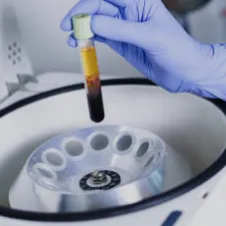
The propensity of phase separation is determined by centrifuging the pigmented ink for 30 min at 3000 rpm followed by calculating the changes in particle size using the equation below:
where:
→ Sc is the centrifugal stability
→ d1 and d2 are the particle size of the pigment size before and after the treatment respectively
Moisture Content
The moisture content can also be determined by a simple experiment of drying at 60°C until a constant weight is attained after which moisture content can be determined mathematically.
NOTE: The science and the art of pigment dispersion are too broad for this write-up.
- Magdassi S. (2010), The Chemistry of Ink Jet Inks - World Scientific Publishing Co. Pte. Ltd.
- Tawiah B, Howard E.K, Asinyo B. (2016), The chemistry of inkjet inks for digital textile printing - Review, BEST 4(2016:61-78.
- Schulz G. (2002), Textile chemistry of digital printing. Melli Texilberichte/Int. Text Rep (Eng Ed).
- Ujiie H. (2006), Digital Printing of Textiles. Woodhead Publishing.
- Li, M, Zhang L, Wang, D., Datong W., Agbo, C., Fu, S. (2017), Influence of nano-coated pigment ink formulation on ink-jet printability and printing accuracy. Coloration Technology,133(6), 476-484.