

Pigments: How to select pigments for paints, coatings, and inks?
Last update on Apr 2, 2026
Pigments are important constituents in paints, coatings, and inks. They impart color, bulk volume, and desired physical & chemical properties to wet or dry film.
With over 46K+ pigments available in our Master Catalog, finding the one you need becomes difficult. Our platform simplifies this complexity through intelligent filtering. You can use chemistry type, color, properties, and technical specifications. Are you using the right approach to find the pigment of your choice?
In this guide, explore the fundamental differences between pigments and dyes, pigment families, and performance characteristics that impact your formulation success.
What are color pigments and dyes?
In the field of coatings, paints, and inks, color pigments and dyes are distinct classes of colorants that differ fundamentally in how they interact with the medium and impart color:
Color pigments
Pigments are insoluble particles that remain as discrete solid particles dispersed throughout the coating, paint, or ink formulation. They don't dissolve in the medium but are physically suspended within it.
Key characteristics of color pigments:
- Exist as fine solid particles (typically 0.01-10 micrometers)
- Provide color through light scattering and selective absorption
- Offer opacity and hiding power
- More lightfast and weather-resistant than dyes
- Resistant to heat, and chemicals such as acids & alkalis
- Require binders or dispersing agents to remain stable in the formulation
- Can be organic (carbon-based) or inorganic (mineral-based)
- Examples: titanium dioxide (white), iron oxides (reds, yellows, browns), phthalocyanine blues and greens
Dyes
Dyes are soluble colorants that dissolve completely in the medium, creating a molecular-level solution rather than a suspension.
Key characteristics of dyes:
- Completely dissolve in the carrier medium (solvent, resin, or water)
- Provide color at the molecular level through selective light absorption
- Transparent
- Often produce brighter, more intense colors than pigments
- Generally less lightfast and less durable than pigments
- More susceptible to fading and environmental degradation
- Commonly used in wood stains, inks for printing, and translucent finishes
- Examples: azo dyes, anthraquinone dyes, solvent dyes

Dispersion process
High-quality coatings of high brilliance and color strength are characterized by:
- A perfect pigment dispersion
- Optimal pigment particle size
- Long-term stabilization of the dispersed particle in the formulation
The dispersion process refers to the permanent breaking of agglomerates into primary particles. There are four aspects to the dispersion process:
- Deagglomeration: The breaking down of the agglomerates & aggregates by applying force. A mixture of both crushing and mechanical shearing force is applied here.
- Wetting: It occurs at the surface of a pigment when a surface-active agent sticks to the pigment's surface. It acts as a connection between the pigment and the binder. Wetting out time depends on the viscosity. Heat produced by the mechanical shearing process increases the temperature of the mixture. This thus reduces the viscosity, helping the wetting out process.
- Distribution: It demands the pigment to be equally dispersed throughout the binder system. A lower viscosity tends to lead to a more even pigment distribution.
- Stabilization: It prevents the pigments from re-agglomerating. The pigment dispersion is stabilized by dispersing agents to prevent the formation of uncontrolled flocculates. The resultant suspension is stabilized due to the adsorption of binder species or molecules at the pigment surface.
Pigment dispersion vs. dye dispersion
The smallest units of pigments refer to primary particles. The particles' structure and shape depend on the crystallinity of the pigment. During the pigment production process, primary particles generally aggregate and generate agglomerates.


Here, we will focus more on the various chemistries of pigments. Read on to discover more!
Types of pigments
Each pigment types have distinct properties that distinguish them from one another. Some main pigment classes include:
- Organic pigments do not disperse easily and form agglomerates (clumps of pigment particles).
- Inorganic pigments get more easily dispersed in the resin.
- Functional pigments impart a desired property to the coating. They create optical effects like metallic, hammer finish, and diverse color perceptions depending on the angle. Examples include anti-corrosive pigments, conductive pigments, and carbon blacks.
- Special effect pigments are focused on creating visual effects beyond solid color. Examples of special effect pigments include: interference, metallic, pearlescent, iridescent pigments.
Let's explore the fundamental pigment classes in detail: organic, inorganic, functional, and special effect pigments. Each type offers distinct advantages in terms of dispersion, color properties, and performance. Understanding the key differences between these types will help you make informed decisions for your specific coloring needs.
Organic pigments
Organic pigments are traditionally transparent. Modern manufacturing techniques impart properties that are not associated with the chemical type. It is now possible to produce high-opacity organic pigments.
Organic pigments are relatively new. Natural dyes have been precipitated onto inorganic bases (known as lakes). They are used in artists' colors since the Middle Ages (e.g., madder lake and crimson lake). However, true organic pigments have been known since the early years of the 20th century. They divide into two sub-groups:
- One of vegetable origin, and
- Other of animal origin
Most organic pigments show better transparency as dispersion improves. While in the case of larger particle size inorganic pigments, opacity is improved by good dispersion.
Explore the range of organic pigments in detail below.
 Organic Red Pigments |
 |
There are a lot of red pigments. To select the best pigment for your application, you need to know all the products available in this color and their properties.
PIGMENT NAME | COLOR INDEX | PROPERTIES | PRICE |
Beta-naphthol | Pigment Red 3, 4 & Pigment Orange 5 |
| Relatively cheap pigments |
BON arylamides | Pigment Red 2, 5, 12, 23, 112, 146, 170 & Pigment Orange 38 |
| |
Toner pigments | Pigment Red 48, 57, 60, 68 |
| |
Benzimidazolone | Pigment Red 171, 175, 176, 185, 208 Pigment Violet 32 & Pigment Brown 25 |
| Relatively economic when compared with other high-quality pigments. |
Disazo condensation | Pigment Red 144, 166, 214, 220, 221, 242 Pigment Orange 31 & Pigment Brown 23 |
| |
Quinacridone | Pigment Red 122, 192, 202, 207, 209 & Pigment Violet 19 |
| Relatively expensive |
Perylene | Pigment Red 123, 149, 178, 179, 190, 224 Pigment Violet 29 & Pigment Black 31, 32 |
| Expensive, because of their good properties |
Anthraquinone | Pigment Red 177 |
| Expensive |
Dibromanthrone | Pigment Red 168 |
| Expensive |
Pyranthrone | Pigment Red 216, 226 & Pigment Orange 51 |
| |
Diketopyrrolo-pyrrole pigments (DPP) | Pigment Red 254, 255, 264, 270, 272 & Pigment Orange 71, 73 |
| Often used in combination with other more economic pigments |
 Organic Blue Pigments |
 |
The blue pigment range is dominated by one chemical type: Phthalocyanine. It is considered as the ideal pigment to impart blue color in paints and coatings.
PIGMENT NAME | COLOR INDEX | PROPERTIES | APPLICATIONS |
| Copper phthalocyanine | Pigment Blue 15, 15:1, 15:2, 15:3, 15:4, 15:6, 16 |
| These pigments are relatively transparent and can be used in solid, reduced, and metallic automotive coatings |
| Indanthrone | Pigment Blue 60 |
| Used in high-performance paints, i.e. automotive OEM finishes, principally in metallic and pale shades |
 Organic Green Pigments |
 |
The green spectrum is dominated by copper phthalocyanine pigments. The common method to reach green is by mixing yellows and blues, the desired brightness and economics being the two main factors determining the best approach.
PIGMENT NAME | COLOR INDEX | PROPERTIES |
| Phthalocyanine green | Pigment Green 7, 36 |
|
 Organic Violet Pigments |
 |
Violet paints are not commonly used whereas violet pigments are. They are used to add blue tones to red paints, and red tones to blue paints, without affecting the intensity of the color.
Violet pigments can also be used to turn the yellow tint of titanium dioxide into white. Dioxazine violet is the most used violet pigment in the paint industry.
PIGMENT NAME | COLOR INDEX | PROPERTIES | LIMITATIONS |
| Dioxazine violet | Pigment Violet 23, 37 | Excellent heat stability and solvent resistance Good light fastness |
|
Dioxazine violet pigments are used in a variety of paint systems:
- Water-based emulsions
- Automotive OEM paints
- Coil coatings
- and more
In metallic paints, Pigment Violet 23 is more used because of its transparency and bluer shade.
 Organic Orange Pigments |
 |
Yellow and Orange pigments can often be difficult to differentiate. Numerous orange pigments can be produced via similar chemistry to inorganic yellow chrome pigments, and arylamide, isoindoline, and isoindoline yellow organic pigments.
Others tend to possess chemistry which is associated with red pigments, ie.
- Cadmium reds and molybdate
- Beta-naphthol and BON arylamide pigments
However, the pigments listed below are orange pigments in their own right:
PIGMENT NAME | COLOR INDEX | PROPERTIES | APPLICATIONS |
| Pyrazolone orange | Pigment Orange 13, 34 |
| Mainly used in printing inks. Pigment Orange 34 can also be used in industrial finishes, especially when produced in its opaque form |
| Perinone orange | Pigment Orange 43 |
| Used in tinting systems |
Organic Black Pigments |
Black pigments are characterized by their origin:
- Organic blacks
- Vegetable blacks: peach, charcoal, vine
- Animal blacks: bones, ivory
Organic or inorganic blacks are the most important groups, as well as carbon black which are the most common black pigment.
PIGMENT NAME | COLOR INDEX | PROPERTIES & APPLICATIONS |
| Carbon Black | Pigment Black 6, 7, 8 |
|
| Graphite | Pigment Black 10 |
|
| Aniline Black | Pigment Black 1 |
|
| Anthraquinone Black | Pigment Black 20 |
|
 Organic Brown Pigments |
 |
Iron oxide is the most important brown pigment, but a few organic pigments are used for specialty applications.
PIGMENT NAME | COLOR INDEX | PROPERTIES & APPLICATIONS |
| Benzimidazolone | Pigment Red 171, 175, 176, 185, 208 Pigment Violet 32 Pigment Brown 25 |
|
| Disazo condensation | Pigment Red 144, 166, 214, 220, 221, 242 Pigment Orange 31 Pigment Brown 23 |
|
 Organic Yellow Pigments |
 |
A large number of organic yellow pigments are available. They differ by their:
- Brightness of shade opacity
- Fastness requirements
- Physiological properties, and
- Economic considerations
These properties influence the choice of the pigments depending on the end application. As well as being used in yellow paints, yellow pigments are also used in oranges, greens and browns.
PIGMENT NAME | COLOR INDEX | PROPERTIES & LIMITATIONS |
| Arylamide | Pigment Yellow 1, 3, 65, 73, 74, 75, 97, 111 |
|
| Diarylide | CI Pigment Yellow 12,13,14,17,81,83... |
|
| Benzimidazolone | Pigment Yellow 120,151,154,175,181,194 Pigment Orange 36,60,62 |
|
| Disazo condensation pigments | Pigment Yellow 93, 94, 95, 128, 166 |
|
| Organic metal complexes | Pigment Yellow 129, 153 Pigment Orange 65, 68 |
|
| Isoindolinone | Pigment Yellow 109, 110, 173 & Pigment Orange 61 |
|
| Isoindoline | Pigment Yellow 139, 185 & Pigment Orange 69 |
|
| Quinophthalone | Pigment Yellow 138 |
|
| Anthrapyrimidine | Pigment Yellow 108 |
|
| Flavanthrone | Pigment Yellow 24 |
|

Inorganic pigments
The use of inorganic pigments dates back to the early cave paintings that are 30,000 years old. Although they occur naturally, for the manufacturing of paint they usually require modification. All white pigments are inorganic and a wide range of colored pigments is also available.
Enlighten your knowledge in colored pigments given in detail below.
 Inorganic Red Pigments |
 |
The popular red inorganic pigments chemistries suitable for paints, coatings and inks are discussed below.
PIGMENT NAME | COLOR INDEX | PROPERTIES | PRICE |
| Lead chromate | Pigment Red 103 CI 77601 |
| These pigments are relatively cheap |
Lead Molybdate | Pigment Red 104 CI 77605 |
| |
Cadmium red | Pigment Red 108 CI 77202 |
| Relatively expensive |
Red iron oxide | Pigment Red 101 (synthetic) & Pigment Red 102 (natural) |
| Economical to use |
 Inorganic Blue Pigments |
 |
The blue inorganic pigment range is dominated by one chemical type: Phthalocyanine. It is considered as the ideal pigment to impart blue color in paints and coatings.
Other blue pigments include:
- Indanthrone which is used for particular high quality applications
- Ultramarine and Prussian blue are two inorganic pigments occasionally used
The printing ink industry uses some cationic toners (phospho tungsto molybdic acid, ferrocyanide and alkali blue pigments), but their poor solvent and chemical resistance coupled with poor light fastness means they have virtually no use in paint.
PIGMENT NAME | COLOR INDEX | PROPERTIES | APPLICATIONS |
| Prussian blue | Pigment Blue 27 CI 77510 / 77520 |
| This pigment is mainly used in printing inks. It can also be used in industrial coatings and in automotive paints |
Ultramarine | Pigment Blue 29 CI 77007 |
| |
| Cobalt blue | Pigment Blue 28 CI 77346 Pigment Blue 36 & Pigment Green 50 |
| Used in powder coatings, silicone paints and inks |
 Inorganic Green Pigments |
 |
The green inorganic pigments spectrum is dominated by copper phthalocyanine pigments. The common method to reach green is by mixing yellows and blues, the desired brightness and economics being the two main factors determining the best approach. Inorganic pigments play a comparatively insignificant role.
PIGMENT NAME | COLOR INDEX | STRUCTURE | PROPERTIES |
| Chrome green | Pigment Green 15 | Obtained by co-precipitation or dry blending of Chrome Yellow and Prussian Blue |
|
| Chromium oxide green | Pigment Green 17 CI 77288 | Cr2O3 |
|
| Hydrated chromium oxide | Pigment Green 18 CI 77289 | Cr2O(OH)4 - Similar in chemistry to chromium oxide |
|
Inorganic Black Pigments |
Black inorganic pigments are characterized by their origin:
- Inorganic blacks: iron oxides, graphite
- Vegetable blacks: peach, charcoal, vine
- Animal blacks: bones, ivory
Organic or inorganic blacks are the most important groups, as well as carbon black which are the most common black pigment.
PIGMENT NAME | COLOR INDEX | PROPERTIES & APPLICATIONS |
| Black Iron Oxide | Pigment Black 11 |
|
| Black Micaceous Iron Oxide | Not listed |
|
 Inorganic Brown Pigments |
 |
Iron oxide is the most important brown inorganic pigment, but a few organic pigments are used for specialty applications.
PIGMENT NAME | COLOR INDEX | PROPERTIES & APPLICATIONS |
| Iron Oxide Brown | Pigment Brown 6, 7 |
|
| Metal complex brown | Pigment Brown 33 |
|
White Pigments for Coatings and Inks
All white pigments are inorganic. The more used white pigment is Titanium Dioxide.
Titanium Dioxide became the dominant white pigment after the Second World War. White pigments are compared by their reducing power. This corresponds to the amount of white pigment needed to produce an equal depth of shade when used with a standard amount of colored pigment.
PIGMENT NAME | COLOR INDEX | PROPERTIES & APPLICATIONS |
| Titanium Dioxide | Pigment White 6 CI 77891 |
|
| White Lead | Pigment White 1 |
|
| Zinc Oxide | Pigment White 4 CI 77947 |
|
| Zinc Sulphide | Pigment White 7 CI 77975 |
|
| Lithopone | Pigment White 5 CI 77115 |
|
| Antimony Oxide | Pigment White 11 CI 77052 |
|
 Inorganic Yellow Pigments |
 |
A large number of inorganic yellow pigments are available. They differ by their:
- Brightness of shade
- Opacity
- Fastness requirements
- Physiological properties, and
- Economic considerations
These properties influence the choice of the pigments depending on the end application. As well as being used in yellow paints, yellow pigments are also used in oranges, greens and browns.
PIGMENT NAME | COLOR INDEX | PROPERTIES & LIMITATIONS |
| Lead chromate | Pigment Yellow 34 CI 77600 CI 77603 |
|
| Cadmium yellow | Pigment Yellow 37 CI 77199 |
|
| Yellow oxides | Pigment Yellow 42 & 43 |
|
| Bismuth vanadate | Pigment Yellow 184 |
|
Extender Pigments for Coatings and Inks
- Extender pigments are added in order to reduce the cost of a paint formulation. They are also used to modify the flow (viscosity), sedimentation stability and film strength.
- Most extender pigments appear white and possess a refractive index similar to commonly used binders.
- Most of the extender pigments occur naturally and others can be produced synthetically.
- Aluminum silicate, magnesium silicate (talc), silica, calcium carbonate (synthetic and natural) and barium sulfate are some commonly used extender in paints and coatings.
PIGMENT NAME | COLOR INDEX | PROPERTIES & USES |
| Aluminum silicate (china clay) | Pigment White 19 |
|
| Magnesium silicate | Pigment White 26 |
|
| Silica | Pigment White 27 |
|
| Calcium carbonate | Pigment White 18 |
|
| Barium sulphate | Pigment White 21, 22 |
|

Organic vs. inorganic pigments: Property comparison
Pigment Properties | Inorganic Pigments | Organic Pigments | |
Classical | High-performance | ||
| Color, Purity | Often dull | Usually bright | |
| Opacity | High | More or less transparent | |
| Color strength | Medium to Low | Normally High | |
| Light Fastness (Blue scale) | Good to High (7-8) | Low to Middle (<7) | Good to High (7-8) |
| Weather Resistance | Varies (depending on chemistry) | Insufficient | Middle to High |
| Heat resistance | In general > 500°C Rarely < 200°C | 150 to 220°C | 200 to 300°C |
| Fastness to solvents - Bleed resistance | High | Middle to Good | Good to High |
| Resistance to chemicals | Varies (depending on chemistry) | High (except for salts) | High |
| Price | Low to Medium | Medium | High |
| Commercial Products | Inorganic pigment grades | Organic pigment grades | |
Functional pigments
Functional pigments serve a technical purpose beyond color. They add specific performance properties to the plastic. Examples include:
- Carbon black for UV protection and electrical conductivity
- Anti-corrosive pigments for metal protection
- Conductive pigments for static dissipation
- Antimicrobial pigments for hygiene applications
- IR-reflective pigments for heat management
You choose these pigments based on performance needs, not just appearance. We've explained the first three for you.
Carbon black pigments
Carbon black is a form of elemental carbon consisting of extremely fine particles.
- They are produced through the controlled, incomplete combustion or thermal decomposition of gaseous or liquid hydrocarbons.
- It has a complex structure of fused carbon particles arranged in aggregates and agglomerates.
- Particle sizes typically range from 10 to 500 nanometers.
Key applications and benefits of carbon black pigments include:
PIGMENT NAME | COLOR INDEX | PROPERTIES & APPLICATIONS |
| Carbon Black | Pigment Black 6, 7, 8 |
|
Anti-corrosive pigments
Corrosion is the destruction or degradation of metal by chemical attack. Corrosion inhibiting pigments can help prevent corrosion by:
- Physically obstructing the passage of water and oxygen
- Protecting the anodic sites that have become pitted
- Providing soluble pacifying ions to protect the metal
- Producing an insoluble film to prevent active corrosion
Most of these pigments can be toxic because of lead or chrome VI they contain. Corrosion inhibiting pigments have to be selected carefully depending on the application.
| PIGMENT NAME | COLOR INDEX | PROPERTIES & USES |
| Red lead | Pigment Red 105 |
|
| Basic lead silicochromate |
| |
| Zinc chromate | Pigment Yellow 36 |
|
| Calcium, strontium and zinc molybdate |
| |
| Calcium plumbate | Pigment Brown 10 |
|
| Zinc phosphate | Pigment White 32 |
|
| Zinc dust | Pigment Metal 6 & Pigment Black 16 |
|
Conductive pigments
Conductive pigments are materials with high electrical conductivity. When dispersed at enough concentrations, they form continuous conductive networks. These networks allow electrical current to flow through the coating surface.
The effectiveness depends on achieving percolation threshold. It is the minimum concentration at which conductive particles form continuous pathways through the insulating binder. Below this threshold, particles remain isolated and the coating stays insulating.
PIGMENT NAME | COLOR INDEX | PROPERTIES & APPLICATIONS |
| Carbon Black | Pigment Black 6, 7, 8 |
|
| Graphite | Pigment Black 10 |
|
Other examples of conductive pigments include: Graphene oxides, Carbon nanotubes, Metal-coated particles, and Polymeric pigments.
How to measure the performance of pigments?
Listed below are the factors to keep in mind while measuring the performance of your pigments.
Color of pigment
The color of a pigment is mainly dependent on its chemical structure. It is determined by the selective absorption and reflection of various wavelengths of light at the surface of the pigment.
Colored pigments absorb part of all the wavelengths of light. For example:
- Blue pigment reflects the blue wavelengths of the incident white light and absorbs all of the other wavelengths. Hence, a blue car in orange sodium light looks black, because sodium light contains virtually no blue component.
- Black pigments absorb almost all the light.
- White pigments reflect virtually all the visible light falling on their surfaces.
- Fluorescent pigments have an interesting characteristic. They have a high reflection in specific areas of the visible spectrum. They also absorb light in areas outside the visible spectrum (i.e., ultra-violets that the human eye cannot detect). They split the energy up, and re-emitting it in the visible spectrum.
Hence, they appear to emit more light than actually falls upon them, producing their brilliant color.
TIP: Want to achieve the right color in your formulation? Use our advanced "Color and Appearance" filters to narrow your search.
Color strength
Color strength (or tinctorial strength) must be considered when choosing a pigment. Color strength is the facility with which a colored pigment maintains its characteristic color when mixed with another pigment. The higher the color strength, the less pigment is required to achieve a standard depth of shade.
- Chemical Structure is one of the factors that influence the color strength of a pigment.
- In organic pigments, color strength depends on the ability to absorb certain wavelengths of light. Highly conjugated molecules and highly aromatic ones show increased color strength.
- Inorganic pigments that are colored due to having metals in two valency states, show high color strength. In contrast, those that have a cation trapped in a crystal lattice are weakly colored.
Particle size also influences the color strength of a pigment. Higher color strength is obtained with smaller particles. Manufacturing conditions are the main factor to consider while formulating. They influence the particle size of pigment crystals. Pigment manufacturers play a crucial role by:
- Reducing the size of the particles by preventing the growth of crystals during synthesis
- Increasing color strength by efficient dispersion
Pigment dispersion also plays a major role in the color strength of the paint. It imparts colloidal stability to the finer particles. Thus, avoiding their flocculation and using their full intrinsic color strength.
Heat resistance
Few pigments degrade at temperatures normally associated with coatings. However, at higher temperatures, pigments become more soluble and shading can occur. Thus, for organic pigments, heat stability is closely related to solvent resistance.
Some pigments prove to be satisfactory at a certain stoving temperature. These pigments may be totally inadequate to perform in an application requiring 10°C more. Chemical stability is also likely to be critical at elevated temperatures. This is typically the case in powder coating systems.
Another key area is coil coatings, as metal complex pigments may react with stabilizers at elevated temperatures. This can cause major shifts in shade. Modifications can occur in the crystal structure of pigments at elevated temperatures.
Pigments with high crystallinity are usually more heat resistant than polymorphic pigments. This is because different crystal modifications may respond differently to heat. Typically, inorganic pigments have enhanced heat stability. Yellow iron oxide is an exception. It loses water from the crystal at high temperatures.
Heat stability is system dependent, and this must be reflected in any test. All tests assess color at various temperature intervals. They evaluate the color difference between the sample and a standard, processed at the minimum temperature. Learn how to formulate heat-resistant coatings?
Light fastness
Light fastness is evaluated in relation to the whole pigmented system, not just the pigment. The binder imparts a varying degree of protection to the pigment. So, the same pigment will tend to have better light fastness in a polymer than it will in paint.
Pigments will nearly always have a much poorer light fastness in a printing ink system, where there is less resin to protect the pigment, and where there is a double effect of light passing through the pigmented layer, being reflected by the substrate and back through the pigmented layer.
Other pigments may influence light fastness in a pigmented system. These include:
- Titanium dioxide promotes the photodegradation of most organic pigments. Therefore, high ratios of titanium dioxide led to poorer levels of light fastness.
- Iron oxide can improve the light fastness of organic pigments. This is due to the fact that it is an effective absorber of UV light.
When the association of two pigments gives a better light fastness, it is called a synergistic effect. When the light fastness obtained is lower, it is called an antagonistic effect.
Some inorganic pigments are unchanged by exposure to light. But most pigments, and all organic pigments, are changed in some way: darkening or complete fading can occur.
A pigment's ability to resist light is influenced considerably by its chemical constitution. Other less significant influences are:
- pigment concentration,
- crystal modification, and
- particle size distribution
Additionally, factors in the environment can dramatically affect results. These include the presence of water and chemicals in the atmosphere or in the paint system.
The light fastness of a pigmented system can be truly tested in the final formulation and application. Light fastness tests must be carried out only under carefully controlled test conditions.
Weather stability
For outdoor applications, coloring pigments should be selected for their weather resistance characteristics. This property is closely related to light fastness. Weatherability adds the extra dimension of atmospheric conditions (including salt from the sea, waste gases from industrial areas, or very low humidity from desert conditions). Weather-resistant pigments are usually light fast, but the reverse is not always the case.
The selection of pigments for outdoor use depends on:
- Outdoor performance required (lifetime, climatic region/ Kilo Langley)
- Binder type
- Concentration of the pigment
- Presence of titanium dioxide (which typically accelerates fading)
- Concentration and type of light stabilizers used
Performance can also be influenced by the surface of the painted object and by the processing heat history.
The best way to assess weathering resistance in service is by using outdoor exposure tests in the climatic region(s) concerned. This is clearly not always feasible. The widely used alternative is accelerated testing. Machines are available which in addition to a xenon lamp; include wet cycles interspersed between longer dry cycles. Weatherability is designated in terms of the 1-5 Grey Scale. 5 represents no change and 1 a severe change.
Insolubility
A pigment must be insoluble in the vehicle (the medium in which it is dispersed). It must not react with any of the components of the paint, such as crosslinking agents.
Pigments should retain these properties even when the paint is being dried. The drying of paint is frequently carried out at elevated temperatures. In the dried film, the pigment must also remain unaffected by the substrate and agents with which it comes into contact including water. The water may simply be in the form of condensation, or acidic industrial atmospheres.
Organic pigments may dissolve to a limited extent in organic solvents. Whereas inorganic pigments may be affected by other components. Under certain conditions, pigments may dissolve, leading to application problems.
The solubility of a pigment generates the following problems:
- Blooming: If the pigment dissolves in the solvent, as the paint dries, the solvent comes to the surface and evaporates. It leaves crystals of pigment on the surface in the form of a fine powder. As solubility increases with temperature, this phenomenon worsens at elevated temperatures.
- Plate out: The effect of plate out looks similar to blooming but occurs in plastics and powder coatings. This effect is not due to the pigment dissolving. But because of the surface of the pigment that is not being properly wetted out. It usually occurs mainly with complex pigments and once wiped from the surface does not reappear.
- Bleeding: Pigments in a dried paint film may dissolve in the solvent contained in a new coat of paint applied on top of the original film. If the topcoat is a different color, particularly a white or pale color, the result can be disastrous. Again, elevated temperatures exacerbate the problem.
- Recrystallization: This phenomenon was almost unknown until the introduction of bead mills. During the milling stage, heat is generated, which dissolves a portion of the pigment. Over some time, the dissolved "pigment" starts to precipitate. It loses its brilliance and color strength. This becomes noticeable in paints containing two different colored pigments with different solubility. The more soluble pigment dissolves and then as it comes out of solution and precipitates, the paint will take the shade of the second pigment. Recrystallization can even take place in aqueous systems. It can be avoided by using less soluble pigments and/or by controlling the temperature during the dispersion process.
Opacity and hiding power
Hiding power is the ability of a pigmented coating to obliterate the surface. It is dependent on the ability of the film to absorb and scatter light. Naturally, the thickness of the film and the concentration of the pigment play a fundamental role. The color is also important.
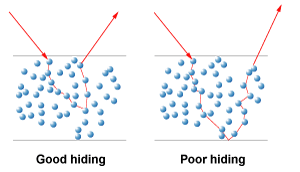
Dark, saturated colors, such as blacks and deep blues, absorb most light falling upon them, whereas yellows do not. However, carbon black and most organic blue pigments are fairly transparent. This is because they do not scatter the light that falls on them. In contrast, titanium dioxide absorbs almost no light. Yet its capacity to scatter light ensures that at a sufficiently high concentration, it will cover the substrate being coated. It is common practice to use a combination of pigments to achieve the best results.
A key factor in the opacity of a pigment is its refractive index (RI), which measures the ability of a substance to bend light. The opacifying effect is proportional to the difference between the refractive index of the pigment and that of the medium in which it is dispersed. This is one of the main reasons why titanium dioxide is now almost universally used as the white pigment in paint.
| Medium | RI |
| Air | 1.0 |
| Water | 1.33 |
| Film Formers | 1.4-1.6 |
| Pigment / Filler | RI |
| Calcium carbonate | 1.58 |
| China clay (aluminium silicate) | 1.56 |
| Talc (magnesium silicate) | 1.55 |
| Barytes (barium sulphate) | 1.64 |
| Lithopone 30% (zinc sulphide/barium sulphate) | 1.84 |
| Zinc oxide | 2.01 |
| Zinc sulphide | 2.37 |
Titanium dioxide: Anatase Rutile | 2.55 2.76 |
| Solve all your problems related to poor pigment and filler dispersion. | |
Inorganic pigments have a high refractive index and organic pigments have much lower values. Consequently, most inorganic pigments are opaque, whereas organic pigments are transparent.
The particle size distribution of the pigment is another factor that plays an important role in opacity. As the particle size increases, the ability of the particle to scatter light increases, up to a maximum. It then starts to decrease. This ability to scatter light increases the hiding power of the pigment. Therefore the hiding power also reaches a maximum and then decreases as the particle size increases.
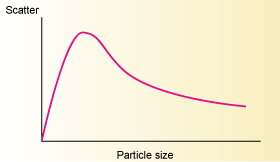
Whereas the refractive index of a compound cannot be altered, the pigment manufacturer can influence the particle size of pigments. Consequently, particle size selection has become one of the principal developments in pigment technology in recent years.
Measurement of opacity: The coating is applied in a wedge shape over a contrast chart. The film thickness is built up over the length of the chart, which is attached to a metal panel. The point at which complete obliteration is observed is noted and the film thickness at that point measured.
Transparency
Usually, transparency is obtained by reducing pigment particle size as much as possible. This is achieved by surrounding the particles as soon as they are formed with a coating, which prevents the growth of crystals. The most common products used for this coating are rosin or rosin derivatives. This is particularly useful for printing ink pigments that are required to have high transparency. It has the added advantage that such pigments are more easily dispersed.
Iron oxide pigments can be opaque or transparent. The transparent variety is an important group of inorganic pigments. This is because they are widely used for metallic finishes where:
- their high level of transparency gives an attractive finish, and
- their weatherability resistance improves the weatherability of pigments with which they can be combined.
This is known as a synergistic effect. Transparent iron oxides depend on the particles being unusually small, and also having a crystal shape. The dispersion process can influence transparency. This is due to the breaking up agglomerates of particles into individual primary particles. However, primary particles are not split up by the dispersion process. All one can do is make full use of the pigment's original particle size. Good dispersion will maximize the transparency of a small particle.
Measuring Transparency: Assessed by applying the coating over a black-and-white contrast chart and measuring the color difference. The greater the color difference, the higher the transparency.
Chemical stability
Resin, crosslinking agents, UV initiators, and any other additives may react with the pigment and alter its performance. When UV-cured coatings were new to the market, some additives reduced their storage stability. This causes the coating to gel in the can. Select pigments for UV-coatings.
A great deal of care must be taken when selecting pigments for powder coatings. The initiator can change the pigment shade and reduce fastness properties. Reputable pigment manufacturers publish data on such systems and can offer assistance in case of difficulties.
Another adverse effect can come from:
- Chemicals that the coating gets in contact with. Water, in the form of condensation, can seriously affect a paint film, particularly in bathrooms and kitchens. Many of the detergents used for cleaning paintwork are harsh. They have an abrasive effect on the pigment. It is essential that if the coating comes in contact with food, the coating is unaffected and the food remains unchanged.
- Many testing processes concerning chemical stability consist of applying the chemical to the surface of the coating. This keeps them in contact for a given time, then measuring the discoloration of the coating and/or the staining of the chemical concerned.
Which properties to consider while selecting pigments?
You should consider the following factors while selecting pigments for your coatings, paints, and ink formulations. Let's take a look at them:
Crystal structure
Pigments can be crystalline or non-crystalline (amorphous).
- In crystalline pigments, the atoms within each molecule are arranged in a well-structured pattern.
- In amorphous pigments, the atoms are randomly arranged.
It is also possible for materials to have several different crystalline forms. This is known as polymorphism.
Color is dependent on these different structures. There exist pigments that have chemically identical entities in different crystal forms. Yet these polymorphic pigments are not suitable for use as a pigment. Examples of such polymorphic pigments include:
- Titanium dioxide
- Phthalocyanine blue, and
- Linear trans quinacridone
Techniques for influencing the desired crystal form and particle distribution are being developed. This is done by pigment manufacturers to optimize the commercial product for end applications.
Particle shape
Particle shape can influence the shade of a pigment and the properties of the paint. The following parameters determine the shape of particles:
- chemical structure,
- crystalline structure, or
- synthesis of a pigment
The primary particles of a pigment may be nodular, spherical, prismatic, acicular, or lamellar. Primary particles are composed of single particles. The smaller these particles, the greater their surface energy. Thus, the more likely it is that they will clump together during manufacturing.
It is not practical to supply pigments in the form of primary particles as they would be more like smoke than powder. In practice, they only exist as the pigment is synthesized. When particles clump during the manufacturing process they form either aggregates or agglomerates.
- Aggregates are connected along crystal boundaries during synthesis or drying. It is difficult to separate them. Hence, pigment manufacturers attempt to avoid their formation during the pigment's production.
- Agglomerates are loose clusters of primary particles. They can break down via an efficient dispersion process. Following this process, it is still possible for particles to re-agglomerate into loosely held groups. These groups are known as flocculates. This commonly occurs when there is a rapid change of state, i.e.,
- Too rapid dilution or
- The addition of an incompatible substance
Flocculation results in a loss of tinctorial strength. However, flocculates are usually easier to separate than true agglomerates. Even normal shear such as brushing out is sufficient for their separation. This result in an uneven increase in tinctorial strength, depending on how much shear has been developing.
One point to note during brushing out is that small particles are more susceptible to flocculation than larger ones. So, pigments at risk are carbon blacks and organic pigments such as phthalocyanine and dioxazine violet pigments. There are an increasing number of flocculation-stable grades being released in the market.
Particle size
Pigment particles are not usually spherical. They can have different dimensions depending on whether one measures the length, width or height. Particle size is an average diameter of primary particles. Typical ranges are:
- Carbon black: 0.01 to 0.08 µm
- Titanium dioxide: 0.22 to 0.24 µm
- Organics: 0.01 to 1.00 µm
- Inorganics: 0.10 to 5.00 µm
Extender pigments can be among the coarsest pigment particles, up to 50 µm. But other types can be exceptionally fine (e.g., the precipitated silicas).
The pigment's particle size can affect its color, hide, and settling characteristics. Large particles usually settle faster than smaller ones, and smaller ones are harder to disperse. Light scattering is also often influenced by pigment size. And the distribution will also affect the colloidal stability and color.
Surface area & oil absorption
The surface area is the total area of the solid surface. The unit of the surface area is square units (m2) and is usually defined as 1 gram of pigment. Typical values for organic pigments are between 10 and 130m2. This surface area is determined by an accepted measurement technique such as the BET (Brunauer, Emmett, and Teller) method using nitrogen adsorption. This technique consists in calculating the adsorption properties of the pigment.
The surface area is closely linked to the pigment's demand for binder. Larger particles have a smaller surface area and therefore a lower demand for binder. As the size of the particle of pigment is small, the surface area becomes large. As a result, the paint needs a large amount of binder to wet each pigment particle during the dispersion process.
Oil absorption is the amount of oil that is required to "wet out" 100 grams of pigment and to make paint. Oil Absorption is expressed in number of grams of oil per 100 grams of pigment (or volume relationship from weight).
This value varies depending on the pigment's physical nature and particle size. The amount of oil affects the time of dryness. In general, the large amount of oil causes yellowing and delay of dryness.
Hardness of the pigments
Hardness is usually based on Mohs Hardness Scale. The hardness of the pigment is measured by comparison with the ten classes of the Mohs scale.
In the absolute scale of the hardness (of Rosiwal), the abrasion resistance is measured with proofs from laboratory, and by attributing to the corindone the value 1000.
Also for the Knoop scale, the values of hardness are absolute. They depend on the depth of the signs engraved on the minerals due to a special utensil with a diamond point, with which a standard of force is applied.
Mineral | Mohs Scale | Rosiwal Scale | Knoop Scale |
| Gold | 0 | - | - |
| Talc | 1 | 0.03 | 1 |
| Gypsum | 2 | 1.25 | 32 |
| Calcite | 3 | 4.5 | 135 |
| Fluorite | 4 | 5 | 163 |
| Apatite | 5 | 6.5 | 430 |
| Orthoclase | 6 | 37 | 560 |
| Quartz | 7 | 120 | 820 |
| Topaz | 8 | 175 | 1340 |
| Corundum | 9 | 1000 | 1800 |
| Diamond | 10 | 140000 | 7000 |
These scales help define how hard a pigment is and if it will be easily abraded. The hardness of the pigment can affect the durability and abrasion resistance of the film. The hardness scales also allow the formulator to better define milling equipment needs and end-use. Some pigments are soft and can be damaged by milling, especially when placed in a ball mill for extended periods of time.
Another point to consider is the pigment's solubility and the effect of solvent on the pigment's hardness and structure.
Quantity of Pigment
The amount of pigment used in paint is determined by:
- the intensity and tinctorial strength
- the required opacity
- the required gloss
- the resistance and durability specified
The paint technologist works on one of two main concepts:
- Pigment volume concentration (PVC) -
- It fundamental concern when formulating paints with optimum durability. There is a critical point that represents the densest packing of the pigment particles. This aligns with the degree of dispersion of the system. For systems requiring high gloss, low PVC is required. Primers and undercoats can have much higher PVC (up to 90%).
- Pigment to binder ratio (P:B) -
- The P:B ratio, by weight or occasionally by volume, is a much simpler calculation. It is often used to assist in formulating a good mill base and for balancing a formulation for gloss and opacity.
Binders used in formulations
The binder in the paint system plays a key role in terms of determining the pigment and the type of solvent in which it is dissolved.
- A common choice for a solvent is water as it is compatible with most polymers, except some toners.
- White spirit is a commonly used solvent for long oil alkyd paints. These are widely used in decorative gloss paints. A large majority of pigments are almost insoluble in white spirit. So, it rarely narrows the choice of pigments.
- Industrial finishes can be based on solvents such as xylene, ketones, and esters. They are very powerful and can dissolve pigments with poor or only moderate resistance to solvents.
It is also necessary to consider whether the coating will be overcoated. For example, in the case of a car getting repaired, the pigment used on the original finish will have to be fast to overcoating.
In powder coatings, crosslinking agents can affect the pigment. Hence, the pigments must be compatible with these agents at temperatures employed during application. It is therefore evident that the type of resin and solvent used remain key factors in the choice of pigment.
Paint performance in end application
An awareness of the end use of the paint is essential, as durability and chemical resistance requirements. The maximum price that can be tolerated for improved performance depends on this knowledge. For example, a low-quality pigment would be insufficient in an automotive finish, just as a high-quality pigment would be unnecessary for use in a gardening tool.
Paints can be classified according to the market in which they are used, such as:
- Building, architectural or decorative
- Automotive finishes, OEM (original equipment manufacturers) or VR (vehicle refinishes), and
- Industrial finishes
In the same way, pigments used in paint do not require the same properties as pigments used for ink applications.
| Find the right pigment grades for your coatings, paints, and ink formulations. You can compare products, access technical datasheets, or request samples with ease. |