

Green Strength, Peel Strength, and Bond Strength: What They Mean and Why They Matter?
Last update on Dec 26, 2024
Adhesives are substances capable of bonding surfaces together, providing a strong and durable bond. Adhesive strength is the stress required for the failure of the adhesive system.
The magnitude of adhesive strength depends not only on the adhesive force, mechanical properties, nature of the adherend, and the bonding process, but also on the joint form and stress condition (type, size, direction, frequency), environmental factors (temperature, humidity, pressure, medium) related to test conditions, and experimental techniques1.
Adhesives play a critical role in industries ranging from aerospace to construction and medical devices. However, picking the right one for your application is not easy - it requires a deep understanding of adhesive performance metrics. Among the key properties to evaluate are:
- Green strength – Measures the initial bond strength of an adhesive before it is fully cured
- Peel strength – Adhesive's resistance to separation under tensile stress
- Bond strength – Ultimate tensile strength an adhesive bond can withstand
Each of these metrics is crucial for ensuring reliability, durability, and efficiency in various applications. It is important to understand the factors influencing these adhesive properties. This includes curing agents, crosslink density, and substrate interactions.
Each element directly impacts the performance of the adhesive, from its initial application to its final durability. A strategic approach to adhesive selection not only ensures strong and reliable bonds but also optimizes production efficiency and product longevity.
Let's have a detailed look.
Green Strength: The Foundation of Reliable Adhesive Bonds
Green strength refers to the initial bond strength of an adhesive before it has fully cured. It is critical for applications where the bonded assembly needs to be handled or subjected to stress immediately after application. A high green strength prevents premature failure. This ensures that the bond can withstand the rigors of subsequent manufacturing processes.2 High green strength enables immediate handling, reduced assembly time, and improved productivity.
The lap shear test is a standard method to assess green strength. A specific amount of adhesive is applied between two overlapping test specimens. The assembly is then subjected to a tensile force until the bond fails. The force required to break the bond is measured and used to calculate the green strength.
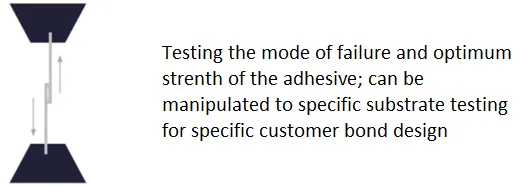
Overlap Shear Testing (ASTM D1002)
Two Samples Bonded Together and Loaded to Test the Lap Shear Strength
Factors affecting green strength
The time it takes for an adhesive to achieve green strength varies widely depending on the specific adhesive type, curing mechanism, and environmental factors such as temperature and humidity.
- Temperature: Higher temperatures can accelerate the curing process, which improves green strength. Whereas, lower temperatures can slow down curing and reduce green strength.
- Curing time: Faster-curing adhesives achieve green strength more quickly, allowing for rapid assembly processes. However, excessively fast curing can sometimes compromise the final bond strength. Generally, reactive adhesives like epoxies and urethanes can achieve green strength within minutes to hours. Epoxy adhesives typically exhibit moderate to high green strength, depending on the specific formulation and curing conditions. Pressure-sensitive adhesives (PSAs) may require longer curing times.
- Curing agents: The choice of curing agents and catalysts can influence the rate of curing and green strength development.
- Tackifiers: Tack is the initial stickiness of an adhesive and is important for initial contact. For example, pressure-sensitive adhesives (PSAs) rely on tack for initial adhesion. However, green strength is still important for ensuring reliable bonding, especially in applications where the adhesive is subjected to immediate stress or handling. A higher green strength can prevent premature bond failure and improve overall performance3. Tackifiers are low molecular weight polymers or resins that enhance the adhesive's stickiness. This allows it to adhere to surfaces before full curing. They contribute significantly to green strength.
- Partially reacted crosslinkers: Initiate the crosslinking process. Thus, forming a network structure that provides initial strength. As curing progresses, more crosslinks form, leading to increased bond strength.
Role of green strength across various industries




Examples of high green strength adhesives
Some examples of adhesives with high green strength include:
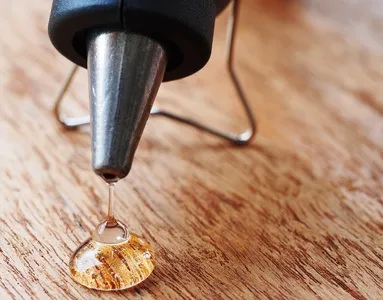
- Hot-melt adhesives: They are melted and applied, quickly solidifying upon cooling. They often exhibit high green strength, allowing for immediate handling and bonding.
- Reactive hot-melt adhesives: Combine the benefits of hot-melt and reactive adhesives. They offer excellent green strength and final bond strength.
- Anaerobic adhesives: Cure in the absence of air, providing rapid bond formation and high green strength.
Peel Strength: Measuring Bond Durability in Adhesives
Peel strength measures the resistance of an adhesive bond to separation under tensile stress. Peel test is a common method where a strip of adhesive tape is applied to a rigid substrate. The tape is then peeled at a 90° angle at a constant rate. The force required to peel the tape is measured and used to calculate the peel strength. It is calculated using the below formula:
Peel strength = Force/Width of the tape
Peel strength is typically measured in units of force per unit width, such as:
- N/m (Newtons per meter),
- lb/in (pounds per inch),
- oz/in (ounces per inch)
T-peel strength is a measurement of the force required to separate two flexible materials that are bonded together. The T-peel test, also known as ASTM D1876, is a standard test method that determines the relative peel resistance of adhesive bonds. The force required to peel the tape is measured and recorded.
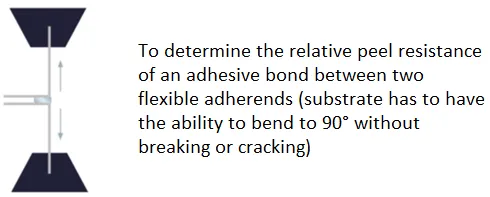
T-Peel Test (ASTM D1876)
Common for Flexible Bonded Materials3
Generally, pressure-sensitive adhesive tapes have peel strengths ranging from a few ounces per inch to several pounds per inch. Peel strength is particularly important for applications involving flexible substrates, such as tapes, labels, and packaging materials. A high peel strength ensures that the adhesive bond remains intact, even when subjected to significant pulling forces.
Chemical basis of peel strength
The chemistry of the adhesive influences peeling. These are explained below:
- Cohesive forces: These are the attractive forces between molecules within the adhesive itself. A strong cohesive force ensures that the adhesive remains intact during the peeling process.
- Adhesive forces: These are the attractive forces between the adhesive and the substrate. Strong adhesive forces enhance the bond strength and contribute to high peel strength.
Adhesive-substrate interactions: Strong interfacial adhesion between the adhesive and the substrate is crucial for high peel strength. This can be achieved through chemical bonding, mechanical interlocking, or a combination of both.

Different Types of Adhesive/Substrates Failure5- Polymer chain flexibility: The flexibility of the polymer chains in the adhesive influences peel strength. More flexible chains can accommodate deformation during peeling, leading to higher peel strength.
Factors affecting peel strength
The peel strength of adhesive tape can vary widely depending on the type of adhesive, the backing material, and the specific application. It depends on several factors, including:
- Adhesive type: Different adhesive types (e.g., acrylic, rubber, silicone) have varying peel strengths.
- Adhesive thickness: A thicker adhesive layer can provide higher peel strength due to increased mechanical interlocking and adhesive volume. However, excessive thickness may lead to longer curing times and reduced flexibility.
- Cure time: The peel strength of an adhesive often increases with curing time. As the adhesive cures, crosslinks form, strengthening the bond, and improving peel resistance.
- Substrate compatibility: The peel strength is influenced by the surface energy and roughness of the substrate.
- Application method: The way the adhesive is applied can affect its peel strength.
- Curing conditions: Generally, higher temperatures can reduce peel strength due to decreased adhesive viscosity. However, the specific effect depends on the adhesive type and the substrate. Other conditions like humidity and pressure can also impact the final bond strength.
Role of peel strength across various adhesive applications



Bond Strength: Ensuring Optimum Adhesive Performance
Bond strength measures the maximum stress an adhesive bond can withstand before failure. It is also known as ultimate tensile strength. It is crucial for applications that require long-term durability and resistance to environmental factors such as temperature, humidity, and chemical exposure. A high bond strength guarantees that the adhesive joint will maintain its integrity over time.
The tensile test is a standard method where the adhesive is applied between two substrates and is allowed to cure. The bonded assembly is mounted in a tensile testing machine. A steadily increasing tensile force is applied to a bonded joint until it fails. The maximum force and elongation at break are measured to calculate the bond strength.
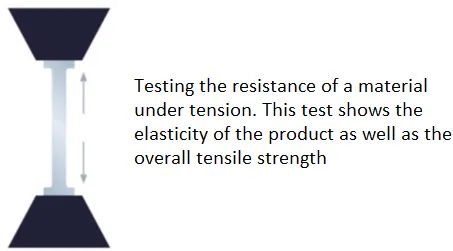
Tensile testing (Dumb-bell) of Adhesive Bonding Strength According to ASTM D412-163
Factors influencing bond strength
The strength of an adhesive bond is a complex interplay of various factors. Three key elements significantly influence bond strength. These are explained in detail below.
Curing agents
Curing agents are essential components in many adhesive systems. They initiate and control the crosslinking reaction, transforming a liquid adhesive into a solid, cured bond. The type and amount of curing agent used can significantly affect the final bond strength.
- Reaction mechanism: Curing agents react with the resin to form crosslinks, creating a three-dimensional network structure. The efficiency of this reaction determines the rate of curing and the ultimate strength of the bond.
- Cure time and temperature: The choice of curing agent influences the required cure time and temperature. Faster-curing agents can reduce production time, while slower-curing agents may be more suitable for applications requiring longer working times.
- Bond strength and durability: The type of curing agent can affect the final properties of the adhesive. This includes its bond strength, thermal resistance, and resistance to environmental factors like moisture and chemicals.
Crosslink density
Crosslink density refers to the number of crosslinks per unit volume of the cured adhesive. A higher crosslink density generally leads to a stronger and more durable bond.
- Mechanical properties: A higher crosslink density improves the mechanical properties of the adhesive. For example, tensile strength, shear strength, and impact resistance.
- Thermal resistance: Crosslinked polymers exhibit higher thermal stability and resistance to degradation at elevated temperatures.
- Chemical resistance: A densely crosslinked network can enhance the resistance of the adhesive to chemicals, solvents, and other environmental factors.
Substrate interaction
The interaction between the adhesive and the substrate plays a crucial role in determining bond strength.
- Surface energy: The surface energy of the substrate influences the wetting behavior of the adhesive. A higher surface energy promotes better adhesion.
- Surface preparation: Proper surface preparation, such as cleaning and priming is essential for optimal adhesion.
- Interfacial bonding: The type of bond formed between the adhesive and the substrate (e.g., mechanical, chemical) affects the bond strength. Strong interfacial bonds contribute to higher overall bond strength.
Role of bond strength across various adhesive applications



Applications Showing the Importance of Each Strength Type
Many applications require adhesives to meet multiple performance criteria. To achieve this, it is essential to balance various properties:
- Strength and durability: High bond strength and durability are crucial for structural applications.
- Flexibility and impact resistance: Flexible adhesives can accommodate thermal expansion and mechanical stress. This improves the durability of the bond.
- Thermal resistance: Thermally stable adhesives are necessary for high-temperature applications to maintain bond integrity.
- Chemical resistance: In harsh environments, chemically resistant adhesives can prevent degradation and bond failure.
- Electrical insulation: Electrically insulating adhesives can protect components and prevent short circuits in electronic applications.
Below are the examples of industries and applications where specific adhesive strengths are prioritized (e.g., automotive, aerospace, consumer goods)9.
| Industry | Green Strength | Peel Strength | Bond Strength |
| Automotive assembly | Part alignment during assembly | Weatherstripping, moldings | Structural components |
| Electronics manufacturing | Quick component handling | Flexible circuits, displays | Component mounting |
| Packaging | High-speed production | Easy-open features | Package integrity |
| Construction | Vertical applications | Floor coverings | Structural panels |
| Medical device manufacturing | Precise component placement | Skin-contact applications | Device durability |
Industries and Applications Prioritizing Different Adhesive Strengths
Criteria to Ensure Long-lasting Bonds
The selection of an appropriate adhesive is a critical decision that significantly impacts the performance and durability of a product. Several factors must be considered to ensure optimal adhesion and long-lasting bonds. These are explained below8.
Substrate compatibility
- Surface energy: The adhesive must have sufficient wettability to adhere to the substrate. High-surface-energy substrates generally bond well with a wide range of adhesives. Whereas, low surface-energy substrates may require special primers or adhesives with strong adhesive forces.
- Porosity: Porous substrates can absorb adhesives, potentially reducing bond strength. Selecting an adhesive with good penetration and curing properties is essential.
- Thermal expansion: Differences in thermal expansion coefficients between the adhesive and substrate can lead to stress and potential bond failure. A flexible adhesive can accommodate these differences.
Application method
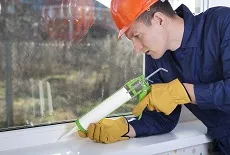
- Dispensing: The chosen adhesive should be compatible with the dispensing method (e.g., syringe, cartridge, spray).
- Film thickness: The required film thickness can influence the choice of adhesive. Thicker films may require longer curing times and higher temperatures.
- Gap filling: If gap filling is necessary, the adhesive must have sufficient flow and curing properties to fill the gap and form a strong bond.
Curing conditions
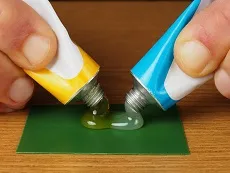
- Temperature: The curing temperature can significantly impact the rate of curing and final bond strength. High-temperature curing can accelerate the curing process but may not be suitable for all substrates.
- Humidity: Humidity can influence the curing reaction and final properties of the adhesive. Some adhesives require specific humidity levels for optimal curing.
- Cure time: The required cure time can vary depending on the application and the desired properties of the adhesive. Fast-curing adhesives are ideal for rapid assembly, while slow-curing adhesives may be better suited for complex geometries or large-scale applications.
Conclusion
Understanding adhesive strength metrics like green strength, peel strength, and bond strength is vital for selecting the right adhesive. A holistic approach, balancing technical metrics with chemical composition, ensures optimal performance. By considering factors such as curing agents, crosslink density, and substrate interactions, formulators can create durable and reliable adhesive solutions for diverse applications. The below table summarizes the differences between green strength, peel strength, and bond strength.4,6,7
| Property | Definition | Measurement Method | Key Factors |
| Green strength | Initial bond strength before full cure | Lap shear test | Tackifiers, partially reacted cross-linkers |
| Peel strength | Resistance to separation under tensile stress | 90° peel test | Adhesive-substrate interactions, polymer chain flexibility |
| Bond strength | Maximum stress a bond can withstand | Tensile test | Cross-linking density, polymer chain length, and molecular weight |
Differences Between Green Strength, Peel Strength, and Bond Strength
- https://eprintspublications.npl.co.uk/3417/1/MGPG72.pdf
- https://www.ellsworth.com/globalassets/literature-library/manufacturer/ellsworth-adhesives/ellsworth-adhesives-guide---adhesive-technical-guide.pdf?srsltid=AfmBOopjduPwgS8tG6TiW-cKbgxQY2168TbY0Q1X1aL_UVfpvHd63OzP
- https://www.designworldonline.com/how-does-heat-affect-lap-shear-strength-in-adhesives/
- ASTM D3167: Standard Test Method for Peel Adhesion of Pressure-Sensitive Tape by 90° Peel Test
- https://tombrowninc.com/blog/understanding-adhesive-failures/
- ASTM D1876: Standard Test Method for Peel Adhesion of Pressure-Sensitive Tape
- ASTM D3167: Standard Test Method for Peel Adhesion of Pressure-Sensitive Tape by 90° Peel Test
- https://www.forgeway.com/learning/blog/how-to-choose-an-adhesive
- https://www.anglo-adhesives.co.uk/blog/what-are-the-key-applications-of-adhesive-materials-and-how-can-anglo-adhesives-services-ltd-help/#:~:text=They%20are%20used%20for%20a,and%20stability%20of%20construction%20projects