

How to Formulate UV-curing Liquid Pressure Sensitive Adhesives?
Last update on Nov 29, 2024
This article was originally published in 2008 and updated in 2024.
Pressure-sensitive adhesives (PSAs) are all around us, bonding everyday items while remaining almost invisible. Among the many types of adhesives, UV-curing PSAs stand out for their efficiency, versatility, and specialized applications. But what makes them so effective? The answer lies in their intricate formulation.
The design and formulation of UV-curing PSAs demand a deep understanding of material properties, such as:
- polymer rheology,
- molecular weight,
- functionality, and
- crosslink density
Each component in the adhesive—from oligomers to monomers and photoinitiators—plays a critical role in determining its final characteristics. These properties can be fine-tuned to meet specific demands, from high shear strength to optimal flexibility.
UV-curing PSAs also offer unparalleled adaptability, making them suitable for diverse industries. For example, electronics, automotive, and packaging. Their ability to bond to challenging substrates, coupled with resistance to heat, chemicals, and aging, highlights their value in applications requiring precision and reliability.
Let's have an in-depth understanding.
Core Components of Liquid UV-curable PSAs
The conventional liquid UV-curable PSA is comprised of four essential components. Each of the components is explained below.
Oligomers
The overall properties of any adhesive crosslinked by radiant energy are determined by the oligomers in the formulation. Oligomers are moderately low molecular weight polymers. Most of these are based on the acrylation of different structures. The acrylation imparts the unsaturation or C=C group to the ends of the oligomer. This serves as the functionality. The oligomer used in PSA applications is generally a multi-functional elastomeric polymer such as an aliphatic urethane acrylate.
Oligomers provide much of the shear strength in the UV PSA formulation. However, the selection of the oligomer will also affect more viscous properties such as tack and peel strength. The high molecular weights and glass transition temperatures are generally well below room temperature to allow the oligomer to offer elastic properties at room temperature. This provides the viscoelasticity required for good tack and adhesion. Other factors that are affected by the choice of oligomer include:
- reactivity,
- creep resistance,
- heat and chemical resistance, and
- color retention
Cost is also an important factor as oligomers often have the greatest weight concentration in an adhesive formulation. In the acrylate family, several possible UV-curing oligomers can be used in PSA formulations. Each of these has certain advantages and disadvantages. Various types of acrylate oligomers are given below.
Epoxy acrylates
Epoxy acrylates are one of the dominant oligomers in the radiation-curable coatings market. In most cases, epoxy acrylates do not have any free epoxy groups left from their synthesis but react through their unsaturation. Within this group of oligomers, there are several major sub-classifications, which are explained in Table 1.
Types Characteristics Aromatic difunctional epoxy acrylates These resins have very low molecular weight, which gives them attractive properties such as high reactivity and low irritation. Aromatic difunctional epoxy acrylates have limited flexibility, and they yellow to a certain extent when exposed to sunlight. They are viscous and need to be thinned with functional monomers. These monomers are potentially hazardous materials. Aliphatic epoxy acrylates These are available as difunctional, trifunctional, or higher types. The difunctional types have good flexibility, reactivity, adhesion, and very low viscosity. Some difunctional types can be diluted with water. The trifunctional or higher types have moderate viscosity and poor flexibility but excellent reactivity. Aliphatic epoxy acrylates have a higher cost than aromatic epoxy acrylates and are generally used in niche applications. Acrylate oil epoxy acrylates These are essentially epoxidized soybean oil acrylates. These resins have low viscosity, low cost, and good wetting properties. They produce relatively flexible coatings. Acrylated oil epoxy acrylates are used mainly to reduce cost. Epoxy novolac acrylates These specialty products are mainly used in the electrical/electronics industry because of their excellent heat and chemical resistance. They provide rigid coatings with relatively high viscosity and high costs.
Table 1: Characteristics of Different Types of Epoxy Acrylate Oligomers
Urethane acrylates
Urethane acrylates are produced by reacting polyisocyanates with hydroxyl alkyl acrylates, usually along with hydroxyl compounds, to produce the desired set of properties. They are the most expensive of the acrylates. The major characteristics that differentiate urethane acrylates are presented in Table 2. As would be expected of a urethane, these properties are determined by the isocyanate and polyol used in its manufacture.
There are many different types of urethane acrylate oligomers having variations in the following parameters.
Properties Characteristics Isocyanate Monoisocyanates are used for monofunctional acrylates only. Diisocyanates are the most widely used and can be divided into aliphatic diisocyanates and aromatic diisocyanates. The incorporation of an aromatic group makes the resulting coating tougher and more rigid. The higher-cost aliphatic diisocyanates are slightly more flexible. They are also non-yellowing. Aliphatic urethane acrylates are used for flexible packaging. Polymeric isocyanates are used for higher functionality urethane acrylates. Polyol The polyol is the backbone of the urethane acrylate. They are essentially polyether or polyester with functionality ranging from two to four. Polyether urethane acrylates are generally more flexible, provide lower cost, and have slightly lower viscosity. Polyester urethane acrylates have less hydrolytic stability but are non-yellowing. Molecular weight For di- and trifunctional urethane acrylate, the polyol modifier determines this property. Functionality Varies from one to six. Lower functionality results in lower reactivity, better flexibility, and lower viscosity. Monofunctional urethane acrylates are low viscosity, specialty products used to improve adhesion to difficult substrates and to improve flexibility. High-functionality products (4 and higher) have niche applications as well. They are used to improve reactivity, chemical resistance, and other physical properties. Because of their high viscosity, they are generally blended with other resins.
Table 2: Differentiating Characteristics of Urethane Acrylates
Polyester acrylates
Polyester acrylates vary in functionality, chemical backbone, and molecular weight. They are generally low-viscosity resins that require no reactive diluents. Polyester acrylates provide performance properties that are different from those of urethane acrylates and epoxy acrylates. The influence of the functionality is similar to that of the urethane acrylates. The chemical backbone has a large influence on properties such as:
- reactivity,
- color stability,
- hardness, etc.
Typically, the higher the molecular weight, the higher the flexibility and viscosity and the lower the reactivity. A disadvantage of some types of polyester acrylate is their irritancy. This is particularly true for low molecular weight, highly reactive resins.
Polyether acrylates
Polyether acrylates have the lowest viscosity of the acrylate resins and are typically used with very little monomer or reactive diluents. They generally have high flexibility but relatively poor water and chemical resistance. To overcome these drawbacks, polyether acrylates are combined with other oligomers or monomers. An interesting property of some polyether acrylates is that they are compatible with water and can be used in water-dilutable systems.
Acrylic acrylates
Acrylic acrylates, like urethane acrylates, have a very versatile chemistry, and many variations are available to the formulator. These resins are often used because of their good adhesion to difficult substrates such as low-surface energy plastics.
Miscellaneous oligomers are generally specialty products that typically comprise of melamine acrylates, silicone acrylates, etc. Other types of radiation-curable resins include unsaturated polyesters dissolved in styrene or acrylics. More recently, polyester resins have appeared in the market in the form of non-acrylic vinyl ether blends.
Monomers
Monomers are primarily used to lower the viscosity of the uncured material and facilitate application. However, they are also used to make adjustments to the formulation, such as improved surface wetting, leveling, and physical properties. Since most oligomers are too viscous to be applied via conventional coating equipment, most radiation-cured formulations are diluted to a viscosity of 100-10,000 cps by adding a lower molecular weight monomer.
Of the possible monomers that can be used, there are primarily two types:
- Monofunctional monomers: Used as a diluent.
- Multifunctional monomers: Used as a diluent and crosslinker. These can be di-, tri-, and poly-functional.
The monomer used as a reactive diluent in a UV-curable resin plays a key role. It affects the cure speed, polymerization extent, and the properties of the final product. The greater the functionality the greater the crosslinking potential of the monomer. In this way, the functional monomers can be used to adjust the properties of the final adhesive and reduce viscosity. The characteristics provided by functionality are summarized in Table 3.
| Functionality | Characteristics | Value | Mechanism |
| Mono- |
|
|
|
| Di- |
|
|
|
| Tri- and Poly- |
|
|
|
Table 3: Characteristics of Radiation-cured Monomers According to Functionality
Let's understand how the monomers affect polymerization and Tg in the below section.
Effect of monomer on polymerization
The influence of monomer chemistry on the polymerization process and the physical properties of the final adhesive are also illustrated in Table 4.
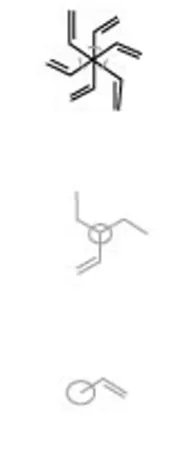
Results in the increase of chemical properties:
• Polymerization rate
• Crosslink density
• Glass transition temperature (Tg)
• Mechanical properties like shear strength
• Hardness
• Chemical-, scratch-, and thermal resistance
• Cure speed
Results in the decrease of chemical properties:
• Final conversion
Results in the decrease of mechanical properties:
• Flexibility
• Elongation at break
Table 4: Influence of Monomer Functionality on the Polymerization Process and Properties of the Final Adhesive2
A balance is generally required between adhesive strength and rigidity. Rigid adhesives have high shear strength and chemical/thermal resistance but exhibit low peel strength. More flexible adhesives have high peel and impact strength and better adhesion to plastic substrates. However, they do not have the heat and chemical resistance of their more densely crosslinked (more rigid) counterparts.
An increase in monomer functionality generally accelerates the curing process but at the expense of the overall monomer conversion. Poor conversion leads to a crosslinked polymer, which contains a substantial amount of residual unsaturation. As a result of increased crosslink density, UV adhesives become more rigid and resistant to chemicals, temperatures, and abrasion. However, they become less flexible and less resistant to impact and thermal cycling.Effect of monomer on glass transition temperature
The effect of monomer on glass transition temperature (which is a result of crosslink density) is an important tool for the formulator. This is because the mechanical properties of the adhesives are strongly influenced by the glass transition temperature (Tg). The table below illustrates the properties of adhesives when the Tg is above or below the service temperature.
Tg above the expected service temperature Tg below the expected service temperature - Rigid and to some extent brittle
- Low impact and peel strength
- Prone to crack propagation
- Low thermal expansion coefficient
- Poor resistance to thermal cycling
- High shear strength
- Low water uptake and swelling and high barrier properties against chemicals and water
- High temperature and chemical resistance
- Flexible with a high degree of elongation
- High peel and impact strength
- Good resistance to thermal cycling
- High thermal expansion coefficient (well suited for plastic substrates)
- High degree of creep when exposed to constant stress
- Poor blocking resistance (tacky)
- High moisture uptake
- Good chemical and temperature resistance
Table 5: Comparison of Adhesive Characteristics when Tg is Above and Below the Service Temperature
The range of radiation-curable reactive monomers offered today is almost unmanageable. Formulators who have to provide optimum product performance at the best cost are sometimes overwhelmed by the vast array of choices. Because there are so many monomers available, it is important to keep in mind some general guidelines.

Figure 1: Four Major Parameters Contributing to Monomer Characteristics
The type and molecular weight of the backbone chain in a monomer can be varied to provide lower skin irritation, better flexibility, and faster cure speeds. Monomers can also be tailored for water-dispersible, adhesion-promoting, and pigment-dispensing applications. In addition to providing the functions noted above, monomers could be used as a chemical intermediate to produce copolymers that enhance performance properties.
Photoinitiators
Photoinitiators absorb light and are responsible for the production of free radicals. Free radicals are high-energy species that induce crosslinking between the unsaturation sites of monomers, oligomers, and polymers. Photoinitiators, sensitizers, and other radiation-sensitive additives may have an effect on the adhesive properties and especially on the processing of the adhesive. Thus, all additives need to be tested with regard to storage, processing properties, and adhesive properties.
Arguably, the most important additive is a photoinitiator for UV-cured adhesives. They are not needed for electronic beam-cured systems because the electrons themselves can initiate crosslinking by their higher energy. A typical photoinitiator for a UV-curable acrylic system is based on an aromatic keto compound. Often more than one photoinitiator is employed to provide for cure with a specific radiation source. The photoinitiator package is also optimized for a given adhesive thickness and UV dosage.
Below is a selected listing of photoinitiator chemicals:
|
|
The photoinitiator determines not only how but also where the cure will occur. A high surface cure photoinitiator, for example, will tend to increase shear properties but destroy the tack of the system. A good through-cure product may leave the surface very tacky but exhibit poor cohesive strength due to the fact that the surfaces are not well crosslinked.
Some of the UV-curable adhesives contain a combination of UV and IR initiators to take advantage of the IR output that many UV lamps generate. At times a photoactive crosslinking agent is used to improve cohesive strength without affecting tack and peel. Table 6 shows an example of a UV-curable formulation.
| Ingredients | Parts by Weight |
| Urethane acrylate | 33 |
| Isobornyl acrylate | 33 |
| Trimethylolpropane triacrylate | 5 |
| Pigment and stabilizer | 5 |
| Photoinitiator | 4 |
Table 6: Typical UV-curable Pressure Sensitive Adhesive Formulation3
An essential requirement of UV-curing is that the adhesive has to be transparent to UV light in order to be cured. Filled or pigmented adhesives may pose a curing challenge. Another disadvantage is that one transparent substrate is normally required, and a limited depth of cure can be achieved. These disadvantages have generally been overcome by the development of dual-cure adhesive systems. In these systems, two independent curing mechanisms are incorporated into a single formulation. The adhesives can be cured first to a chemically stable state by UV radiation and then advanced to a full cure by a second means such as thermal cure.
Additives
Stabilizers
Stabilizers are the most common additives in all UV-cured resins are stabilizers. These prevent gelation in storage and premature curing due to low levels of light exposure.Tackifiers
Tackifiers are required in pressure-sensitive radiation-cured adhesives. They help to improve the tack and pressure-sensitive nature or "stickiness" of the adhesive. Traditionally, these formulations have included tackifiers consisting of solid rosin esters of C-5 and C-9 hydrocarbon resins. However, solid tackifying agents are difficult to incorporate into UV-curable oligomers and monomers without the use of a solvent and/or heat. This is often a time-consuming and expensive process. New low-viscosity oligomers have been developed that claim to provide excellent tack properties without the need for a solid resin additive4.Oxygen scavengers
Oxygen scavengers may be required as oxygen inhibits the curing of acrylates. These act by quenching the photoinitiator or by scavenging free radicals. Scavenging produces stable species that slow down the cure rate but also degrade the properties of the cured adhesive. Other methods of oxygen inhibition are:
- nitrogen blanketing,
- use of high-intensity lamps, and
- varying the initiator type and concentration
Examples of other additives include color pigments and dyes, defoamers, adhesion promoters, flatting agents, wetting agents, slip aids, fillers, antioxidants, and plasticizers. These additives used to improve the performance of radiation-cured adhesives are similar to those that might be found in more conventional adhesives.

Material Requirements for UV-curable PSAs
Formulators must understand the fundamental material properties required for general PSAs and UV-curing PSAs specifically. This will provide them with the tools required to minimize trial-and-error approaches and speed development time. The most important fundamental material properties for PSA applications are discussed in detail below:
Rheology
Rheology is the study of the change in form and flow of a matter. It is generally applied to viscoelastic materials.
- The rheological properties of the uncured adhesive are important for application and coating.
- They are also important in the cured state, as they must be capable of a degree of flow to provide wetting and tack. Yet, it should have sufficient resistance to stress to provide high adhesive strength.
The correct rheological properties for a PSA require a careful balancing of these properties. To counteract the viscous flow, PSAs are based on very high molecular weight rubber polymers. These polymers rely on the entanglement of molecules to restrict flow.
When high-strength, heat, and chemical resistance are required, the entanglements themselves are not sufficient to restrict flow due to service stress. In such cases, the molecules are chemically crosslinked to provide a three-dimensional network structure. This is the function of UV-curing mechanisms.
Molecular weight
In PSAs, the crosslink density or the molecular weight between crosslinks provides a measure of the balance that can be achieved between holding power and viscous flow. This crosslink density can also be measured by the glass transition temperature (Tg) of the adhesive. The higher the glass transition temperature for a specific adhesive, the higher the crosslink density or the lower the molecular weight between crosslinks.
Functionality
The functionality plays an important role in determining crosslink density. The functionality of a polymer is the number of reactive sites contained in the polymer molecule. The reactive sites are the connecting points for crosslinking to take place. Therefore, the higher the functionality, the higher the crosslink density, holding other factors constant.
The above section considers the base polymer in the UV-curing PSA formulation. To further modify the system to provide for the breadth of properties required for a practical adhesive, many additives, and modifiers are also required. Thus, the adhesive formulator has many tools at his disposal. In fact, there are more tools than in conventional PSA formulation. This is primarily due to the effect of UV dosage and possible oxygen inhibition on crosslink density.
Raw Material Concentration to Manufacture UV-curing PSAs
The wide choice of raw materials available to the formulator allows maximum latitude to achieve the desired properties. A typical formulation for a radiation-cured adhesive is provided below.
| Components | Common Concentrations (%) | Functions |
| Oligomer | 25-90 | Film formation, basic properties |
| Monomer (reactive diluent) | 15-60 | Viscosity adjustment, crosslink density |
| Photoinitiators | 1-8 | Initiation |
| Additives | 1-50 | Surfactants, pigments, fillers, stabilizers, etc. |
Table 7: General Components in a UV-cured Adhesive Formulation
With conventional adhesives, the final performance properties are achieved during the resin polymerization process in a reactor. With UV technology, the polymerization takes place during the curing process. Thus, some like to think of radiation-curable adhesives as a compact self-contained polymer factory. Figure 2 illustrates a conventional process for applying and curing a UV-curable adhesive to a backing material for the production of a PSA tape.

Figure 2: Manufacturing of Pressure Sensitive Tape via UV-processing of a Solventless Liquid Adhesive
Conclusion
Pressure-sensitive adhesives (PSAs) are an essential part of daily life, holding things together while staying nearly invisible. Among them, UV-curing PSAs shine for their efficiency and wide range of uses. Their success lies in carefully chosen ingredients like oligomers, monomers, and photoinitiators. Each of its components is fine-tuned for specific needs. With their adaptability and strength, UV-curing PSAs are invaluable in industries like electronics, automotive, and packaging.

- Cationic UV Cured Epoxy Adhesives", SpecialChem4Adhesives.com, 2005
- Schwalm, R., "UV Coatings: Basics, Recent Developments, and New Applications", Elseiver, Amsterdam, 2007, p. 161
- Bluestein, C., Adhesives Age, 25(12), 19-22 (1982)
- Smith, D.A., "New Oligomers Designed to Enhance Formulating UV/EB Pressure Sensitive Adhesives", RadTech Conference Paper, 2002