
Silicone rubber: How to select the right grade?
Last update on Jul 8, 2025
What is silicone rubber?
Silicone rubber is a durable & highly-resistant elastomer (rubber-like material). It is composed of silicone (polymer) containing silicon together with other molecules. These molecules include carbon, hydrogen, and oxygen. Its structure always comprises of:
- Siloxane backbone (silicon-oxygen chain)
- Organic moiety bound to the silicon
Hence, the special features of silicone rubber originate from its unique molecular structure. This structure carries both inorganic and organic groups.

The first commercial silicone rubber was first introduced by Dow Corning in 1943 (now a 100% Dow subsidiary). These rubbers are now manufactured by several companies. View the complete list of silicone rubbers here »
How are silicone rubbers classified based on the organic groups?
The organic groups in silicone rubbers may be methyl, vinyl, phenyl, or other groups. The ASTM D1418 standard covers a system of general nomenclature for rubber and rubber lattices. This classification includes:
- Methyl Group – Also known as dimethylsilicone elastomer/rubber or methyl silicone rubber. It is also referred by MQ.
- Methyl and Phenyl Groups – Also known as methyl-phenylsilicone elastomer/rubber or phenylsilicone rubber. It is also referred by PMQ. It has an excellent low-temperature performance.
- Methyl and Vinyl Groups – Also known as methylvinylsilicone elastomer/rubber. It is also referred by VMQ.
- Methyl, Phenyl and Vinyl Groups – It is referred by PVMQ. It is also known for its excellent low-temperature performance.
- Fluoro, Vinyl and Methyl Groups – Also known as fluorinated rubber or fluorosilicone rubber. It is also referred by FVMQ. They are highly resistant to chemical attacks (fuel, oil, solvent…).
How are silicone rubbers classified based on the molecular structure?
The molecular structure, viscosity, and processing methods are factors for classifying silicone rubbers. They are available in three main forms:
Solid Silicone Rubber or High-Temperature Vulcanized, HTV
Silicone solid rubbers contain polymers with a high molecular weight. They have relatively long polymer chains. They are available in an uncured form. They require traditional rubber processing techniques.
Heat-curable elastomers are higher-viscosity rubbers. They are mixed and processed like other elastomers. They are cured at elevated temperatures by means of organic peroxides or with a platinum catalyst.
Liquid Silicone Rubber, LSR

Liquid silicone rubbers contain polymers of lower molecular weight. They have shorter chains and better flow properties.
- It is a low-viscosity and high-purity thermoset elastomer.
- It maintains mechanical properties over a wide range of temperatures (from -50°C to 250°C).
- This heat-cured elastomer provides:
- excellent optical clarity
- long-term durability in harsh environments (high temperature, UV, etc...)
- design freedom
- It is a low-viscosity and high-purity thermoset elastomer.
- This material highly boosts productivity by:
- decreasing cycle time
- reducing material waste
- using smaller machines
- It is specially processed on injection molding and extrusion equipment.
The main advantage of LSR is the possible integration of multiple parts into one, allowing drastic cost reduction. This innovative transparent material serves diverse applications such as:
- high-power LED lighting
- electronics
- automotive lighting, and many others.
Room Temperature Vulcanized, RTV
RTV silicone rubber is a type of silicone rubber made from one-part (RTV-1) or two-component (RTV-2) systems. Their hardness ranges from very soft to medium. They are available for potting, encapsulations, sealants, etc.
What are the methods to synthesize silicone rubbers?
Overall, silicone rubbers synthesis majorly involves three steps.
- Preparation of chlorosilanes
- Followed by hydrolysis
- Polymerization yielding silicone elastomers
Today, silicones are commercially obtained from chlorosilanes. They are prepared from the direct process of Rochow. The reaction giving chlorosilanes takes place in a fluidized bed. This bed is filled with silicon metal powder. A stream of methyl chloride flows through the bed. This usually takes place at temperatures of 250 to 350°C and at pressures of 1 to 5 bars. A copper-based catalyst is used.
A mixture of different silanes is obtained containing mainly the dimethyldichlorosilane, Me2SiCl2.

Mixture of Different Silanes
(Source: Dow Corning)
The dimethyldichlorosilane is separated via distillation. It is used as the monomer to produce Polydimethylsiloxanes. This is done by the hydrolysis of dimethydichlorosilane in the presence of excess water.

Linear & Cyclic Oligomer Synthesis Silicone Rubber
(Source: Dow Corning)
This heterogeneous and exothermic reaction gives formally a disilanol 'Me2Si(OH)2' [2]. It readily condenses with HCl acting as a catalyst. This reaction gives a mixture of linear [3] or cyclic [4] oligomers by inter- or intramolecular condensation.
The linear and cyclic oligomers obtained by hydrolysis of the dimethyldichlorosilane have short chains for most applications. They must be condensed (linear) or polymerized (cyclic) and crosslinked to obtain elastomers.
What are the properties of silicone rubbers?
The strong Si-O chemical structure and high bond energy give Si Elastomers their unique performance properties. Several benefits of silicone rubbers include:
- Wide service temperature range – excellent thermal and thermoxidative resistance (-Si-O-Si- binding energy is higher than C-C bonds)
- Excellent resistance to attack by oxygen, ozone and sunlight
- Readily resistant to electromagnetic and particle radiation (UV, alpha, beta and gamma rays)
- Excellent non-stick and non-adhesive properties
- Low toxicity
- Flexible at low temperatures due to their low glass transition temperature (Tg).
- Optical transparency
- Good excellent insulation properties
- Low chemical reactivity
- High bio-compatibility
- Excellent mechanical properties (high tear strength, high elongation)
| Embrittlement Point | -60 to 70°C |
| Insulation resistance | 1 - 100 TΩ.m |
| Thermal conductivity | 0.2 W/mΩ.K |
| Volume resistivity | 0.01 - 10 Ω.m |
| Tear Strength | 9.8 kN/m |
| Water vapor permeability | 15 - 51 |
Hence, the properties of silicone rubber can vary greatly depending on the organic groups and molecular structure.
Silicone rubbers can withstand temperatures (-50°C to 350°C) depending on the duration of exposure. Parts made of silicone rubber when exposed to wind, rain, and UV rays for long periods. This results in virtually no change in physical properties. Unlike most organic rubbers, silicone rubber is not affected by ozone as well.
As compared to organic rubber, silicone rubber has a Si-O bond in its structure, and hence, it has better:
- Heat resistance
- Chemical stability
- Electrical insulation
- Abrasion resistance
- Weatherability
- Ozone resistance

Comparison of Properties of Various Rubbers Using Natural Rubber as Reference
(Source: Shin-Etsu Silicone)
How inclusion of additives affect silicone rubbers?
Silicone rubbers generally contain additives to obtain high performance for a desired application.
- Crosslinking - Silicone rubbers are cured/crosslinking either by:
- Peroxide crosslinkers (benzoyl peroxide, 2,4-dichlorobenzoyl peroxide, t-butyl perbenzoate, and dicumyl peroxide) or
- Platinum catalysts resulting in a mechanically stable cured product.
- Fillers - Pyrogenic silica is a reinforcing filler with very high BET surface area. Quartz is a non-reinforcing filler. Used to produce parts with high tear strength or increase conductivity behavior (Carbon black).
- Stabilizers - They are mainly added to silicone rubber to enhance its heat resistance.
- Flame Retardants - Used to increase the fire resistance of silicone rubbers. Such additives include:
- Carbon black
- Aluminum trihydrate
- Zinc
- Platinum, and
- Ceric compounds
- Pigments and colors - Unlike other rubbers, which are black, silicone rubbers offer high transparency options. Hence making it easily colorable with pigments as per application needs.
How to compare between silicone rubber vs. thermoplastics vs. TPEs?
| Comparison With | Silicone Rubber Benefits |
| Latex |
|
| PVC |
|
| Polyurethane & Vinyl |
|
| Thermoplastic Elastomers (TPE) |
|
(Source: Vesta, Inc. )
How to integrate LSR with thermoplastic injection molding?
Injection molding of liquid silicone rubber (LSR) has caught increasing attention of late. Processing requires special equipment and tooling as the LSR is vulcanized under heat.
In addition to an injection molding machine, a metering/mixing system is needed for the two LSR components. A specially designed mold is required to handle the material which is cured to about 160 to 200°C.
Most injection molding machines for LSR use a reciprocating screw injection unit. It functions like thermoplastic injection molding. But the barrel and screw assembly for LSR is specifically designed with a shorter L/D ratio than thermoplastics.
- The two-component LSR material is pumped into the injection unit. This is done using a meter/mix device with a static mixer mounted at the feed throat. This process aids the mixing and/or additives dispersion.
- The LSR is injected into a mold. It is typically heated by four to six electric mold heating zones for each mold half.
- Adequate clamp force must be maintained throughout the molding cycle since, during the 10-100 seconds of curing, LSR will expand in volume by 1-2 percent, which is sufficient to cause flashing.
- Pressure must also be maintained so that material is not permitted to migrate back through the sprue bushing into the nozzle.
Many LSR injection molding machines have water-cooled or insulated plates. This ensures that the high temperature of the mold is not transferred to other areas of the injection molding machine.
LSR Two-Shot Molding
Important advances are being made in the two-shot molding of LSR. This process typically involves injection molding a thermoplastic material such as PBT or nylon followed by co-molding or over-molding with an LSR. It is used for applications such as integrating gaskets into connectors or other similar types.
| Two-Shot LSR Molding Process | |
| LSR / LIM Injection (Thermoset) | Engineered Thermoplastic Injection |
|
|
| LSR/LIM | Thermoplastic Material | |
| Material Type | Thermoset | Thermoplastic |
| Typical Mold Temperatures | 140-220°C | 25-100°C |
| Typical Material Processing Temperatures | 20-30°C | 200-400°C |
| Typical Injection Pressures | 7-35 bar | 70-140 bar |
| Typical Cycle | 30-60 sec | 10-40 sec |
| Cure Time | 25-55 sec | 8-35 sec |
However, the two-shot thermoplastic/LSR process presents certain challenges as the two materials process at significantly different temperatures. This results in a process in which one mold half is heated to cure the LSR, while the other half is cooled.
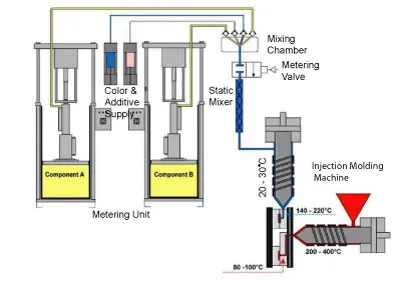
Two-Shot LSR Molding Process
(Source: Momentive)
A key factor for success in this process is thermal separation in the mold. Two separate injection units are required and a rotating table to index the molds or a robot to transfer the moldings from one mold half to the other in order to overmold the thermoplastic with LSR.
Are silicone rubbers recyclable?
Is silicone rubber toxic?
However, some additives used in the production of silicone rubber may have the potential to be harmful if not used properly. Additionally, some forms of silicone rubber may release volatile organic compounds (VOCs) during manufacturing or use. These compounds can be harmful if inhaled in high concentrations.
Popular Applications Where You Can Find Silicone Rubbers
Silicone rubber is a perfect choice of material in applications requiring a working temperature above 100°C (which most rubber cannot withstand). It has high electrical resistance as well as high steam sterilization resistance. Used especially in seals & gaskets, and medical devices. It is a non-toxic material suitable for food contact applications. It also offers high durability and color-matching options. Explore some of the key applications of silicone rubbers in detail.
Automotive
In the automotive industry, key applications of silicone rubber include sealants, gaskets, connectors, spark plug tires, radiators, heat exchangers, water-pump gaskets, engine covers, valve covers, etc. Thanks to its properties such as excellent electrical insulation, heat and chemical resistance, weather ability, tear strength, etc. make it a material of choice in above mentioned automotive applications.
Electrical & Electronics
Main E&E applications of silicone rubbers are cable terminations, connectors, insulators, parts for energy transmission, engine gaskets, control unit gaskets, etc. They are also widely used in lighting applications such as lens molds, reflectors, diffusers, illumination, floodlighting etc. Properties such as their stability with temperature fluctuations as well as excellent aging properties make silicone rubber resistant to kinks and vacuum collapse.
Medical and Healthcare
In medical and health care applications, silicone rubbers are widely used due to their excellent biocompatibility. Their main applications are catheters, tubing, drainage, seals, gaskets, o-rings, valves, membranes, respiratory care, anesthetics, e.g. masks, medical instruments, medical cables, medical textile coating, baby bottle nipples and more.
Consumer Products – Cookware, Food Contact
Silicone Rubbers are non-toxic and food-safe. They are widely used in food processing as well as packaging equipment, drinks wending machines, baking trays and molds, over door profiles, etc. Silicone rubbers are resistant to cooking fats, sterilizing fluids hence making them suitable for these applications.
Leisure
In addition to transparency and high tear strength, silicone rubber parts are pleasant to touch with high skin feel and they are physiologically inert to living tissues. Hence, widely used in applications such as swimming goggles, snorkels, mouthpieces for players, bands, etc. Select silicone rubbers for lesiure applications.
Other than these silicone rubbers parts are widely adapted in aerospace, industrial, semiconductor industries as well.
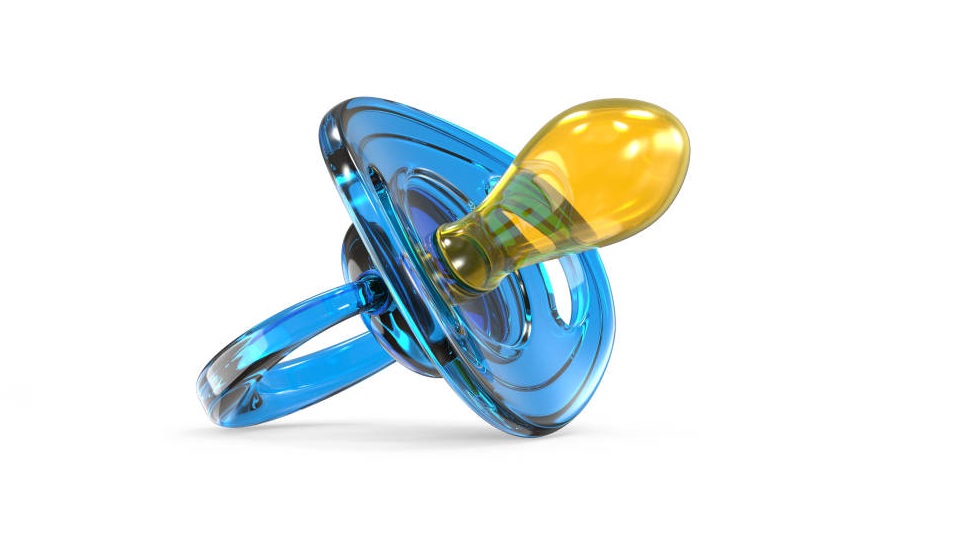
Silicone Rubbers are non-toxic and food safe and are used in baby pacifiers
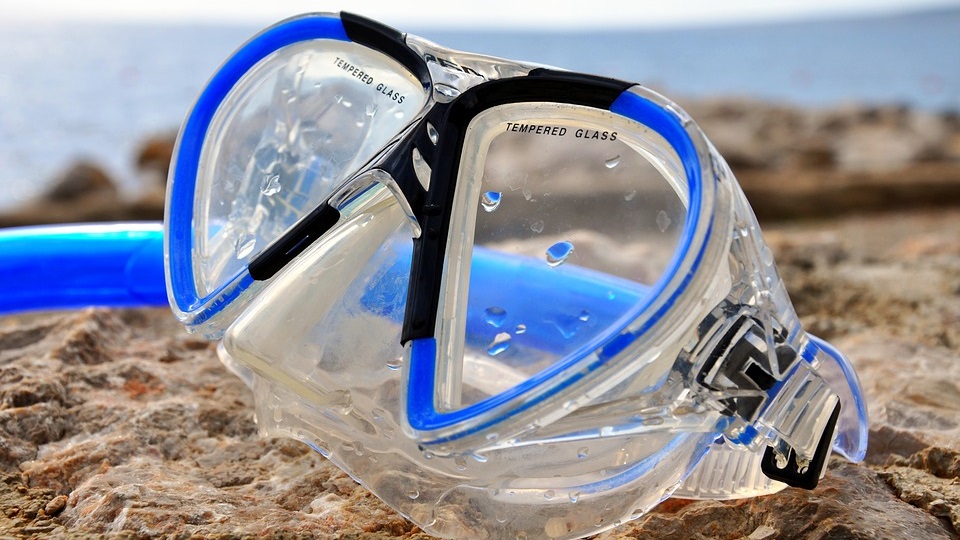
Silicone rubber parts are pleasant to touch with high skin feel
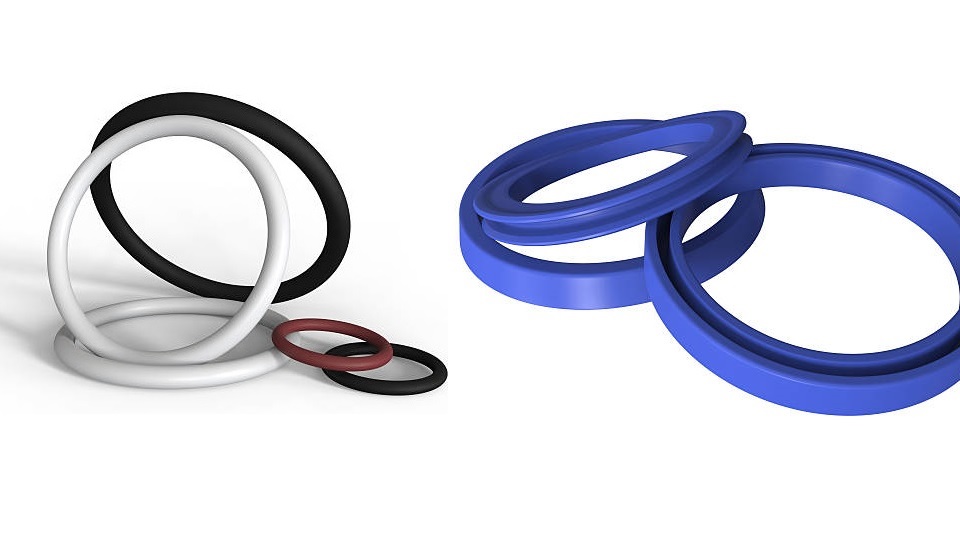
Silicone rubber seals and gaskets offer good weatherability and tear strength