

Polymethyl methacrylate (PMMA or Acrylic): How to select the right grade?
Last update on Jun 11, 2026
Have you ever admired the crystal-clear, shatterproof panels of an aquarium or the sleek façade of a building? Chances are, you are looking at polymethyl methacrylate (PMMA). This thermoplastic has become one of the most reliable materials for applications requiring clarity, strength, and aesthetics.
PMMA offers the transparency of glass with even greater impact resistance. Its UV stability and weathering resistance make it stay clear and durable even in the toughest outdoor environments. However, with numerous options available, picking the right grade for your formulation can be challenging.
So, if you are looking to understand what PMMA really is, how it’s produced, and how to select the best grade for your application, you’re in the right place. Let’s dive into its chemistry, versatility, and limitless design potential of this polymer.
What is PMMA?
Polymethyl methacrylate (PMMA) is a transparent material. It is also known as acrylic or acrylic glass. It is a rigid thermoplastic widely used as a shatterproof replacement for glass.
PMMA has many technical advantages over other transparent polymers (for example, PC and PS). These include:
- high resistance to UV light and weathering,
- excellent light transmission, and
- unlimited coloring options
The strength of the PMMA material is higher than molding grades owing to its extremely high molecular mass. Rubber toughening has been used to increase the toughness of PMMA, which is inherently brittle under applied loads.

How is PMMA produced?
Poly (methyl 2‐methylpropenoate) or PMMA is produced from the monomer methyl methacrylate (MMA). The molecular formula of MMA is C5H8O2. Free-radical polymerization of this monomer occurs when it is in sheet form. This transparent material can also be produced using suspension polymerization.
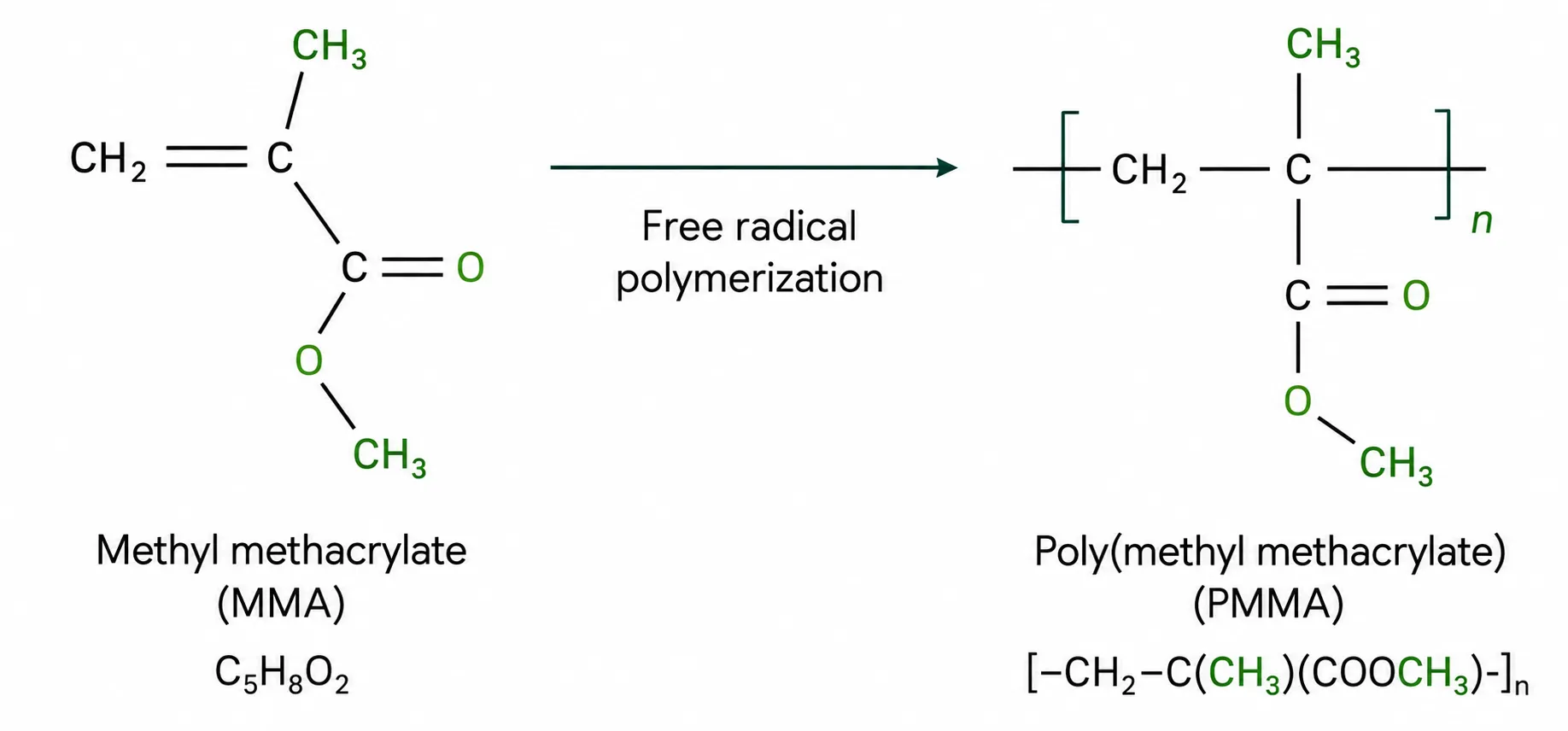
Polymethyl methacrylate polymerization process
Key characteristics of PMMA
PMMA polymer exhibits glass-like qualities at half the weight, with up to 10 times the impact resistance. The properties of PMMA include clarity, brilliance, and transparency. It is more robust and has less risk of damage.

Transmittance
Acrylic polymer has a refractive index of 1.49, thus offering high light transmittance. PMMA allows 92% of light to pass through it, which is more than glass or other plastics. They can be thermoformed without loss in optical clarity. Compared to polystyrene and polyethylene, PMMA is recommended for most outdoor applications due to its environmental stability.

Surface hardness
PMMA is a tough, durable, and lightweight thermoplastic. The density of acrylic ranges between 1.17-1.20 g/cm3, which is half that of glass. It has excellent scratch resistance as compared to other transparent polymers like polycarbonate, but less than glass. It exhibits low moisture and water-absorbing capacity, due to which products made have good dimensional stability.

UV stability
PMMA has high resistance to UV light and weathering. Most commercial acrylic polymers are UV-stabilized for good resistance to prolonged exposure to sunlight. This is because their mechanical and optical properties vary fairly under these conditions. Hence, PMMA is suitable for outdoor applications intended for long-term open-air exposure.

Chemical resistance
Acrylics are unaffected by aqueous solutions of most laboratory chemicals. For example, detergents, cleaners, dilute inorganic acids, alkalis, and aliphatic hydrocarbons. However, acrylics are not recommended for use with chlorinated or aromatic hydrocarbons, esters, or ketones. Want to boost chemical resistance in your polymers? - Find your solution here.
Now that we know the basics of polymethyl methacrylate and its properties, let's look at its chemical types to make an informed choice of the right grade.
PMMA: Types, limitations, & performance enhancement
Types of PMMA based on chemistry
Based on chemistry, several PMMA variants have been developed to enhance performance and processing versatility. Each type modifies the PMMA backbone to achieve specific improvements in properties. For example, higher thermal stability, impact resistance, optical clarity, or chemical durability. The key chemical types of PMMA are explained below.
Polymethyl methacrylimide (PMMI)
Polymethyl methacrylimide is an imidized derivative of PMMA. It is formed through the imidization of MMA units. PMMI increases the glass‐transition temperature and improves dimensional and thermal stability. In transparent molding compounds, PMMI grades can deliver very high heat‐deflection temperatures and enhanced resistance to chemical stress cracking1.
Styrene–methyl methacrylate (SMMA)
Styrene–methyl methacrylate is a copolymer where methyl methacrylate (MMA) is copolymerised with styrene. They are sometimes modified further. They retain high optical clarity, similar to PMMA. However, SMMA offers improved processability, lower moisture absorption, and better stress/crack resistance for certain applications (like lighting, displays, and clear packaging)3.
PMMA alloys/blends
While not always a specific chemical monomer change, these refer to PMMA blended or alloyed with other polymers. They tailor mechanical or surface properties by combining PMMA’s clarity with other polymers’ toughness or heat resistance. An example is a PP/PMMA alloy where PMMA improves surface hardness and gloss. And compatibilizers are used to maintain the structural stability of the blend2.
Looking for the right PMMA grade for your next project? Use the "chemical family" facet on the SpecialChem platform to choose from 500+ commercial PMMA options listed in our master catalog. You can download technical datasheets/request samples with ease!
 |  |  |
Limitations of PMMA
Pure PMMA may not always meet the performance demands of advanced applications. Some of the imitations are listed below.
- Poor impact resistance
- Limited heat resistance (80°C)
- Limited chemical resistance (prone to attack by organic solvents)
- Poor wear and abrasion resistance
- Cracking under load is possible
However, these properties can be significantly enhanced through the incorporation of additives. Additives are selected based on application needs. Let's learn how to overcome the limitations in the next section.
Overcoming the limitations of PMMA
Pure PMMA sometimes does not exhibit property standards. We can overcome the challenges in the properties of PMMA by the incorporation of additives. These additives must meet the demands of specific applications and enhance the properties of PMMA. These include impact resistance, chemical resistance, flame retardancy, light diffusion, UV light filtering, and optical effects.
Let's have a look at the additives that are used in this process:
- Co-monomer methyl acrylate enhances thermal stability by decreasing the tendency to depolymerize during heat processing
- Plasticizers are added to modify the glass transition and impact strength
- Fillers can be added to modify final material properties or improve cost-effectiveness
- Dyes can be added during the polymerization process to provide UV light protection or impart a certain color
In the next section, we will explore how the grades you have selected can be processed using various techniques into final products.
Techniques for PMMA processing
Polymethyl methacrylate is a clear, colorless polymer available in pellet, small granules, and sheet forms. It can be processed by using standard thermoplastic techniques, including:
- injection molding,
- extrusion,
- extrusion blow molding (impact modified acrylics only),
- thermoforming, and
- casting
The highest quality polymethyl methacrylate sheets are produced by cell casting. However, in this case, the polymerization and molding steps occur concurrently. Pre-drying is not necessary if a vented cylinder is used. But if a normal cylinder is used, then PMMA must be processed dry. It is advisable to pre-dry the granules at 70-100°C for up to 8 hours. Surface defects and blisters will form if damp granules are processed.
Injection molding
The injection molding technique allows the processing of PMMA when optimal temperature and pressure conditions are maintained. Careful control of melt and mold temperatures ensures high-quality, stress-free molded parts with excellent clarity and dimensional stability.
The following parameters should be maintained during the injection molding of acrylics.
- Melt temperature: 200-250°C
- Mold temperature: 40-80°C
- High injection pressures are required due to poor flow properties. It may be necessary to inject slowly to get the correct flow.
- Internal stresses can be eliminated by heating at 80°C
Select from 370+ PMMA grades suitable for injection molding from our master catalog
Extrusion
PMMA can be shaped using conventional welding and extrusion techniques. Proper temperature control and screw design are essential to achieve consistent melt quality and optical clarity.
Let's find out the control conditions to be maintained for the extrusion of PMMA grades.
- Extrusion temperature: 180-250°C
- A degassing screw with an L/D ratio of 20:30 is recommended
PMMA can be welded using all plastic welding processes, such as hot‐blade, hot‐gas, ultrasonic, or spin welding.
Due to its transparency and stiffness, PMMA is also used as a 3D printing material. But it requires a slightly higher temperature and is a bit more prone to warping as compared to PLA. PMMA filaments are available in a wide array of colors.
Select from 240+ PMMA grades suitable for extrusion available on our platform
Other processing techniques
Beyond traditional molding and extrusion, PMMA can also be processed using other techniques. This includes options like extrusion blow molding (for impact-modified grades), thermoforming, and casting. These methods help achieve outstanding clarity, smooth finishes, and design freedom across diverse applications. Pre-drying and controlled processing conditions ensure consistent quality and visual appeal.
Use the advanced graphical search option available on our platform. Compare PMMA grades from 500+ commercial options available in our master catalog and start ordering samples suitable for your processing technique:
 |  |  |
 |  |  |
Having covered acrylic processing methods, let’s uncover how sustainable and recyclable it truly is.
Recyclability and safety profile of PMMA
PMMA vs. PC - What is the difference?
Key markets served by PMMAs
- (n.d). Higher Heat Deflection Temperature Under Load. PLEXIGLAS®.
- (2013). PP/PMMA (Polypropylene/Polymethyl Methacrylate) Alloy Material and Preparation Method Thereof. Google Patents.
- (2017). PMMA SMMA Polymethyl Methacrylate & Styrene-Methyl Methacrylate Copolymer. LG MMA.
- Pla.to GmbH. (2024). Recovery of PMMA Production Waste. YouTube. https://www.youtube.com/watch?v=vFdTacklTn4.
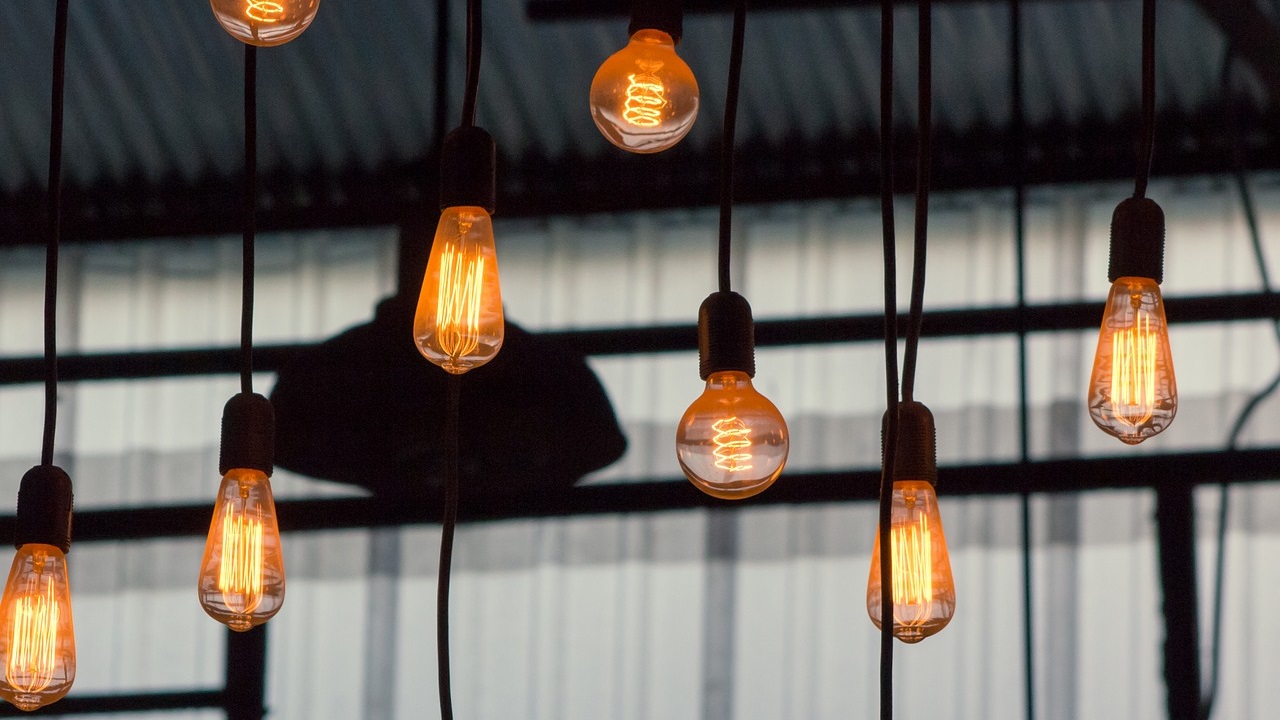
PMMA sheets are used for designing LED lights

PMMA is used to fabricate incubators, drug testing devices, storage cabinets in hospitals and research labs

PMMA is widely used in smartphones display as well as electronic equipment displays