



How to achieve high transparency?
Last update on Jan 14, 2026
Transparency, the quality that allows light to pass through a polymer readily, plays a vital role in many aspects in the world of polymers. Transparency refers to a polymer's ability to transmit light with minimal scattering or absorption. When light encounters a transparent polymer, it passes through with little obstruction, allowing us to see objects clearly on the other side.
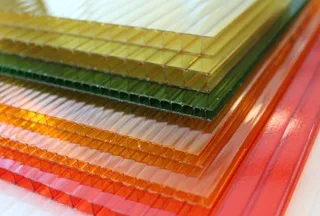
What is light transmittance?
Light transmittance (LT) expresses the percentage of light that passes through a material compared to the amount of light that enters it. Here's how it relates to the concept of transparency:
- High LT value (typically above 80%) indicates significant light transmission, making it highly transparent. You can easily see through the material with minimal distortion.
- Low LT value (often below 20%) allows very little light to pass through, making it opaque or nearly so. You cannot see through the material clearly.
- Moderate LT value (20–80%) represents materials with varying degrees of translucence. Some light may pass through, but the material might appear hazy or partially see-through.
Factors affecting transparency
Several key factors influence a polymer's level of transparency:
- Crystallinity: Highly crystalline (i.e. more opaque) polymers, where polymer chains are tightly packed in an ordered arrangement, tend to be more opaque. This ordered structure scatters light, reducing its ability to pass through effectively.
- Surface roughness: Rough surfaces can disrupt the passage of light, leading to a hazy appearance and reduced transparency. Conversely, a smooth surface allows for clearer light transmission.
- Wavelength of light: The transparency of a polymer can vary depending on the specific wavelength of light. Some polymers might be transparent to visible light but appear opaque to ultraviolet (UV) radiation.
- Wall thickness: This is the distance between the plastic wall and the object behind it. The longer the distance, the more shattering there is.
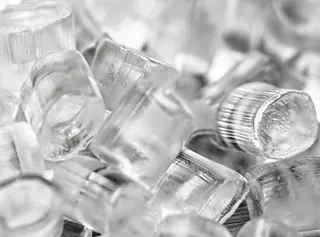
Image credits: RecyclingInside1
Most popular polymers in this segment
Visible After Login Visible After Login Visible After Login Visible After Login Visible After Login Visible After Login Visible After Login
Visible After Login Visible After Login Visible After Login Visible After Login Visible After Login Visible After Login Visible After Login Visible After Login
Visible After Login Visible After Login Visible After Login Visible After Login Visible After Login Visible After Login Visible After LoginVisible After Login
Polymer selection & part design for transparency
Visible After Login Visible After Login Visible After Login Visible After Login Visible After Login Visible After Login Visible After Login
Visible After Login Visible After Login Visible After Login Visible After Login Visible After Login Visible After Login Visible After Login Visible After Login
Visible After Login Visible After Login Visible After Login Visible After Login Visible After Login Visible After Login Visible After LoginVisible After Login