

Demand for Medical Grade Plastics Driven by Light-weighting Efforts
Last update on Jul 19, 2018
The global medical plastics industry has registered an exorbitant growth due to development of advanced grade plastics. Replacement of conventional materials such as steel, aluminum, and metals by advanced plastics is expected to translate into the growth of the medical plastics.
The major replacement for the medical grade plastics in the healthcare industry has been observed in the following components:
- Surgical Instruments
- Medical Devices
- Medical Grade Packaging
- Surgical Implants
Medical polymers are regulated by numerous agencies across the globe. In Europe, medical devices fall under the EU Council Directive (93/42/EEC), which provides guidance for their consumption. The industry is heavily guarded and regulated due to the highly critical nature of their usage. Some of the regulations are listed as below:
- Restriction of Hazardous Substances (RoHS) Directive, 2011/65/EU
- Packaging and Packaging Waste Directive, 94/62/EC
- REACH Regulation, No. 1907/2006
- CE mark regulation
Despite being a highly regulated industry, there has been an increasing demand for medical grade plastics.
Let's take a look at the advanced that are replacing the convention materials in the industry today!
New & Advanced Grade Plastics - The Way Forward for the Companies
The global medical plastics market is subject to multiple technological advancements pertaining to the production of advanced plastics for use in the healthcare industry. The companies in the market resort to new product developments as one of the major strategies to achieve market growth. Some of the major new product introduction for the medical grade plastics has been summarized as follows:
- In May 2018, SABIC launched glass reinforced polycarbonate materials under the trade name THERMOCOMP™ HMD-D, that can efficiently replace metal components in the healthcare industry. The product is expected to be used increasingly for the production of various components of the equipment used in the healthcare industry.
- In April 2018, BASF SE announced the introduction of Ellastollan® TPU, advanced grade thermoplastic polyurethane used for the manufacture of components of medical devices. The product offers high mechanical strength and flexibility, which is expected to drive demand.
- In April 2018, Teknor Apex Company launched a range of advanced grade thermoplastic elastomers (TPEs) for use primarily in the production of plunger stoppers in syringes with an aim to increase the market share through enhanced syringe function through a uniform travel force due to a low coefficient of friction.
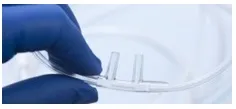
- Covestro launched a superior grade polycarbonate material under the brand name Makrolon® Rx3440, for use primarily in luers and intravenous connectors. The product is said to offer superior durability and chemical resistance to the solvents used in drug deliveries.
- In February 2018, Eastman Chemicals launched disinfectant ready co-polyester marketed under the trade name MXF221 which can be used for the production of medical components such as syringes, minimally invasive surgical instruments, non-implantable devices, blood contact instruments, IV components, etc. The wide application scope of the materials is expected to result in a high product demand leading to the increase in the revenue of the company.
- In January 2018, Kraiburg TPE introduced a new range of THERMOLAST® M TPE compounds that provide superior biocompatibility and have been used for the manufacture of products such as Ophthalmic Squeeze Dispenser (OSD) manufactured by Aptar Pharma.
- In December 2017, Solvay announced a new range of polyetheretherketone (PEEK) products marketed under the name Zeniva® ZA-600 CF30. The product is expected to find a high demand for the production of implantable devices.
- In October 2017, Solvay launched a range of medical grade specialty polymers including engineered plastics such as PEEK and polysulfone, with the materials exhibiting superior compatibility with gamma irradiation for the sterilization process.
- In May 2017, Colorite (Tekni-Plex) launched a range of TPE compounds as an alternative to rubber compounds. The product finds high application scope in the production of medical devices.
Let's examine the major factors influencing the growth of medical industry:
Growth of the Medical Device Industry
Plastic including polyethylene, polyvinylchloride,polypropylene, and engineering plastics are increasingly being used in the manufacturing of medical devices. The growth of the home healthcare market on account of low costs as compared to hospital care and intensive care has resulted in a rise in the demand for medical devices.
The key factors influencing the demand for medical devices are:
- Availability
- Awareness
- Affordability
- Adaptability

Global Medical Plastics Market share by Region, 2016 (%)
According to the report published by Grand View Research, Asia Pacific accounted for over 27% share in 2016 and is expected to witness the fastest growth over the forecast period. The presence of major economies with high healthcare costs and increasing government expenditure on public & private health systems is expected to positively impact the market growth.
The increasing private participation in the healthcare industry to improve healthcare services and infrastructure and offer high-quality treatment in countries such as China, Japan, India, Singapore and Australia is expected to drive market growth.
In terms of production, Europe accounts for the second largest share in the global medical device market. Robust medical infrastructure coupled with the presence of large pharmaceutical multinational companies is expected to propel the demand for these devices. Western Europe accounted for the majority market share in Europe, accounting for over 80% in 2016. However, improving medical infrastructure in Central & Eastern Europe coupled with growing investments in R&D by major manufacturers in the region is expected to propel growth over the projected period.
Rise in Global Healthcare Expenditure
As per the World Health Organization, the global healthcare expenditure is expected to rise from USD 7.2 trillion in 2013 to over USD 9.3 trillion in 2018. The rise is expected to be fueled by the economic recovery of the effects of the recession leading to a rise in the healthcare spending. In addition, the some of the major reasons expected to fuel the global healthcare expenditure can be listed as follows:
- The growing needs of the aging population (65 years of age or above)
- The rise in the prevalence of chronic disorders and diseases
- Infrastructure improvements
- Technological advancements

U.S. Medical Plastics Market Revenue, 2014-2025 (USD Million)
The U.S. medical plastics industry was dominated by the medical components segment, in 2016, having accounted for 636.9-kilotons of the product. The volume consumption in this segment is expected to increase to 1,057.8 kilotons by 2025, growing at a CAGR of 5.9% during the forecast period, according to the report published by Grand View Research. The growing number of insured individuals in the country, along with the resultant demand for medical devices, is expected to have positive impacts on the segment growth during the forecast years.
The rapid growth of the pharmaceutical industries in the U.S. is expected to impact the growth in the economy, mainly on account of the resultant demand for the product in pharmaceutical packaging. In addition, high levels of public healthcare expenditure coupled with government investments in the economy are expected to drive the market growth.
The demand for highly durable products such as PETG and ABS owing to ease of sterilization coupled with superior barrier properties is expected to drive the orthopedic implants packaging plastics segment to grow at a CAGR of 5.3% from 2017 to 2025. In addition, the segment is likely to grow in the wake of the growing prevalence of the orthopedic surgeries.
The orthopedic soft goods segment exhibits a high demand for PEEK and propylene plastics. Due to high strength coupled with superior resistance against adverse environmental conditions. In addition, the demand for the plastic is expected to grow in the wake of rising efforts of the orthopedic goods manufacturers towards the reduction in the overall weight of the products.
Presence of a Number of Companies Results in a Highly Competitive Market
The medical plastics market is highly competitive with the presence of a number of companies across the major economies. The companies in the market are involved in the production of various grades of medical plastics for use in various market applications. The market players are involved in the production of differentiated products with differentiation provided in terms of the performance characteristics of the plastics.
The companies are also involved in research and development pertaining to the development of advanced products through high volume investments. The major companies in the medical plastics industry market their products as high technology advanced solutions to attract the consumers. In additions, such companies provide the plastics at a discounted rate to the major consumers in order to attract the consumers.
Companies in the market employ strategies such as the development of new advanced plastics to facilitate substitution of traditionally used materials. Mergers and acquisitions to facilitate the increase in geographical reach are one of the major market characteristics. In addition, major market players invest a high proportion of their revenues towards research and development in a bid to improve the sales.
Source: www.grandviewresearch.com