

Top Food Packaging Barrier Innovations for New Opportunities!
Last update on Apr 18, 2023
It had to happen eventually! A specialty materials company, U.S. California-based Cove, has developed a barrier-proof, a bioplastic water bottle that will easily disintegrate in 90 days in an industrial compost facility and well less than five years if left outside. The bottle and cap are molded of PolyHydroxyAlkanoate (PHA) bioplastic, a barrier material that is currently growing at 5.5% annually.
The bottle has been selling since December for $2.99 at six Erewhon specialty grocery stores, throughout the Los Angeles area. Cove's PHA is certified by TÜV Austria in marine, soil, and freshwater environments, as well as for composting industrially and at home.

World's First Biodegradable PHA Water Bottle by Cove
Increasing demand for fresh and quality packaged food, consumer convenience, and manufacturers concern for the longer shelf life of food products are driving the market for global advanced packaging technology for the food and beverage market. Growing demand for convenience foods and 'ready to meals' created by busier lifestyles and increased disposable income are reflected in the high growth in food packaging. Number one with the public is food safety, and active or barrier packaging that can help prevent spoilage or contamination is in strong demand.
Consumers want easy-to-open, see-through, economical packaging that also protects against oxygen, water vapor, and aromas. European Food Safety Authority (EFSA), government policy and regulations are also impacting barrier plastic packaging design. There is increasing focus on meeting the environmental and of packaging end users.

Top Food Packaging Barrier Innovations for New Opportunities
Let's review two barrier packaging materials, one processing development, and two application technologies, respectively.
LyondellBasell & Partners Develop Renewable Polypropylene Yogurt Cups
To start with, four companies - LyondellBasell/Neste/Fernholz/Illig - have jointly developed high renewable content, high CO2 barrier, food-grade PolyPropylene (PP) yogurt cups that are identical in quality and process to totally fossil fuel-based, thermoformed package equivalents. LyondellBasell sources renewable content feedstock from Neste and produces the PP resin, which is then extruded into a sheet by Fernholz, and finally goes to machinery producer Illig to thermoform the finished yogurt cup.

LyondellBasell, Neste, Fernholz, and Illig's High CO2 Barrier, Renewable Content PP Yogurt Cups
NEXTLOOPP Transforms Recycled Polypropylene Into Food Grade Packaging
Concluding in the material technology area, the British-based NEXTLOOPP project has as its goal to circularly transform recycled PolyPropylene (rPP) into high, value-added, food-grade packaging. Current rPP usage is limited to higher carbon footprint alternatives such as chemical recycling or waste-to-energy processes.
The NEXTLOOPP partners have successfully, with 30% rPP content, molded 500-gram dairy spread tubs and accompanying thermoformed lids. The high-quality rPP resin is contaminant free and does not change food taste, odor, or composition, while also providing excellent surface aesthetics and ease of processing. NEXTLOOPP has submitted rPP food-grade samples for approval to the European Food Safety Authority (EFSA) and the U.S.-based Food and Drug Administration (FDA).
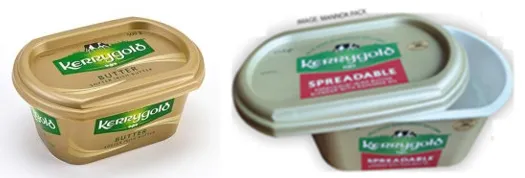
NEXTLOOPP's Food-Grade rPP Resin Developed for Dairy Spread Tubs and Lids
Sipa’s High Oxygen Barrier for Blow Molded PET Wine Bottles
Next, let's center our attention on our single-barrier packaging process development. The blow molding specialty equipment supplier Sipa SpA from Venice, Italy has developed high oxygen barrier, PolyEthylene Terephthalate (PET), 'La Spumante' branded, sparkling wine bottle. PET wine bottles are growing fast in Italy, Germany, and France, replacing traditional glass counterparts.
Unlike heavier glass, PET bottles are totally transparent, largely unbreakable, lighter in weight reducing transport cost, and much lower in energy usage in manufacturing, which has been confirmed by Life Cycle Analysis (LCA). Sipa produces its wine bottles on a four-station injection stretch blow molding machine. It is rotational servo motor controlled, which in turn dramatically reduces energy consumption on the order of 500+ kilograms by weight. It also can be supplied with a mold changing station that reduces mold changing time to a very low 2.5 hours between mold changes.

Sipa SpA's PET Blow Molded Sparkling Wine Bottle (L) and Traditional Glass Bottle (R)
Toppan Offers Recyclable Polypropylene Films for Mono-material Packages
Finally, let's delve further into two barrier packaging applications. Let's start here by turning our attention to a Japanese firm Toppan which has commercialized a high oxygen and water barrier, recyclable, transparent, PolyPropylene (PP) film for mono-material, retort capable, pouch-type packages.
Their GL Barrier product line provides both a unique heat and water resistance combination for liquid food products, normally very challenging to attain in traditional PP films. Equally important is that the GL Barrier film reduces carbon dioxide emissions by 25%, so it is well positioned to replace multilaminate plastic/aluminum foil packages, allowing it to be microwave, and retort sterilizable.

Toppan's Recyclable Mono-material PP Barrier Packaging for Retort Sterilization
Cocoa Canopy Uses NatureFlex’s Cellulose Plastic for Chocolate Packaging
Let's now conclude with our second and final barrier packaging application example, NatureFlex's renewable and compostable cellulose plastic has been selected by British-based Cocoa Canopy for their luxury brand chocolate packaging. NatureFlex cellulose plastic is both environmentally novel and has been adapted to high-speed bagging lines to stock supermarket shelves, in collaboration with film extruder Futurama and bagging machinery company BW Flexibles.
Cocoa Canopy's cocoa beans are grown in sustainable farming communities in concert with the Rainforest Alliance program. NatureFlex cellulose is fully certified for home and industrial composting after use. Cocoa Canopy's film is ideal for chocolate packaging due to it providing:
- a high barrier to water vapor/gases/aroma,
- a wide color range for store shelf differentiation,
- strong sealing/dead folding capability, and
- tailorable moisture barriers for specific chocolate product type needs and excellent gloss/clarity/printability.

Cocoa Canopy's NatureFlex Renewable and Compostable Cellulose Chocolate Packaging
Multi-layer, Recyclable, and Oxygen Barrier Material Advances in 2022
DSM, SABIC & Partners Develop Sustainable Meat Casing Using PCR Content –
DSM, SABIC and related partners have developed a multi-layer barrier casing for meat products that uses post-consumer plastics. SABIC's certified circular PolyEthylene (PE) from its TRUCIRCLE™ portfolio and a circular Akulon® CRC-MB PolyAmide (PA, Nylon) from DSM Engineering Materials have been manufactured by extruder Viscofan into a high performance, multi-layer, sustainable, fresh food packaging film.

SABIC & Partners' Multi-Layer Barrier Film Meat Casing
RKW & SAES Produce Recyclable Polyethylene for Food Packaging Films –
RKW, a packaging film extruder, and SAES Coated Films, a coatings manufacturer, have teamed up to create a novel, recyclable, mono-material, PolyEthylene (PE), high barrier packaging film. This new product is positioned to counter the traditional solution here, which is multi-layer films that are difficult or near impossible to recycle. It is showing up in zip-style stand-up food pouches. The film is quite capable of replacing multi-material film substrates like stiff polyesters and nylon that are often laminated to PE.

RKW and SAES' Mono-Material PE Food Packaging Film
SP Group & Nurel Produce Compostable Films for Food Products –
Specialty film extruder SP Group and Nurel Biopolymers have jointly commercialized a compostable, high oxygen barrier multi-layer film. This development represents another approach to accomplishing the recycling of complex, multi-material, barrier film packaging. This compostable film is currently targeted at refrigerated or dry food products such as salmon, nuts, salt, and energy bar packages. The film incorporates Nurel's INZEA® biopolymers. The SP Group extrudes this bioplastic on traditional blown film equipment for high transparency, high compostability, and high oxygen barrier.

SP Group and Nurel's INZEA® Bioplastic Compostable Barrier Film
Gipfelpuls Uses Innovia's Propafilm™ Strata in Snack Bar Wrapping –
Innovia Films has commercialized a new Propafilm™ Strata film, which is called SLF. It is transparent and possesses outstanding barrier levels to oxygen, moisture, aroma and mineral oils. It also has a wide temperature sealing range, rendering it ideal for use on high-speed form, fill, seal packaging equipment for snack food, bakery, biscuits, and confectionery food products. Specialty extruder Gipfelpuls has developed a 60% filled nut snack film package that combines berries, fruits, seeds, in addition to nuts in spherically shaped clusters. Superior aroma and oxygen barriers maintain the nut product in a very fresh condition.

Gipfelpuls Uses Innovia's Propafilm™ Strata in Snack Bar WrappingPlacon's Recyclable Oxygen Barrier Material for PET Packaging –
Film extruder Placon has developed OxyStar™, a recyclable oxygen barrier material, used in thermoformed PolyEthylene Terephthalate (PET) packaging. OxyStar™ has found use in high vitamin C meats and cheeses as well as high-fat oils and nuts. Whereas most barrier materials are classified #7 unrecyclable, OxyStar™ is designated #1 recyclable, allowing it to be placed in the standard PET regrind stream. The oxygen scavenging additive binds oxygen molecules into the thermoformed PET sidewall, keeping the packaged product fresher longer.

Placon's OxyStar™ Recyclable PET Barrier Material
Explore All Polymers Suitable for Food Packaging Application
View a wide range of food packaging plastics available in the market today, analyze technical data of each product, get technical assistance or request samples.