
Polyetherimide (PEI): How to select the right grade?
Last update on Jul 9, 2025
Polyether imide, often abbreviated as PEI, belongs to the family of amorphous thermoplastics. The top two features of PEI include high-temperature resistance and exceptional mechanical strength. These make PEI valuable in aerospace, automotive, electronics, and other industries.
Several PEI grades available in the market today have:
- Diverse property range and application-specific requirements
- Different processing requirements and mold design
By selecting the right PEI grade, you can optimize product performance, reduce costs, and improve manufacturing.
In this guide, we will highlight the key properties of PEI which make it an ideal choice in high-end engineering applications. Also, discover the sustainability initiatives that you can make to create greener PEI options that lead to improved fuel efficiency and reduced emissions.
What is Polyetherimide (PEI)?
Polyetherimide (PEI) is an amorphous engineering thermoplastic known to exhibit high-temperature resistance and outstanding mechanical and electrical properties. PEI has a Tg of 217°C.
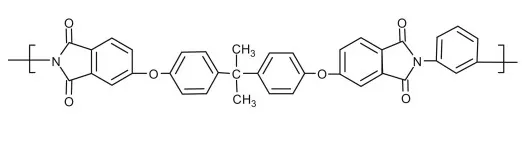
- Molecular Formula: [C37H24O6N2]
- Molecular weight: 592.61 g/g-mol
This high-performance polymer also exhibits high tensile strength, good flame resistance, and low smoke emission making it an ideal material of choice in automotive, electrical, medical, and other industrial applications.
Polyetherimide was first developed in 1982 by General Electric Company (now known as SABIC) under the trade name ULTEM™ resin. Today, PEI is manufactured by 30+ suppliers. Select over 550+ Polyether imide (PEI) grades in our database.
Molecular structure of PEI
The characteristic group of polyether imides is the imide or –C=ONC=O- group.
Incorporating the proper ether linkages into the polyimide molecular chain provides sufficient flexibility to allow good melt processibility yet retains aromatic imide characteristics of excellent mechanical and thermal properties.
- Imides impart high temperature performance
- Ether groups allow melt processing
How does PEI overcome challenges associated with polyimides?
Polyether imides are a relatively new class of specialty plastic materials that are characterized by:
- High strength-to-weight ratio
- Thermo-oxidative stability
- Excellent mechanical properties
- High temperatures resistance and more…
Polyetherimides have been developed to overcome challenges associated with polyimides i.e. this polymer family is not readily melt processable, and finished parts tend to be rather expensive.
Synthesis of Polyetherimide
PEI is produced via the polycondensation reaction between aromatic dianhydrides and aromatic diamines.Here's a basic outline of the steps involved in the synthesis of PEI process:
Dissolution of raw materials
The raw materials involved in the synthesis of PEI include:
- Aromatic anhydride: Bisphenol-A dianhydride such as tetracarboxylic dianhydride. Produced from the reaction of bisphenol A and phthalic anhydride.
- Aromatic diamine such as m-phenylene diamine
These raw materials are dissolved in a polar aprotic solvent. This step brings the reactants into close proximity and allows better molecular interaction.
Initial reaction - Formation of amic acid
As the mixture is heated, the amine groups of the diamine attack the carbonyl carbon of the dianhydride. This nucleophilic addition opens the anhydride ring, forming an amic acid intermediate. This step occurs for both ends of the dianhydride molecule.
Polymerization - Chain growth
The amic acid formation continues along the length of the growing polymer chain. Each diamine molecule can react with two dianhydride molecules, and each dianhydride can react with two diamine molecules, leading to linear chain growth.
Imidization - Ring closure
As the reaction continues at a high temperature, the amic acid undergoes cyclodehydration (loss of water) to form the imide ring. This step is crucial for forming the final polyetherimide structure.

Polycondensation Reaction Between Aromatic Dianhydrides and Aromatic Diamines
This is the final step of the PEI synthesis process. The early laboratory process involved a costly and difficult synthesis. Further development resulted in several breakthroughs that led to a simplified, cost-effective production process.
Performance Profile of PEI
Take a look at the parameters you must consider before selecting the right PEI grade.
Chemical resistance
- Polyetherimide is resistant to alcohols, acids, bases, and solvents.
- PEI shows resistance to hydrocarbon solvents but dissolves in partially halogenated solvents.
- Some PEI grades can be attacked by polar chlorinated solvents, aromatic hydrocarbons, acetates, etc. leading to stress cracking.
| Chemical | ULTEM™ | PES | PSU | PPSU |
| Aromatic Hydrocarbons | 3 | 1 | 1 | 4 |
| Aliphatic Hydrocarbons | 10 | 10 | 7 | 10 |
| Chlorinated Hydrocarbons | 3 | 3 | 1 | 5 |
| Alcohols | 10 | 7 | 7 | 10 |
| Inorganic Base | 1 | 10 | 10 | 10 |
| Acetates / Ketones | 4 | 1 | 1 | 4 |
| Acids | 7 | 7 | 7 | 7 |
Chemical Resistance Performance of PEI with Different Sulfone Polymers
Thermal properties
- Polyether imide resin is characterized by high deflection temperature (200°C at 264 psi).
- PEI also displays good hydrolytic stability.
- PEI has a high limiting oxygen index of 47, combined with NBS smoke chamber results which show the lowest specific optical density of any unfilled thermoplastic.
- PEI is inherently flame resistant without the use of additives. Most of the PEI grades have a UL94 flame resistance rating of VTM-0.
- The high-temperature resistance of Polyetherimide competes with polyketones, polysulfones, and polyphenylene sulfide.
Mechanical properties
- PEI grades have high tensile strength, stiffness, impact strength, and flexural modulus (480,000 psi).
- They have a very good retention of mechanical properties at elevated temperatures.
- They have a unique combination of high specific strength, rigidity, flexibility, exceptional dimensional strength, etc.
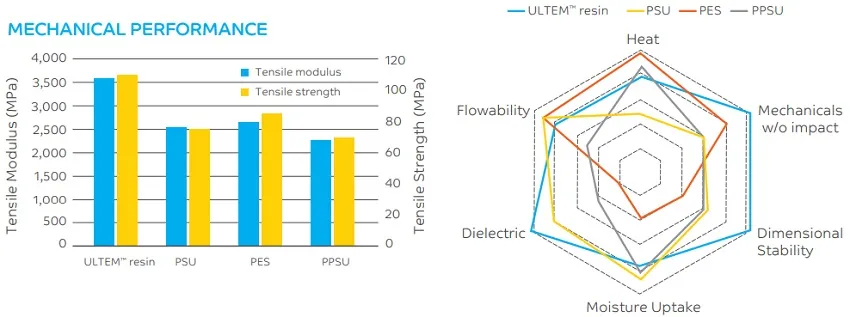
Polyetherimide (PEI) Performance Versus Sulfone Polymers (Source: SABIC)
Physical properties
- PEI is an amorphous thermoplastic resin with amber transparency.
- PEI has good UV-light resistance and weatherability.
- PEI has low shrinkage, good dimensional stability, and good flow.
- PEI grades can undergo sterilization through autoclave, electron beam, ethylene oxide, and gamma radiation.
Electrical properties
- PEI resin exhibits good electrical properties, which remain stable over a wide range of temperatures and frequencies (including microwave).
- PEI grades can find their use in electrically conductive applications.
Reinforcements
- Polyetherimide resin is available as unreinforced for general-purpose processing methods.
- PEI is a transparent resin available in standard and custom colors. It has a good colorability.
- PEI can be filled with glass fibers with different percentages ranging from 10, 20, 30, and 40%. Glass reinforcement provides even greater rigidity and dimensional stability while maintaining many of the useful characteristics of basic PEI. The glass reinforcement yields a product with an exceptional strength-to-weight ratio and increased tensile strength.
- PEI can be also reinforced with minerals, carbon fibers, PTFE, etc.
- Several bearing grades and high-temperature grades are also available.
Regulations
- Some PEI grades are US FDA compliant, EU Food Contact Compliant, and ISO10993 compliant.
- PEI grades are also compliant with REACH and RoHS regulations.
How to process PEI?
Polyetherimides can be melt-processed because of the ether linkages present in the backbone of the polymer. However, it still maintains high-temperature properties similar to the polyimides.
Processing methods
Unlike most other polyimides, PEI is suitable for processing by typical methods such as:
Additionally, PEI is nowadays widely used resin material to create functional prototypes and production parts for high-strength, FST-rated, and certified applications using 3D Printing.
Select 550+ Polyether imide (PEI) grades that can be processed via different methods.
 |  |  |
Processing conditions
The polymer should be dried at 140-150°C for 4 to 6 hours before processing for a maximum moisture content of 0.01% to 0.02%.
- Processing temperature: 370 to 400°C
- Purging of the barrel is necessary when changing material (PC or HDPE at 370-400°C)
- Mold Temperature: 65 to 180°C
- Suitable for injection of very small parts with tight dimensional tolerances
The polymer can be easily machined with conventional metalworking tools, painted, hot stamped, printed, or metalized. PEI films are made via melt-extrusion and solvent casting processes and PEI fibers are made via melt-extrusion and spinning.
Bonding of PEI is carried out typically via:
- Fuse bonding
- Ultrasonic bonding
- Solvent bonding
- Adhesive bonding
Physical forms of PEI
Once polyetherimide (PEI) is molded, it can be manufactured into various forms suitable for different applications. Discover the main forms of molded PEI available in our database:
| • Pellets | • Powder | • Rods |
| • Solid | • Granules | • Sheet |
Solutions to Overcome the Limitations of PEI
To address the limitations of Polyetherimide (PEI), several strategies can be employed. Let's go through each limitation and discuss potential solutions:
Limitations | Solutions |
Very high cost |
|
Low colorability |
|
Attacked by chemicals leading to stress cracking |
|
Long drying before processing |
|
Hot mold during injection molding |
|
You can use a single or multiple strategies to overcome the challenges of PEI. The best approach depends on the specific application, production volume, and performance requirements.
Polyetherimides and Sustainability
When it comes to the sustainability aspect of PEIs, there are several points to consider:
- Durability: PEIs are durable materials, which contributes to their sustainability. Their long lifespan reduces the need for frequent replacements. This reduces waste and resource consumption.
- Energy efficiency: PEIs' lightweight nature contributes to improved fuel efficiency. This reduces the carbon emissions.
- Recyclability: PEIs are recyclable. Their recycling process can be challenging due to their high melting points.
- End-of-life considerations: PEIs are not biodegradable. They may pose challenges for disposal at the end of their lifecycle.
- Potential alternatives: Research is ongoing to develop more sustainable options including bio-based or partially bio-based versions. These new alternatives improve the properties compared to their petroleum versions.
- PFAS-free: Ensuring that PEI-based products are part of PFAS-free systems could be an important sustainability consideration in certain industries.

Key Applications
Polyether imide has an excellent metal-replacing property. It also offers a combination of high strength, heat resistance, and dimensional stability. These unique features make PEI the right choice across various demanding industrial applications. In the section below, let's elaborate more about the uses of PEI in detail.
Automotive
- PEI has been increasingly used in the automotive industry. This is due to its replacement with metal, thermosets, and bulk molding compounds (BMC). Electrical and lighting systems are the largest application areas for PEI. This is further followed by under-the-hood applications.
- Used where high heat resistance, high strength and modulus, and broad chemical resistance are required.
- Principal applications include transmission components, throttle bodies, and thermostat housings.
- Used in electromechanical systems such as fuses, gears, bearings, solenoid bodies, ignition switches, and oil pump drives
- Automotive lighting applications such as headlight reflectors, fog light reflectors, bezels, and light bulb sockets. PEI is selected for its high heat resistance (up to 200°C), ability to be metalized without a primer, and its competitive systems cost versus thermosets.
Electrical and Electronics
- Electrical/electronic is the second most important market for Polyetherimide.
- In the telecommunications market, there is an increasing need for high heat-resistant materials, especially for high-end connectors in the fiber optics segment. PEI resin offers great flow for thin wall design.
- Other applications of polyetherimide include electrical switches and controls, motor parts, printed circuit boards, and connectors.
- Polyetherimide is also used in so-called molded interconnect devices (MID). This is because of its unique plating capabilities. PEI allows the combination of electrical functions with the advantages of injection-molded and 3-D mechanical components.
- To meet the ongoing needs for miniaturization, ceramic-filled polyetherimide grades have been developed. These grades have increased packing densities and are more lightweight carrier materials. They have excellent electrical and processing properties, and can also be easily metalized. They are suitable for applications such as circuit boards operating in the microwave range as well as internal aerials, el bectronic chips, and capacitors.
Aerospace
- In aerospace applications, PEI is recommended for its lightweight and electrically conductive properties.
- Suitable for EMI shielding, elevated thermal resistance, exceptional mechanical strength, etc.
- It is used in jet engine components and sheeting of aircraft interiors.
Medical
- PEI resins are suitable for both disposable and reusable medical devices and medical monitor probe housing. They are autoclavable, both chemical and lipid-resistant. They are available in both clear and opaque grades.
- Polyetherimide can withstand dry heat sterilization at 180°C, ethylene oxide gas, and gamma radiation.
- PEI finds extensive use in membrane applications. This is due to its separation, permeance, blood and tissue biocompatibility properties. Typical applications include membranes for biohybrid applications.
- Other medical applications of PEI are surgical instrument handles and enclosures, non-implant prostheses, etc.
Appliances
- Polyetherimide is very often used as a metal replacement material. HVAC equipment and fluid handling systems are used in institutional kitchenware applications.
- In household and domestic appliances, PEI is widely used in microwave cookware, steam and curling irons, and dual-ovenable trays for food packaging that meet FDA food packaging requirements.
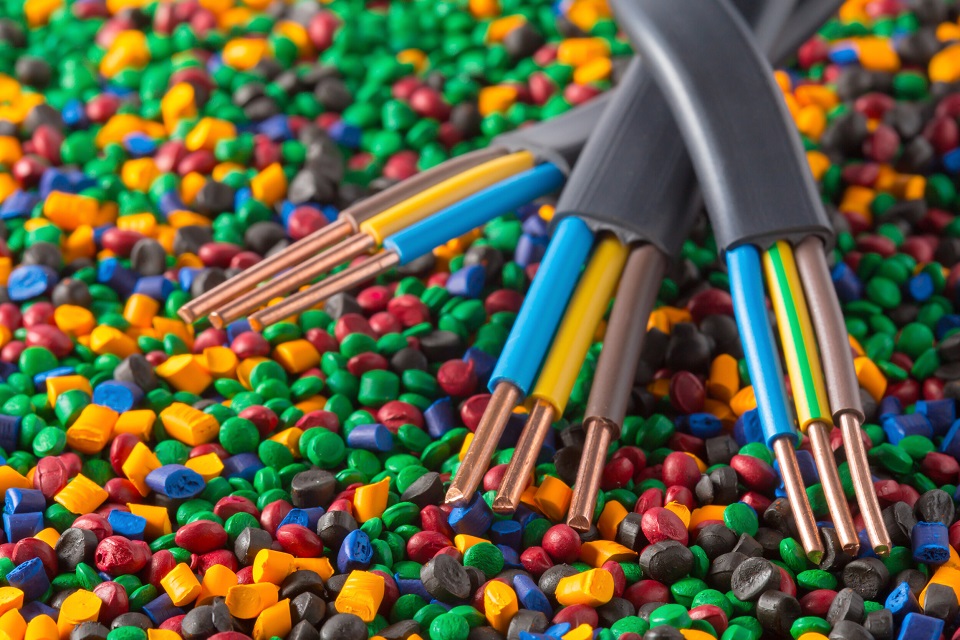
Polyetherimide (PEI) is an engineering thermoplastic known to exhibit high temperature resistance, outstanding mechanical and electrical properties.

Polyetherimide applications in automotive have been increasing due to its replacement with metal, thermosets and bulk molding compounds (BMC)
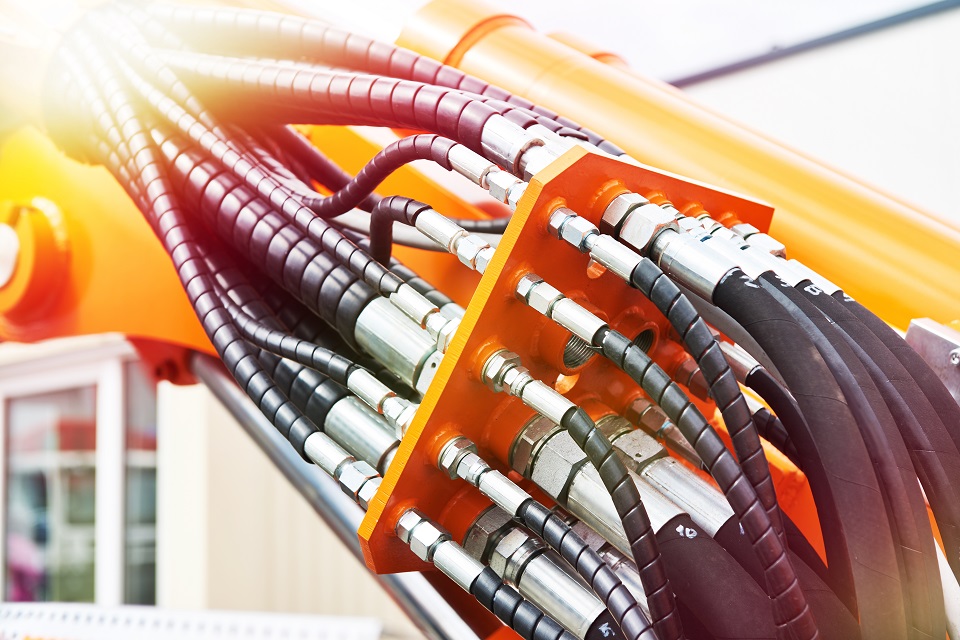
Polyetherimide is very often used as a metal replacement material