

Moisturizing agents: How to select the right grade for cosmetics?
Last update on Jun 29, 2026
Moisturizing agents modulate the moisture content of the skin and protect the skin barrier from drying. They are among the most essential ingredients in cosmetic formulations. They directly influence skin hydration, barrier protection, sensory experience, and consumer satisfaction.
Developing an effective moisturizer goes far beyond selecting a single humectant or emollient. Formulators must understand how different classes of moisturizing ingredients interact to:
- improve water retention,
- reduce transepidermal water loss (TEWL),
- strengthen the skin barrier, and
- deliver the desired skin feel
Whether you are formulating creams, lotions, or color cosmetics, they must deliver lasting hydration. Achieving the right balance is critical for meeting both consumer expectations and clinically measurable performance.
In this guide, you will explore the science behind moisturizing agents that creates a practical framework for selecting the right ingredients for your formulations.
What are moisturizers?
In cosmetic chemistry, moisturizing agents, also known as moisturizers, are topically applied ingredients designed to increase the water content of the stratum corneum.
The stratum corneum is a thin biological protective membrane that covers the human skin and is exposed to the external environment. This layer allows the skin to retain water in dry atmospheric conditions.
Understanding this structure is your starting point for selecting the right moisturizing approach. Key characteristics of a healthy stratum corneum:
- It is thin and supple.
- It prevents the loss of body water, contributing to skin health.

Why moisturizers are essential for healthy skin
Healthy skin is generally said to have a water content of 10-20%. Skin discomfort is unacceptable, and moisturizers containing primarily emollients and humectants can help alleviate the symptoms of dry, itchy, and uncomfortable skin.
For formulators, moisturization/skin conditioning is the central objective of topical skin treatment. Consumers recognize the term 'moisturizer' as a signal of improved skin health. Thus, it is one of the most widely expected performance claims across categories. In general terms, moisturization is the kingpin of topical skin treatment.
Moisturizers are often confused with terms such as 'humectants' and 'emollients'. They are broadly associated with skin or hair conditioning. In practice, achieving effective moisturization requires the following:
- Knowledge of the chemical, physical, and performance properties of these ingredients
- An understanding of how to select the right combination for your specific performance claim
Technologies used in moisturizing formulations
Moisturizer technologies are as diverse, in a general sense, as the total available chemistry in personal care. Achieving acceptable moisturization does not require new technology. It can draw from the extensive list of already available chemistries, mainly:
- Esters
- Organic salts
- Hydroxyl-functional
- Nitrogen-containing
- Vegetable oils and butters
There are many options to enhance moisturization performance in skin and hair care formulations. Generally, there is a balance of the various classes of moisturizers to elicit a consumer-perceived moisturization effect and a clinically enhanced performance. Further, there is a synergistic gain when combinations of each technology classification are employed.

Effective moisturization relies on combining different classes of ingredients. The following section explains the role of each class.
Classification of moisturizers
Dry and combination skin types require barrier repair. Thus, achieving optimal consumer-perceived moisturization typically requires incorporating four classes of functional ingredients:
|
|

Classes of functional ingredients
The choice of which classes to combine and at what ratio depends on the target application and the consumer experience you are formulating for. Let's learn about each of the classes of moisturizers in detail.

Humectants
Humectants are a group of hydroscopic substances that attract and retain moisture from the air or within the skin. They can modulate available moisture on and in the skin by enhancing surface water availability.
Aesthetic limitations can constrain usage levels. Synergies between humectant types can enhance overall humectancy as measured by transepidermal water loss (TEWL) and conductance improvements at reduced individual levels. This improves both aesthetics and performance.
| Classes | Properties |
| Trihydroxy polyol | Best humectant with desquamation properties and a high conductance generator. E.g., glycerin. |
| Alkanol amine | Provide synergy with glycerin and increased skin barrier build. E.g., lactamide MEA. |
| Carbohydrate | Works as a moderate humectant, offers good aesthetic-enhancing properties combined with glycerin. E.g., sugar alcohols (e.g., sucrose, honey, and mannitol), polysaccharides. |
| Polyols | Hydroxyl groups hydrogen-bond to water. E.g., propylene glycol and butylene glycol. |
| Carbamide | Good humectant with keratolytic properties and good synergy with glycerin and other humectants. E.g., urea. |
| Carboxylic acid | One of the original NMF ingredients. E.g., PCA salts and derivatives. |
| Amino sugars | Reported humectancy, noted for the potential for skin turnover, and aesthetic-enhancing properties. E.g., glucosamine, glycosaminoglycan, and hyaluronan derivatives. |
| Quaternary amine | Mild humectant with aesthetic-enhancing properties. E.g., betaine, polyquaternium-51, polyquaternium-61, polyquaternium-64, and polyquaternium-71. |
| Sebaceous gland extract | Strong occlusivity agent with hydrating properties and increased cell turnover, reported improved skin barrier repair. E.g., lanolin & derivatives and alcohol-acetylated. |
| Organic acid salt | Strong hydrating properties and some keratolytic action. E.g., potassium lactate. |
| Master Catalog of humectants - Get samples and technical data sheets on our platform » | |

Occlusivity agents
Occlusivity agents can be referred to as the natural skin's moisturization balance. They modulate water content by slowing down TEWL. They function as air and water barriers, preventing significant evaporation of the skin's internal water and blocking topical ingredients from penetrating the skin's barrier.
They have aesthetic limitations, particularly for heavier agents. Combining petrolatum with aesthetic-enhancing occlusivity agents can optimize both performance and skin feel.
| Classes | Properties |
| Hydrocarbon | Occlusivity agents (petrolatum is considered the benchmark), but can have some tacky aesthetics. E.g., petrolatum, isododecane, and C14-20 alkane. |
| Siloxane | Almost equivalent to petrolatum without the negative aesthetics, excellent combination with petrolatum to soften skin feel. E.g., C30-45 alkyl methicone. |
| Nut butters | It has very good occlusivity and some humectancy properties, excellent replacement for petrolatum. E.g., shea butter (other nut butters). |

Keratolytic agents
Keratolytic agents stimulate cell renewal by cleaning dead cells from the skin's surface and exciting new cells to form at the surface for a better and healthier barrier. They accelerate cell turnover to strengthen the skin's barrier.
A drawback of keratolytic agents is increased skin irritation potential. Formulations compatible with the skin's acid mantle can preserve keratolytic properties without loss of efficacy.
| Classes | Properties |
| Carboxylic acids | Strong keratolytic action without the strong skin-irritating properties. E.g., salicylic acid and derivatives |
| Fruit acids | Excellent keratolytic action, strong skin irritants (before pH modification, which can reduce effectiveness). E.g., alpha hydroxy acids and lactic acid |
| Diureide | Keratolytic and desquamation action. E.g., allantoin |

Emollients
Emollients are primarily characterized by their ability to enhance skin aesthetics. They improve tactile softness and smoothness properties. They can provide some level of moderate TEWL improvement topically. They also act as a non-greasy friction reducer.
Selecting the right emollient from an expansive and chemically diverse candidate pool requires systematic evaluation. Understanding the cascading emolliency effects of blended emollients enables formulators to engineer changing skin feel during and after application.
| Classes | Properties |
| Siloxane | A diverse group of compounds from dimethyl substituted to virtually organic substitution. Candidates are measured by compatibility in the formula and cost constraints. E.g., dimethicone, gums & crosspolymer, alkyl methyl (distearyl methicone), amino functional (e.g., amodimethicone). |
| Fatty acid esters | A diverse group of compounds that are selected based on how the skin feels. Can be combined to create a cascading emolliency. E.g., linear (cetyl palmitate, behenyl lactate, arachidyl propionate), branched (isononyl isononoate behenyl isostearate, triisodecyl myristate). |
| Glyceride derivatives | Provide excellent emolliency and organic coupling. Some have good co-emulsification properties. E.g., capric/caprylic triglyceride. |
| Ether | Good emolliency. E.g., dicapryl ether. |
| Dimer dilinoleate derivatives | Good emolliency and some have good co-emulsification properties. E.g., dimer dilinoleate derivatives (diisostearyl dimer dilinoleate). |
| Polymeric | A diverse group of compounds based on acrylic, polyether, polyamide, and polyurethane chemistry. E.g., isoeicosane, polyglycerin-10 Isostearate, PEG-8/SMDI copolymer, dilinoleic acid/dilinoleyl alcohol/propanediol copolymer. |
| Vegetable oils and derivatives | A very popular natural choice for emolliency. Need to formulate around the potential oiliness of straight oil triglycerides. E.g., olive oil and esters/transesters. |
| Master Catalog of emollients – Get samples and technical data sheets on our platform » | |
Vegetable and natural oils (such as rapeseed oil, sunflower oil, and soybean oil, etc.,) are desirable emollients. They offer antioxidant properties in skin care applications. Some of the oils and their properties are listed below.
- Wheat germ oil is an antioxidant with more vitamin E than any other natural oil. It is primarily used as an emollient to moisturize and relieve dry, irritated skin. Wheat germ oil possesses cell regenerative properties that make it a good choice for anti-aging formulas.
- Avocado oil is deeply hydrating and highly compatible with the natural oils of the skin. It is also a powerful antioxidant and is filled with high levels of chlorophyll, vitamin E, and omegas 3 and 9 to improve the health and vitality of your skin.
- Jojoba oil has excellent inherent emollient and moisturizing properties, coupled with its oxidative stability properties. It is one of the world's top lipid cosmetic ingredients, often used in anti-aging skincare.
- Cocoa butter is one of the most stable fats known, loaded with natural antioxidants that prevent rancidity and give it a shelf life of two to five years. It softens and lubricates the skin, assisting in reducing stretch marks and scars, making it an excellent massage cream. It performs as an antioxidant, emollient, and lubricant.
- Sweet almond oil has a long historical use that includes restoring itchy, dry, and inflamed skin as well as being a simple emollient. It contains 24% linoleic acid, an incredibly high amount of the antioxidant EFA.
- Shea butter is used as an emollient and moisturizer in cosmetics. It is high in vitamin E, an anti-aging antioxidant that increases micro-circulation. It also contains the antioxidants beta-carotene and vitamin A.

Wheat germ oil, avocado oil, jojoba oil, sweet almond oil, cocoa butter, shea butter (From left to right)
In the next section, let's evaluate the moisturizer performance to be able to better select the right ingredients for your formulation efficiency.
Evaluating moisturizer performance for ingredient selection
Starting point formulations
Key applications of moisturizing agents
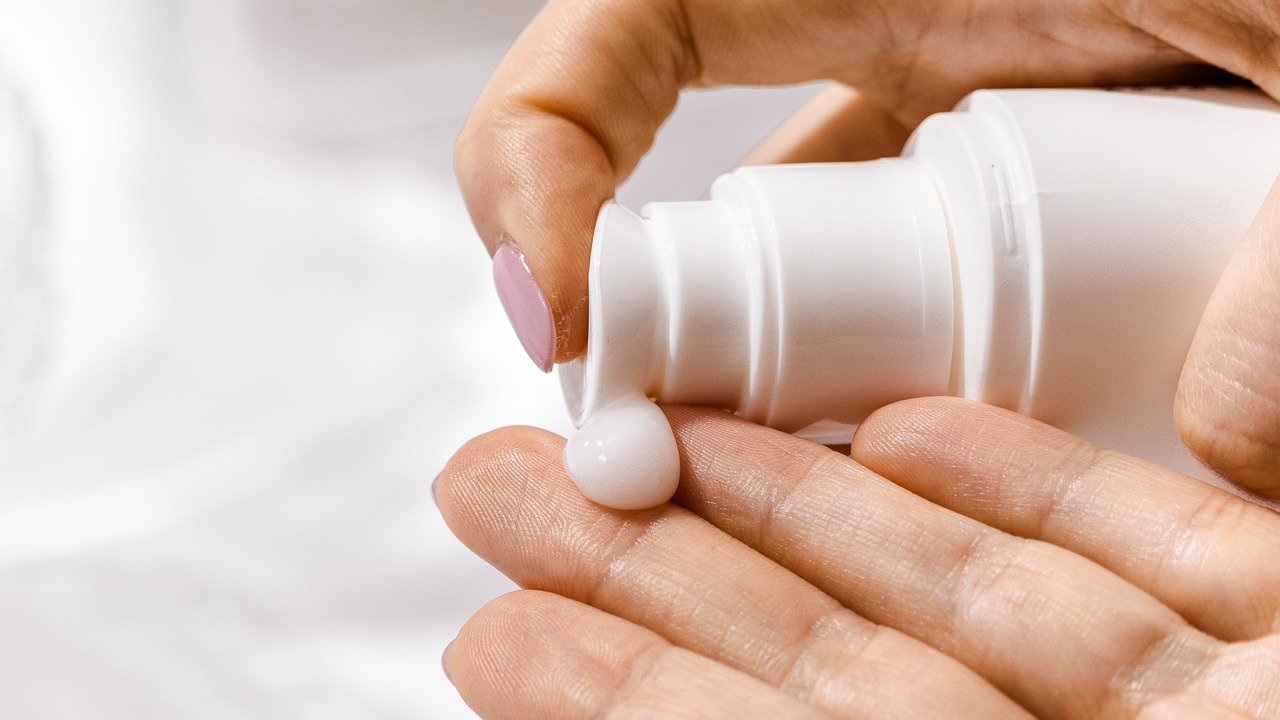
Moisturizer moisturizes & renews the look of skin
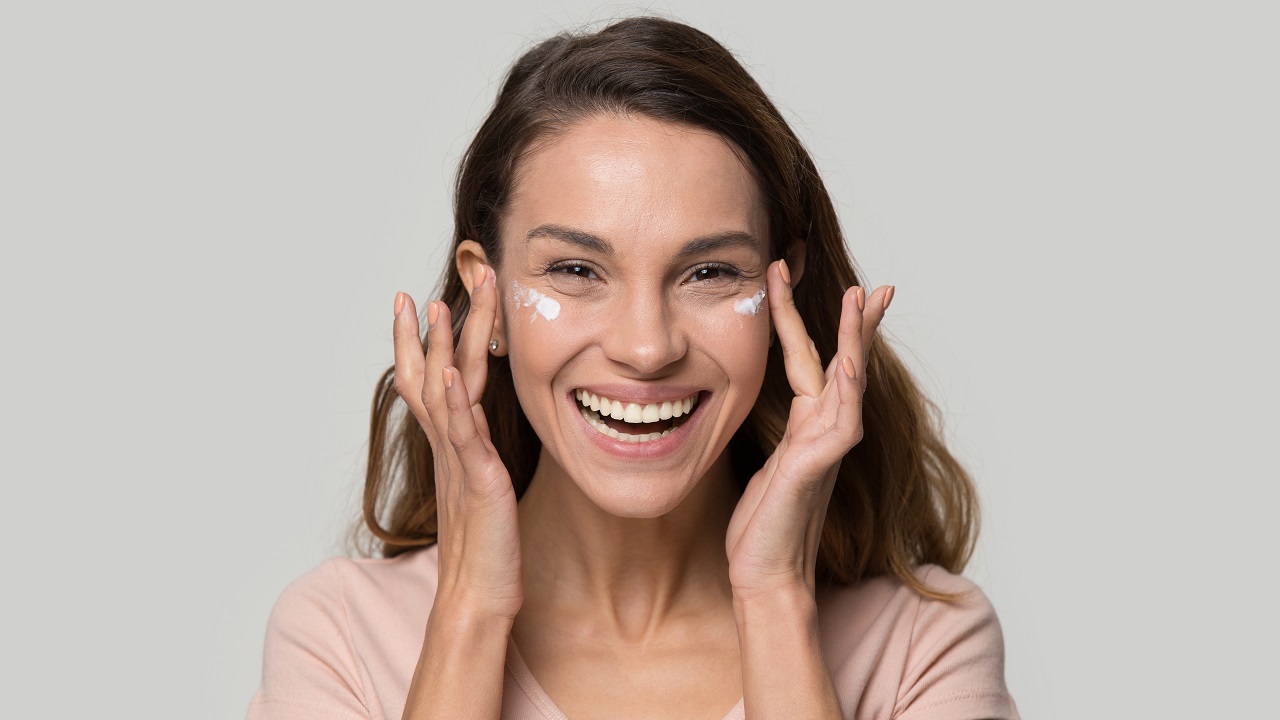
Moisturizers help to smooth wrinkles fast and diminish the look of age spots
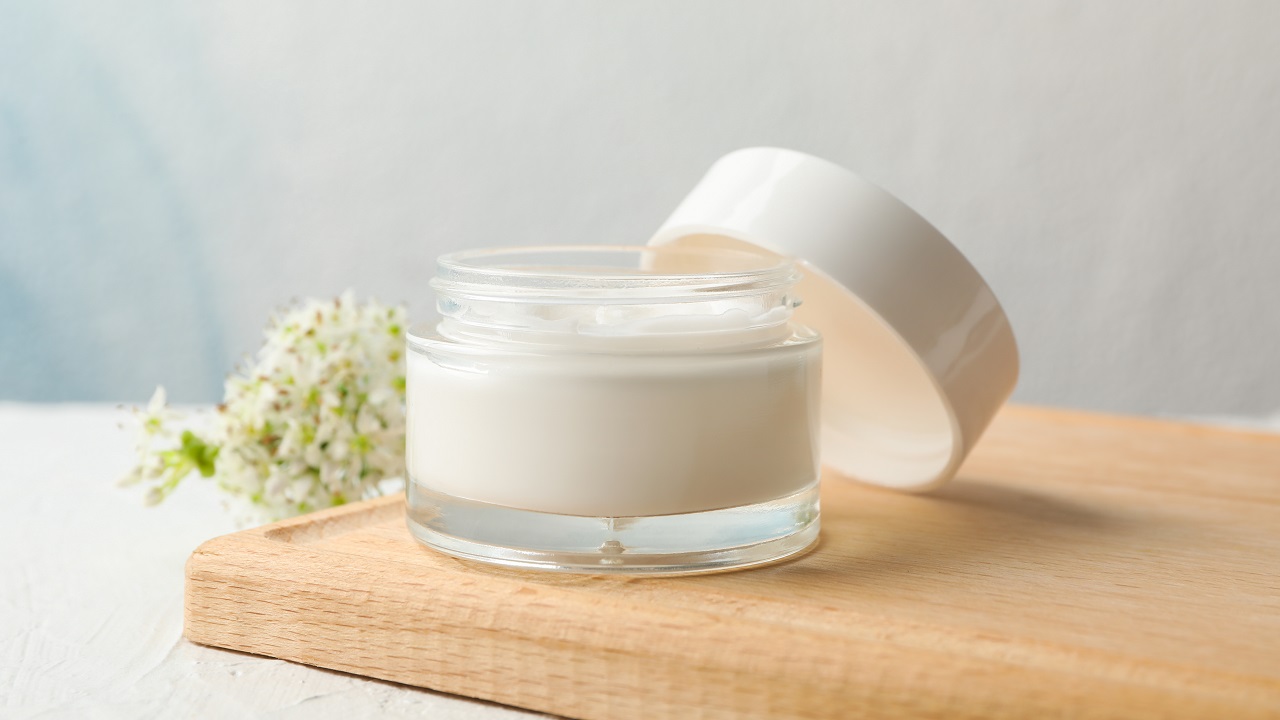
Moisturizers containing primarily emollients and humectants can help alleviate the symptoms of “dry” skin