

Mastering thermal stability: Additives for heat-resistant plastics
Last update on Jul 30, 2025
Inadequate thermal stability of polymers at elevated temperatures causes degradation. This breakdown includes oxidation, chain scission, and cross-linking reactions leading to product failure. This ultimately causes discoloration, brittleness, and reduced strength.
Thermal stability is the polymer's resistance to this breakdown. It determines how well a material maintains its structural integrity when exposed to high heat. Plastics encounter heat during both processing and end-use applications.
To mitigate thermal degradation, plastic formulators must use adequate stabilizers and processing conditions in their formulation.
- Thermal stabilizers protect polymers from heat degradation during the product life cycle.
- Antioxidants and heat stabilizers prevent degradation during reprocessing and use.
- Compatibilizers improve the mixing and properties of different plastics.
- Optimized processing (e.g., reducing screw speed) minimize thermal stress.
Find out how to enhance the thermal stability of your plastics using additives. Also, discover the various types of thermal stabilizers and the best practices to maximize heat resistance in your plastic formulations.
What is thermal stability in polymers?
Thermal stability is a polymer's ability to resist changes in its physical, chemical, and mechanical properties when exposed to heat over time. It depends on the polymer's structure, impurities, environment, and processing (as shown in Figure 1). High thermal stability means the polymer maintains its integrity despite heating.

Figure 1. Various exposure conditions resulting in polymer degradation, where oxygen and temperature are important parameters1
Thermal degradation can break down a polymer's structure and properties (e.g., chain breaking, color change) due to heat. Polymers turn yellow under heat due to thermal oxidation. Here, heat causes the polymer chains to degrade and react with oxygen, forming colored "yellow bodies" (chromophores). Impurities and inadequate stabilizers can accelerate this.
Role of thermal stabilizers in combating heat degradation
Thermal stabilizers are polymer additives that can withstand high temperatures without degrading or losing effectiveness, ensuring they can protect the polymer. This can be achieved in the following ways2:
- Radical scavenging: Neutralizing reactive particles that cause degradation.
- Hydroperoxide decomposition: Preventing the formation of more damaging radicals.
- Metal deactivation: Blocking metal ions that can speed up degradation.
- UV absorption/quenching: Protecting against UV light, which can start thermal degradation.
- Acid scavenging: Neutralizing harmful acids released during polymer breakdown.
- Processing aids: Reducing heat stress during manufacturing.
TGA curves in Figure 2 indicate that at 180°C, the remaining mass from plasticizer, plasticized PVC-film, and the film with organotin antioxidant (2 phr) was 99%, 98%, and 100%, respectively. At 225°C, 91%, 88%, and 97% of the initial mass of plasticizer, plasticized PVC-film, and the film with antioxidant remained, respectively. This shows that the PVC-antioxidant sample had minimum mass loss compared to the others in this temperature range.
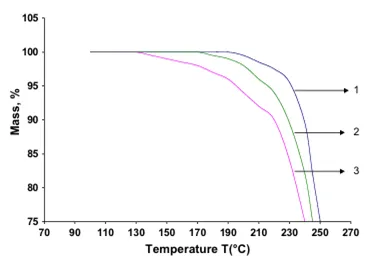
Figure 2. TGA curves for (1) PVC film with organotin antioxidant, (2) plasticizer, and (3) control plasticized PVC film without antioxidant2
Stabilizers can evaporate during high-temperature polymer processing. This leads to a reduction in their concentration and effectiveness over time. This loss is influenced by the stabilizer's volatility, processing temperature, and duration.
Best practices for blending thermal additives are as follows:
- Ensuring uniform dispersion of the additive within the polymer matrix for optimal protection.
- Using masterbatches for better control and distribution.
- Considering the order of addition to prevent premature reactions or degradation.
- Optimizing mixing time and intensity based on the additive and polymer.
- Verifying blend uniformity through testing.
Properties of thermal stabilizers
The key properties of thermal stabilizers are mentioned below:
| • High decomposition temperature • Low volatility • Good compatibility • Effectiveness at low levels • Non-discoloring and non-toxic | • Cost-effectiveness • Synergistic potential • Stable in formulation • Minimal impact on polymer properties |
Types of polymer additives to achieve thermal stabilization
Thermal stabilizers are a type of polymer additive that have diverse structures with key functional groups, such as3:
- Primary antioxidants [hindered phenols (-OH with bulky groups)],
- Secondary antioxidants [phosphites (P+3)],
- Hindered amines (cyclic amines with bulky groups)
- Thioesters (containing sulfur),
- Metal salts (metal + fatty acid), and
- Organotins (Sn-C)
These structures dictate their protective actions.
Antioxidants
Primary antioxidants
Primary antioxidants directly intercept and neutralize the propagating free radicals that drive the chain reaction of oxidation. Examples include hindered phenols and secondary aromatic amines. Hindered phenols are primary antioxidants that donate a hydrogen atom to free radicals. This leads to the formation of a stable phenoxy radical due to steric hindrance and resonance. Thus, stopping radical chain reactions.
Secondary antioxidants
Secondary antioxidants do not directly scavenge the propagating radicals. Instead, their primary function is to prevent the formation of these radicals in the first place or to decompose intermediate products that would lead to radical generation. Their core function is to prevent or slow down thermo-oxidative degradation, which is driven by heat and the presence of oxygen. They act as a preventative shield, reducing the overall radical burden within the polymer system.
Key examples include phosphites, phosphonites, and thioesters. Phosphites are a class of secondary antioxidants that decompose unstable hydroperoxides into stable products. Thus preventing radical formation. They are effective during processing and often work synergistically with hindered phenols.
| Note: The battle against thermal and thermo-oxidative degradation in polymers relies heavily on antioxidants. They are broadly categorized by their mechanism of action into primary and secondary types. Often, the most effective thermal stabilization is achieved through the synergistic combination of primary and secondary antioxidants. The secondary antioxidant helps to "regenerate" or protect the primary antioxidant. This happens by decomposing hydroperoxides that might otherwise react with and consume the primary antioxidant. This cooperative effect leads to enhanced and prolonged protection against thermal degradation. |
Synthetic vs. natural antioxidants
The quest for effective antioxidants for polymers has led to the development of a wide array of synthetic compounds. There has also been exploration of the potential of naturally derived substances. Each category offers distinct advantages and disadvantages6.
- Synthetic antioxidants: Synthesized in laboratories and industrial chemical plants through controlled chemical reactions. Examples include hindered phenols (e.g., butylated hydroxytoluene, Irganox® series), phosphites (e.g., Irgafos® series), thioesters (e.g., distearyl thiodipropionate), aromatic amines (e.g., Wingstay® series), and hindered amine light stabilizers (HALS - while primarily UV stabilizers, they contribute to thermal stability).
- Natural antioxidants: Extracted and purified from natural sources, primarily plants. However, some are also extracted from microorganisms and animal products. Examples include phenolic compounds like tocopherols (Vitamin E), rosemary extract (carnosic acid, carnosol), green tea extract (catechins), flavonoids, and lignans. Carotenoids like beta-carotene, lycopene, ascorbic acid (Vitamin C), and their derivatives.
Hindered amine light stabilizers (HALS)
Hindered amine light stabilizers are primarily photostabilizers, designed to provide long-term protection against UV-induced degradation. However, they also offer significant benefits for thermal stability. This is particularly in the long term and in mitigating degradation initiated by light exposure. In practice, achieving optimal polymer stability often necessitates the use of a synergistic blend of stabilizers. This includes both phosphites (for processing and long-term thermal stability) and HALS (for long-term UV and weathering protection, as well as contributing to thermal stability).
Let's have a look at the distinctions between phosphite stabilizers and HALS.
| Feature | Phosphite stabilizers | HALS |
| Primary target | Hydroperoxides (preventing radical formation in thermal/oxidative degradation) | Radicals generated during photodegradation; also scavenge thermal radicals and decompose hydroperoxides |
| Main protective role | Secondary antioxidant for thermal stability | Primary photostabilizer with significant long-term thermal stabilization |
| Mechanism | Decomposition of hydroperoxides | Formation of nitroxide radicals, radical scavenging, hydroperoxide decomposition, regenerative cycle |
| Effectiveness | Thermal and thermo-oxidative degradation, especially during processing | Photodegradation (UV), long-term thermal degradation (especially photo-initiated) |
| Direct UV protection | Minimal | Minimal (they don't absorb UV directly) |
Table 1. Key Distinctions between phosphite stabilizers and hindered amine lignin stabilizers
Metal-based and organotin stabilizers
The thermal stabilization of Polyvinyl Chloride (PVC) is critical due to its inherent tendency to undergo thermal degradation. This primarily occurs through the autocatalytic dehydrochlorination process (release of HCl). Both metal soaps and organotin compounds play significant roles as PVC stabilizers. However, they differ in their chemical nature, mechanisms, performance characteristics, and environmental implications.5
- Metal soaps: They are salts of long-chain fatty acids (e.g., stearic acid, lauric acid) with various metals, like calcium (Ca), zinc (Zn), barium (Ba), magnesium (Mg), and lead (Pb). They contain metal ions and are effective, especially in PVC. They can cause discoloration, and some have toxicity/environmental issues. They are often used in complex mixtures to achieve synergistic stabilization effects.
- Organotins: These compounds feature tin atoms covalently bonded to organic groups (e.g., methyl, butyl, octyl). They are carbon-based and act as radical scavengers/hydroperoxide decomposers. Their types include mercaptides (sulfur-containing), carboxylates, and maleates, with sulfur-containing organotins generally offering the highest performance. They generally cause less discoloration and lower toxicity (but still a concern).
The current trend in PVC stabilization is a move away from highly toxic metal-based stabilizers like lead towards more environmentally benign alternatives. This includes optimized calcium/zinc-based systems, organic stabilizers, and safer organotin compounds like octyltin mercaptides. The choice of stabilizer system involves a complex trade-off between performance requirements, cost, processing considerations, and regulatory compliance.
| Feature | Metal soaps (E.g., Ca/Zn, Ba/Zn) | Organotin stabilizers (E.g., Octyltin mercaptides) |
| Primary metal | Calcium, zinc, barium, lead, magnesium | Tin (Sn) bonded to organic groups |
| Stabilization efficiency | Good to moderate, often requiring synergistic blends | Very high, especially for long-term stability and color hold |
| HCl scavenging | Effective | Highly effective |
| Color hold | Can be good (especially with Ca), but Zn can cause issues at high temperatures | Excellent, prevents early and long-term discoloration effectively |
| Cost | Lower | Higher |
| Toxicity/environment | Some elements (Pb, Cd) can pose risks, while others (Ca, Zn) are more favorable | Certain shorter-chain types have significant toxicity concerns, leading to regulation |
| Applications | Wide range of flexible and rigid PVC products, often cost-sensitive | High-performance rigid PVC applications (e.g., window profiles, pipes) requiring superior durability and aesthetics |
Table 2. Key comparison of metal soaps vs. organotin stabilizers in PVC
Nanocomposites
Adding nano-sized fillers creates a barrier to volatile products and oxygen, leading to:
- restricted polymer chain movement,
- improved heat dissipation, and
- formation of a protective char layer
This leads to better heat resistance without relying solely on chemical additives. As can be seen from Figure 3, PBT/clay nanocomposites have better thermal stability than their corresponding polymer without clay. There is an almost 8–10°C increment in the onset temperature of degradation of clay nanocomposites compared with the PBT polymer without any clay, as well as their maximum decomposition temperatures. It seems that a mere 2% by weight (wt.%) of nano clay is capable of improving the thermal stability of PBT.

Figure 3. Thermograms of various PBT/clay nanocomposites in a nitrogen atmosphere4
Advantages and disadvantages of thermal stabilizers
The table below presents a comparison of key advantages and limitations to aid in the selection of the most appropriate thermal stabilizer for your polymer formulation.
| Feature | Advantages | Disadvantages |
| Durability | Prevents premature degradation due to heat. | Not a complete solution. Its effectiveness can be limited by extreme conditions or time. |
| Cost | Reduces material waste and product failure from thermal damage. | Some highly effective stabilizers can be expensive, impacting material costs. |
| Processing | Allows for higher and more stable processing temperatures without degradation. | Some stabilizers may not be fully compatible with certain polymer matrices, leading to poor dispersion or reduced effectiveness. |
| Stability in use | — | Additives can migrate or leach out, affecting performance and safety. |
| Material properties | — | High thermal stability may compromise mechanical properties. |
| Sustainability | Non-metallic stabilizers lower toxicity and have a better environmental profile. | — |
Table 3. Summary of the advantages and disadvantages of thermal stabilizers
Industrial applications of thermal stabilizers
Wire and cable insulation
PVC is a common insulation material, but it degrades under heat. Heat stabilizers are crucial to prevent discoloration and loss of properties during processing and use. Historically, lead-based stabilizers were effective but are being phased out due to toxicity. Current options include organotin compounds (though facing environmental concerns) and heavy metal-free stabilizers like calcium/zinc (Ca/Zn) systems, which are more environmentally friendly. Antioxidants and light stabilizers are also used to protect against heat, oxidation, and UV degradation in wire and cable insulation.
Automotive under-the-hood parts
Polymers used here often have inherent high heat resistance, sometimes enhanced with additives. Examples of high-performance polymers include polyamides (PA), especially heat-stabilized grades like Stanyl® Diablo, polybutylene terephthalate (PBT), and silicone rubbers. Additives include antioxidants for long-term thermal stability in automotive components and heat stabilizers to maintain mechanical properties at elevated temperatures for under-the-hood applications.
Food packaging
Thermal stability is needed for processing (e.g., sterilization, hot filling) and sometimes for end-use (e.g., microwaveable packaging). Common polymers include polypropylene (PP), polyethylene terephthalate (PET), and high-density polyethylene (HDPE). Antioxidants are added to prevent degradation during processing and storage. FDA-approved stabilizers (often Ca/Zn-based or specific organic types) are crucial for food contact applications.
High-temperature 3D printing filaments
High-temperature 3D printing requires filaments that can withstand elevated nozzle and bed temperatures without degrading. Base polymers include acrylonitrile butadiene styrene (ABS), polycarbonate (PC), polyether imide (PEI) (e.g., ULTEM™), and polyether ether ketone (PEEK). They have inherently high glass transition temperatures. Heat stabilizers are added to prevent thermal breakdown during the printing process.
Aerospace
Aerospace applications demand materials that can withstand extreme temperature fluctuations. This ranges from cryogenic conditions to high heat. Polymers like polyimides (PI) (e.g., Kapton®), PEEK, PEI (e.g., ULTEM™), and polyphenylene sulfide (PPS) offer excellent high-temperature performance. These polymers often have inherent thermal stability and may not require significant amounts of traditional thermal stabilizers for moderate temperature ranges. However, antioxidants are still used for long-term protection against thermo-oxidative degradation in harsh environments.
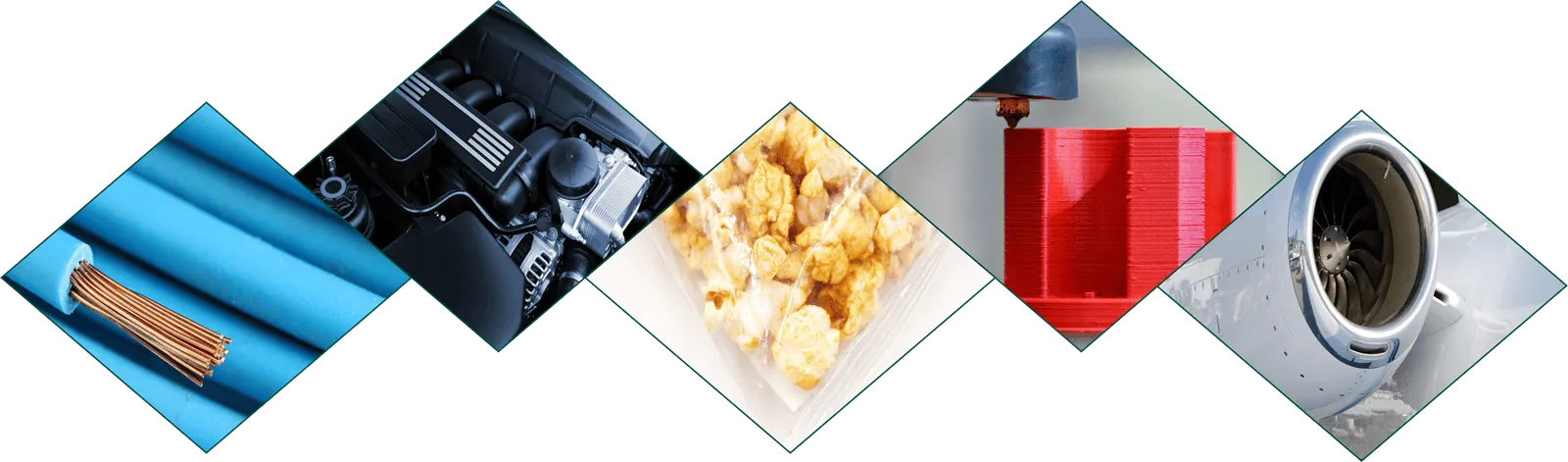
Figure 4. Industrial applications of thermal stabilizers
Safety profile of thermal stabilizer in plastics
- Toxicity of thermal stabilizers: Many thermal stabilizers are toxic (for example, heavy metals, some organotins).
- FDA-approved for food: Limited to safer options like some Ca/Zn and specific organic HALS. This depends on the polymer, use, and regulations.
- Organotin environmental impact: It can be harmful, especially in aquatic environments (TBT ban, leaching from PVC).
- Non-toxic alternatives: Ca/Zn, Mg/Zn, and some organic stabilizers are replacing toxic heavy metals.
- REACH compliance: EU regulation requires registration, evaluation, authorization/restriction of chemicals (including thermal additives). Many toxic stabilizers are SVHCs facing potential restrictions.
Browse our database to select various regulatory-approved polymer additives for thermal stability:
 |  |  |
Test methods to determine the thermal stability of polymers
Key techniques to evaluate thermal stability
Techniques used to measure the thermal stability of polymers include:
- Thermogravimetric Analysis (TGA) for weight loss,
- Differential Scanning Calorimetry (DSC) for heat flow,
- Heat Deflection Temperature (HDT) for deformation under load,
- Vicat Softening Point (VSP) for softening,
- Specialized methods like TGA-IR/MS for analyzing degradation products
- Oven aging tests for long-term stability
Standards to assess heat resistance
The following are the standards used to assess the heat resistance of polymers:
- UL 746B: It is the long-term heat aging test for plastics. It determines the Thermal Index (RTI) based on the degradation property.
- ISO 11358: It is the standard for TGA analysis of polymers. It measures weight change with heat for thermal stability assessment.
- Home thermal stability test: It provides the basic observations of material changes (discoloration, softening) under moderate heat (caution advised, not professional).
- Accelerated aging for additives: It simulates long-term exposure (heat, UV, humidity, chemicals) in a short time to predict lifespan and effectiveness. Long-term thermal stability is a plastic's ability to retain properties over extended heat exposure. It depends on the polymer, stabilizer effectiveness over time, environment, and thermal history.
- Heat-resistant polymer standards: UL 746, ASTM/ISO (HDT, VST), SAE (automotive), aerospace-specific, FDA (food), REACH (Europe). HDT is for the polymer compound, not individual additives. However, good thermal stabilizers influence the polymer to maintain its HDT at higher temperatures by preventing degradation.
Emerging trends and innovations in thermal stabilizers
Bio-based thermal stabilizers8
There is increased focus on sustainable alternatives from renewable sources (plant oils, extracts) that help to:
- replace synthetic stabilizers in bioplastics,
- improve thermal and UV stability, and
- support a circular economy
For example, thermogravimetric analysis (TGA) in air was used to compare the effectiveness of natural antioxidants with that of the synthetic antioxidant Irganox® 1010. It compares the ability to stabilize polymer against thermo-oxidative degradation under quiescent conditions7. Figure 4 shows thermograms of LDPE samples incorporating 1 wt.% Irganox® 1010 (loading level similar to that used in commercial application) added by melt processing or various loadings of agro waste incorporated in LDPE.
Effective incorporation of agro waste materials into LDPE leads to major stability enhancements. Use of 2.5 wt.% GW as filler in LDPE resulted in 15°C elevations in both T10% and T20%. Increasing the GW loading to 4 wt.% produced hybrids with the best stability enhancement, with 62 and 44°C increases in T10% and T20%, respectively, relative to neat LDPE. These enhancements are far superior to those observed with 1 wt.% Irganox® 1010.
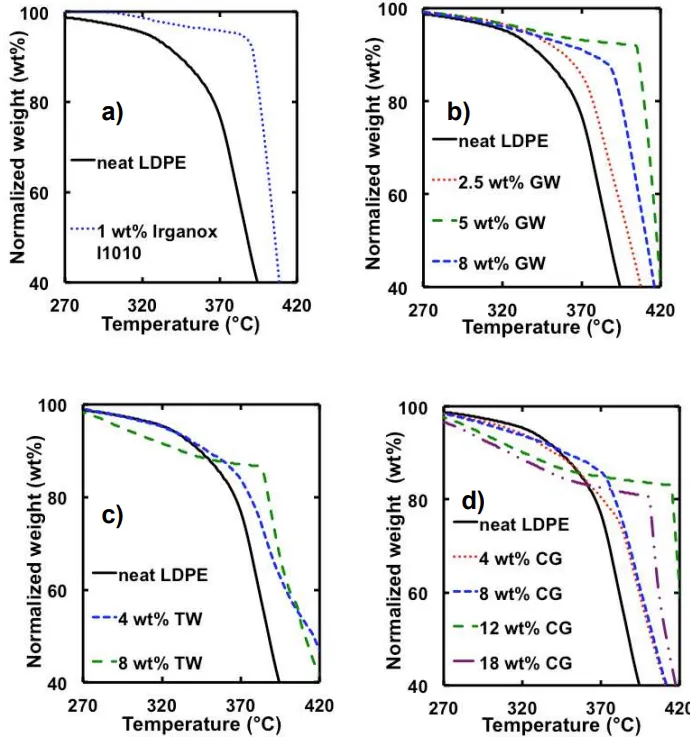
Figure 5. Thermal degradation behavior in air of neat LDPE and LDPE hybrids with a) Irganox® 1010, b) GW (grape waste), c) TW (turmeric waste), and d) CG (coffee grounds)7
Nanotechnology
Nanomaterials like nano clays, carbon nanotubes, and graphene are used to enhance mechanical, thermal, and barrier properties of polymers at high temperatures. They also improve performance and potentially reduce the amount of additive needed.
Self-healing polymers
Developing polymers with the intrinsic ability to repair thermal damage autonomously. This extends service life and improves safety in high-temperature applications. This takes place through dynamic chemical bonds or encapsulated healing agents.
Smart additives
Exploring additives that can dynamically respond to temperature changes. It offers tailored thermal management (e.g., phase change materials, dynamic insulation skins) within the polymer matrix for enhanced efficiency and protection.
Flame retardant thermal stabilizers
Research focuses on halogen-free, more environmentally friendly flame retardants that also enhance thermal stability. Nanomaterials and synergistic combinations are key areas. They aim for improved fire safety without compromising other polymer properties.
Conclusion
Thermal stabilizers preserve the performance and longevity of plastics exposed to high temperatures. By learning about their types and mechanisms, manufacturers can choose the most suitable stabilizer for their application. The right thermal stabilizer can prevent discoloration, maintain mechanical strength, or enhance processability. Staying updated on material compatibility and emerging technologies ensures long-term product reliability and compliance.
- Celina, Mathew C. "Review of polymer oxidation and its relationship with materials performance and lifetime prediction." Polymer Degradation and Stability 98.12 (2013): 2419-2429
- Gijsman, Pieter, and Rudinei Fiorio. "Long term thermo-oxidative degradation and stabilization of polypropylene (PP) and the implications for its recyclability." Polymer Degradation and Stability 208 (2023): 110260
- Arkış, Esen, and Devrim Balköse. "Thermal stabilisation of poly (vinyl chloride) by organotin compounds." Polymer Degradation and Stability 88.1 (2005): 46-51
- Folarin, Olujinmi Moses, and E. R. Sadiku. "Thermal stabilizers for poly (vinyl chloride): A review." Int. J. Phys. Sci 6.18 (2011): 4323-4330
- Bikiaris, Dimitrios. "Can nanoparticles really enhance thermal stability of polymers? Part II: An overview on thermal decomposition of polycondensation polymers." Thermochimica Acta 523.1-2 (2011): 25-45
- Al-Malaika, S. "Antioxidants: an overview." Plastics additives: An AZ reference (1998): 55-72
- Thbayh, Dalal K., and Béla Fiser. "Computational study of synthetic and natural polymer additives—Antioxidant potential of BHA, TBHQ, BHT, and curcumin." Polymer Degradation and Stability 201 (2022): 109979
- Iyer, Krishnan A., Lanhe Zhang, and John M. Torkelson. "Direct use of natural antioxidant-rich agro-wastes as thermal stabilizer for polymer: Processing and recycling." ACS Sustainable Chemistry & Engineering 4.3 (2016): 881-889