

Polycarbonate vs. polypropylene: When to choose what?
Last update on Jan 29, 2025
Polycarbonate (PC) and polypropylene (PP) are thermoplastics used across diverse applications. Although these plastics have similar utilities, they are engineered to meet distinct user demands.
While each of these offers unique properties, it is crucial to understand what sets them apart.
- PC is known for its toughness and transparency
- PP is known for its lightweight and cost-effectiveness
Here, we aim to bring about their differences and the parameters technical buyers must consider when they are seeking the best fit for their specific requirements. We will also talk in detail about their properties to understand why to choose one over the other.
Let's take a look at some of their distinct features.
Chemical Backbone and Variants
What is polycarbonate?
Polycarbonate is a tough thermoplastic with carbonate groups in its chemical structure. They have organic functional groups linked together by carbonate groups (–O–(C=O)–O–). The chemical structure of polycarbonate (PC) is shown below.

Chemical Structure of Polycarbonate (PC)
Polycarbonate is known for its high impact resistance, optical clarity, and thermal stability. It helps in maintaining coloring and strength over time, even in stressful conditions.
Polycarbonate is typically divided into the following types:
- General purpose polycarbonate: Used in a wide range of applications including automotive and consumer goods.
- Optical grade polycarbonate: Known for its exceptional clarity, it is often used in lenses and eyewear.
- Flame retardant polycarbonate: Treated to meet stringent fire safety standards, making it ideal for electronics and construction.
Are you looking for an exhaustive range of polycarbonates available in our database, select from 7000+ PC grades or get an indepth knowledge about how to select the right polycarbonate grade.
What is polypropylene?
Polypropylene is made from the polymerization of propylene monomers. It was first polymerized in 1951 and today its demand stands at around 45 metric tons globally. The chemical structure of propylene monomers (left) and polypropylene polymer (right) is shown below.

Chemical Structure of Propylene (Left) and Polypropylene (PP) (Right)
Polypropylene is the world's second most widely used thermoplastic after polyethylene. It is a lightweight thermoplastic that combines excellent chemical and fatigue resistance, making it suitable for various industries.
Polypropylene can be classified as:
- Homopolymer polypropylene: Offers high strength and stiffness, commonly used in industrial applications.
- Block copolymer polypropylene: Provides enhanced impact resistance, suitable for automotive and heavy-duty applications.
- Random copolymer polypropylene: Known for its clarity and flexibility, ideal for food packaging and medical applications.
Are you looking for an exhaustive range of polypropylenes available in our database, select from 14,000+ PP grades or get an indepth knowledge about how to select the right polypropylene grade.
Property and Performance Comparison
Physical properties — What are the major differences?
The following table highlights the key physical properties of polycarbonate and polypropylene to facilitate a side-by-side comparison.
| Property Name | Polycarbonate (PC) | Polypropylene (PP) |
| Density | 1.20 g/cm3 | 0.89-0.93 g/cm3 |
| Melting point | 220-315°C | 130-171°C |
| Transparency | Transparent | Opaque (unless clarified) |
| Chemical resistance | Good resistance to diluted acids and bases, alcohols, aliphatic hydrocarbons, many oils and greases, oxidizing and reducing agents, salt solutions, and detergents | Excellent resistance to most acids and bases, alcohols, aliphatic hydrocarbons, many solvents, oxidizing agents, and detergents |
| UV resistance | Requires additives | Requires additives |
| Refractive index | 1.58-1.59 | 1.49 |
| Dielectric constant | 2.9-3.2 | 2.1-2.3 |
| Electrical resistivity4 | 1014-1016 ohm-cm | 1016-1018 ohm-cm |
| Water absorption at 23°C immersion5 | 0.362 wt.% | 0.064 wt.% |
| Flammability | UL 94 rating of V-2 or better | UL 94 rating of HB (Horizontal Burning) |
A Comparison of Physical Properties Between PC and PP
Mechanical properties — A comparative analysis
- Tensile strength: Polycarbonate has a significantly higher tensile strength than polypropylene. This makes the PC more resistant to stretching and pulling forces. This property is critical for applications that require high structural integrity, such as automotive components and safety equipment.
- Impact resistance: Polycarbonate is known for its exceptional impact resistance. This makes the PC highly resistant to breakage and shattering. This is particularly beneficial in applications where the material may be subject to sudden impacts or drops. For example, sports equipment and protective clothing.
- Flexural strength: Polycarbonate generally has a higher flexural strength than polypropylene. This indicates that the PC has a greater resistance to bending and flexing forces. This property is important for applications that require the material to withstand bending loads. For example, structural components and automotive parts.
- Fatigue resistance: Polypropylene has excellent fatigue resistance. This means PP can withstand repeated cycles of stress without significant degradation or failure. This property is critical for cyclically stressed applications such as automotive parts and packaging materials.
- Hardness: Polycarbonate is generally harder than polypropylene. This makes the PC more resistant to scratching and abrasion. This property is beneficial in applications where the material may come into contact with abrasive surfaces. For example, automotive components and consumer electronics.
- Stiffness: Polycarbonate generally has a higher stiffness than polypropylene. This means PC is less prone to deformation under load. This property is important for applications that require dimensional stability, such as precision engineering components and optical lenses.
| Property Name | Polycarbonate (PC) | Polypropylene (PP) |
| Tensile strength | 60-70 MPa | 25-40 MPa |
| Impact resistance | High | Moderate |
| Flexural strength | 92-160 MPa | 25-60 MPa |
| Elongation at break | 3.5-110% | 3.0-80% |
| Flexural modulus | 2.3-10 GPa | 1.5-7.0 GPa |
A Comparison of Mechanical Properties Between PC and PP
Thermal properties — How do they differ?
- Heat distortion temperature (HDT): Polycarbonate generally has a higher HDT than polypropylene. This indicates that the PC has greater resistance to heat distortion. This property is critical for applications exposed to elevated temperatures. For example, automotive components and electronic housings.
- Thermal conductivity: Polycarbonate generally has a lower thermal conductivity than polypropylene. This means that the PC is a better insulator. This property is beneficial in applications where thermal insulation is required. For example, building materials and food packaging.
- Coefficient of thermal expansion (CTE): Polycarbonate generally has a lower CTE than polypropylene. This means the PC experiences less dimensional change with temperature changes. This property is important for applications where dimensional stability is critical. For example, optical components and precision engineering parts.
| Property Name | Polycarbonate (PC) | Polypropylene (PP) |
| Flash point | 450°C | 300°C |
| Thermal expansion | 10-69 µm/m-K | 30-90 µm/m-K |
| Heat deflection temperature | 135-145°C | 50-140°C |
A Comparison of Thermal Properties Between PC and PP
Cost considerations: The economics of material choice
Polypropylene is generally less expensive than polycarbonate due to lower production and raw material costs.
- The price of polypropylene is between USD 1 and USD 2 per kilogram. Select 95+ cost-effective PP grades.
- The price of polycarbonate is between USD 2 and USD 5 per kilogram. Select 20+ cost-effective PC grades.
This difference is due to the simpler production process and lower energy requirements of PP. However, for applications requiring superior strength, clarity, or thermal performance, the higher cost of the PC may be justified by its superior properties.
Sustainable material choices — Which is easier to recycle?
Both polycarbonate and polypropylene are recyclable, but the ease and practicality of recycling vary:
- Polycarbonate: PC is recyclable although the process is not well-established. The recycling process involves depolymerization, where the material is broken down into its monomers. This method is less common due to the high energy requirements and challenges in separating contaminants that degrade the quality of the recycled materials. Recycled polycarbonate is often used in lower-grade applications, which means it is not much in demand, unlike other plastic counterparts. The recycled variant can be used in construction materials or automotive parts.
- Polypropylene: PP is easier to recycle and is widely repurposed into items like storage containers, automotive parts, and packaging materials. Recycling involves collecting and sorting the plastic waste, shredding it into small pieces, and then melting and molding it into new products. Due to its lower melting point, the recycling process is simplified.
The recycling infrastructure for polypropylene is more developed than polycarbonate, making it a preferred choice for industries aiming to minimize their environmental impact.
Additional considerations for technical buyers
- Environmental regulations: Evaluate how your choice aligns with industry standards and sustainability goals.
- Performance requirements: Consider long-term durability, environmental stress resistance, and exposure conditions.
- Customization potential: Determine whether the material can be tailored with additives for UV resistance, flame retardance, or improved aesthetics.
- Supply chain reliability: Ensure consistent availability to meet production demands.
- Regulatory compliance: Assess compliance with regulations such as FDA approval for food contact or ISO certifications for medical applications.
Processing Techniques to Create Finished Products
Conversion modes of polycarbonate
- Injection molding: Commonly used for producing complex shapes like lenses, electronic housings, and medical devices.
- Extrusion: Creates sheets and films for applications in construction, signage, and glazing.
- Blow molding: Suitable for manufacturing hollow items, such as bottles and containers.
- Thermoforming: Used to produce large, lightweight parts like vehicle panels and protective equipment.
Conversion modes of polypropylene
- Injection molding: Ideal for creating caps, containers, automotive components, and household items.
- Extrusion: Produces fibers, films, pipes, and sheets for diverse applications.
- Blow molding: Frequently used in the packaging industry for bottles, jars, and other hollow objects.
- Rotational molding: Used for manufacturing large, hollow items like tanks and bins.
Key Applications & Features They Harness
Industries served by PC
 Automotive | ||
 Electronics | ||
 Construction | ||
 Medical | ||
 Sports and recreation | ||
 Optical applications | ||
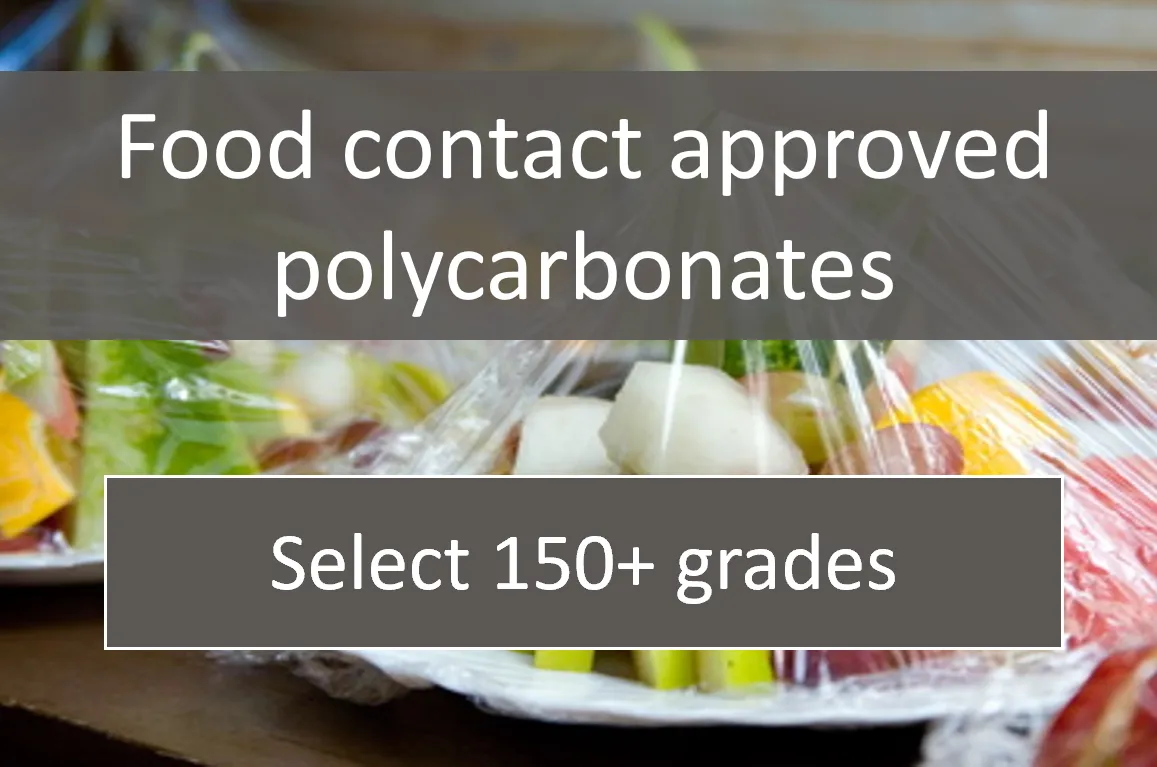
Food contact applications
|
Industries served by PP
 Packaging | ||
 Automotive | ||
 Textiles | ||
 Medical | ||
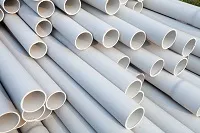 Industrial applications | ||
 Consumer goods | ||
Food contact applications
|

Choose the Best Polymer For Your Requirements
Find the perfect polymer grade tailored to meet specific user requirements with our customized selection process. Let us make your polymer selection easy by matching your needs with the optimal polymer grade for your application.
You might also be interested in:
 |  |
- SpecialChem. (2026). Polycarbonate (PC): How to select the right grade?
- SpecialChem. (2026). Polypropylene: How to select the right grade?
- (n.d.). What are the common uses of polypropylene plastic? Adreco Plastics.
- (n.d.). Electrical Properties of Plastic Materials. Professional Plastics.
- Mat-Shayuti, Abdullah, and Megat-Yusoff. (2013). Water Absorption Properties and Morphology of Polypropylene/ Polycarbonate/Polypropylene-graft-Maleic Anhydride Blends. Asian Journal of Scientific Research.
- (n.d.). PC vs. PP Homopolymer. MakeItFrom.
- Stanborough. (2020). Is Polypropylene a Safe Plastic to Use in Your Home? HealthLine.