

Cleansing agents: How to select the right grade for skin and hair products?
Last update on Apr 22, 2026
• the surfactant chemistry and
• its structural properties for shaping the delivery and user experience of the product
However, selecting the right type of surfactant for a particular application is challenging. Here's a solution to all your problems.
In this guide, explore the classes of surfactants available in the market today. Learn how to select the right chemistry depending on your product requirements. We have listed some unique formulation examples of surfactants/cleansers used in hair care and facial care products for you.
What are surfactants?
In cosmetics and personal care products, surfactants are cleansing and foam-forming agents. They form the base of almost all cleansing products available. They mix with water and fat on the skin to remove dirt.
The term "surfactant" is broadly used to denote surface activity. It is noted for its ability to reduce the surface tension between two phases. In general, surfactants may act as:
- Detergents
- Wetting agents
- Emulsifiers
- Foaming agents, and
- Dispersants
The lipophilic chain is attracted by the soil and penetrates it, while the surfactant forces the soil to an open surface area and then detaches from the surface.

How do surfactants work?
A key to utilizing surfactant's unique properties lies in understanding how and when to use them.
Surfactants in cosmetic personal care formulas can be easily incorporated, but this requires skillful execution of surfactant-related processes. Surfactant molecules rest at a water interface, forming a thermodynamically stable system that prevents polar and non-polar solvents from contacting each other. Thermodynamically stable systems primarily include: micelles, lamellae, microemulsions, emulsions, and liquid crystals.
Polar and non-polar components of a surfactant provide varying affinity that allows a surfactant to attract to specific solvents.
Polar component
This component is hydrophobic in nature. It is insoluble in water and can be in various forms such as:
- linear or branched,
- alkyl and aromatic,
- sulfuric, nitrogenic, phosphoric, and
- alkoxylate groups combined.
Non-polar component
This component is hydrophilic in nature. This region determines a surfactant's classification.
- Nonionic (polyalkoxylate, glucose, sucrose, amine oxide) - No charge
- Anionic (sulfate, sulfonate, carboxylate, phosphate) - Negative charge
- Cationic (alkylammonium salts) - Positive charge
- Zwitterionic (which contains both anionic and cationic groups)

Types of non-polar component of a surfactant1
Role of surfactants in cosmetics
Surfactants play a crucial role in cosmetic formulations as cleansing agents. Some key roles surfactants serve in cosmetics include:
- Emulsification - Surfactants can emulsify or blend two immiscible liquids like oils and water. This allows oil-based moisturizing ingredients to mix well with water in creams, lotions, etc.
- Foaming/Lathering - Many surfactants generate foam and lather when rubbed with water. This gives a visual cue of cleansing activity and makes the application of cleansers enjoyable.
- Deep cleaning - The polar and nonpolar structure allows surfactants to cut through oil, and dirt and lift them off the skin or hair. This helps thoroughly clean the surface.
- Solubilization - Surfactants help solubilize essential oils and fragrances in the water phase. They disperse them evenly in products like shower gels. This provides heat and physical stability.
- Conditioning - Some surfactants act as mild conditioning agents themselves leaving a smooth softened feel to the hair or skin. Examples include betaines and fatty acid surfactants.
- Thickening & stabilizing - Surfactants adjust the viscosity and stabilize emulsions. This is done through their oriented alignment at oil-water interfaces. This improves texture.
Knowing about the role of surfactants in cosmetics is crucial. It's important to note their behavior when they are added into the formulation.
Many options of surfactants are available in the market today. But, are you finding it difficult to select the right type for your cosmetic formulation? Let's help you make the right choice to formulate your cosmetic products.
In the section below, we will dive deep into the different classes of surfactants. The common strengths, weaknesses, and examples of each class are also mentioned.
Classification of surfactants
There are many options for creating surfactancy and delivering end-user benefits. Obtaining the following properties is essential such as:
- low/high foaming,
- non-residue/residue deposition, and
- viscosity/rheology modulation
A synergist balance is required within chemistry and classification to achieve targeted physical and sensorial properties. Most surfactants provide adequate levels of surfactancy. The table below shows the surfactant types to know what properties they impart when added to a cosmetic formulation.
Functionality matrix of anionic surfactants
Anionic surfactants are incorporated for their surface activity (negative charge polar head groups like carboxylic acid, sulfates, sulfonic acids, and phosphoric acid derivatives)
| Anionic Surfactants Chemistry | ||
| Classification & Examples | Benefits | Weaknesses |
Sulfates |
|
|
Sulfo-derived
|
|
|
| Miscellaneous | Taurates | |
| Anionic surfactants - Select grades from the list available on our platform | ||
Functionality matrix of cationic surfactants
Cationic surfactants are incorporated for their electrostatic attractive properties to skin and hair, and substantivity (positive charge polar head groups like amines, alkylimidazolines, alkoxylated amines, quaternary ammonium)
| Cationic Surfactants Chemistry | |||
| Classification & Examples | Benefits | Weaknesses | |
Amines
|
|
| |
Alkylammonium salts
|
|
| |
| Cationic Surfactants - Select grades from the list available in our Master Catalog | |||
Functionality matrix of non-ionic surfactants
Non-ionic surfactants are incorporated as emulsifiers, conditioning agents, and solubilizers/coupling agent (no charge and represented by alkylene oxides, polyglucosides, fatty alcohols, ethanolamines, dimethylamine oxides)
| Non-ionic Surfactant Chemistry | ||
| Classification | Example | Benefits |
| Alkoxylated alcohols (Ethers) | Random copolymers:
|
|
| Esters & Glucosides | Glycerides:
|
|
| Glucose, Sucrose, Amine Oxide |
| |
| Non-ionic surfactants - Select grades from the list available on our platform | ||
Functionality matrix of Zwitterionic surfactants
Amphoteric surfactants are incorporated as secondary surfactants to help boost foam, improve conditioning, and reduce irritation (zwitterionic with positive and negative depending on the pH of the environment)
| Zwitterionic Surfactant Chemistry | |
| Classification | Example |
| Amphiphilic |
|
| Betaines |
|
| Sultaines |
|
| Amphoteric surfactants - Select grades from the list available in our Master Catalog | |
Now that you have selected which type of surfactant(s) to choose, let's understand how to make your selection process easy and the factors to consider while formulating cosmetic products.
Tips to select the right surfactant system
The selection of the right surfactant system is difficult because of the diversity of options. When deciding upon a system:
- Consider the interaction of ingredients and how a surfactant-based cleansing system will be positioned in the marketplace
- Chose the raw material manufacturers because they might employ different processes:
- There is always a concern - as relates to manufacturer variations - regarding the quality and performance of ingredients
- There can be variances in the consistency of ingredients from batch to batch and lot-to-lot
- Surfactant specifications are critical to ensuring viscosity control, color, odor, pH, salt content, and foaming/cleansing characteristics

The general mechanism of surfactant is similar - care should be taken, understanding why a surfactant is used and how to determine the selection of the right combination of surfactants is important. Everyday functional uses of surfactants include:
- Detergency to remove soil - e.g., in shampoos and soaps
- Wetting to improve the contact angle between a solution and a substrate - e.g., in the coloring of hair and applications of permanent wave lotions
- Foaming for appearance - e.g., in shampoos, bubble bath, and laundry detergents
- Emulsification to form a stable mixture of two incompatible phases to include oil-in-water, water-in-oil, multiple phases, clear micro, alcoholic, nano-, and refractive index matching - e.g., in skin and hair creams and lotions
- Solubilization of insoluble components such that they are compatible in an incompatible system - e.g., in perfumes and flavors
Practical aspect on surfactant chemistry

An important step in developing a cleansing-type product is to consider how surfactants will be incorporated into them to optimize performance and processing. The main performance properties of cleansers are:
- Quality of the foam
- Structure and amount (e.g., creamy, loose, tight, quick breaking, etc.), and
- Cleansing action
Physical compatibility of surfactant components can depend on viscosity, phase separation of liquids, crystallization, solubility limits, and temperature changes.
Important considerations while formulating with surfactants
- Choosing the right surfactant type/co-surfactant system which has the greatest solubility for the oil phase.
- Adjusting the ratio of surfactant to co-surfactant.
- Determining the ratio of oil to surfactant/co-surfactant mixture.
- Add sufficient water to find the right microemulsion region.
Once the surfactant system is selected, attention shifts to how the entire formulation comes together. Several formulation basics help ensure the cleanser performs as expected.
Fundamentals to successful cleanser construction
Face cleanser formulations
Hair cleanser formulations
Key applications
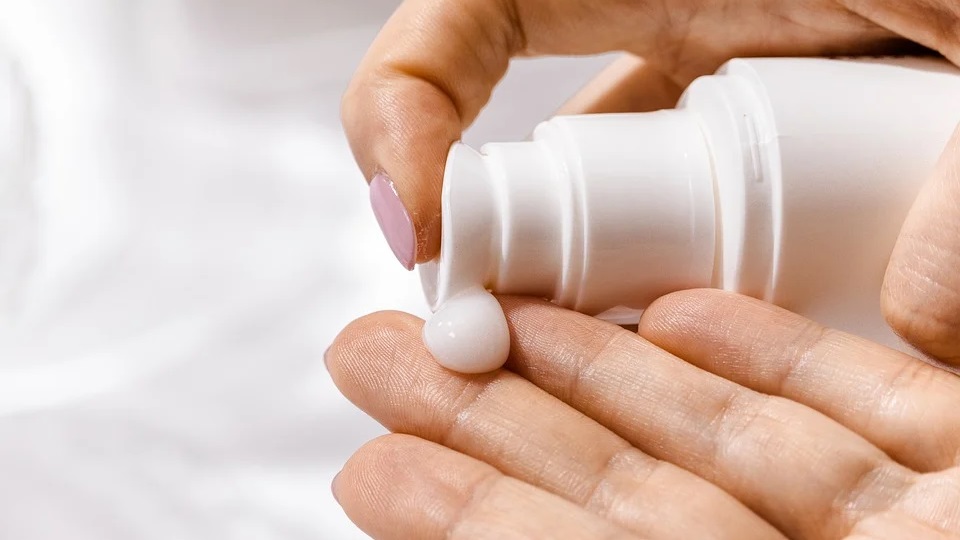
Surfactants as emulsifiers are used to form a stable mixture of two incompatible phases
Surfactants are used in shampoos, bubble bath for foaming appearance
Surfactants crate a luxurious and rich lathering experience in hair cleanser formulations