

Sticking to Sustainability: How Adhesives and Sealants are Joining the Circular Economy
Last update on Jul 4, 2024
Sustainability and circularity are the center of business discussions happening around the world. Solving the world's most challenging environmental issues is becoming increasingly urgent. This relates to the need to markedly decrease carbon emissions to not just slow, but reverse damage to our planet from excessive carbon mismanagement.
The adhesives & sealants industry has a long history of innovation based on materials derived from petrochemicals. It now has the opportunity to invest resources to develop technologies that not only do no harm to the environment but do good.
It's not about the stories to be told, it's about getting things done.
This article brings us to the measures adopted by the adhesives and sealants industry to prioritize sustainability. Also, how the industry aligns with the EU's circular economy goals and reduces carbon emissions.
The EU Green New Deal: A Path to Decarbonization and Sustainability
The European Union's Green New Deal was initiated in December 2019. It is an ambitious plan aimed at transforming the EU into a modern, resource-efficient, and competitive economy. Its primary goal is to achieve climate neutrality by 2050, ensuring no net emissions of greenhouse gases.
The Green New Deal targets decarbonizing energy-intensive industries, supports sustainable agriculture and biodiversity, and fosters circular economies. It also proposes to improve air and water quality, reduce waste, and protect ecosystems. This translates into a healthier environment.
Some of the key aspects of the Green New Deal include:
- significant reductions in greenhouse gas emissions,
- expanding the use of renewable energy, and
- accelerating energy efficiency
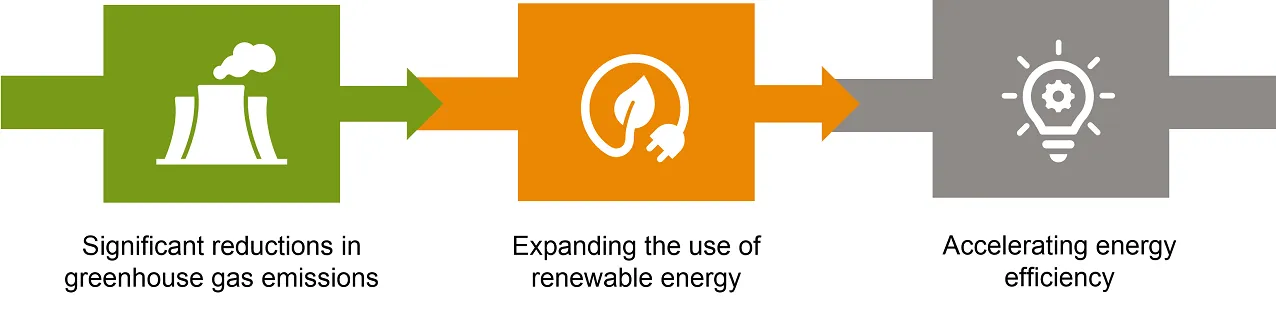
Key Aspects of the Green New Deal
The initiatives of the Green New Deal include:
- The European Climate Law — It legally binds the EU to its 2050 climate neutrality target.
- The Just Transition Mechanism — It provides financial and technical support to regions and sectors most affected by the green transition.
To accelerate innovation, the Green New Deal prioritizes research and development in green technologies and infrastructure. The EU also aims to encourage at least €1 trillion in sustainable investments over the next decade through public and private funds. Overall, the EU Green New Deal represents a comprehensive strategy to address climate change, enhance sustainability, and ensure economic resilience.
Adhesives and Sealants in the Circular Economy
Adhesives and sealants are crucial in product design, especially for disassembly and recycling. The precipice affecting industry-wide improvements to reducing environmental impact is attributed to:
Regardless of product technology, it's clear that a positive impact on the circular economy can be achieved in all end-use markets. This includes consumer/DIY, professional, and industrial uses. Following are the 4 primary methods where adhesive & sealant technologies contribute to sustainable practices.
Raw materials selection: Driving sustainability in product formulation

The selection of raw materials by formulators plays a critical role in the sustainability profile of the finished product. There are a wide range of options that exist today that contribute to:
- low toxicity,
- no VOCs,
- elimination of ingredients that are under regulatory pressure (e.g., formaldehyde and 1, 4 dioxane), and
- minimizing environmental impacts from shipping raw materials sourced from distant continents
Ingredients that are produced in nature tend to offer the best alternative to petrochemicals. For example:
- Starch-based adhesives are commonly used in paper, packaging, and wood adhesives
- Soy-based adhesives have found success as environmentally friendly options in plywood and particle board manufacturing1
Raw material selection is also essential to reaching anaerobic and/or aerobic degradation. This ensures that there is no long-term environmental effect.
Find out commercial grades for sustainable adhesives and sealants ingredients in our database:
 |  |  |  |
Manufacturing processes: Contributing to positive impact on carbon footprint
An element that contributes to the carbon footprint of an adhesive or sealant, that may not be initially thought of when assessing the sustainability profile, relates to the manufacturing process of both the end product and the raw materials. Many of the processes utilize unit operations that require significant energy. This has historically come from the consumption of fossil fuels to generate the needed energy.
Converting to renewable energy has a positive impact on the overall carbon footprint of the adhesive or sealant. For example, two of the most common sources of power are:
- Coal power — It produces 820-1050 grams of CO2 equivalent per kilowatt-hour (g CO2e/kWh)
- Solar power — It produces 20-50 grams of CO2 equivalent per kilowatt-hour (g CO2e/kWh)2
This marked difference highlights that coal power produces between 16 and 60 times more CO2, and thus offers manufacturers many benefits to their carbon footprint.
Revolutionizing packaging materials with renewable resources
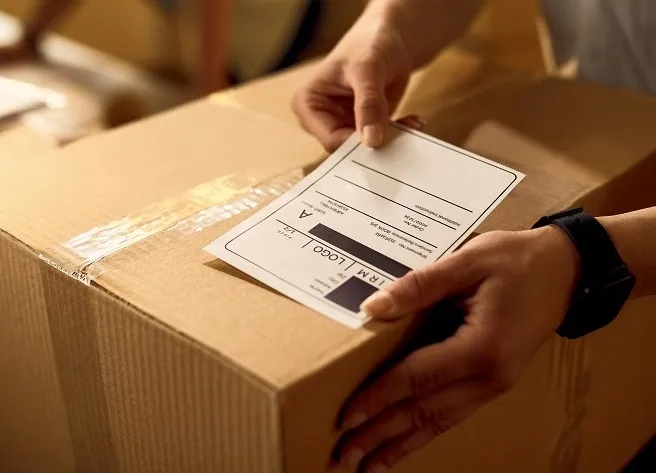
The environmental impact of packaging components depicts the long-term effect of packaging materials. They have a deleterious effect on the environment. The design of sustainable packaging used for consumer and industrial adhesives and sealants can be enhanced with renewable resources rather than traditional petrochemical-based materials.
Recent advancements in plant-based plastics such as polylactic acid (PLA) can replace petroleum-based plastics like PET. PLA is made from renewable resources like cornstarch or sugar cane. It is safe for use in food packaging applications and medical device packaging3.
Material selection improves the sustainable nature of packaging. Whereas, the design offers opportunities to reduce the environmental impact of packaging components. Techniques are being implemented that include:
- minimalistic design,
- reducing materials by optimizing the design,
- reusability, and
- using recycled paper and cardboard
Select from a wide range of adhesives and sealants ingredients for various applications:
 |  |  |  |
End-of-life solutions: From creation to reuse
One of the important, and often overlooked elements of sustainability is what happens when a product reaches the end of its useful life. Numerous approaches can be employed to mitigate the impact of the adhesive or sealant on the environment. It is crucial to note that the product means not just the adhesive or sealant itself, but also the packaging and delivery methods. The primary objective related to packaging is to reduce the amount of material being used to ship or display the product.
Additionally, the use of biodegradable packaging technology is available at an affordable price. It can be afforded by both the manufacturer and the customer. These technologies also allow the packaging to be recyclable or biodegradable. This has a long-term positive environmental impact on the Earth's finite land and water resources. Newer advances in reversible adhesives can be implemented. They enhance functionality and contribute to sustainability through easier recycling and reuse4.
Some industries have valuable components where it's cost-effective to disassemble. This is done by reversing the bond developed by the adhesive or sealant. For example, in the electronics industry where adhesives play a critical role in the assembly process to increase productivity and reduce the need for mechanical fasteners. The creation and disposal of electronic devices continue to grow. This growth rate will certainly continue for the foreseeable future.
Recycling used electronics can yield materials (e.g., gold, copper, glass, aluminum) that can be returned to the supply chain to be reused. This reduces raw materials used and the need for disposal of the used electronics. It also keeps them out of the waste disposal cycle where many of these components could be damaging to the environment5.
Challenges and Innovations by the Adhesives & Sealants Industry
Many industrial leaders across the adhesives and sealants supply chain are engaged in sustainable solutions. They address some of the world's largest challenges. Targets are being set, plans are being put in place, and stakeholders are beginning to develop accountability systems. Companies, generally start-ups, can and do have a voice through new sustainable technologies. These are especially those developing biobased chemicals that can be used as raw materials in adhesives and sealants.
Some of the more impactful biobased raw materials include:
- surfactants
- solvents, and
- biodegradable polymers for packaging
There are multiple forces at play when developing and implementing strategies. Performance and cost are necessary to ensure the products meet the requirements of the market and application. The biobased raw materials being developed can have a premium price. This is essentially a function of scale in the early days of the life of a technology.
Other hurdles are slowing down progress including resistance to regulatory advances to minimize or restrict chemicals of concern. For example, formaldehyde through a recent risk evaluation by the US Environmental Protection Agency (EPA) under the Toxic Substance Control Act (TSCA)6.
Conclusion
It's incumbent upon everyone in the adhesives and sealants industry value chain to:
- prioritize sustainability,
- develop strategies, and
- enact specific actions with targets and timing that have stated accountability
The road to sustainability is a journey. The pace down this path needs to accelerate to increase the impact of the adhesives and sealants industry on our fragile environment.
- United States Forest Products Lab, US Department of Agriculture; Soy adhesives that can form durable bonds for plywood, laminated flooring, and particleboard
- National Renewable Energy Lab (NREL) – Lifecycle Greenhouse Gas Emissions from Electricity Generation
- Recent Advances in PLA-Based Antibacterial Food Packaging and Its Applications; National Library of Medicine, Molecules. 2022 Sep; 27(18): 5953. Published online 2022 Sep 13. doi
- Sierra-Romero, Adriana et al. “A reversible water-based electrostatic adhesive.” Angewandte Chemie (International ed. in English) vol. 63,2 (2024): e202310750. doi
- Basic Information about Electronics Stewardship; United States Environmental Protection Agency (EPA)
- Risk Evaluation for Formaldehyde; United States Environmental Protection Agency (EPA)