
New product concept
Multifunctional Biosurfactants for Advanced Paints & Coatings: Enhanced Wetting, Leveling, Color Development & Pigment Dispersion
Interested in this new product concept?
Description of Desired Solution
Multifunctional biosurfactants designed to enhance key steps in paint and coating formulations: improving wetting, flow leveling, color development, and pigment dispersion across different coating systems.
By introducing a renewable, water‑soluble ingredient with broad applicability, this solution enables exploration of more sustainable coating systems while maintaining the performance needed for modern application demands.
Who can benefit
Coating formulators and manufacturers exploring new additive technologies for wetting, film formation, or pigment handling interested in assessing biosurfactant performance in their own formulations.
R&D teams evaluating bio‑based or multifunctional materials for next‑generation coating systems.
- Sustainability and innovation teams seeking alternatives aligned with environmental or regulatory goals.
Building on these capabilities, this biosurfactant offers a versatile platform that can interact with multiple formulation steps and coating chemistries. Its broad compatibility opens opportunities to fine‑tune performance across systems while supporting more sustainable development pathways.
The following benefits highlight where this material can add value in practical formulation work:
Detailed Solution Description

Uniform Performance & Enhanced Coverage on Difficult, Contaminated Surface
The biosurfactant exhibits improved wet‑out and less paint crawling, resulting in a more even film on contaminated substrates.
Brushed application of an acrylic–alkyd wood coating on oil‑contaminated engineered wood was compared with and without a biosurfactant (2.5%). | 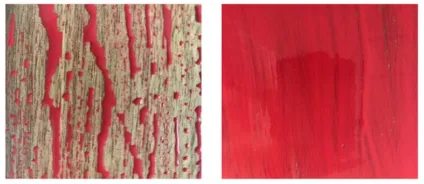  |
Lower Film‑Formation Temperature, Smoother Films
The biosurfactant enhances coalescence and yields a more continuous film with reduced surface defects.
In a polyurethane‑dispersion topcoat, adding 5% biosurfactant reduced the minimum film‑forming temperature (MFFT) from 72 °F to 63 °F (ASTM D7306‑7). | 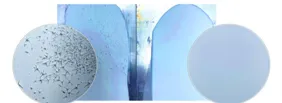  |
Improved Flow & Leveling for More Uniform Film
The biosurfactant improved flow, leveling, and surface wetting, visibly reducing mottling/roller stipple and yielding a more continuous, uniform film.
2% biosurfactant added to an acrylic latex wall paint applied with a ¼″‑nap roller. | 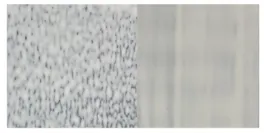  |
Improved Color Development & Rub‑Up Uniformity
The biosurfactant reduced visible rub‑up marks and produced a more uniform tint, indicating improved color development under mechanical rubbing.
0.5% biosurfactant added to an acrylic latex tinted with phthalo blue, ASTM D5326 rub‑up testing. |  
|

Adding a biosurfactant rapidly breaks up pigment agglomerates and produces a more uniform, workable paste compared with a thicker, lumpy control.
Outstanding high-temperature storage stability was observed during multi-week ASTM D1849 testing, with viscosity retained within specification, no evidence of hard settling or re-agglomeration, and a finer, more uniform particle distribution evident in low-magnification micrographs.
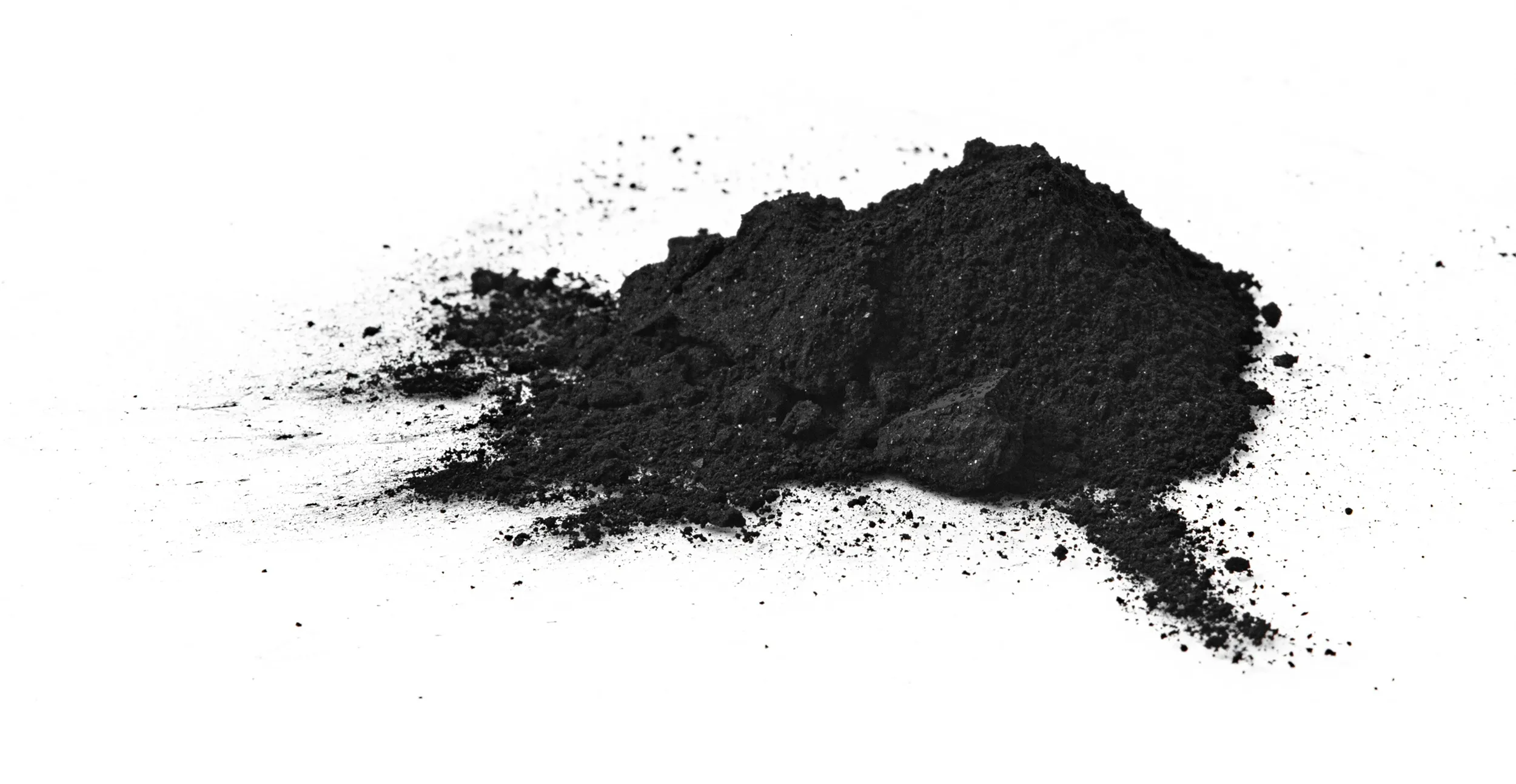
Across carbon black, but also TiO₂ and organic blue/red/yellow pigments, the evidence supports excellent particle deflocculation and stabilization, which is beneficial to achieve high color strength and a high‑gloss finish in subsequent tint and film evaluations.


Get in touch