

Polyimide additives in electronics industry
Last update on Oct 24, 2011
Polyimides are the class of polymers that have found uses in demanding electronics needs. These are thermally stable polymers that are often based on stiff aromatic backbones. They are a very interesting group of incredibly strong and astoundingly heat and chemical resistant polymers.
Their strength, heat and chemical resistance are so great that these polymers often replace glass and metals, such as steel, in many demanding applications. Polyimides have very high glass transition temperatures with typical values greater than 300°C. Another key benefit that is provided by polyimide-based flexible circuits is a low coefficient of thermal expansion (CTE).
A high modulus that is provided by polyimide films is thought to be an economic advantage as it allows a design engineer the potential to obtain adequate stiffness with a 1-2 mil film as an alternative to using a thicker substrate. Performance demands of polyimide films as a dielectric substrate for flexible printed circuit applications continue to intensify.
The use of polymeric materials in certain electronics applications poses a set of challenges that not all polymers can satisfy. Polyimides are one class of polymers that have found uses in demanding electronics needs.
In this guide, let's summarize the properties that allow them to meet these requirements and also areas of further development are discussed.
Chemical structure and production
Polyimides are a class of thermally stable polymers that are often based on stiff aromatic backbones. The aromatic polyimides are generally produced by a two-step polycondensation reaction of an aromatic dianhydride with either aromatic diamine or aromatic diisocyanate in a suitable reaction medium.
Their general chemical structure is shown in Figure 1 along with the general structure of linear polyimides. They are a very interesting group of incredibly strong and astoundingly heat and chemical resistant polymers. Their strength, heat and chemical resistance are so great that these polymers often replace glass and metals, such as steel, in many demanding applications. In addition, due in large part to their very low dielectric constant values, polyimides have become the polymer of choice in several demanding electronics applications.
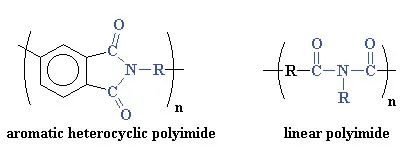
Figure 1: General chemical structure of polyimides
Low dielectric constant materials are required in several electronics uses because the higher the relative dielectric constant, the slower a signal travels on a wire, the lower the impedance is of a given trace geometry, and the larger the stray capacitance along a transmission line.
Further, only materials that can maintain sufficient reliability under severe heat conditions (180-400°C) can be used as insulation materials for electronics. Polyimides are one material that can satisfy this heat resistance requirement.
Also, polyimides are used in the electronics industry for flexible cables. For example, in a laptop computer, the cable that connects the main logic board to the display is often a polyimide base with copper conductors. Other uses for polyimide films in the electronics industry include use as substrates for flexible printed circuit boards and pressure-sensitive tapes.
As the electronics applications for polyimides have increased, an interest in the development of approaches to lower the dielectric constant have been sought. Structure-property studies have been performed to define the features that lead to low dielectric constant materials.
Among the strategies that have been employed to achieve this objective are:
- The incorporation of diamine and dianhydride reactants which minimize polarizability
- Using diamine and dianhydride reactants which impart a high degree of free volume
- Incorporating fluorine atoms into the molecular structure of the polyimide
It has been found that minimizing polarizability, maximizing free volume, and fluorination all lowered the dielectric constants in the polyimides that were studied. Polarizability is the primary variable which influences dielectric constants while free volume and fluorine content are secondary variables that can alter a polymer's polarizability. Enhanced free volume lowers polarization by decreasing the number of polarizable sites per unit volume. Fluorination increases the free volume, lowers the electronic polarization and can either increase or have no effect on dipole polarization, depending on whether the fluorination is asymmetric or symmetric.
Performance properties
Temperature-dependent properties
The dielectric constant at the room temperature of polyimides is important for their use in many electronics applications. The variation of the dielectric constant as a function of temperature is also relevant to their performance.
In addition, it is desirable that the associated dielectric loss remains low as a function of increasing temperature. The attainment of both of these features with polyimides is related to the fact that polyimides have very high glass transition temperatures with typical values greater than 300°C.
Coefficient of thermal expansion (CTE)
Another key benefit that is provided by polyimide-based flexible circuits is a low coefficient of thermal expansion (CTE). A polyimide film CTE of about 17 ppm/°C is desirable because of its match to copper from room temperature to solder bath temperatures. Without this property, the stresses during a thermal change of several 100°C would lead to excessive distortions.
High modulus
A high modulus that is provided by polyimide films is thought to be an economic advantage as it allows a design engineer the potential to obtain adequate stiffness with a 1-2 mil film as an alternative to using a thicker substrate. A stiffer film is also easier to process into a laminate construction.
Laminates are usually prepared by bonding a stack consisting of a polyimide film, an adhesive, and a metal foil such as copper. This construction is subjected to sufficient heat and pressure in a laminating press to provide a metal/polyimide laminate. The ability to use thin polyimide layers in laminates which are all flex constructions or as a flex layer in rigid boards also reduces the inductance and electromagnetic interference.
Challenges and limitations
Moisture absorption
One of the disadvantages of polyimide-based flexible printed circuits is the moisture absorption that is associated with the polyimide structure. The specific value of 1.5% is about the lower limit of moisture absorption for most current aromatic polyimides. Presently, a shift to other polymeric structures is being considered as a way to dramatically lower moisture absorption.
Furthermore, a moisture content of about 2% is about the limit of tolerance of most polyimide/copper laminates to avoid blistering when subjected to sudden excursions to 250-300°C during bonding. A long-term goal for polyimide development is a moisture absorption value of less than 1%.
Processing and manufacturing
Performance demands of polyimide films as a dielectric substrate for flexible printed circuit applications continue to intensify. In large part, those greater demands have stemmed from the design impetus toward ultra-miniaturization of solid-state memory and logic devices with increasingly greater lead counts.
As the technology continues to progress, the design engineer, with a constant desire for more reliable substrates, seeks thinner dielectric materials that will not distort under the mechanical stresses of processing. In addition, the materials should be dimensionally inert and capable of withstanding exposure to heat and process chemicals.
Surface treatment
Along with greater functionality, there is always the desire for higher production yields. Surface contaminants are a detriment to the bond quality in flexible printed circuits and complicate the adhesion to metal foils in laminate structures.
It is critical to properly prepare the surface of the polyimide film prior to the application to a metal foil. Various heat treatments, reactive ion etching and chemical modification techniques have been explored and additional advanced film processing technologies need to be developed.
Recent and future developments
One recent development in the polyimide field that addresses many of these concerns is a class of new, colorless polyimides that are based on technology that was originally developed at NASA. Several companies have recently reported work on such polyimide materials. They possess several unique properties including:
- Optical transparency approaching 90%
- Smooth surface finish in film form, and
- Tunable dielectric properties
The glass transition temperature is > 300°C and the coefficient of thermal expansion is < 30 ppm⁄°C, consistent with the requirement previously discussed. Both of these features are indicative of excellent high temperature stability. In addition, moisture absorption values less than 1% have been reported. The combination of desirable features makes this class of polyimides a likely candidate for exploration in emerging electronic uses.
This development is just one example of attempting to tailor the structure of polymers to meet a specific need. As requirements for polymeric materials, including polyimides, continue to become more stringent this trend is likely to continue. This means that there will be a growing need for studies which can define the structure-property relations as a way to better understand what chemical structure is required to meet the material performance requirement.