
Envalior to highlight its bio-based composites for aircrafts at JEC World 2026
Last update on Feb 27, 2026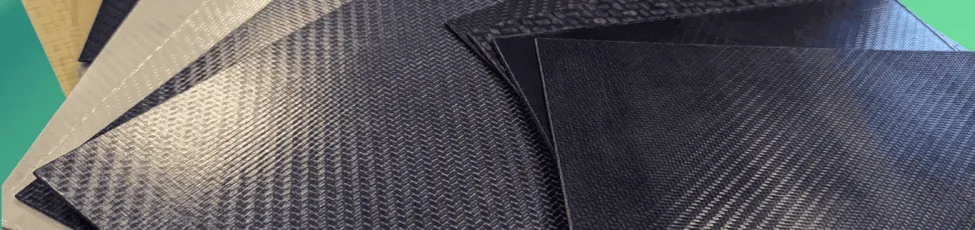
Envalior is putting the spotlight on its new Tepex® and UDea® composites for aircraft and drone manufacturing at JEC World 2026. The composites, many of which are bio-based, give manufacturers in these industries the opportunity to switch from thermoset to thermoplastic construction materials.
Interested in Envalior's latest developments? Visit their profile!
Key highlights
Materials showcased at Envalior’s booth for aircraft and drones include:
New polyphenylene sulfide and polyetherimide composites Tepex® dynalite: These materials are characterized by high temperature and chemical resistance as well as high intrinsic flame retardancy. Potential applications include aircraft interior parts, such as seat shells, paneling, partitions, and flaps.
High-performance Tepex® dynalite composites based on Envalior's EcoPaXX® (polyamide 4.10, PA 4.10): This material family is bio-based and derived from castor oil. Thanks to the excellent adhesion between the reinforcing continuous glass or carbon fibers and the PA 4.10 matrix, it offers the highest strength and stiffness in Envalior's composite portfolio while having a low density. This makes it ideal for lightweight components in drones, such as rods and rotors.
"Our thermoplastic composites can be processed in large quantities using the hybrid molding process in a much more cost-efficient manner, mold-falling, and without the need for reworking. This results in high-performance components of consistent high quality which, unlike their thermoset counterparts, are easily recyclable into injection molding compounds and are therefore significantly more sustainable," explains Dr. Dirk Bonefeld, head of Global Product Management and Marketing for Tepex® at Envalior.
Additional applications showcased at Envalior’s booth for new mobility and sustainable lightweight construction include:
Thermoplastic high-pressure vessel for storing hydrogen: The blow-molded tank liner is made of a Fuel Lock polyamide 6 compound and the reinforcing wrap is made of EcoPaXX® PA 4.10 UDea® tape, both from Envalior. The tank is easy to recycle. The strong chemical adhesion between liner and wrapping enables deep vacuum cleaning without collapse of the liner. In addition, the vessel exhibits a high mechanical strength at temperatures down to -40°C during rapid pressure changes, such as those that occur during fueling. Such tanks can be used, e.g., in fuel cell technology for busses and trucks, and in hydrogen transportation.
Rotation-molded liner for high-pressure hydrogen vessels: The polyamide 6 liner has an excellent inner surface with low porosity, comparable to that of blow-molded or injection-molded and then welded liners. The PA 6 compound enables the integration of metallic boss parts. As single-stage process, rotomolding is highly economical and results in liners without weld seams.
Protective sleeve for the rotor of an electric motor: The ultra-lightweight sleeve is made of UDea® tape and encloses the high-speed rotor. It is cheaper to manufacture in large volumes than its counterparts made of metal or thermoset composites and, unlike the latter, is easy to recycle mechanically. Because of these advantages, more and more manufacturers of all types of electric motors are switching to such shells made of thermoplastic composite tapes.
Bio-based child seat: The prototype, manufactured by the Fraunhofer Institute for Microstructure of Materials and Systems (IMWS), will be on display at JEC’s special exhibition Innovation Planets. The seat consists of a bio-based polyamide 10.10 composite Tepex® reinforced with flax fibers and is overmolded with a bio-based polyamide 11.
Visit Envalior at the JEC World 2026, Paris Nord Villepinte Exhibition Center, Booth P39, Hall 5, to explore these composite innovations firsthand.
Image credits: Envalior