

Polyvinylidene Fluoride (PVDF): How to select the right grade?
Last update on Apr 27, 2026
Polyvinylidene fluoride (PVDF) is a semi-crystalline thermoplastic fluoropolymer. It is known for its excellent mechanical strength, chemical resistance, and melt-processibility.
Easily fabricated through injection and compression molding, PVDF has gained strong market interest in recent years. This is mainly due to its outstanding piezoelectric, pyroelectric, and ferroelectric properties.
These attributes make it a material of choice across various applications, including chemical processing, electrical and electronics, energy storage, and specialty industries. To address the wide range of processing requirements, PVDF is commercially available in multiple grades with varying melt flows.
Read on to explore what makes PVDF a high-performance polymer and how its properties translate into real-world applications.
What is PVDF?
Polyvinylidene fluoride (PVDF) or polyvinylidene difluoride (PVF2) is a semi-crystalline thermoplastic fluoropolymer. It has a high purity with service temperatures up to 150 °C. The polymer chain has alternating CH2 and CF2 groups. The polarity of these groups leads to insolubility and electrical properties.

Molecular structure of PVDF
PVDF has become the largest volume of fluoropolymers after polytetrafluoroethylene (PTFE). Thanks to its excellent combination of properties and processability. It is commercially available in a wide range of melt flow rates and with various additives. This enhances the processing or end-use properties.
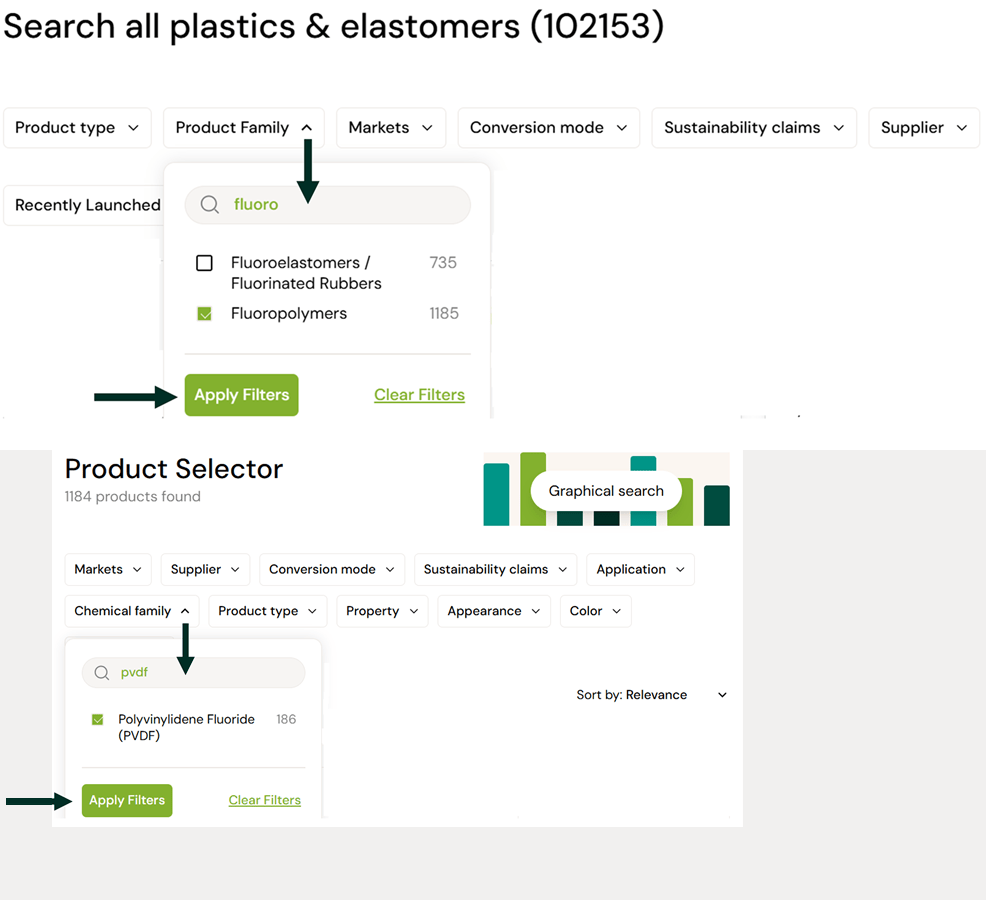
Identify the most suitable polyvinylidene fluoride grade through our centralized platform. Access our Master Catalog, featuring over 180 commercial PVDF grades, request samples, and download technical datasheets for efficient material evaluation.
 |
How to produce PVDF?
Polyvinylidene fluoride is generally synthesized by the free radical polymerization of 1,1-difluoroethylene (CH2=CF2). The polymerization takes place in the suspension or emulsion at:
- Temperature: 10-150 °C
- Pressure: 10-300 atm
The material obtained is then processed into film or sheets. Chlorotrifluoroethylene (CTFE) or hexafluoropropene (HFP) are most commonly employed to prepare PVDF copolymers.

Synthesis of PVDF from its monomer
Polyvinylidene fluoride copolymers with HFP have increased flexibility compared to PVDF homopolymer grades. Copolymers with CTFE are among the most flexible PVDF products. The material shows excellent low-temperature performance and low shrinkage. Copolymers are ideal for wire & cable and tubing applications, which require enhanced flexibility.
What are the properties of PVDF?
Polyvinylidene fluoride exhibits a unique combination of structural, physical, mechanical, chemical, and electrical properties. These properties are closely linked to the way the polymer chains are arranged at the molecular level. Thus, making its crystalline structure a key factor in determining overall performance.
Crystal structure
Polyvinylidene fluoride is typically a semi-crystalline polymer that is approximately 50% amorphous. It has a highly regular structure with most of the VDF units joined head-to-tail. A very small percentage of these monomer units are joined head-to-head.
This fluoroplastic exists in four possible conformations, namely α, β, γ, and δ phases.
- The C–F bonds are polar. The highest dipole moment is obtained with the alignment of all dipoles of the polymer in the same direction. This corresponds to the β-phase of the PVDF. The β-phase is the desired phase for the piezoelectric characteristics of the polymer.
- The dipole moments of α crystallites are oriented in opposite directions. This results in zero net polarization.

Alpha- and beta-phase structures of PVDF
(Source: Royal Society of Chemistry)
Physical properties
PVDF has one of the lowest melting points of commercial fluoropolymers. It has the highest heat deflection temperature under load. PVDF provides very low permeation values compared to other fluoropolymers. This is due to high crystallinity and surface tension properties.
PVDF shows low permeability to gases and liquids. However, the permeability of PVDF is influenced by the crystalline degree and the modification of crystalline parts.
| Polymer | Deflection temperature (°C) | Melting point (°C) | |
| 0.5 MPa | 1.8 MPa | ||
| PVDF | 148 | 113 | 178 |
| PCTFE | 126 | 75 | 218 |
| PTFE | 121 | 56 | 327 |
| ECTFE | 116 | 77 | 240 |
| ETFE | 104 | 74 | 270 |
| PFA | 73 | 48 | 310 |
| FEP | 70 | 51 | 270 |
Physical parameters of various fluoropolymers
Mechanical properties
Polyvinylidene fluoride shows the following characteristics when compared to ethylene tetrafluoroethylene (ETFE) and ethylene-chlorotrifluoroethylene (ECTFE).
- PVDF has a similar tensile modulus but lower impact strength.
- Modification with HFP or CTFE lowers the modulus but increases elongation and impact strength.
- When exposed to flame, PVDF is non-flammable and non-dripping. It is self-extinguishing. It is TL V0 compliant. The LOI is 44%.
- It also exhibits good resistance to UV light.
| Property (Standard) | PVDF values | vs. ETFE values | vs. ECTFE values |
| Melting point, °C, ASTM D 3418 | 154-184 | 250-275 | 236-246 |
| Specific gravity, g/cm3, ASTM D 792 (Solid) | 1.75-1.80 | 1.72 | 1.7 |
| Tensile Strength @ 23°C, MPa, ASTM D 638 | 36-56 | 38-48 | 45-60 |
| Elongation @ 23°C, %, ASTM D638 | 25-500 | 100-350 | 150-250 |
| Tensile Modulus @ 23°C, MPa, ASTM D 638 | 1340-2000 | 830 | - |
| Izod impact strength @ 23°C, J/m, ASTM D 256 | 160-530 | no break | no break |
| Coefficient of thermal expansion, ASTM D 696 | ~10-4 | 9 x 10⁻⁵ | 5 x 10⁻⁵ |
| Processing temp. range, °C | 200-300 | 300-345 | 260-300 |
| Dielectric constant, (1 kHz), ASTM D 150 | 7.5-13.2 | 2.6 | 2.6 |
| Dielectric strength, kV/mm, ASTM D 149 | 260-950 | 59 | 80-90 |
| Dissipation factor, (1 kHz), ASTM D 150 | 0.0163-0.019 | 0.0008 | 0.0024 |
| LOI, %, ASTM D 2863 | 44 | 30 | 64 |
Comparison of mechanical properties: PVDF vs. ETFE vs. ECTFE
Chemical resistance
The chemical inertness varies between the different fluoropolymers.
- PTFE, fluorinated ethylene propylene (FEP), perfluoroalkoxy (PFA), and methyl fluoroacetate (MFA) exhibit chemical inertness to a wider range of chemicals.
- Partially fluorinated polymers show chemical inertness to a narrower range of chemicals. Examples of partial fluoropolymers include CTFE, PCTFE, and ECTFE.
At elevated temperatures, PVDF can be dissolved in organic solvents such as esters and amines. This allows PVDF to be applied as corrosion-resistant coatings on chemical process equipment and architectural panels. Parts made of PVDF display great resistance to minerals and organic acids, aliphatic and aromatic hydrocarbons, alcohols, and halogenated solvents.
Get tips from experts to formulate chemical-resistant polymers and find suitable commercial grades for your next formulation project.
Electrical properties
PVDF is primarily used in wire and cable isolation. Thanks to its high dielectric constant and dissipation factor. However, their poor electrical properties allow the production of PVDF films with:
- piezoelectric behavior and
- pyroelectric behavior
PVDF films are prepared from extruded films in B-phase conformation. Both surfaces of the film are metalized and then subjected to high voltage. This leaves it permanently polarized.
Such films generate a voltage when stretched or compressed (piezoelectricity) or heated (pyroelectricity) at a temperature close to the melting point. The polymer films also show some ferroelectricity.

Key properties of polyvinylidene fluoride
Let's move on to find out how these PVDF grades are processed into their final forms and assess whether they meet today's sustainability expectations.
PVDF: Processing methods and sustainability
How are PVDF grades processed?
Polyvinylidene fluoride grades are available in a wide range of melt viscosities as powders and pellets. It can be processed using techniques applicable to standard thermoplastics, including:
|
|
Drying of resin before processing is usually not necessary. Care must be taken to eliminate hang-up areas where molten resin can collect and thermally decompose if residence time is excessive. The processing temperature ranges between 190 and 280 °C.
Injection molding
Injection molding of PVDF requires careful control of processing conditions. Appropriate temperature settings, mold design, and shrinkage considerations are essential to obtain dimensionally accurate and high-quality parts.
- Melt temperature should be between 200 and 270 °C
- A mold temperature of 50-95 °C is recommended
- The relatively high melt viscosity of PVDF requires proper mold design. This is an important factor in injection molding
- The shrinkage (3-4%) of the injected molded pieces has to be taken into consideration during conception
Extrusion
Extrusion of PVDF requires controlled processing conditions to maintain polymer stability. Proper equipment design and temperature management are key. This helps to prevent degradation and achieve high-quality extruded products.
- In extrusion, attention should be paid to the elimination of dead spots, where degradation of the polymer can start
- Extrusion temperature ranges from 230 to 290 °C
- No extrusion aids, lubricants, or heat stabilizers are needed to extrude PVDF
- An L/D ratio of at least 20 is recommended
Select commercial polyvinylidene fluoride grades available in our Master Catalog that support various polymer processing methods:
 |  |  |
Sustainability aspect of PVDF
Is PVDF recyclable?
Polyvinylidene fluoride is recyclable. It can be melted and reprocessed multiple times. Thus, it does not lead to any significant degradation of its properties. However, it is important to note that the recycling of PVDF might not be as readily available as common materials like PET or HDPE.
Are PVDF resins toxic?
PVDF is generally considered safe for many applications. It is a thermoplastic polymer that has a high resistance to chemicals, UV radiation, and extreme temperatures. This makes it suitable for various industries. In terms of human health, PVDF is generally regarded as non-toxic and biocompatible. Hence, it has been used in medical applications such as implants, prosthetics, and drug delivery systems.
Building on the processing routes and sustainability considerations discussed above, let’s now explore the key markets where PVDF’s distinctive properties translate into real-world applications.
Key markets served by PVDF

PVDF Used in Piezoelectric films

PVDF is also widely used in filtration and separation equipment (filters, membranes, housings)
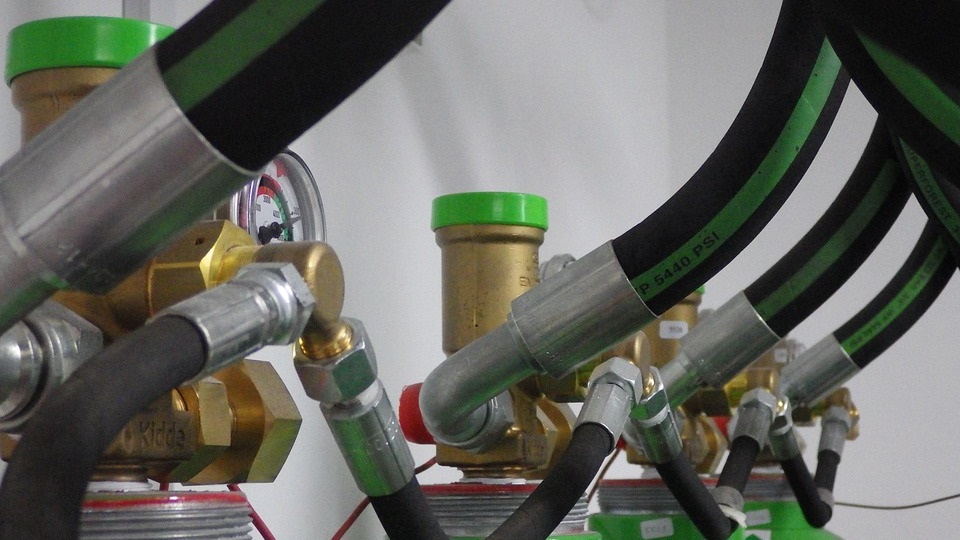
Heat-shrinkable or flexible tubing made from PVDF resin