

Polytetrafluoroethylene (PTFE): How to select the right grade?
Last update on Apr 1, 2026
Fluoropolymer is a class of plastics offering a varied range of properties. The discovery of PTFE has revolutionized the emergence of this category of polymers.
Today, PTFE is used in low-tech non-stick frying pan surfaces (Yes! It is the slippery coating in the cookware you use in your kitchen). It is used in high-tech exotic medical & hospital uses such as implants, surgical instruments, & test equipment.
In this guide, you will find what makes PTFE a versatile polymer. Also, learn how to select the right PTFE grade for your requirements.
What is Polytetrafluoroethylene (PTFE)?
Define PTFE
PTFE stands for Polytetrafluoroethylene or PTFE, the commonly used versatile, high-performance fluoropolymer. PTFE was first discovered 'accidentally' in 1938 by Dr. Plunkett at DuPont. After that PTFE was made commercially available in 1947 with the trademark 'Teflon™' from Chemours. It was the discovery of PTFE that accelerated the development of the other fluoropolymers.
Chemical formula of polytetrafluoroethylene
PTFE is made up of carbon and fluorine atoms. The chemical structure of PTFE [CF2-CF2]n is like that of polyethylene (PE). The hydrogen atoms in PE are completely replaced by fluorine. Hence it is referred to as perfluoro polymer. However, it is important to note that in practice PTFE and PE are prepared and used in totally different ways.

Molecular Structure of PTFE
It is the size of a fluorine atom that forms a uniform and continuous sheath around carbon-carbon bonds. This uniform fluorine sheath:
- Imparts good chemical resistance and stability to the molecule.
- Provides electrical inertness to the molecule.
The fluorine content in PTFE is theoretically 76% and it has 95% crystallinity.
How is PTFE made?
PTFE is a linear polymer of tetrafluoroethylene (TFE). It is manufactured by a free-radical polymerization mechanism in an aqueous media via the addition polymerization of TFE in a batch process.

What are the properties of PTFE?
The basic properties of PTFE which make it an interesting material with high commercial value are:
|
|
Density: It has a density in the range of 2.1 - 2.3 g/cm3 and melt viscosity in the range of 1-10 GPa per second.
Chemically resistant: The exceptions include molten alkali metals, gaseous fluorine at high temperatures and pressures, and a few organic halogenated compounds such as chlorine trifluoride (ClF3) and oxygen difluoride (OF2). Know more about chemical resistance here.
Mechanical properties: Properties of PTFE are generally inferior to engineering plastics at room temperature. Compounding with fillers has been the strategy to overcome this shortage. PTFE has useful mechanical properties in its use temperature range. These properties are also affected by processing variables such a preform pressure, sintering temperature, cooling rate, etc. Polymer variable such as molar mass, particle size, particle size distribution poses a significant impact on mechanical properties.
Electrical properties: High insulation resistance, low dielectric constant, and low dielectric constant of 2.0 due to the highly symmetric structure of the macromolecules.
Thermal properties: PTFE exhibits high thermal stability without obvious degradation below 440°C. These materials can be continuously used below 260°C.
Radiation resistance: PTFE is attacked by radiation, and degradation in the air begins at a dose of 0.02 Mrad.
| Property | Value |
| Melting Temperature (°C) | 317-337 |
| Tensile Modulus (MPa) | 550 |
| Elongation at Break (%) | 300-550 |
| Dielectric strength (kV/mm) | 19.7 |
| Dielectric Constant | 2.0 |
| Dynamic Coefficient of Friction | 0.04 |
| Surface Energy (Dynes/g) | 18 |
| Appl. Temperature (°C) | 260 |
| Refractive Index | 1.35 |
These properties come from the special electronic structure of the fluorine atom, the stable carbon-fluorine covalent bonding, and the unique intramolecular and intermolecular interactions between the fluorinated polymer segments and the main chains.
Impact of fillers on PTFE properties
The addition of fillers or additives results in the following changes in PTFE:
- They can enhance its mechanical properties, particularly creep and wear rate.
- They provide excellent properties of PTFE at low and high temperatures.
- They increase the porosity of PTFE compounds.
- The dielectric strength decreases while the dielectric constant and dissipation factor increase.
- The chemical properties will depend on the type of filler used.
- They impart a change in the electrical and thermal conductivity of PTFE.
Up to 40% by volume of filler can be added to the PTFE without complete loss of physical properties. The impact of fillers below 5% is low.
Some common fillers are glass fiber, carbon, carbon fiber, steel, bronze, graphite, etc.
- Glass fiber has a positive impact on the creep performance of PTFE. The fiber reduces its low and high temperatures. Glass-filled compounds perform well in oxidizing environments. They further improve the wear characteristics of PTFE.
- Carbon reduces creep, increases hardness, and elevates the thermal conductivity of PTFE. When combined with graphite, the wear resistance of carbon-filled compounds can be improved. They are suitable for non-lubricated applications such as piston rings in compressor cylinders. Further, graphite imparts excellent wear properties to PTFE. Graphite-filled PTFE has an extremely low coefficient of friction.
- Carbon fiber lowers creep, increases flex and compressive modulus, and raises hardness. Unlike glass fibers, carbon fibers are inert to hydrofluoric acid and strong bases. Carbon fiber PTFE compounds have low coefficient of thermal expansion and high thermal conductivity. These compounds are ideal for automotive parts in shock absorbers, water pumps, etc.
- Bronze-filled PTFE compounds have high thermal and electrical conductivity. Hence, these compounds are suitable for applications where a part is subjected to load in extreme temperatures.
Other fillers: Calcium fluoride, Alumina, Mica, and polymeric fillers.
Challenges to overcome while selecting PTFE
The conventional PTFE has some limitations in its applications, such as:
- Impossibility of using conventional molten-state processing methods and difficulty and cost of the suitable specific methods
- Sensitivity to creep and abrasion
- Significant dimensional variation around glass transition temperature (19°C)
- Difficulties of joining
- Corrosive and prone to toxic fumes
- Low radiation resistance
Now that you've learnt about PTFE properties, pick the right processing method for your needs.
PTFE: Processing and physical forms
How PTFE is processed?
PTFE has a very high-melt viscosity and a high-melting temperature. This is due to the rigid polymeric chain structure. This in turn makes processing difficult by extrusion and injection molding. Processing technologies have more similarities to powder metallurgy than those of traditional processing.
- Sintering, pressing, ram or paste extrusion, compression molding or isotactic molding, machining, hot stamping, and extrusion of pre-sintered powders on special machines.
- Paste extrusion in which PTFE blends with a hydrocarbon, before molding a preform. This continuously fabricates PTFE into tubes, tapes, and wire insulation. The hydrocarbon vaporizes before the part is sintered.
- Dispersion – metal coatings, coatings, pulverization, impregnation, cast for thin films, and fiber spinning.
- Operating range (-270°C) -200°C to 260°C (280°C)
The properties of the PTFE products are strongly dependent on the processing procedure. These include:
- Particle size
- Sintering temperature
- Processing pressure
Other fluoropolymers are needed for specific applications where PTFE is not completely suitable. This led to a search for melt-processable fluoropolymers and the development of other members of the family.
Our platform shows you several processing options. Choose the one that works best for you.
 |  |  |
 |  |  |
Physical forms of PTFE
PTFE is available in granular, fine powder and water-based dispersion forms.
- The granular PTFE resin is produced by suspension polymerization in an aqueous medium with little or no dispersing agent. Granular PTFE resins are mainly used for molding (compression and isostatic) and ram extrusion.
- The fine PTFE powder is prepared by controlled emulsion polymerization, and the products are white, small-sized particles. Fine PTFE powders can be processed into thin sections by paste extrusion or used as additives to increase wear resistance or frictional property of other materials.
- PTFE dispersions are prepared by the aqueous polymerization using more dispersing agents with agitation. Dispersions are used for coatings and film casting.
PTFE uses and applications
PTFE is used as a cost-effective solution across multiple sectors. This versatile polymer has many practical uses across 25+ markets and 60+ applications. Find out which PTFE grade you need out of 620+ commercial grades in our master catalog.

Kitchenware and food processing
PTFE is the best non-stick coating for your kitchen pans and baking trays. Applied to machinery components to reduce sticking and friction. This fluorinated thermoplastic can work in extremely high or low temperatures.

Automotive industry
Self-lubricating PTFE grades are used in automobiles. Chemically resistant PTFE grades are used in valve stem seals and linings for fuel hoses. PTFE is also suitable for O-rings, gaskets, power steering, and transmission. Filled granular resins are used for gaskets, shaft seals, bearings, and piston rings. Select 210+ PTFE grades used in seals, sealants, and gaskets.

Electrical and electronics
High-purity PTFE grades are used in semiconductor parts. High-performance insulation for wires and cables. Used in connectors, flexible printed circuit boards, and electrical insulation. Recommended for microwave/RF components due to its low dielectric constant. Select 60+ PTFE grades used in electrical and electronic industry.

Medical and pharmaceutical
PTFE medical grades are chemically inert. They are suitable for catheters, cardiovascular grafts, and surgical meshes. This high-performance polymer is also used in non-reactive tubing and containers. PTFE grades are well suited for pharmaceuticals, ligament replacement, and heart patches.

Engineering and manufacturing
Due to its chemical resistance, PTFE is used to line the coatings of industrial equipment. For example, heat exchangers, pumps, diaphragms, impellers, tanks, reaction vessels, autoclaves, and containers. Used in engineering applications for pipes, fittings, valves, pump parts, seals and plugs.


One of the common applications of PTFE polymer is non-stick coating in kitchen cookware (pans, baking trays etc.)
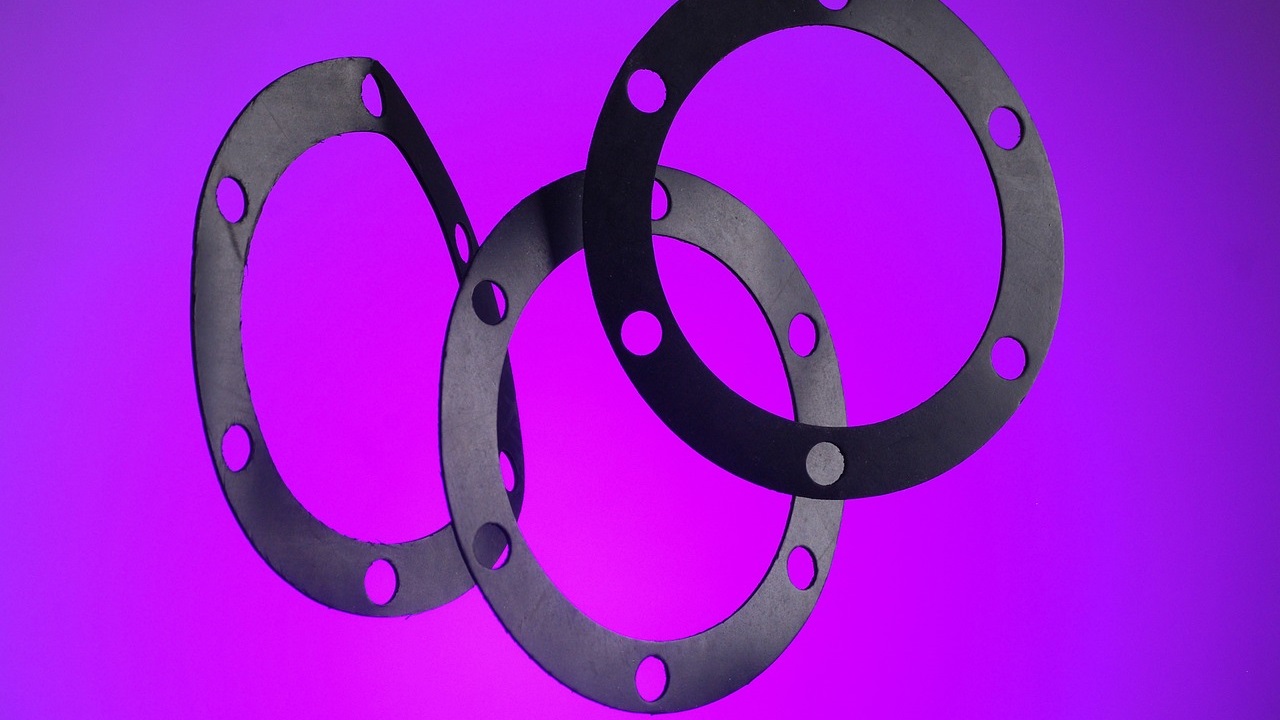
PTFE filled granular resins were found to be suitable for parts such as gaskets, shaft seals, bearing, piston rings etc.

PTFE is used as a cost-effective solution for oil & gas industry