

Polyamide (Nylon): How to select the right grade?
Last update on Feb 28, 2026
• Monomeric units
• Polymerization chemistry
But are you finding it hard to select the right one for your specific application?
Make your selection process easy by elaborating on the types of polyamides. Key features and processing conditions of each class have been explained here. Also, understand what makes them an ideal choice in high-end engineering applications.
What is Polyamide?
A polyamide is a polymer containing repeating amide (–CO-NH–) linkages. Wallace Hume Carothers was the chemist behind the discovery of Polyamide and Nylon.
1928: Hired by DuPont de Nemours to lead extensive research on the design of original polymeric materials.
1934: Carothers and his team turned their attention to fibers to produce synthetic silk. In their experiments, they reacted a diacid and a diamine to form a polyamide polymer.
1935: Dr. Gerard Berchet was assigned to this polyamide research. Under the direction of Carothers, they produced a half-ounce of polyamide 6-6.
Is nylon same as polyamide?
'Polyamide' and 'nylon' are frequently used as synonyms. However, this usage isn't accurate. Let's help you differentiate between these terms.
| Polyamides | Nylons |
|
|
What does the number after nylon or polyamide mean?
The number after nylon or polyamide is denoted by one or more numbers relating to the number of carbon atoms contained in the repeated pattern. Here is a list of the monomers used in the manufacturing of different aliphatic polyamides.
| Aliphatic Polyamides | Monomer(s) |
| Nylon 6 | Caprolactum |
| Nylon 11 | 11-amino undecanoic acid |
| Nylon 12 | Laurolactam |
| Nylon 6-6 | Hexamethylene Diamine/ Adipic Acid |
| Nylon 6-9 | Hexamethylene Diamine/ Azelaic Acid |
| Nylon 6-10 | Hexamethylene Diamine/ 1,12-Dodecanedioic Acid |
| Nylon 6-12 | Hexamethylene Diamine/ Sebacic Acid |
| Nylon 4-6 | 1,4-Diaminobutane/ Adipic Acid |
| Nylon 12-12 | 1,12-Dodecanediamine/ 1,12-Dodecanedioic Acid |
Aliphatic polyamide polymers and their monomers

Types of polyamides
The manufacturing of different polyamide types varies depending on the monomeric units. They may be aliphatic, semi-aromatic, and aromatic (aramids). Based on their crystallinity, they may be: amorphous, semi-crystalline, or crystalline.
Here is a hierarchical representation of the different classes and sub-classes of polyamides:

Each has unique property profiles that make them suitable for some applications and unsuitable for others.
- Aliphatic polyamides offer the most versatile performance. They lack aromatic content allowing maximum flexibility, toughness, and ease of processing. Yet, it has reduced resistance to heat and chemicals compared to the other two classes.
- Semi-aromatic grades enhance mechanical properties, moderate thermal performance, and chemical resistance. These properties are coupled with increased flexibility and impact resistance.
- Aromatic polyamides contain a significant percentage of aromatic rings in their molecular structure. This gives them high thermal stability and chemical resistance. But it also makes them rigid and relatively brittle.
Selecting the right polyamide is crucial when designing applications with certain considerations. The table below will help you select the right polyamide based on your requirements.
Property | Aliphatic Polyamides | Semi-Aromatic Polyamides | Aromatic Polyamides (Aramids) |
|---|---|---|---|
| Strength | Good | Enhanced | Exceptionally high |
| Stiffness | Moderate | High | Very high |
| Toughness | Very good | Good | Low (brittle) without modification |
| Resistance to Heat and Fire | Up to 150°C | Up to 200°C | Up to 500°C |
| Chemical/Solvent Resistance | Moderate | High | High, except to some solvents |
| Weatherability | Very Good | Moderate; less UV stable | Poor weatherability |
| Water Absorption | Fairly high | Low | Very low |
| Cost | Low | Moderate | High |
| Processability | Excellent | Good | Difficult |
We will help you make the right polyamide selection based on the base polymer, end-user requirement, and the intended application.
Let's ease your material selection by elaborating each polyamide category in detail along with their key features and processing conditions.
Aliphatic polyamides
Polyamide 6 (Nylon 6)
Polyamide 6 (PA 6) is also known as Nylon 6 or polycaprolactam. It is one of the most extensively used polyamides globally. It is synthesized by ring-opening polymerization of caprolactam. Melting point of polyamide 6 is 223°C.
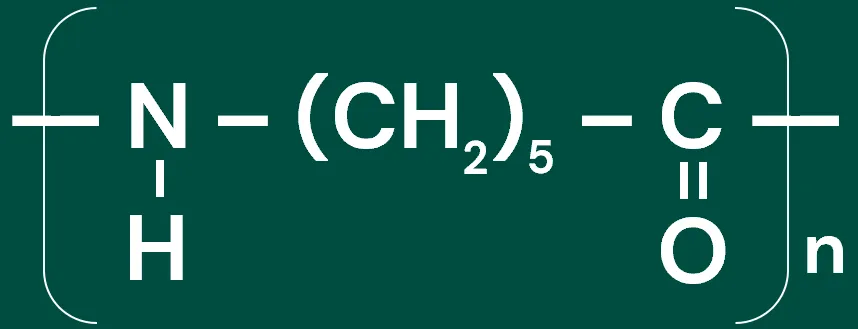
Polyamide 6 structure
Polyamide 6-6 (Nylon 6-6)
Polyamide 6-6 (PA6-6) or Nylon 6-6 is one of the most popular engineering thermoplastics. It is majorly used as a replacement for metal in various applications. Nylon 66 is synthesized by polycondensation of hexamethylenediamine and adipic acid. These two monomers contain 6 carbon atoms each. Melting point of polyamide 6-6 is 255°C.
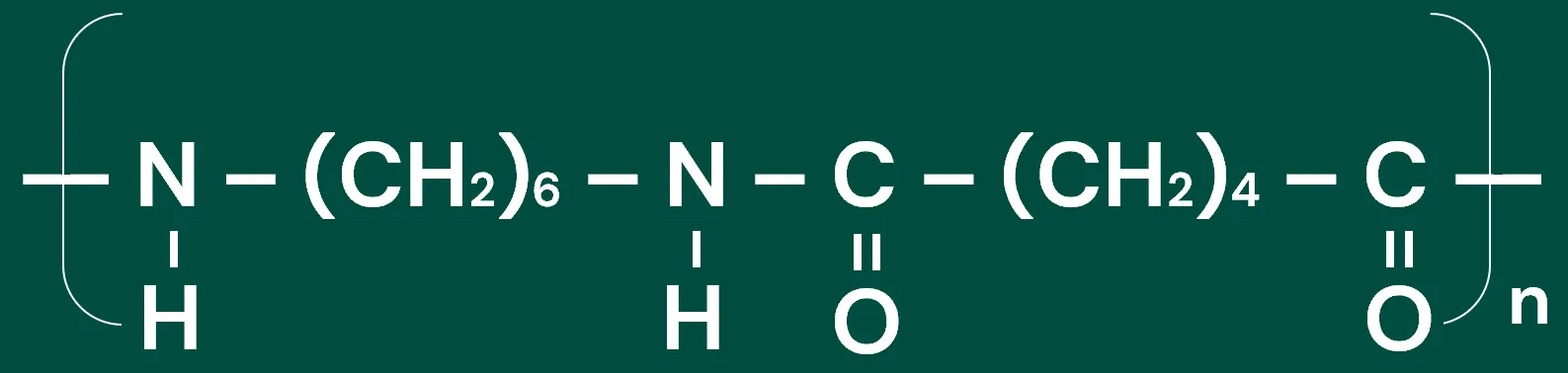
Polyamide 66 structure
PA6 vs. PA 6-6: How are they different?
Main properties of PA 6 and PA 6-6
PA 6 & PA 6-6 are by far the most used polyamides globally. They are used in many applications due to their excellent performance/cost ratios. Their key properties include:
- High strength and stiffness at high temperature
- Good impact strength, even at low temperature
- Very good flow for easy processing
- Good abrasion and wear resistance
- Excellent fuel and oil resistance
- Good fatigue resistance
- Good electrical insulating properties
- High water absorption and water equilibrium content limit the usage
- Low dimensional stability
- Attacked by strong mineral acids and absorbs polar solvents
- Proper drying before processing is needed
Although they exhibit similar properties, slight differences do remain.
| Detailed property comparison between PA6 and PA66 | |
| PA 6 vs. PA 6-6 | PA 6-6 vs. PA 6 |
|
|
Processing conditions of PA6 and PA66
While processing PA 6 and PA 6-6 drying before is highly recommended. The moisture content should be a maximum of 0.2%. The maximum permissible drying temperatures lie in the range of about 80 to 110°C.
Polyamide 6 and Polyamide 6-6 are thermally stable up to 310°C. At temperatures above this leads to decomposition. The initial products formed are mainly carbon monoxide, ammonia, and caprolactam. While processing Polyamide 6 and 6-6 with injection molding and extrusion techniques, the following conditions are recommended.
Injection molding
- L/D ratio of 18:22
- The melt temperature should be between 240-270°C (PA 6) & 270-300°C (PA 6-6)
- The mold temperature should be in the range of 55-80°C
| Commercial Grades | Select 5300+ injection molding PA 6 grades | Select 5500+ injection molding PA 6-6 grades |
Extrusion
- Only highly viscous grades can be processed by extrusion
- A three-section screw with an L/D ratio of 20-30 is recommended
- The processing temperature during extrusion should lie between 240 and 270°C (PA 6) & 270 to 290°C (PA 6-6)
| Commercial Grades | Select 500+ PA 6 extrusion grades | Select 250+ PA 6-6 extrusion grades |
Polyamide 11 (Nylon 11)
Polyamide 11 (PA11) or Nylon 11 is a rare bio-based engineering plastic. Derived from renewable resources (castor plants). It is produced by the polymerization of 11-amino undecanoic acid.
Rilsan® is one of the first biosourced polyamide. Melting point of Polyamide 11 is 190°C.

Bio-based polyamide derived from renewable resources (castor plants)
Several properties of PA11 are similar to Polyamide 12 (PA 12). PA 11 comparatively offers superior thermal and UV resistance, low water absorption, and lower environmental impact. It displays good impact strength and dimensional stability.
| Strengths | Limitations |
|
|
If you wish to know more about PA 11 processing conditions, click here to know more >
Polyamide 12 (Nylon 12)
Polyamide 12 (PA 12) or Nylon 12 is a semi-crystalline thermoplastic. It has a similar performance to Polyamide 11. It can be derived from both petroleum and renewable sources. It is an expensive polymer compared to other polyamides.

Polyamide 12 structure
Key properties of PA 12 include:
- It possesses lower impact resistance but shows good resistance to abrasions and UV.
- It has a lower water absorbency than PA 6, PA 6-6, and all other types of polyamides.
- The PA 12 grade displays good dimensional stability and reasonable electrical properties.
- PA 12 is ideal for applications where safety, durability, or reliability over time is critical.
- PA 12's transparent grades are also available, allowing high flexibility in terms of design and creation.
| Strengths | Limitations |
|
|
PA11 vs. PA12: What's the difference?
PA 11 and PA 12: Unique features you should know
PA 11 and bio-sourced PA 12 demonstrate the following features:
🧪 Excellent chemical resistance
🌀 Flexibility
🛡️ Durability
🔨 Cold impact resistance
🌡️ Thermal resistance
These properties give PA 11 and PA 12 an edge over traditional bio-based polymers.
- Even if they do not over-perform in terms of temperature resistance (HDT, peak temperature...), they exhibit outstanding retention of performance over time.
- Their remarkable long-lasting performance allows for their use in a wide range of conditions (temperature, pressure, chemical...).
- PA 11 and PA 12 are particularly suitable when reliability over time is needed.
PA 11 & PA 12 processing conditions
Drying before processing is highly recommended: 6-12 h at 80-90°C. Target moisture content should be a maximum of 0.1%.
Injection molding
- For the plasticating unit, a three-zone screw with an L/D ratio between 18 and 22 is recommended.
- Melt temperature: 180 - 230°C
- Mold temperature: 30 - 100°C
- A decrease in mold temperature very often eases de-molding but a decrease in crystallinity then occurs.
| Commercial Grades | Select 60+ injection molding PA 11 grades | Select 300+ injection molding PA 12 grades |
Extrusion
- General temperature setting depends very much on the resins to be processed and the type of extrudate, thus a general recommendation can not be given.
- Temperature in the first heating zone: ~ 200°C
- Conventional three-zone screw with an L/D ratio of at least 24 is recommended.
- Mixing and shear elements may be useful to increase the melt homogeneity.
- Cooling of the feeding section is mostly required.
| Commercial Grades | Select 40+ PA 11 extrusion grades | Select 100+ PA 12 extrusion grades |
Polyamide 6-10 (Nylon 6-10)
Polyamide 6-10 (PA 6-10) is a semi-crystalline polyamide. It is produced by the polymerization of hexamethylene diamine with a dibasic acid i.e., sebacic acid. Melting point of polyamide 6-10 is 223°C.
Key features of PA 6-10
- Exhibits lower water absorption when compared to PA 6 or PA 6-6
- Has a lower brittle temperature than PA 6 or PA 6-6
- Has good abrasion resistance and chemical resistance
- Possesses lower strength and stiffness unlike PA 6-6
- Drying before processing PA 6-10 is highly recommended
- PA 6-10 is much stronger than PA 11, PA 12, or PA 6-12
- Low coefficient of friction
- Good electrical insulating properties
- High resistance against high energy radiation (gamma and X-rays)
Polyamide 6-10 is used to manufacture insulators for the electrical market. This is because of its good insulating properties, heat resistance, and flame retardancy.
Limitations of PA 6-10
- High mold shrinkage, and high cost compared to other low water absorption polyamides.
- It is attacked by strong mineral acids and absorbs polar solvents.
| Commercial Grades | Select 40+ injection molding PA 6-10 grades | Select 40+ PA 6-10 extrusion grades |
Polyamide 4-6 (Nylon 4-6)
Polyamide 4-6 (PA 4-6) or Nylon 4-6 is manufactured by polycondensation of adipic acid and 1,4-diaminobutane. Diaminobutane is synthesized from acrylonitrile and HCN. Melting point of polyamide 4-6 is 295°C.
Key properties of PA 4-6

| 
| 
| 
| 
|
Good Thermal Performances | Good Mechanical Properties Particularly at high temperatures | Excellent Wear Resistance | Excellent Chemical Resistance | Excellent Electrical Resistance |
PA 4-6 is the polyamide exhibiting the highest temperature resistance. Its HDT at 1.8MPA is 160°C, and 285°C when filled with 30% of glass fibers. PA 4-6's mechanical resistance is superior to PA 6-6's. Its fatigue resistance is 50 times that of PA 6-6.
- PA 4-6 is often used to replace metal in demanding, high-temperature applications.
- Due to PA 4-6's excellent mar and wear resistance, it is used in gear applications. It offers a combination of mechanical and constant performances at high temperatures. It also offers excellent tribological behavior and high fatigue resistance in this industry.
- PA 4-6 can be metalized. It is also possible to color a part made of PA 4-6. However, the color resistance will depend on the behavior of the pigments at high temperatures.
- Due to its high fluidity, PA 4-6 is a good solution for complex shapes and parts with thin walls.
| Strengths | Limitations |
|
|
Polyamide 4-6 processing conditions
Polyamides are hygroscopic and hence tend to absorb moisture when left in the open. It is therefore highly recommended to dry Polyamide 4-6 for 2-8 h at 80°C before processing. This ensures that hydrolytic degradation does not occur. Target moisture content should be a maximum of 0.1%. For critical applications, the recommended moisture content is 0.05% or less. In this case, it is recommended to pre-dry pellets 24-100 h at 80-105°C.
- Polyamide 4-6 can be processed on standard reciprocating screw injection molding machines.
- An L/D ratio of at least 20 is recommended.
- Melt temperature should lie between 300-330°C
- Mold temperature should be in the range of 60-120°C.
- Polyamide 4-6 does not stick to the mold surface and has good ejection properties.
Semi-aromatic polyamides or polyphthalamides
Polyphthalamides are formed by the reaction of aromatic acids with aliphatic diamines. They are produced using a combination of terephthalic acid and isophthalic acids. Polyphthalamide also known as PPA is a high heat resistance semi-aromatic polyamide.
Key features of PPA
With its low moisture pick-up, PPA shows excellent retention of performances in:
- Harsh chemical environments, and
- Extreme temperature conditions
They also show excellent stiffness and creep resistance.
Polyphthalamides have an aromatic structure. Due to this structure, it offers several superior performances compared to other polyamides. They offer:
- Improved dimensional stability
- Improved solvent and hydrolysis resistance
- Better high-temperature mechanical property retention
Polyphthalamide resin features an excellent stiffness-to-cost ratio and a high strength-to-weight ratio. Both these properties are superior relative to PBT, PPS, PEI, PET, and PA 66.
Polyphthalamide is stronger and less moisture-sensitive. They have better thermal properties compared to:
- Aliphatic polyamides such as PA 6-6
- Polyetheretherketone (PEEK) and some Liquid Crystal Polymers.
Yet they are less ductile in comparison. Some impact grades are available.
| Strengths | Limitations |
|
|
Polyphthalamide injection molding processing conditions
- Drying time and temperature: 2h at 120°C or at least 8h at 80°C.
- Holding the melt at temperatures above 350°C may result in polymer degradation which should be avoided.
- A melting temperature of 320-345°C.
- A mold temperature of 80-140°C.
- Use a screw with an L/D ratio of 18-22 during the plasticizing phase.
Are you looking for injection molding polyphthalamides? Select 500+ injection molding PPA grades from our Master Catalog.
Aromatic polyamides or aramids
Aromatic polyamides are also known as Aramids. They are obtained from the polycondensation of terephthalic acid with diamines. PA 6-3-T is one of the common examples of aromatic polyamide. It is amorphous and transparent in nature. Aramids can be processed at 280-300°C and are expensive. When compared to aliphatic polyamides, aromatic polyamides have:
- better dimensional stability,
- flame and heat resistance, and
- higher strength
| Among this large polymer family, several types of polyamides are particularly suited for given applications. The best choice depends on the set of performances needed as well as the economic constraints. ☆ The two most widely used PAs are by far PA 6-6 and PA 6. They are often extruded to manufacture fibers (textile industry), or films (packaging), or injection molded. ☆ The polyamides with the highest performances are PPA and PA 4-6. They are good candidates for metal replacement developments or very specific applications exposed to extreme conditions. ☆ Bio-based PA is also available. For instance, PA 11 is based on castor-oil chemistry. |
Understanding the features, processing conditions, and limitations of each polyamide class is important. It helps you achieve the desired needs based on your intended application.
How are polyamides synthesized?
Several methods are involved in the production of polyamides:
Condensation polymerization
Diacids and diamines react together with the loss of water to form nylon polymers. The reaction proceeds until the polymer precipitates from the solution and the chains terminate. Examples include nylon 6-6.

Condensation polymerization of polyamides
Ring-opening polymerization
Involves opening cyclic monomers like caprolactam to form linear polyamide chains. Heat or catalysts initiate the reaction. It proceeds similarly to condensation polymerization. Examples include nylon 6 and nylon 6,12.

Ring-opening polymerization of PA 61
NOTE
|
Properties exhibited by PA grades
Polyamides have a good balance of properties. They exhibit high temperature and electrical resistance. Thanks to their crystalline structure, they also show excellent chemical resistance. They have very good barrier and mechanical properties. These materials can easily be flame retarded.
Here are the main reasons why polyamides (nylons) are considered high-performance plastics:
- High strength and toughness – Polyamides are chosen for their excellent mechanical properties. They can withstand high impact and stress. High strength and durability are common requirements. Know more about toughness.
- Thermal stability – Polyamides retain strength and stiffness at elevated temperatures. Hence, they are used in applications where thermal stability is required.
- Chemical resistance – In applications like gears and bearings, resistance to wearing, grease, and oil is critical. So, specialized polyamides are developed to resist chemical damage.
- Friction – A low coefficient of friction is required for bearing, gears, and other sliding parts.
- Lightweight – In many applications, there is a desire for lightweighting so plastic formulators may specify density as a requirement.
- Electrical insulation – The insulating properties make polyamides useful for electrical components. These applications include plugs, sockets, coil bobbins, and many more.
- Moisture absorption – The moisture-absorbing properties of polyamides make them suitable for tubing and reservoirs. Discover water absorption at 24 hrs.
- Heat stability – Polyamides offer heat stability at temperatures ranging from 100°C exceeding 200°C. In some cases, the temperatures also exceed 500°C. Heat stabilizers can be added to improve the dimensional stability of polyamides.
- Processability – Polyamide grades show good processability. They can be processed using injection molding, extrusion, 3D printing, and many other processing techniques.
Incorporating reinforcements like glass, carbon fiber, carbon black, aramid fiber, minerals, PTFE, and molybdenum sulfide may alter the mechanical properties of polyamides.
- Glass fiber – When polyamides are added with glass fillers their stiffness can compete with metals. Hence, they are considered in metal replacement projects.
- Carbon fiber – Adding carbon fiber may increase the strength, rigidity, and dimensional stability of polyamides.
- Carbon black – Carbon black fillers improve resistance to wear, UV, and electrical conductivity of polyamides.
- Aramid fiber – Reinforcing with aramid fiber contributes to extreme tensile strength and heat resistance limiting creep.
- Mineral fillers – Talc and calcium carbonate increase the stiffness and heat deflection temperatures of polyamides. This reduces the cost but tend to decrease strength and toughness.
- PTFE – Provide solid lubricant properties and low coefficient of friction for bearings, gears, and other sliding applications while enhancing chemical resistance.
- MOS2 – Similar to PTFE, molybdenum disulfide powder provides the same performance. Additionally, they are self-lubricating in parts like bushings.
These properties position them above widespread commodity plastics for advanced engineering applications. Their unique property combination makes them exemplary high-performance thermoplastics.
TIP: You can select a single property or a combination of properties to achieve the desired end application using the "Property" filter. Here request samples and download TDS with ease.
Appearance and processing of polyamides
The physical form and conversion mode impact the efficiency of the finished plastic parts. Understanding these requirements is vital for you to achieve optimal manufacturing designs. Selecting polyamides on this basis avoids operational disruptions and unnecessary capital investments.
Forms of nylon grades
Nylons are available in several physical forms:
Pellets
Nylon pellets are the most common form with sizes between 2mm to 5mm in diameter. They are shaped like small cylinders or discs. They are melted and molded into finished plastic parts or extruded into filaments/fibers.
Powder
Nylon powders have an average particle size ranging from 10 to 200 microns. Used in rotational molding, powder coating, and selective laser sintering applications to create 3D objects. The powder melts and fuses when heat is applied.
Granules
Slightly larger than pellets, Nylon granules measure approximately 4mm to 8mm across. They improve material flow ability and are convenient for feeding into extrusion machinery compared to fine powders.
Solid
Custom polymer shapes can be machined from nylon blocks, rods, or plates. Common solid forms are round rods, rectangular blocks, and discs. Dimensions range from a few centimeters up to multiple meters long.
Chips
Flakes or angular irregularly shaped pieces with a broad size distribution are referred to as nylon chips. They may be recycled polymer feedstock or skeletal powder residues. Chips may be blended back into the molding process.
In summary, Nylons offer versatility in physical design to suit many manufacturing processes. The form dictates the optimal fabrication conditions to produce the desired nylon products.
Discover the various forms of nylon grades available on our platform. Request samples with ease.
 |  |  |  |  |
Ways to process polyamides
Nylons can be processed by all common melt processing techniques. Though low melt viscosity Nylons need particular attention. Due to their semi-crystalline nature, one must control the processing of Nylons. This is done to optimize the physical properties of the end component.
Thanks to their crystalline structure Nylons are easy to inject, showing high fluidity. This is particularly appreciated when injecting thin-walled parts.
Due to their moisture sensitivity, Nylons need an efficient drying process. Insufficient drying will lead to splays and unaesthetic marks on part surfaces. They lower the mechanical properties due to material degradation. This degradation by heat and water leads to oxidation.
Injection molding
All Nylon materials can be processed by injection molding.
- If the moisture content is >0.2%, drying in a hot air oven at 80°C (176°F) for 16 hours is recommended. If the material has been exposed to air for more than 8 hours, vacuum drying at 105°C (221°F) for more than 8 hours is recommended.
- Mold Temperature: 60-80°C
- Melt Temperature: 230 - 280°C; 250 - 300°C for reinforced grades
- Material Injection Pressure: 75 - 125 MPa (depends on material and product design)
Extrusion
Nylons can be processed by extrusion.
- Maximum allowable moisture content 0.1%
- Melt Temperature: 230-290°C
- The compression ratio:
- The L/D Ratio: 25-30 (Barrier Screw or Polyolefin Screw with equal feed, transition and metering section)
3D printing
Nylons are also widely used to produce 3D parts printed by selective laser sintering (SLS). 3D printing techniques used to produce plastic prototypes offer several benefits such as the production of complex parts, individual designs, and cost-effectiveness in small-scale production.
Nylon 3D Printing (Source: MatterHackers)3
Find out the conversion modes of nylon grades available in our Master Catalog. Download technical datasheets and get access to samples.
 |  |  |
Are polyamide grades sustainable?
Can polyamides be recycled?
The key use of nylon 6 is in carpets. A recycling process for this was initially devised by DuPont in 1944. Although recycling a dirty carpet is still a challenge.
De-polymerization method involves breaking down the long polymer chains into monomers. These monomers can be then re-polymerized. This converts the waste into products having a quality equal to the 'virgin' polymer.
For example, Nylon 6 can be depolymerized to its monomer – caprolactam by:
- Acidolysis
- Hydrolysis
- Aminolysis, or
- Catalyzed-de-polymerization in vacuum
Other methods include the recovery of polymer components without reaching the monomer level. These recycling methods include:
- Multiple extraction and separation steps
- Mechanical recycling
- Thermal recycling, or
- Energy generator
Check out the recyclable polyamides available on our platform. Get samples for free.
 |  |
Are polyamides biodegradable?
Polyamides are considered to be non-biodegradable polymers. This is due to the strong molecular chain interactions, less polarity than proteins, and high crystallinity. However, they can be made biodegradable to varying extents by:
Introduction of hydrolytically unstable bonds
By copolymerizing monomers with ester, glycosidic, or peptide bonds along with amide groups. The resulting nylon structure becomes susceptible to enzyme-catalyzed hydrolytic cleavage. This accelerates breakdown in the environment.
Blending with biodegradable fillers
Adding biofillers makes nylons more accessible to microbial or enzymatic attacks during degradation. Some examples of biofillers include starch, cellulose, or lignin.
Synthesis from bio-based monomers
Polyamides derived from naturally occurring amino acids, vegetable oils, or microbial sources tend to degrade more readily. Certain aliphatic polyamides are susceptible to biodegradation by microorganisms.
PA Types | Microorganisms | Conditions |
Bacteria | ||
PA 6 | Bacillus cereus | pH 7.5 temp. 35°C, mineral salt medium under submerged enrichment conditions with the polymer as the sole carbon source, 31% molar mass decrease (Mn0 = 58,000), moieties formed in 90 days: NHCHO, CH3, C(O)NH2, CHO, and COOH |
Bacillus sphericus, Vibrio furnisii, Brevundimonas vesicularis | pH 7.5 temp.35°C, mineral salt medium under submerged enrichment conditions with the polymer as the sole carbon source, less than 10% molar mass decrease (Mn0 = 58,000), moieties formed in 90 days: NHCHO, CH3, C(O)NH2, CHO, and COOH | |
Neighboring species to Bacillus pallidus, strain 26 | pH 7.0, temp. 60°C, molar mass decrease in 20 days (Mv0 = 39,000), strain 26 recognized an amide linkage based on ω-amino acid | |
PA 12 | Neighboring species to Bacillus pallidus, strain 26 | pH 7.0, temp. 60°C, molar mass decrease in 20 days (Mv0 = 41,000), strain 26 recognized an amide linkage based on ω-amino acid |
Geobacillus thermocatenulatus | pH 7.0, temp. 60°C, 73% molar mass decrease in 20 days (Mv0 = 41,000) | |
PA 6-6 | Geobacillus thermocatenulatus | pH 7.0, temp. 60°C, 60% molar mass decrease in 20 days (Mv0 = 43,000) |
Bacillus cereus | pH 7.5, temp. 35°C, mineral salt medium under submerged enrichment conditions with the polymer as the sole carbon source, 42% molar mass decrease (Mn0 = 55,000), moieties formed in 90 days: NHCHO, CH3, C(O)NH2, CHO, and COOH | |
Bacillus sphericus, Vibrio furnisii, Brevundimonas vesicularis | pH 7.5, temp. 35°C, mineral salt medium under submerged enrichment conditions with the polymer as the sole carbon source, less than 10% molar mass (Mn0 = 55,000), moieties formed in 90 days: NHCHO, CH3, C(O)NH2, CHO, and COOH | |
Fungi | ||
PA 6 | Phanerochaete chrysosporium | pH 6.25, temp. 30°C, 50% molar mass decrease in 90 days (Mn0 = 16,900) |
PA 6-6 | Trametes versicolor | Temp. 30°C, nitrogen starvation, 68% molar mass decrease (Mw0 = 85,000), moieties formed in 20 days: CHO, NHCHO, CH3, and C(O)NH2, degradation through oxidation by peroxidase |
White rot fungi, IZU-154 | Temp. 30°C, nitrogen or carbon starvation, 93% molar mass decrease in 20 days (Mw0 = 85,000), CHO, NHCHO, CH3, and C(O)NH2, degradation through oxidation by peroxidase | |
Phanerochaete chrysosporium | Temp. 30°C, nitrogen starvation, 86% molar mass decrease in 20 days (Mw0 = 85,000), CHO, NHCHO, CH3, and C(O)NH2, degradation through oxidation by peroxidase | |
Selected microorganisms degraded PA 6, PA 12, and PA 6-62
Are polyamides good or bad for the environment?
When it comes to their environmental impact, polyamides have some pros and cons.
Pros
- They are durable and long-lasting plastics. Hence, products made from nylons don't need to be replaced often.
- They can often be recycled. Giving materials a second life by sending them to landfills.
Cons
- Nylons are made from petroleum. Its production requires extensive energy and generates a lot of nitrous oxide. This can lead to significant greenhouse emissions.
- Recycling rates for nylons are quite low globally. So, a lot of nylon products end up in landfills and oceans.
The best options to minimize their environmental footprint are by reducing their use, reusing products, and recycling at end-of-life. Biodegradable and biobased nylons are also being developed to help address some of these issues.
Are polyamides safe to use?
Polyamides are considered safe for most applications.
- Raw materials used in the preparation of nylons may be hazardous. These substances include strong acids and gases that are involved during the complete production process. But in finished consumer products, they are risk-free. Select PFAS-free polyamides.
- Food-grade nylons comply with EU and FDA food contact regulations. They show no migration of harmful substances in food packaging.
- Medical grade nylons show excellent biocompatibility. Used in implantable devices that do not break down or leach harmful compounds into the body over time.
- Nylons can begin to decompose when exposed to very high temperatures (above 500°F).
Checking regulations and following product instructions given by the supplier is advisable when using nylon materials.
Is your grade complying with the current regulations? Access the grades here: ISCC+ | REACH | RoHS
Nylon vs Polyester - Key differences you should know
Both nylon and polyester are thermoplastic materials. But polyester compounds can be thermosets as well. They both are majorly synthetic in nature. Their main differences are listed in the table below.
| Nylon | Polyester | |
| Type | Thermoplastic Polymers commonly known as Polyamides | Thermoplastic or Thermoset |
| History | First Nylon was produced by Wallace Carothers in 1935 | First polyester fiber called Terylene created in 1941 |
| Production | Nylon is formed by the condensation of copolymers. Equal parts of dicarboxylic acid and diamine are used for the process. There are peptide bonds on the ends of the monomers | Synthetic polyesters are made up of dimethyl ester dimethyl terephthalate (DMT) or the purified terephthalic acid (PTA). |
| Uses | Used in apparel, flooring, molded parts for cars, electrical equipment, etc., packaging films | Used to manufacture a variety of products, including textiles, belts, furniture, insulation, padding, tarps and glossy finishes for hardwoods |
| Touch | A silky, smooth touch | Fiber feeling |
| Durability | Exceptionally strong, abrasion resistant, resistant to damage from oil and many chemicals | Strong, resistant to stretching and shrinking, resistant to most chemicals, crisp and resilient wet or dry, abrasion resistant |
| Stretchability | Low moisture absorbency allows fabric to stretch | No water absorbance, faster drying, wrinkle resistant |
| Commercial Grades | Nylon Grades | Polyester Grades |
Where are polyamides used?
Plastic parts made with polyamides find use in various industries. These include transportation, electronics & electrical, consumer goods, building & construction, and packaging. They can also be a good alternative to metal when filled with glass fibers. Explore the applications where polyamides have proven to be the material of choice.
Markets served by PA 6 & PA 6-6
PA 6-6 is used when PA 6 reaches its temperature or hydrolytic stability limit. It provides good surface appearance and weld strength leading to burst pressure resistance. The molding cycles are quick, providing an economic interest. Polyamide 6 and Polyamide 6-6 answer the requirements of many applications.
| Applications & Features | Commercial Grades | |
PA 6 and 6-6 in automotive sector
| PA 6 Automotive Grades | PA 6-6 Automotive Grades |
PA 6 and 6-6 in electrical & electronics
| ||
PA 6 and 6-6 in consumer goods
| PA 6 Consumer Goods Grades | PA 6-6 Consumer Goods Grades |
PA 6 and 6-6 in packaging
| PA 6 Packaging Grades | PA 6-6 Packaging Grades |
PA 6 and 6-6 in furniture
| PA 6 Furniture Grades | PA 6-6 Furniture Grades |
PA 6 and 6-6 in sports and leisure
| PA 6 Sports Grades | PA 6-6 Sports Grades |
| Other applications of PA 6 and PA 6-6 include agricultural films, liquid packaging, and protective packaging. | ||
Industries served by PA 11/PA12
The superior properties of PA11/ Nylon 11 and PA12/Nylon 12 make them useful in applications like:
| Applications & Features | Commercial Grades | |
PA 11 and 12 in automotive sector
| PA 11 Automotive Grades | PA 12 Automotive Grades |
PA 11 and 12 in sports and leisure
| PA 11 Sports Grades | PA 12 Sports Grades |
PA 11 and 12 in engineering and manufacturing
| PA 11 Engineering Grades | PA 12 Engineering Grades |
PA 11 and 12 in 3D printing
| PA 11 3D Printing Grades | PA 12 3D Printing Grades |
PA 11 and 12 in other applications | ||
| Heathcare/Medical (Catheters) | PA 11 Healthcare/Medical Grades | PA 12 Healthcare/Medical Grades |
| Appliances (Protective coating of dishwashers) | PA 11 Appliance Grades | PA 12 Appliance Grades |
| Electrical Markets (Coatings for termite-resistant wires) | PA 11 Electrical Grades | PA 12 Electrical Grades |
| Household and Consumer Goods (Hammer heads), etc. | PA 11 Consumer Goods Grades | PA 12 Consumer Goods Grades |
Polyamide 4-6: Where is it used?
Polyamide 4-6 (PA 4-6) is a high-temperature polyamide. It provides unmatched performances across a broad range of applications.
| Applications | Commercial Grades |
PA 4-6 in automotive and transportation sector
| PA 4-6 Automotive Grades |
PA 4-6 in electrical & electronics
| PA 4-6 Electrical Grades PA 4-6 Electronic Grades |
PA 4-6 in appliances
| PA 4-6 Appliance Grades |
| Other applications of PA 4-6 include industrial goods and consumer goods. | |
Uses of Polyphthalamide (PPA)
PPA grades deliver cost-effective solutions when compared to PA 4-6. They can also be a good alternative to metal when filled with glass fibers.
| Applications & Features | Commercial Grades |
PPA in automotive and transportation sector
| PPA Automotive Grades PPA Transportation Grades |
PPA in electrical & electronics
| PPA Electrical Grades PPA Electronic Grades |
| Other markets of PPA resin include optics (optical fiber components), hardware and plumbing, sporting goods, oil field parts, and military applications. | |
- Dubois, Coulembier, Raquez, & Jean. (2009). Handbook of Ring-Opening Polymerization. Wiley.
- Kyulavska, Toncheva-Moncheva, & Rydz. (2019). Biobased Polyamide Ecomaterials and Their Susceptibility to Biodegradation. Handbook of Ecomaterials. Springer.
- MatterHackers. (2017). How to Succeed When 3D Printing with Nylon Filament / 3D Printing Tutorial. TouTube. https://www.youtube.com/watch?v=_nhlKnyGLRA.
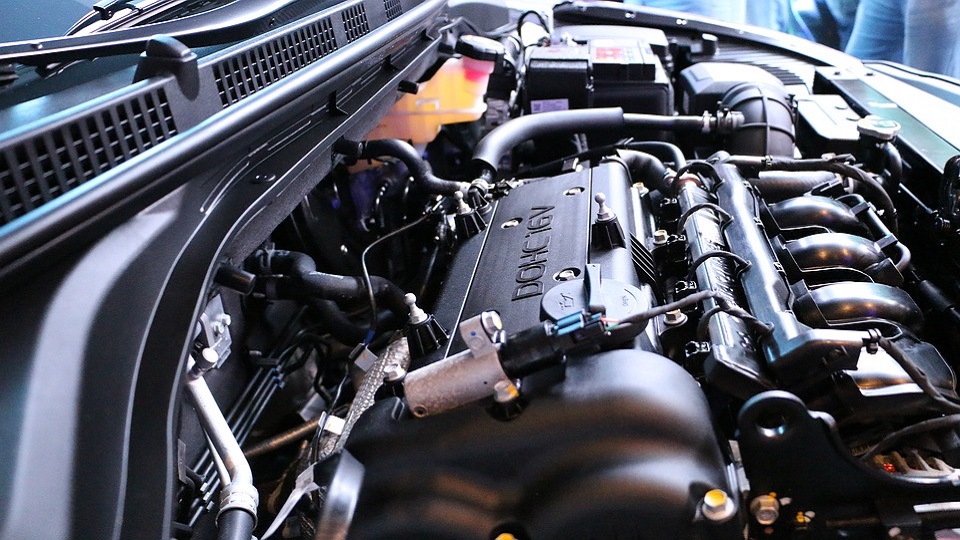
PA6, PA66 Replace Metal in Automotive Applications

Polyamides Offer Good Surface Aspect in Consumer Applications

Electrical & Electronics Applications - Flame Retarded PA Works Well