
Polyoxymethylene (POM): How to select the right grade?
Last update on Jul 8, 2025
What is a Polyacetal?
Polyacetal is a formaldehyde-based, semi-crystalline engineering thermoplastic. It is commonly called acetal or polyoxymethylene (POM). It contains the functional group of a carbon bonded to two -OR groups. It has a molecular structure of (CH2O)n.

POM is 100% recyclable. It is also known as polyformaldehyde, polymethylene glycol, and polyoxymethylene glycol.
How was polyoxymethylene developed over the years?
The key milestones achieved in the development of POM are:
- Discovery of Formaldehyde Polymers: First synthesized and studied in the early 20th century. These polymers include acetal polymers. Researchers discovered that formaldehyde could polymerize to form materials with desirable properties.
- Development of POM: In 1920, Hermann Staudinger, a German chemist discovered Polyoxymethylene. He conducted extensive research on polymers and the concept of macromolecules. His work laid the foundation for the development of polyacetal polymers. Later he received the Nobel Prize in Chemistry in 1953.
- Commercialization in 1956: DuPont became the first company to produce a POM homopolymer. They introduced a method based on formaldehyde polymerization using a coordination catalyst.
- Commercialization in 1962: Celanese became the first company to produce POM copolymer. They employed an acid-catalyzed process to produce this copolymer.
Over the decades new developments in polyoxymethylene (POM) have taken place. These advancements are with regard to polymer chemistry, industrial manufacturing techniques, and properties. View all POM commercial grades and suppliers »
How to produce acetal resins?
Acetal resins are produced by the polymerization of purified formaldehyde [CH2O]. However, different manufacturing processes are used to produce the homopolymer and copolymer versions of POM. In alkaline environments, copolymers are more stable than the homopolymers. Yet homopolymers provide better mechanical properties than copolymers.
POM is available in different forms. Homopolymer resins include:
And, popular copolymer resins are available under the following trade names:
- Celanese - Celcon®
- Polyplastics - Duracon®
- BASF - Ultraform®
How to compare between POM homopolymer or copolymer?
Acetal homopolymer is produced from anhydrous, monomeric formaldehyde which is polymerized by anionic catalysis in an organic liquid reaction medium. The resulting polymer is stabilized by the reaction to acetic anhydride.
While, the copolymer of POM requires the conversion of formaldehyde into trioxane using acid catalysis and cationic polymerization. The reaction is followed by purification of the trioxane by distillation or extraction to remove water and other active impurities containing hydrogen.
| Acetal Copolymer | Acetal Homopolymer |
|
|
What are the key properties of acetal resins?
Polyoxymethylene resins demonstrate well-balanced properties ranging from mechanical to physical and flammability performance. The key benefits of POM resins include:
- Excellent mechanical properties over a temperature range upto 140°C, down to -40°C
- High tensile strength, rigidity and toughness (short-term)
- Low tendency to creep (as compared to nylon) and fatigue (long-term). Not susceptible to environmental stress cracking
- High degree of crystallinity and excellent dimensional stability
- High gloss surfaces
- Excellent wear resistance
- Good resistance to organic solvents and chemicals (except phenols) at room temperature
- Low smoke emission
- Low coefficient of friction
- Low moisture absorption
What are the different POM grades available?
POM grades are often produced with various degrees of polymerization. This results in different properties to meet demanding applications. The different grade options of POM resins are:
- Standard/Unreinforced Grades
- Reinforced Grades: These grades show high tensile strength or rigidity. These properties depend on the type and amount of polymer reinforcement. Glass fibers, carbon fibers or glass spheres-reinforced POM grades are available.
- High-Impact/Toughened Grades: Blending POM resins with rubber, TPU, and other polymers. This results in blends with higher impact strength.
- Grades with High Slip/Wear Properties: Modification of POM with graphite, PTFE, and mineral fillers. These additives enhance abrasion resistance and slip properties.
- UV Stabilized Grades: UV stabilizers and absorbers are often added to POM resins or blends to improve UV stability. e.g., hindered-amine light stabilizers.
- Nanocomposites: Additives, such as CNTs, POSS, ZnO, etc. are used to produce POM nanocomposites.
- Other Grades:
- Addition of powdered Al or bronze enhances electrical conductivity or heat distortion point of POM resins.
- Fluorocarbons lead to good surface lubricity in polyacetal to prevent cracking.
What are the benefits of POM over metals or thermoplastics?
Check out the benefits of acetal resins over metals and other thermoplastics below.
| Benefits over Metals | Benefits over Thermoplastics |
|
|
Processing Techniques for POM
Polyacetal resins are supplied in a granulated form. They can be molded into a desired shape by applying heat and pressure. They can be processed by injection molding, extrusion, compression molding, rotational casting, or blow molding. Injection molding and extrusion are the most commonly used methods for POM processing.
POM resins must be processed in the temperature range (190 – 230°C). They may require drying before forming because of its hygroscopic nature.
Processing Conditions for Injection Molding
- Melt temperature
- Homopolymer resins: 180-230°C
- Copolymer resins: 190-210°C
- Mold temperature: 50-150°C. Use higher mold temperatures for precision molding for reduced post-molding shrinkage.
- Injection pressure: 70-120 MPa
- Injection speed: Medium to high
Extrusion Processing Conditions
Extrusion is used to produce semi-furnished parts, such as sheets, rods, pipes, filaments, & profile sections. They are further machined using traditional methods such as turning, milling, drilling, etc. to form finished parts.
- Melt temperature: 180-230°C
- Screw speed: 33-42
- Die temperature: 175-230°C
Lightly crosslinked grades are used to produce hollow molding by blow molding.
3D Printing of Acetal Grades
- Acetal has found some in-roads into 3D printing in some applications like fan blade, impeller, etc.
- Its high lubricity surface (with 3-5% on average and as high as 7-10%) makes it interesting for 3D printing especially for difficult to release parts.
- Also, acetal polymers have high strength which assures dimensional stability up to a maximum continuous service temperature of 80°C (180°F).
What are the limitations of acetal polymer?
- Poor resistance to strong acids, bases and oxidizing agents.
- Burns easily without flame retardants due to high oxygen content
- Poor thermal stability without suitable stabilizer system
- Limited processing temperature range
- High mold shrinkage
- Poor resistance to UV radiation. Prolonged exposure lead to color change, embrittlement, and loss of strength
- Low surface energy and hence difficult to bond without surface treatment. Overcome bonding problem related to low surface energy substrates »
Key Applications
POM resins have high lubricity, good dimensional stability, and sliding properties. Due to these properties, POM produces high-precision parts for applications such as automotive, electrical & electronic, industrial, and drug delivery. The polymer serves as an alternative to metals. This is due to its low friction, wear, and excellent balance of mechanical and chemical properties. Let us unleash some of the important uses of POM below.
Automotive - Modern Fuel Systems
Only a few polymers can withstand permanent contact with the diverse and increasingly aggressive automotive fuels used today and the increasing temperatures encountered in engine compartments. That is why acetal copolymer (POM) is the preferred material for modern fuel systems.
Typical POM applications in fuel systems are extremely versatile. They include components in fuel caps, fuel filler necks, fuel sender units (e.g. flanges or swirl pot), lifetime filter, valves, fuel pumps, and fuel rails, among many others.

| 
| 
|
Not only do these products have excellent long-term resistance to gasoline, diesel and methanol or ethanol-based fuels, they are also able to withstand temperatures of more than 100°C (212° F).
Automotive - Interior Appearance
To meet the current trends in automotive interiors for soft, warm finishes, polyoxymethylene offers a molded-in low-gloss effect for automotive interior parts. Also, it provides a system cost benefit when compared to painted components, such as painted PC-ABS. Other benefits include:
- Durable low-gloss surface
- Resistant to cleaning solutions
- Excellent dimensional stability
- Provides design flexibility

| 
| 
|

| 
| 
|
POM for Low VOC Performance
The issue of in-vehicle air quality is becoming increasingly important in the automotive industry due to its direct impact on passenger safety and comfort. The reduction of VOCs significantly contributes to an improvement of the cabin air quality. Thus, both POM material suppliers and part manufacturers are keeping it in the mind while developing vehicle components and contributing to a better air quality in vehicles closed environment.
Few examples showcasing the development of POM engineering plastics meeting the growing trend include:
- Delrin® 300TE acetal resin by DuPont – DuPont has developed an impact-modified, low-emission grade suitable for use in automotive interiors. According to the company, tests of samples of Delrin® 300TE revealed formaldehyde emissions of 1.0 mg/m² and lower.
- DURACON® acetal grades by Polyplastics – Polyplastics has designed low-VOC polyoxymethylene (POM) resin grades utilizing utilizes a technology which reduces the quantity of residual formaldehyde within resin pellets through the use of optimal stabilizers and scavengers. The range includes weather-resistant DURACON® M90-45LV, high-sliding DURACON® NW-02LV resin, a glass-reinforced grade DURACON® GH-25LV and many more.
- Tenac™ -C Z4520 POM Copolymer by Asahi Kasei – This POM grade has been certified as an eco-friendly green material by the China Automotive Technology & Research Center (CATARC) for its low VOC emission performance.
Medical and Healthcare
Materials of construction play a central role in the design of new equipment. As the patient community demands increased safety and accuracy from providers, these dictates are ultimately met through high-performance materials.

| 
| 
|
Using POM in medical technology can help reduce total manufacturing cost, through consolidation of multiple parts into a single unit and by implementation of automated assembly processes. POM addresses the challenges of mission-critical components and offers an array of leading edge materials that are excellent candidates for medical applications.
Acetal copolymers, are easily-processed, highly-crystalline plastics delivering high strength, stiffness, toughness and lubricity over a broad range of temperatures and chemical environment. These polymers offer low extractable and high purity and are FDA Compliant and pharma-friendly – animal and latex free.
Industrial Uses
Pumping, conveying and controlling liquids are important factors in the irrigation, plumbing and process industries. For aqueous fluids, acetal copolymers have an extensive history in parts such as housings, taps and valves, and couplings.
These parts are found in many fluid handling applications including plumbing, irrigation, water softeners, beverage dispensers, water filters, shower heads, sprinklers, water meters, and pumps.

| 
| 
|
The acetal copolymer materials offer good flow and moldability, and their very low moisture absorption permits dimensional stability in contact with water.
Consumer Goods
Low fuel permeation to meet new CARB and EPA regulations on evaporative emissions. Small Off-Road Engines (SORE) and other types of gasoline-powered equipment have recently come under new regulations from the US EPA and California (CARB) to limit the amount of evaporative emissions occurring throughout the fuel system, including fuel tanks, caps and hoses.

| 
|
Because of its extremely low permeability to gasoline and ethanol, along with excellent long-term chemical resistance and dimensional stability acetal copolymer has been evaluated in small off-road engine fuel tanks found in lawn & garden and other gasoline powered equipment, including recreation vehicles and marine engines, to meet recently adopted CARB and US EPA regulations.

Acetal copolymer (POM) is the preferred material for modern fuel systems

Acetal polymers offer low extractable and high purity and are FDA Compliant and pharma-friendly – animal and latex free
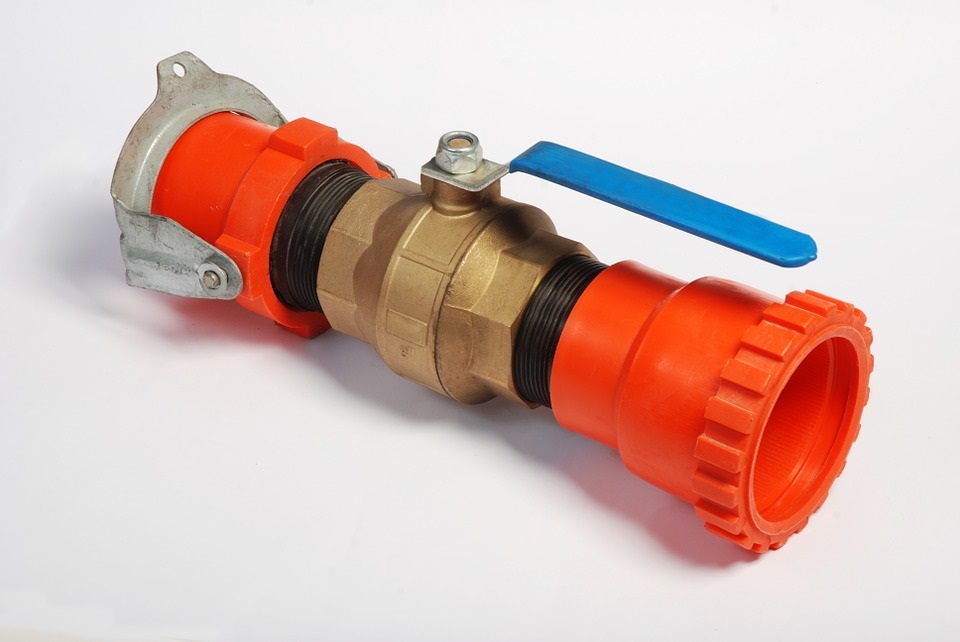
For aqueous fluids, acetal copolymers have an extensive history in parts such as housings, taps and valves, and couplings