

Finding alternatives to soft PVC: Is this still a good idea?
Last update on Sep 5, 2025
This article was originally published in 2011 and revised in 2025.
Soft PVC formulations are less popular than they were a few years ago. This shift may stem from scientific concerns about health risks. Or it may be a quick fix to a complex problem. The reasons vary.
Despite declining popularity, soft PVC still dominates many markets. It offers excellent value for money. Its chemical and mechanical properties remain competitive. This explains why production and sales volumes stay high.
The overall PVC market is estimated at 53.82 million tons in 2025 and expected to reach 65.48 million tons by 2030, at a 4% CAGR.1 Multiple forecasts show consistent growth: market values are projected to grow from around $47-62 billion in 2024-2025 to $65-105 billion by 2030-2033, with CAGRs ranging from 3.6% to 4.4%.2
Whatever the motivations behind replacing soft PVC with other elastomers are based on science or are just a quick and easy answer to a complex issue. Soft PVC formulations do not have the popularity they had a few years ago. Find out the alternatives to soft PVC.
The push for alternatives
Our team posted a survey in July 2011. The results from 153 votes are shown in Figure 1. The lowest-price elastomers were selected first. This confirms that cost drives material choices.
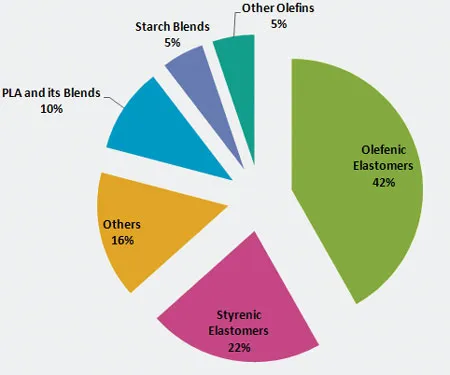
Figure 1: Finding alternatives to soft PVC July 2011 Click'N Vote Result: 153 votes
Some markets are moving away from soft PVC. They worry about additives leaching into fluids or food. Medical tubing applications face particular scrutiny. Body fluids are continuously analyzed. Any foreign substances get detected and measured.
Medical devices also face PVC replacement pressure. But leaching isn't the only concern. Identify the other issues faced by soft PVCs.
Environmental issues
PVC creates environmental problems when burned. This matters for end-of-life management. Incineration remains the main way to handle used plastic products.
Industry response
The PVC industry launched protective initiatives. They want to solve these problems. The European Vinyl Industry created the Vinyl 2010 program. This ten-year program ended earlier in 2011.
The industry achieved all goals. Some were exceeded. They phased out toxic additives ahead of schedule. Cadmium is already gone. Lead will be completely replaced by 2015 in the EU.
The European Vinyl Industry is working on Vinyl 2020. This new ten-year voluntary program continues the effort. But positive results won't convince everyone.
Environmental groups like Greenpeace remain opposed. They have already taken action against the PVC industry.
Solve your problem with direct solutions
The battle against PVC started decades ago. In July 1999, Denmark adopted an action plan. The goal was to reduce and phase out phthalates in soft plastics. Soft PVC was the main target. Since then, the chemical industry developed new products. These have less environmental impact.
The plasticizer problem
Plasticizers are a main component in soft PVC compounds. Some soft PVC formulations contain more plasticizers than anything else. Phthalates have long been the go-to choice. They are competitive and efficient. But phthalates became unpopular. The PVC industry had to find alternatives.
New solutions emerge
Technology advances helped PVC formulators. They now have cleaner alternatives to phthalates. They even have bio-based plasticizers.
These new products could change everything. They respond to current fears about additive leaching. Medical tubing is one of the most sensitive applications. These new plasticizers could solve that problem.
Solving environmental concerns is no longer enough. Non-PVC elastomeric compounds have also improved. They now compete directly with soft PVC.
Examples of new competitors:
- Kraton Polymers (USA) developed Nexar™ styrenic elastomer. It has enhanced water transmission rates for membrane technologies.
- CTS Compounds Technology Services (France) developed hybrid systems. These combine styrenic block copolymer (SBC) and olefinic block copolymer (OBC). They compete with PVC in cost-driven markets like automotive and building construction.
- https://www.onegreenplanet.org/environment/sustainable-healthier-alternatives-pvc-pipes/
- https://kraton.com/newsroom/kraton-performance-polymers-delivers-innovative-pvc-alternatives/