

My Gloss Gets Worse During Storage and Transport: How To Fix It?
Last update on Nov 30, 2022
We would like to acknowledge Jochum Beetsma for sharing his technical expertise and validating the page.
Gloss plays a significant role in customer satisfaction and the visual appeal of the painted product. Hence, it is crucial to not only get the gloss right at the start but also to keep it in the long term. If your gloss degrades during storage or transport, you might have an insufficient stabilization of your dispersion.
Let's review the possible causes and how you can adjust your paint formula.
If your gloss is out of specs right after the production step, check first how to increase your initial gloss.
On this page, you will find guidance to understand and fix your gloss issue on your own.
What is Gloss and What Impacts it
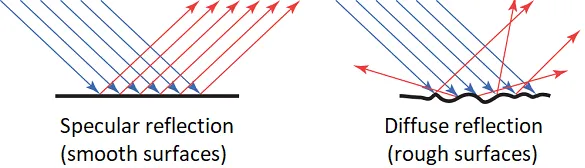
Coating gloss is an optical property that measures the finish of a painted surface when light is reflected off it. The smoother the surface, the glossier the surface appears.
Rough surfaces give a diffused light reflection which results in a lower gloss. Hence, if gloss degrades during storage or transport, it means something happens over time within the paint, resulting in a rougher coating surface .
Reasons Your Coating Loses Gloss Over Time
Looking at the stage where your gloss started to degrade you can understand what may not be right in your formulation.
As the initial gloss was in target, we can assume that the following are fine for your desired goal:
✓ Resin selection
✓ Pigment Volume Concentration (PVC).
The fact that your gloss changes during storage or transport might be caused by insufficient stabilization of the pigments and fillers.
Indeed, once separated, you need to provide a repulsion force strong enough to avoid particles to glue together again. This phenomenon is known as flocculation. When flocculation happens, particles get bigger, and the surface of the resulting coating. In turn, gloss decreases.
Possible Solutions to Fix Your Loss of Gloss
As we now understand, when you experience a loss of gloss during transport or storage, it is wise to check your pigment and filler dispersion.
Are you using enough dispersant in your formula?
Your dispersant loading should be at par with the theoretical dispersant load. Do remember how to do it? No worries, follow these step-by step explanations to calculate your dispersant load.
As you know, you can't indefinitely increase the loading of dispersants. Overloading your system with dispersing agents is not economically viable. You may disturb other important properties of your coating.
Should you look for an alternative dispersant?
Have you tested other loadings and the loss of gloss is still happening? It is time to revisit your dispersing agent selection.