
New product concept
Searching substitutes to PFAS (following ongoing new legal restriction talks)
 Closed
Inquiries no longer accepted
Type of Solution sought
- A Technology
- A Material
Description of Desired Solution
The EU has been reviewing the proposal for REACH restriction for all per- and polyfluoroalkyl substances (PFAS) and the users have already started looking for solutions to secure the technical performance and material availability for related applications.
As a result, at SpecialChem we have recorded a clear increase of interest in PFAS substitutes from compounders, converters and various other players in the value chain.
Do you have a non-hazard and sustainable solution that could substitute PFAS in polymers and additives applications?
The ideal suitable solution could be:
- an off-the-shelf material offering similar functionalities and performance compared to current products using PFAS: in such a case the supplier can benefit from high visibility in the marketplace and can directly connect with interested seekers.
- a technology still in development: if such a solution exists, the supplier can leverage the largest community, specialized in chemicals and materials, to confirm the technical viability and bring this technology to market.
Background
The new restriction proposal may impact more than 10,000 compounds (according to European Chemicals Agency) and the timeline scheduled at this point is rather short.
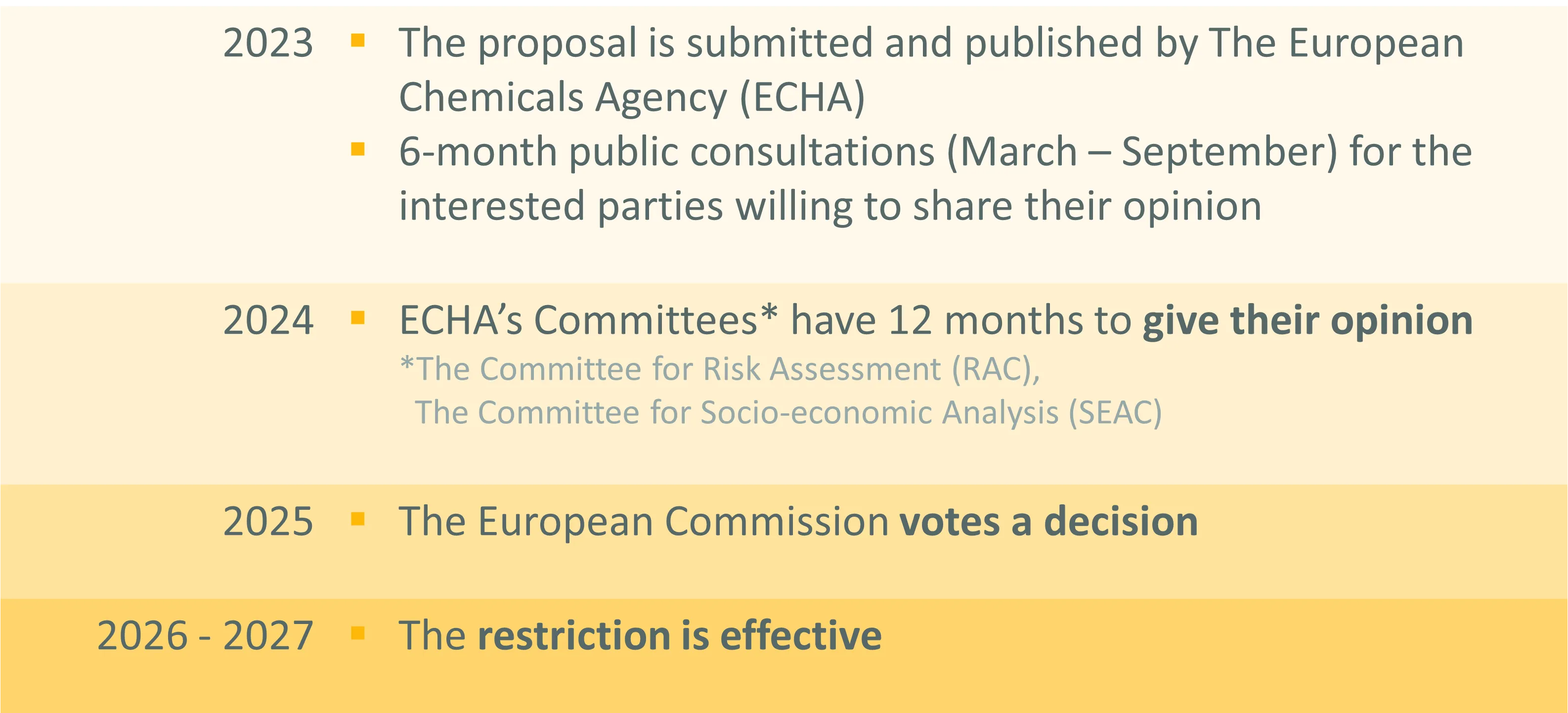
So far, many applications using PFAS, including fluoropolymers, have not received time-related derogations and are as of today subjected to immediate ban if the restriction becomes effective: …batteries for EV, equipment such as seals, gaskets, tubing, wire & cable, electronics, and semiconductor manufacturing, etc.
Detailed Solution Description
There is a myriad of possible applications for which substitutes can be considered.
Application examples (non-exhaustive list)
Mobility / EV / Transportation
- fuel hoses and other components protecting against evaporative vapors and providing thermal and chemical resistance,
- tubing and transmission systems in which fluoropolymers are used for sealing materials against high temperatures,
- vehicle electrical systems for cabling and wiring insulation,
- other: fluoropolymer-based rods, …
Electronic components and semiconductors
- Microelectronics, data storage devices, semiconductor packaging: fluoro-technology is often used to provide corrosion resistance to process chemicals and reduce leakage, as well as to act against impurity, humidity, gases (i.e., organic outgassing). So, the need is for super-clean materials that do not absorb contaminates from the environment and are not subjects to hydrolysis or oxidation. There might be need for heat and chemical resistance.
Wires and cables
Industrial / Processing
Food contact applications
Other:
Technical characteristics
Depending on the final application, various benefits can be valued:
- High temperature resistance,
- Chemical resistance,
- Good electrical insulation properties,
- Processing improvement (i.e., improve mold flow),
- Hydrophobicity and oleophobicity,
- but also, other advantages such as stable supply chains.
Anticipated Next Steps with Respondents
What is next? Discuss the best next steps depending on the proposed solution.
Possible routes:
- Gain visibility for a wide audience of additives and polymers users,
- Connect with compounders, converters and OEMs who are actively looking for alternative solutions.
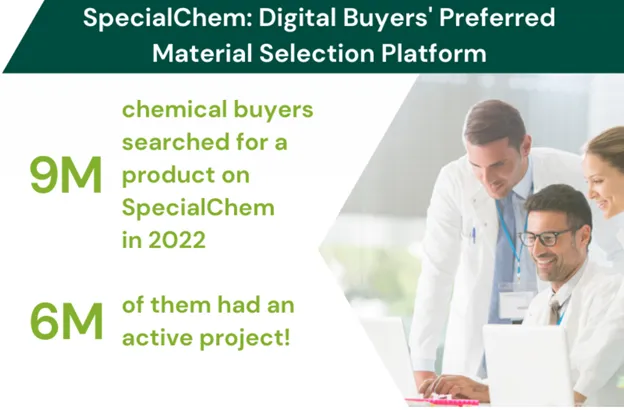
If you have a solution combining diverse characteristics and functionalities similar to PFAS materials, take the opportunity to make the difference and meet the increasing market searches for alternatives.
Type of Outcome expected
We are open to a wide spectrum of proposals’ maturity, starting from a Proof of concept of Technology Readiness Level (TRL) 3 on the NASA TRL scale.
In case you would like to submit a proposal, please indicate the TRL of your solution:
|
TRL# |
Technology Readiness Level |
Description |
|
1 |
Basic principles |
Lowest level of technology readiness. Scientific research begins to be translated into applied research and development (R&D). Examples might include paper studies of a technology’s basic properties. |
|
2 |
Technology concept |
Basic principles are observed. Applications are speculative, and there may be no proof or detailed analysis to support the assumptions. Examples are limited to analytic studies. |
|
3 |
Proof of concept |
Active R&D is initiated. This includes analytical studies and laboratory studies to physically validate the analytical predictions of separate elements of the technology. Examples include components that are not yet integrated or representative. |
|
4 |
Validation in laboratory environment |
Basic technological components are integrated to establish that they will work together. Examples include integration of “ad hoc” hardware in the laboratory. |
|
5 |
Validation in relevant environment |
The basic technological components are integrated with reasonably realistic supporting elements so they can be tested in a simulated environment. Examples include laboratory integration of components. |
|
6 |
Prototype demonstration in a relevant environment |
Representative model or prototype system, which is well beyond that of TRL 5, is tested in a relevant environment. Represents a major step up in a technology’s demonstrated readiness. Examples include testing a prototype in a laboratory environment or in a simulated operational environment. |
|
7 |
System prototype demonstration in an operational environment |
Prototype near or at planned operational system. Represents a major step up from TRL 6 by requiring demonstration of an actual system prototype in an operational environment. |
|
8 |
Actual system completed and qualified through test and demonstration |
Technology has been proven to work in its final form and under expected conditions. In almost all cases, this TRL represents the end of true system development. Examples include developmental test and evaluation (DT&E) of the system in its intended system to determine if it meets design specifications. |
|
9 |
Actual system proven through successful usage |
Actual application of the technology in its final form and conditions. Technology is commercially available. |