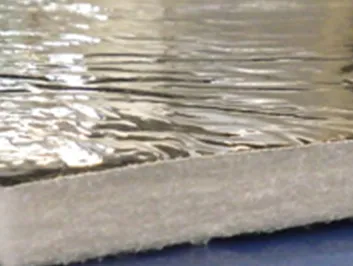
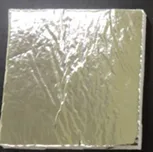
New product concept
BREAKTRHOUGH: Low Frequency Sound Absorption Technology Reducing Vehicle Noise
 Closed
Inquiries no longer accepted
Type of Solution sought
A novel automotive technology allows 30% sound absorbing improvement at low frequency wavelength without compromising on weight compared to conventional materials.
Who might be interested?
Equipment makers and OEMs in the automotive/transportation industry facing challenges with regards to NVH (Noise, Vibration, Harshness), including:
- Complying with new regional standards and regulations for vehicles noise reduction.
- Managing completely new noise perspectives when developing autonomous, connected, and electric automobiles.
Description of Desired Solution
A novel automotive technology allows 30% sound absorbing improvement at low frequency wavelength without compromising on weight compared to conventional materials.
Detailed Solution Description
| Overcoming successfully one challenge may rouse another. Carbon neutral is one of the major trends for environmentally friendly vehicles. However, to reduce automobiles’ low frequency noise engineers have no choice but to use heavy weight sound absorption materials. This results in increased vehicle weight and CO2 emissions volume.
An innovative material successfully overcomes this issue offering new opportunities for automotive manufacturers. |
||||||||||||||||||||||||||||
|
||||||||||||||||||||||||||||
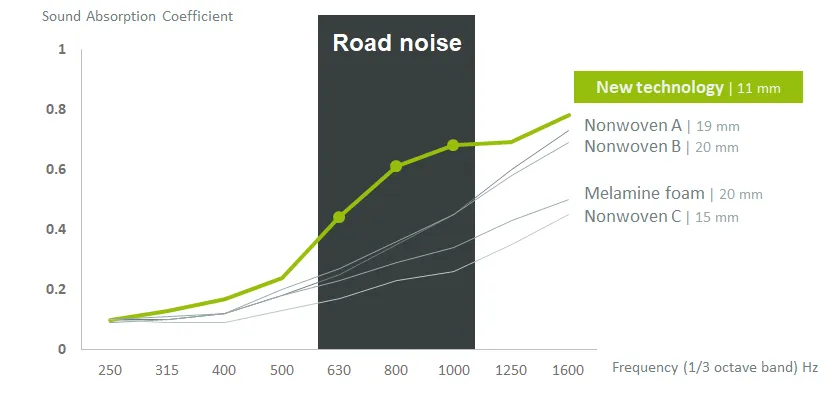
| Outstanding NOISE ABSORPTION and THINNER THICKNESS vs conventional materials |
||||||||||||||||||||||||||||
 |
||||||||||||||||||||||||||||
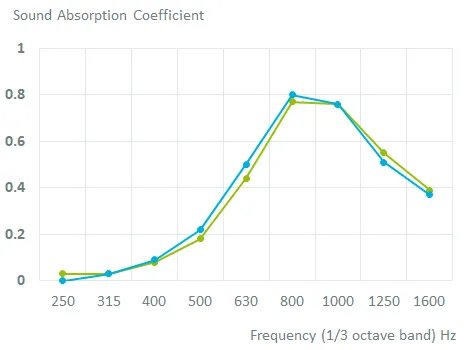
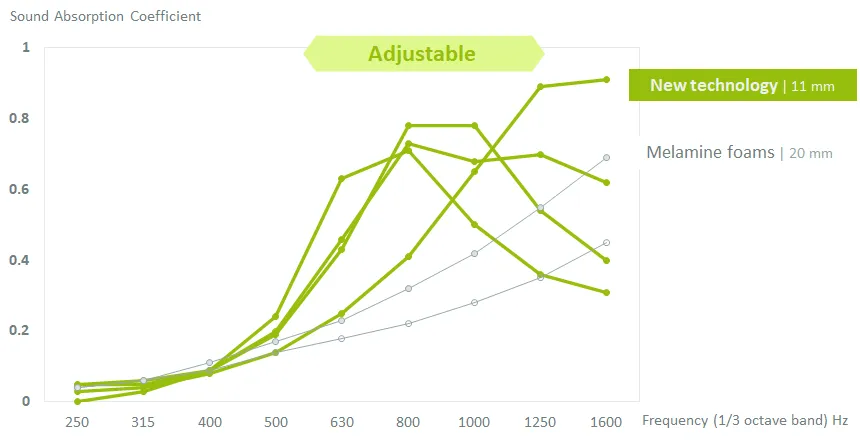
| ADJUSTABLE sound absorption frequency range based on the specific application needs |
||||||||||||||||||||||||||||
 |
||||||||||||||||||||||||||||
| Excellent DURABILITY when exposed to heat and humidity conditions Heat cycle and humidity cycle test |
||||||||||||||||||||||||||||
|
||||||||||||||||||||||||||||
| Keep SHAPE and FLEXIBILITY without shrinkage | ||||||||||||||||||||||||||||
|
||||||||||||||||||||||||||||
|
||||||||||||||||||||||||||||