New product concept
Multifunctional UV-curable monomers: Formulate inks with higher gloss, improved optical density and greater print quality
 Closed
Inquiries no longer accepted
Type of Solution sought
Discover the versatile UV-curable monomers enhancing ink formulations with a range of multifunctional benefits. Testing has proven their superior performance for inkjet applications, delivering stability, high gloss, improved print quality on plastic substrates, and enhanced optical density compared to standard monomers.
Who might be interested?
Formulators seeking to enhance their products with these proven benefits. Don’t miss the opportunity to learn more, test the products, and connect directly with the supplier!
Description of Desired Solution
Discover the versatile UV-curable monomers enhancing ink formulations with a range of multifunctional benefits. Testing has proven their superior performance for inkjet applications, delivering stability, high gloss, improved print quality on plastic substrates, and enhanced optical density compared to standard monomers.
Detailed Solution Description
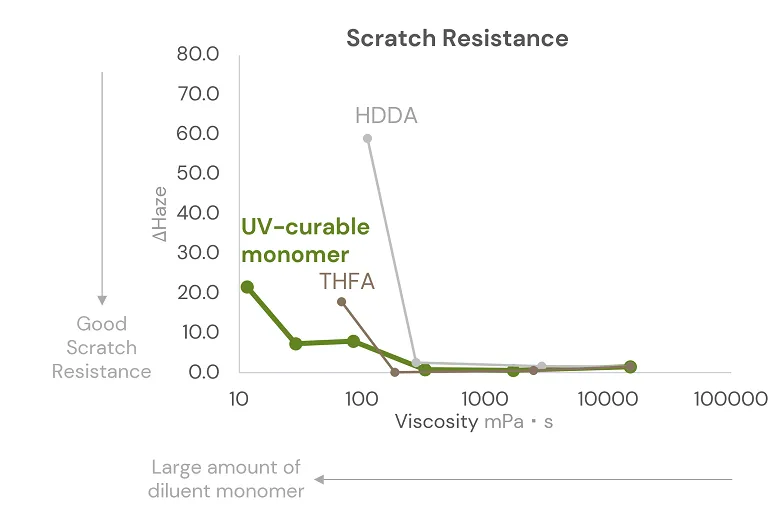
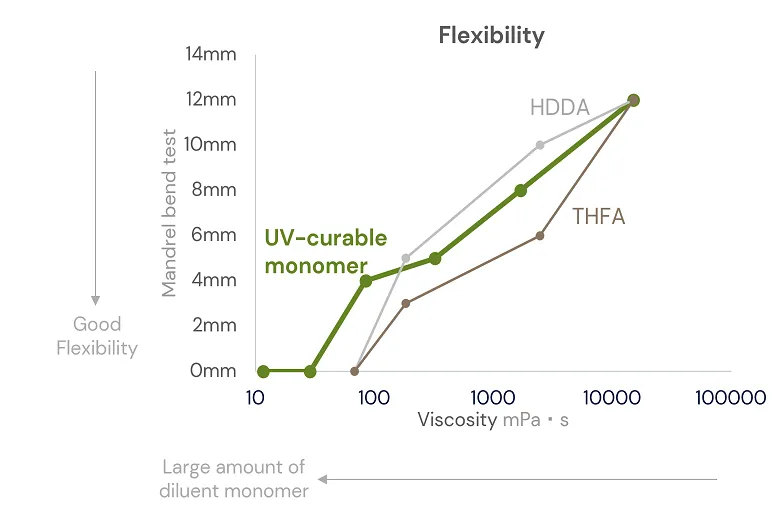
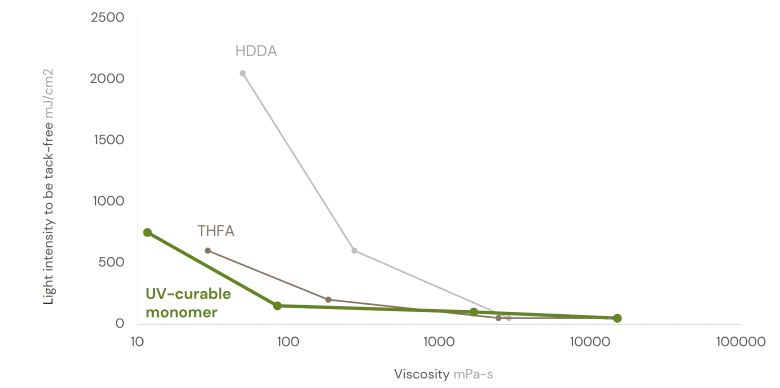
| The UV-curable monomer has demonstrated, through thorough testing, superior performance compared to commonly used monomers like 1,6-Hexanediol diacrylate (HDDA) and Tetrahydrofurfuryl acrylate (THFA). It offers several key advantages, including low viscosity, high UV curability, reduced cure shrinkage, enhanced flexibility of the cured material, and excellent scratch resistance. | ||||||||||||||||||||||||||||||||||||||||||
| Rapid curability | ||||||||||||||||||||||||||||||||||||||||||
| The UV-curable monomer offers superior curability, especially when blended with hexa-functional urethane acrylate, achieving fast curing at low viscosity. This reduces energy consumption, making the process efficient and eco-friendly while enhancing coating hardness and durability for improved production throughput. | ||||||||||||||||||||||||||||||||||||||||||
 | ||||||||||||||||||||||||||||||||||||||||||
| Unique balance in scratch resistance and flexibility | ||||||||||||||||||||||||||||||||||||||||||
| The UV-curable monomer offers an ideal balance of scratch resistance and flexibility, essential for bendable or moving substrates. It maintains durability without cracking, providing long-lasting protection. Its low solvent use enhances energy efficiency and sustainability, making it a top choice for advanced formulations. | ||||||||||||||||||||||||||||||||||||||||||
| Blended with hexa-functional urethane acrylate | ||||||||||||||||||||||||||||||||||||||||||
| ||||||||||||||||||||||||||||||||||||||||||
| Inks formulation example | ||||||||||||||||||||||||||||||||||||||||||
Test procedure:
| ||||||||||||||||||||||||||||||||||||||||||
| ||||||||||||||||||||||||||||||||||||||||||
| Excellent ink stability | ||||||||||||||||||||||||||||||||||||||||||
| The UV-curable monomer exhibits a more gradual increase in viscosity after oven aging compared to the benchmark, highlighting its superior ink stability. | ||||||||||||||||||||||||||||||||||||||||||
| Test: Oven age for 5 days at 60°C | ||||||||||||||||||||||||||||||||||||||||||
| ||||||||||||||||||||||||||||||||||||||||||
| Outstanding print quality and optical properties | ||||||||||||||||||||||||||||||||||||||||||
| The UV-curable monomer delivers cleaner prints on plastic substrates compared to the benchmark, with especially good printability on aluminum. It also achieves higher optical density with any color ink, resulting in more vivid prints. . | ||||||||||||||||||||||||||||||||||||||||||
| Print quality evaluated under microscope | A higher number on a scale of 5 indicates a cleaner print. Optical Density: D65 light source and measurement accuracy of 10°. | ||||||||||||||||||||||||||||||||||||||||||
| ||||||||||||||||||||||||||||||||||||||||||