
New product concept
Seeking A Solution To Improve Biofilm Adhesion On Thermoplastic Surfaces
 Closed
Inquiries no longer accepted
Type of Solution sought
- A manufacturing process
- A material
- A technology
- A partner
Description of Desired Solution
A SpecialChem client is seeking a solution to improve biofilm adhesion on thermoplastic surfaces.
The company wishes to affect a modification to its current product portfolio consisting of thermoplastic substrates formed through melt processing to promote and increase the adhesion of biofilms after the thermoplastic products are placed into service. The modification can preferably be employed in situ during manufacture as a melt additive or surface treatment, or can be employed post-manufacture as a surface modification.
The modification must be durable and permanent.
Background
Dictionary.com defines a biofilm as “A complex structure adhering to surfaces that are regularly in contact with water, consisting of colonies of bacteria and usually other microorganisms such as yeasts, fungi, and protozoa that secrete a mucilaginous protective coating in which they are encased.” Usually, the formation of a biofilm, typically called “biofouling”, is an undesirable situation. In industries requiring efficient heat and fluid flow, biofouling represents a transport barrier that needs to be at least controlled and at best eliminated completely. Mechanical flushing techniques combined with biocides are standard treatment.
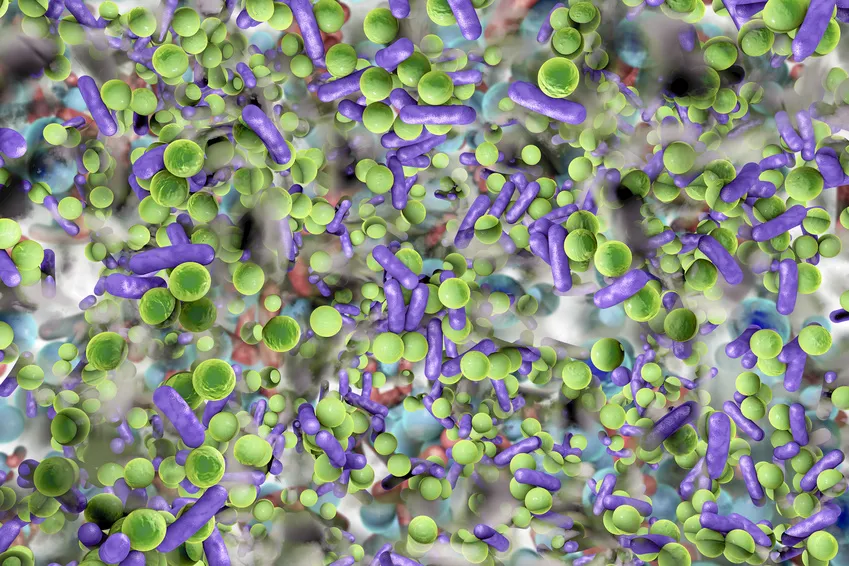
In biofiltration applications, however, particularly in applications known as biotrickling, the formation and durability of a biofilm is critical to the success of the filtration mechanism. The gelatinous biofilm and its constituents act as biological scrubbers for the wastewater introduced into the system for cleaning. The biofilm can absorb organic and NOx compounds and promotes oxidative degradation.
The Company supplies thermoplastic filamentary mesh to the biotrickling industry. These meshes are used as scaffolds for the development and maintenance of the biofilm layer in a wastewater filtration system. The Company is seeking a means to mechanically or chemically modify its products currently employed in biofiltration applications so that the surfaces of these products have a higher affinity for biofilm formation and health.
Detailed Solution Description
The Company is seeking a readily available solution, not a development effort. The product portfolio of the Company is manufactured using standard melt extrusion methods, resulting in rolled goods ready for delivery to biofiltration customers consisting of typically polypropylene as the base polymer, but nylons or polyesters could be used. A variety of melt additives are used currently, including stabilizers and colors, so the addition of a new additive to accomplish a solution would be acceptable. Any solution would need to be compatible with the current operation.
The current product portfolio consists of high surface area to volume/weight ratios, so any mechanical modification would need to deployed on a microscopic scale. The manufacturing of these goods is continuous, so the alteration of standard manufacturing operations would also have to be deployed as a continuous operation. The ultimate solution would either increase the chemical affinity for the biofilm to the polymer surface, or increase the surface area on a microscopic scale to improve the mechanical adhesion of the biofilm to the polymer surface.
Possible Routes To Investigate
- Mechanical surface modification
- Chemical melt additive
- Topical coating
Solution that are not of interest
- Discontinuous, batch-wise operations
Other Comments / Important Considerations
Solution would need to be compatible with maintaining a safe working environment for employees and equipment. Additives would need to be compatible with temperatures associated with melt extrusion processes, and with the other thermoplastics used in manufacturing the products.
Type of Outcome expected
- Proven technology ready for commercial implementation.
Company Demographics
- Industry our client is in: Industrial Textiles
- Annual Revenue: > 500m €
- Years in Business: 100 Years
- Headquarters Area: Europe
Business considered
- Licensing
- Buying