New product concept
Exclusive High-Performance Thermoplastic Copolyester Elastomers – Stability up to 175°C
 Closed
Inquiries no longer accepted
Type of Solution sought
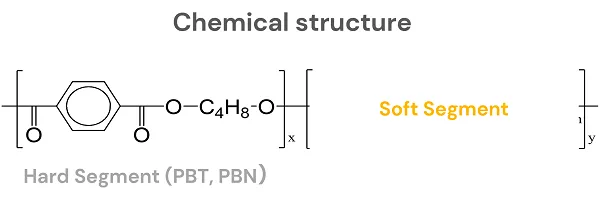
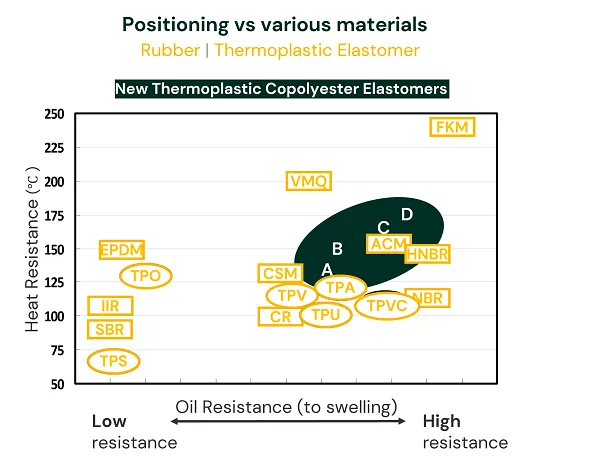
A leading materials supplier has developed a groundbreaking line of Thermoplastic Copolyester Elastomers, uniquely engineered through advanced polymerization to enhance properties, unlike others that rely on additives. This innovative approach combines the best characteristics of rubber and high-performance engineering plastics, delivering superior durability, flexibility, and performance. The materials offer exceptional flexibility, heat resistance (up to 175°C), superior performance at low temperatures, and excellent oil resistance, among other benefits. In addition, this innovative material serves as a sustainable, PFAS-free alternative to fluoropolymers. It delivers outstanding thermal and chemical resistance, making it a game-changer for applications demanding high-performance, environmentally conscious solutions.
Who might be interested?
The supplier is eager to connect with parts manufacturers:
- actively seeking cost-effective, high-performance alternatives to traditional TPC, COPE materials or polyamides such as PA11 and PA12,
- pursuing sustainable, high-performance alternative to fluoropolymers (ETFE, PTFE, THV).
Description of Desired Solution
Detailed Solution Description
| The innovative thermoplastic copolyester elastomers feature a broad hardness range, from 70A to the rigidity of solid PBT, and are compatible with various processing methods, including injection molding, extrusion, and blow molding. | |||||||||||||||||||||||||||||||||||||||||||||||||||||||||||||||||||||||||||||||||||
Benefits:
| |||||||||||||||||||||||||||||||||||||||||||||||||||||||||||||||||||||||||||||||||||
| |||||||||||||||||||||||||||||||||||||||||||||||||||||||||||||||||||||||||||||||||||
| Excellent balance of heat, oil, and bending fatigue resistance | |||||||||||||||||||||||||||||||||||||||||||||||||||||||||||||||||||||||||||||||||||
| |||||||||||||||||||||||||||||||||||||||||||||||||||||||||||||||||||||||||||||||||||
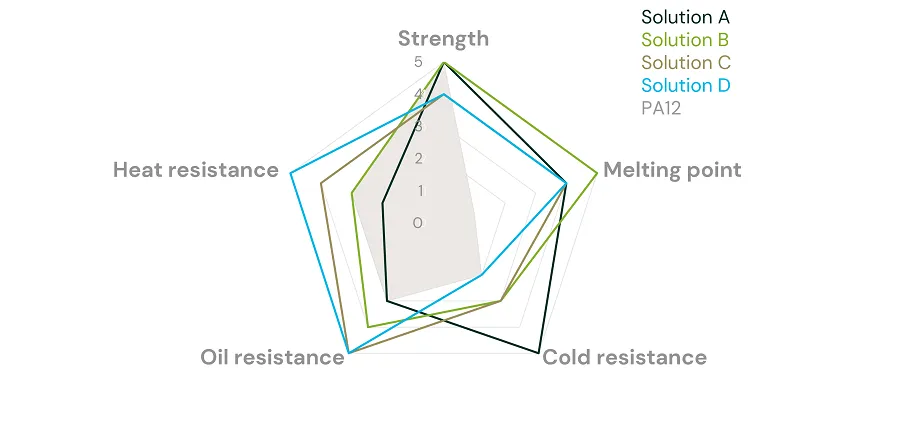 | |||||||||||||||||||||||||||||||||||||||||||||||||||||||||||||||||||||||||||||||||||
| Values in the table are typical measurements of materials, not guaranteed or minimum values. These values are the physical properties in natural color. They may vary depending on color. *PA12, 250°C, 5kg | |||||||||||||||||||||||||||||||||||||||||||||||||||||||||||||||||||||||||||||||||||
| A: P-type B: EN-type C: S-type D: C-type | |||||||||||||||||||||||||||||||||||||||||||||||||||||||||||||||||||||||||||||||||||
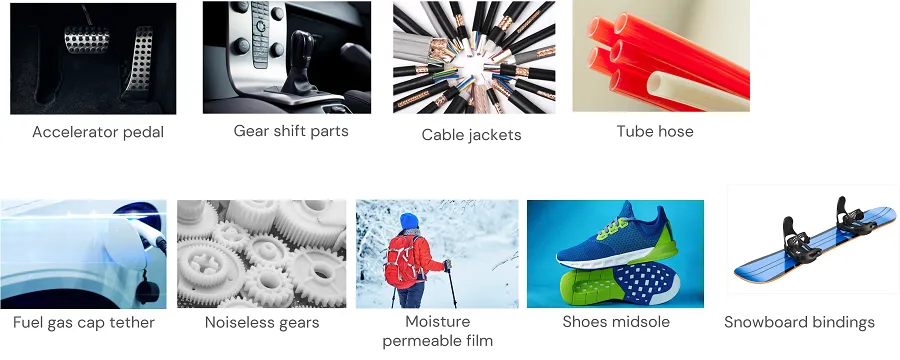
| Application examples (non exhaustive) | |||||||||||||||||||||||||||||||||||||||||||||||||||||||||||||||||||||||||||||||||||
 | |||||||||||||||||||||||||||||||||||||||||||||||||||||||||||||||||||||||||||||||||||