


How to improve EMI shielding effectiveness?
Last update on Jan 15, 2026
EMI shielding, or Electromagnetic Interference Shielding, is the practice of attenuating (reducing) electromagnetic fields by using barriers made of conductive or magnetic materials. These barriers essentially create a shield that blocks or weakens electromagnetic waves, preventing them from reaching or affecting sensitive electronic devices or circuits. EMI can disrupt electronic devices, equipment, and systems used in critical applications such as medical, military, aerospace electronics, and industrial touch screens.
Approaches in EMI shielding using plastics
Metals were the first materials used for EMI shielding, with metal casings being the sole option for protecting electronic devices for many years. However, plastics have significantly penetrated the electronics enclosure market due to several advantages: reduced costs, lighter weight, ease of manufacturing, and greater design flexibility. Conductive plastics offer superior shielding effectiveness and maintain excellent electrical, mechanical, and physical stability compared to their metal counterparts.
The two known approaches to using plastics for EMI shielding:
- Coating with conductive metal: A well-known method of EMI shielding in the consumer electronics and automotive industries. A variety of coating techniques can be used, including ion plating, vacuum metallization, conductive paints, electroplating, foil laminates, and tapes.
- Blending with conductive materials: Plastics can be made conductive by blending them with conductive fillers. Conductive fillers aid the plastic in achieving desirable shielding properties.
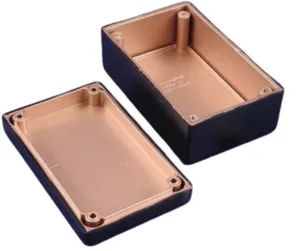
Rugged electronic instrument enclosure molded from flame retardant ABS
Image credits: Hammond Manufacturing³
Formulation strategies
- (2021). What is EMI Shielding and Why is it Important for Your Design. Modus Advanced.
- (n.d.). EMI shielding of plastics. Tangram Technology.
- (n.d.). Thick-Wall Plastic Enclosures w/ EMI/RFI Shielding (1594R Series). Hammond Manufacturing.
- (n.d.). EMI Shielding Plastics: A Lightweight Alternative to Shielding Metal Cans. Cadence System Design and Analysis.