


How to improve anti-fog performance?
Last update on Jan 15, 2026
Fogging occurs when water vapor in the air condenses into tiny liquid droplets on the surface. This condensation scatters incident light, resulting in a blurry or obscured view. In packaging applications, food items with high moisture content are often wrapped or stored in plastic.
When these packages are kept in a cool environment, the moisture can condense on the surface, leading to fogging. This fogging is generally seen as unattractive and can potentially contribute to food spoilage.
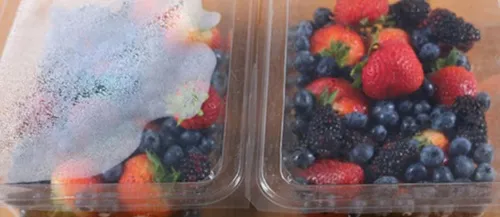
Image credits: Europlas1
Anti-fogging mechanisms
There are two types of anti-fogging mechanisms: hydrophilic and hydrophobic.
- Hydrophilic: Attracting and spreading water molecules into a thin, uniform film on the plastic surface. This prevents water from condensing into droplets that cause fogging.
- Hydrophobic: Repelling water molecules, creating a temporary barrier that prevents water from adhering to the plastic surface and forming fog.
Formulation strategies
Visible After Login Visible After Login Visible After Login Visible After Login Visible After Login Visible After Login Visible After Login
Visible After Login Visible After Login Visible After Login Visible After Login Visible After Login Visible After Login Visible After Login Visible After Login
Visible After Login Visible After Login Visible After Login Visible After Login Visible After Login Visible After Login Visible After LoginVisible After Login