
Precipitated calcium carbonate – Multifunctional additive for PVC
Last update on Jun 24, 2025
Explore, in detail, about use of precipitated calcium carbonate in PVC formulations (rigid and plasticized) and understand how you can achieve high-performance levels in your applications.
What is Precipitated Calcium Carbonate Used for?
Calcium carbonates have long been recognized as useful additives for thermoplastics and particularly in PVC for many applications. Ground calcium carbonate (GCC) is generally used as a filler with an interesting ratio performance/price.
Precipitated Calcium Carbonate (PCC), however, exhibits a much smaller particle size. It is much more than a filler. The specific structure and granulometry of PCC allow it to fulfill additional functions, such as:
- Processing aid
- Impact modification (reinforcer)
- Weather-resistant Agent
Thus, PCC is one of a unique class of additives which can be classified as being multi-functional providing the end-user with an outstanding cost/performance opportunity. Its regular & controlled crystalline shape and ultrafine particle size together with the hydrophobic surface coating, combine to benefit both polymer processing and subsequent physical properties.
Now, let's start by understanding how precipitated calcium carbonate (PCC) is different from ground calcium carbonate (GCC).
Basics of Precipitated Calcium Carbonate (PCC)
Calcium carbonate in the form of chalk, whiting, and limestone is perhaps the most widely available and utilized mineral additive in the world today. Processed to be available in a wide range of particle sizes, calcium carbonate functions as low-cost fillers added to extend and cheapen the widest range of polymeric systems.
In comparison to this, synthetic PCCs offer a range of technical benefits beyond the capability of GCC fillers and other more expensive and sophisticated additives. Ultrafine coated precipitated calcium carbonates (CPCC) are characterized by five important attributes as mentioned below:
- Primary particle size (20-70 nanometres)
- Regularity of shape
- Narrowness of particle size distribution
- Surface coating of calcium stearate
- High purity
How PCC is Different from GCC
The combination of the above-mentioned properties clearly differentiates CPCC from GCC fillers, and is also a factor in explaining the performance benefits that are observed during the use of the precipitated calcium carbonate in rigid PVC.
The figure below compares the granulometry between ground and precipitated calcium carbonate:


The manufacture of synthetic calcium carbonate by the reaction of gaseous carbon dioxide with a colloidal suspension of calcium hydroxide is sufficiently versatile to produce different morphologies. Distinctive and reliable reaction control criteria exist for the manufacture of PCC where morphology and crystalline size can be varied at will.
Production of Precipitated Calcium Carbonate
Precipitated calcium carbonate is produced using the most economic process existing today.
- Limestone is converted into calcium oxide and carbon dioxide by means of calcination at temperatures above 900°C. To ensure a high level of purity, the calcination process is carried out using natural gas.
- After the calcined lime has been slaked with water, the resulting milk of lime is purified and carbonated with the carbon dioxide obtained from the calcination process (See reactions below).

Precipitated Calcium Carbonate Production
- Total carbonation step results in a suspension of CaCO.
- The suspension is then filtered to obtain a cake comprising 40% - 60% solid matter (depending on particle diameter). This filter cake is then dried and subsequently deagglomerated in grinders.
Ultrafine PCC grades are reacted with fatty acids prior to filtration i.e. when still in the suspension stage. The fineness of the grain, as well as the crystal form (aragonite, calcite), is controlled by factors, such as:
- Temperature
- Concentration of reactants
- Time
Depending on the chemical composition of the milk of lime used and on the purifying stages during production, both technical, as well as foodstuff and pharmaceutical grades, can be produced.

Purification Stages of PCC
Crystallinities of Precipitated Calcium Carbonate

The manufacture of synthetic calcium carbonate by the reaction of gaseous carbon dioxide with a colloidal suspension of calcium hydroxide is sufficiently versatile to produce a number of different morphologies
Surface coating agents are often incorporated and fatty acids are widely used. These are compatible and bond to the filler surface as the calcium salts. The coating cannot be removed by solvent extraction clearly indicating that it is bonded to the calcium carbonate surface.
The calcitic trigonal rhombohedral crystal variants are those most commonly used in PVC compounding. The wide range of chemical, physical and industrial applications areas for CPCC products are defined by:
- The ultimate nature of the primary particles
- The presence of the fatty acid coating.
- The aggregate strength and dispersibility.
- The optimum surface coating distribution.
The ability to exert control over the above individual elements to gain the balance of properties required.
The table below summarizes the different crystallinity, properties and applications.
| Fine PCC | Ultrafine PCC (PCC or CPCC) | |
| Typical crystal shapes | Scalenohedral calcite, Aragonite | Rhombohedral calcite |
| Mean particle diameter by air permeability | 0.2-0.4 | 0.02-0.10 |
| Specific surface by BET, (m2/g) | 14-6 | 70-18 |
| Coating content, (%) | 1.9-3.3 | |
| Fields of application | Paper, paints | Plastics, plastisols, sealants, inks |

Precipitated Calcium Carbonate as a Processing Aid
When ultrafine CPCC is compounded into rigid PVC several quite specific effects are observed, as mentioned below.
- Shorter fusion/gelation time
- Elimination of plate out
- Melt extensibility
- Increased output
- Improved surface finish and gloss. and elimination of surface defects, i.e. sharkskin which occurs under conditions of high shear gradients, such as those seen in injection molding operations
#1 Gelation Time
The degree of gelation is a measure of the breakdown of the PVC grain structure and its transformation into a homogeneous matrix. Under gelling or over gelling can result in poor physical properties of PVC. CPCC, because of its very small particle size and surface coating, generates fast and efficient fusion in PVC formulations.
Comparison of Brabender (a fusion test) traces for a series of PVC mixes shows a fusion behavior for the CPCC containing mix having an almost identical trace to the traditional process aid. The GCC system has a markedly different profile (see figure below).
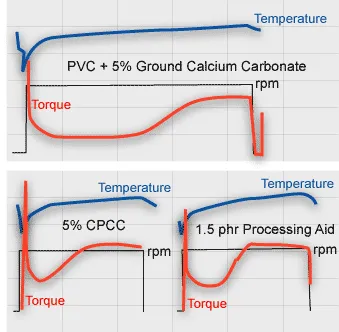
Comparison of Brabender (a fusion test) traces for a series of PVC mixes
The reason for this behavior is the compatibility of the CPCC primary particle size at ~70nm with the PVC primary particle. This compatibility allows good contact to develop which is instrumental in developing frictional heat. Because of the large number of CPCC particles present, this effect is distributed evenly throughout the PVC matrix resulting in more efficient heat up and ultimate fusion of the PVC granules, hence the earlier gelation.
Electron micrograph studies of a series of dry blends based on both CPCC and a typical GCC clearly illustrate this point also (See table below).
| Dry blend with CPCC | Dry blend with GCC |
 |  |
|
|
#2 Plate Out Elimination
Plate out is a phenomenon sometimes observed during extrusion processes that have its origins in varying degrees of incompatibility within the formulation itself. This can involve lubricants and other additives used. The addition of acrylic processing aids is known to improve this situation as a result of the:
- Enhanced fusion
- Improved compound compatibility that is promoted
Due to the ultrafine particle size of precipitated calcium carbonate and its ability to improve the state of dispersion of all the components present in such compounds, resistance to plate out is seen to improve when CPCC is included in these formulations. As a result of this, running times can be extended without the need for costly delays in production for cleaning.
#3 Melt Extensibility
The resistance of a PVC melt to the applied shear forces during the various processing conditions is a critical property for the polymer compound during its processing experience. This is particularly true for injection molding processes where the high shear gradients seen can give rise to surface defects which in some cases can be unacceptable and cause components to be rejected.
Again conventional processing aids are often incorporated to improve the melt properties but also often can increase the melt viscosity and affect output potential.
Benefits in Injection Molding
CPCC containing molding compounds demonstrate excellent processing behavior and produce components with high gloss without the need for conventional processing aids. GCCs fail to match this performance even when used in combination with processing aid.
The table below illustrates the reformulation trends possible to optimize processing aid in molding compounds.
Formulation With Processing Aid + GCC | Typical Alternative CPCC Formulation | |
| PVC | 10 | 100 |
| Stabilizer | 2 | 2 |
| Processing Aid | 2 | 0 |
| 1µ GCC | 3 | - |
| CPCC | - | 5 |
The CPCC Formulation Represents a Significant Cost Saving and Improved Surface Finish and Lower Reject Rates.
Benefits in Rigid PVC Foam
The use of CPCC in rigid PVC foam formulations allows the development of a more regular and uniform cell structure (see figure below).
- This property is derived from the beneficial improvement in melt reinforcement that accompanies the incorporation of these ultrafine calcium carbonates.
- Melt elasticity and elongation are improved which allows optimization in the use of other additives necessary for successful foam production.
There has been speculation as to whether CPCC can act as a "nucleating agent" due to its very small particle size. This has yet to be confirmed although, in theory, this would be an expected outcome of their use.


#4 Increased Output
It is often desirable to maximize the production output but this can also be limited by the speed of gelation of a PVC compound.
While combinations of processing aids can be used in order to assist the fusion characteristics of a particular compound, precipitated calcium carbonate will allow high production output rates without the need for such high usage of processing aids. This is of specific interest for larger output machinery where a suitable level of gelation has often been a limiting factor for high output.
#5 Surface Finish
CPCC containing compounds exhibit excellent gloss in extrusion and injection molding applications. In pigmented rigid PVC, CPCC gives an unparalleled degree of gloss because of its:
- Ultrafine particle size
- Absence of the large particles present in ground fillers that produce surface defects thereby increasing light reflection
Materials sometimes difficult to process such as CPVC (chlorinated polyvinyl chloride) are made more manageable if CPCC is included in the formulation.
The figure below clearly shows the smooth surface finish of the CPCC formulation compared to that with ground calcium carbonate. The relatively large particles of the latter cause surface defects which increase light scattering.

Surface Finish of CPCC vs GCC
Precipitated Calcium Carbonate as a Reinforcer
The decisive advantage which results from the incorporation of ultrafine precipitated calcium carbonate in rigid PVC formulations relates to the significant improvement in the impact performance. This improvement is seen in rigid PVC compounds without the addition of any organic impact modifier.
In the presence of both acrylic and CPE-type modifiers, this improvement in the impact properties is repeated from the levels seen with the modifier alone. Whereas polymer-modified compounds can display a sharp decrease in impact strength at low temperatures, the CPCC modified system possesses residual impact resistance even at low temperatures (see figure below).

Mean Height of Fall h50 of Roller Blind Profiles as a Function
of Socal® 312 Content at Varying Test Temperatures
In contrast to organic impact modifiers, precipitated calcium carbonate increases the:
- e-modulus of the extruded component
- impact strength without reducing the rigidity
The explanation of this positive behavior can be found in both the processing improvements that synthetic calcium carbonate provides along with its ability to improve the dispersibility of other components of the formulation i.e. organic impact modifiers. This improved dispersion and processing benefit also results in the reduction in the % reversion observed for the extrusion of a typical window profile formulation (see table below).
| Formulation | % Reversion | Rate m/min | Single V Notch Charpy impact at 23°C (kJ/m2) | |
| TOP | BOTTOM | |||
| Ground filler system | 1.87 | 2.02 | 1.1 | 14.0 |
| Precipitated CC | 1.57 | 1.67 | 1.1 | Hinge Break |
The more complete gelation that results from the inclusion of precipitated calcium carbonate provides a matrix that in comparison to natural calcium carbonates has fewer defect sites and opportunities for a crack propagation process leading to reduced mechanical properties.
The micrographs show the differences in failure mode for PVC containing precipitated calcium carbonate from those containing a natural calcium carbonate derived by milling (see figure below). It is possible to obtain ductile failures with reduced impact modifier levels by using precipitated calcium carbonate.
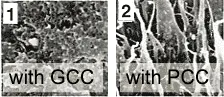
Differences in Failure Mode for PVC Containing PCC vs GCC
View all Precipitated calcium carbonate grades used as impact modifiers or reinforcers here »
PCC as a Weathering-resistant Agent
The resistance of unplasticized PVC to degradation due to exposure to the elements depends on several different factors. These include:
- The nature of the stabilization system
- The pigmentation used
- The grade of PVC
- Other additives in the formulation
It is clear that all these formulation ingredients have a role to play.
Rigid PVC formulations that contain synthetic precipitated calcium carbonate show excellent color durability and retention of mechanical properties in particular impact strength. This positive effect on weatherability is due to a number of different factors some of which have their origin in the improvements in dispersion and processing behavior seen when precipitated calcium carbonate is included in exterior formulations.
CPCC in rigid PVC has a positive effect on weathering by:
- A more effective compounding of the PVC ensures that the stabilizers present are dispersed in a homogenous way. The presence of CPCC in the formulation removes the need to overwork the PVC which itself provides a more stable polymer.
- The ultrafine nature of the synthetic calcium carbonates acts as an efficient radical trap for any evolved HCl thereby inhibiting dehydrochlorination giving reduced yellowing. (see figure below)

Weather Proofness of a Brown, Lead-stabilized Rigid PVC Section Containing Different Levels
of Filling Materials (Exposition Area: Rheinberg/Germany)
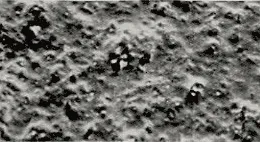
- The enhanced surface finish and gloss are major factors in the surface resistance to degradation. (see table below)
| Ground Calcium Carbonate | Precipitated Calcium Carbonate |
 Mag X 250 Before Weathering |  Mag X 250 Before Weathering |
 Mag X 250 After 8GJ/m2 Weathering Xeon 1200 |  Mag X 250 After 8GJ/m2 Weathering Xeon 1200 |
Effect of Weathering on PVC Surface Containing Ground Calcium Carbonate and Precipitated Calcium Carbonate
Key Applications
PCC finds use in several applications involving rigid PVC (pipes & foams), plasticized PVC (cable compounds) and other specialty applications. It is compatible with various processing modes like injection molding, extrusion (profile, CVPC), etc. Explore some of the applications of precipitated calcium carbonate described below.
#1 PCC in Rigid PVC
Pressure Pipes

Coated ultrafine precipitated calcium carbonate can be included in formulations intended for use in pressure pipe applications where the addition of 2-3 phr will improve the processing properties and ensure more complete gelation. At this level of inclusion, the hoop strength of the pipe is retained without other adverse behavior.
Some specifications limit the inorganic content of such formulations and under these circumstances, the limit of addition may be only 1 phr. However, even at this level, beneficial processing effects can be observed.
The addition of higher levels of any calcium carbonate into pressure pipe formulations is not recommended due to the reduction in tensile strength which can adversely affect the burst pressure of the pipe.
| Indicative Formulation | |
| S-PVC, K-value 68 | 100 |
| CPCC | 1-2 |
| Pigment | X |
| Stabilizer one pack | 2-3 |
Rigid PVC Foam

The use of coated precipitated calcium carbonate provides a unique combination of beneficial processing properties in rigid cellular PVC. In order to obtain an optimum level of density reduction, formulations need to feature a compromising set of melt properties.
The melt strength and elasticity have to be high, but the melt viscosity should be low. Without these rheological characteristics, the generated gas cannot be retained, and cell structure will collapse forming voids and even surface bubbles.
Coated precipitated calcium carbonate has the effect of providing melt reinforcement which manifests itself as improved melt elongation and elasticity. Some benefits in rapid set-up after the die together with possible nucleation effects have also been observed.
The benefits offered by PCC in rigid PVC applications are mentioned below:
- Melt rheology improvement results in improved melt extensibility which reduces the need for high levels of expensive processing aids.
- More efficient dispersion and distribution of all additives including blowing agents allowing a possible reduction in phr of these additives.
- Coated precipitated calcium carbonate as a nucleating agent.
- Significant improvement in impact strength.
- Improved surface finish.
Injection Molding

The inclusion of coated ultrafine precipitated calcium carbonate in rigid PVC formulations improves the processing behavior by increasing the rate of gelation and improving melt behavior.
Such compounds exhibit improved melt reinforcement and elongation which enables the PVC to withstand the shear gradients seen in injection processing which would otherwise give rise to surface defects caused by melt fracture.
Elimination of gates marks from the molding process which is again a desirable quality improvement.
Processing aids tend to increase the melt viscosity which reduces mold flow, spiral flow testing of formulations. While using CPCC show a reduced melt viscosity in comparison to formulations based on traditional processing aids.
| Formulation with Process aid/GCC | Formulation with CPCC | ||
| PVC K value 57-60 | 100 | PVC | 100 |
| Stabilizer system | X | Stabilizer system | X |
| Process aid | 2 | Process aid | 0.5 |
| 1 micron GCC | 3 | CPCC | 6-8 |
Extrusion Profiles

When formulated into extrusion profile PVC compounds, coated precipitated calcium carbonate improves:
- Gelation and processing
- Surface finish
- Impact resistance
Reversion is minimized and profiles retain their mechanical properties under weathering conditions.
CPCC is a unique additive which can provide both a processing aid and impact modification function without any of the adverse effects that can be normally experienced i.e. high melt viscosity/die swell and poor reversion values when using conventional additives.
Most formulations contain organic impact modifiers to achieve high impact strengths. However, these products modify the physical properties of the PVC but also have to be used at high loading which has a negative effect on the processing melt rheology and surface finish properties.
CPCC used to replace the natural calcium carbonate in the formulation improves all the processing properties and allows a reduction in impact modifier and process aid levels.
| Extruder conditions | Variable dosing rpm | % Die well reduction CPCC versus GCC |
KMD 125, 3 mm Rod Temp. profile: 190/191/190/190 | 10 20 30 | 16 15.8 15.4 |
The surface finish of extruded profiles can be very important i.e. window systems, and the incorporation of CPCC provides a high gloss, high integrity surface finish without the need for additional effort i.e. heated calibration stage.

The ultrafine particle size of the synthetic calcium carbonate and the melt reinforcement effect is the explanation for this observation.
Impact Strength
The addition of coated ultrafine precipitated calcium carbonate substantially improves the impact strength of rigid PVC. This improvement is noted over a range of temperatures including below 0°C which is beyond the capability of conventional organic impact modifiers. Such is the improvement, that some window profile systems based on specific PVC types rely on the CPCC for their mechanical properties with no added organic modifier in the formulation.
It is more common however to utilize a combination of organic impact modifiers together with CPCC to obtain the necessary mechanical properties at the most cost-effective level of modifier addition.
The figure below shows that, although the optimum effect of Winnofil® S is achieved at 10-15 parts addition, substantial improvement in impact strength is still obtained with higher levels. However, from a processing viewpoint, additions of more than 15 parts are above the optimum and the proportion generally advised for most applications is up to 10 parts.
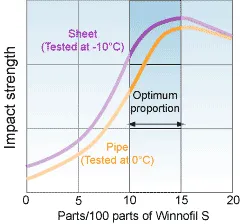
Tested as pipe at 0°C and as a sheet at -10°C. Test method: Falling weight
The figure below shows the beneficial effect of Winnofil® S in combination with an acrylic impact modifier. A cost/performance compromise is to employ 5-10 phr of the organic modifier with 10 phr of Winnofil® S when the effect on impact strength is considerably higher than using either additive alone.

Test method: falling weight at -40°C
Reversion
This area is concerned about the stability of the profile after extrusion. The more under-processed a profile, the greater the instability to heat. "Winnofil®", because of its small particle size gives more homogeneous melt in the extruder. For a given phr these are 1000 more CPCC particles in the melt than GCC.
This allows the PVC to be thoroughly worked during processing giving faster gelation times and more stable profile. The following results were obtained from industrial trials where a Ground and modified formulation were tested at the same conditions.
| Formulation | % Reversion | Rate m/min | Single V Notch Charpy impact at 23°C (kJ/m2) | |
| TOP | BOTTOM | |||
| Ground filler system | 1.87 | 2.02 | 1.1 | 14.0 |
| Precipitated CC | 1.57 | 1.67 | 1.1 | Hinge Break |
Formulations
The table below shows an alternative formulation with CPCC, providing at least 5% cost savings.
Formulation with GPP phr | Alternative with CPCC phr | |
| PVC | 100 | 100 |
| 1 Pack | 4.3 | 4.3 |
| Process aid | 1.5 | 0.5 |
| TiO2 | 4 | 4 |
| GCC | 5 | - |
| Winnofil® S / Socal® 312 | - | 8 |
| Impact modifier | 7 | 5 |
CPVC Extrusion
There are requirements for PVC compounds, which have high heat distortion temperatures, and where also medium/high impact strength is required. These are often formulated from chlorinated PVC resins (CPVC) and impact modifiers.
The melt extrusion behavior of such compounds can prove difficult due to the rheology of the compounds from these resins and additives and often a poor surface finish is observed. The inclusion of CPCC will dramatically improve the surface finish and increase the impact strength such that impact modifier levels can be reduced.
Formulations Containing PCC
The incorporation of coated precipitated calcium carbonate is influenced by the final target density to be attained. However, levels of 2-8 phr CPCC are successfully incorporated into rigid PVC foam allowing both processing aid and impact modifier levels to be significantly reduced.
The table below shows two examples of formulations containing CPCC. One for 2-dimension expansion and another for Free Foam.
| 2 dimensions expansion | Free Foam | ||
| phr | phr | ||
| PVC | 100 | PVC | 100 |
| Stabilizer | 3-4 | Stabilizer | 2.5 |
| Process Aid / Modifiers | 8 | Process Aid / Modifiers | 6 |
| Winnofil® S | 3-6 | Winnofil® S | 3-6 |
| NaHCO3 | 2.5 | Azodicarbonamide | 0.3 |
| TiO2 | 5 | TiO2 | 4 |
Check out the precipitated calcium carbonate for rigid PVC applications
#2 Applications of PCC in Plasticized PVC
Coated synthetic ultrafine calcium carbonate can provide valuable property modifications in a range of flexible PVC applications. The ultrafine nature of the synthetic carbonate and the fatty acid surface treatment enable the CPCC to be readily wetted out during compounding for the full activity of the high surface area to be realized.
The major benefits from using CPCC in plasticized PVC are discussed below:
- High surface gloss
- Smooth surface finish and white scratch marking resistance
- Resistance to white flex marking
- Efficient HCl acid gas absorption
Cable Compounds
CPCC is used in both insulation and cable sheathing where it provides a high gloss finish and retained good electrical properties. Typical formulation and results are summarized in the table below.
| Part by weight | ||
| Insulation | Sheath | |
| PVC Polymer | 100 | 100 |
| DOP | 25 | 60 |
| Cereclor S52 | 25 | 60 |
| Winnofil® S (CPCC) | 50 | 100 |
| TBLS | 6 | 6 |
| Calcium Stearate | 1 | 1 |
| Bisphenol A | 0.25 | |
| Properties | Before immersion in water | 24 hours at 23°C in Water |
| Volume resistivity (ohm-cm x 1014) | 2.6 | 1.4 |
| Power Factor (at 1000Hz) | 0.084 | 0.10 |
| Permittivity (at 1000 Hz) | 5.0 | 5.5 |
The most significant interest concerning the utilization of CPCC in cable compounds relates to the ability of the high surface area CPCC to effectively retain HCl gas released under a combustion situation.
Practical cable formulations have been developed that rely on this high surface area activity of synthetic calcium carbonate for HCl capture and in combination with other additives, this allows workable formulations for use in this sector.

Effect of Filler Level on Retention of HCl During the Combustion of PVC
Typical Flame retardant PVC cable formulations with low HCl emission and properties are given in the table below.
| Formulation | A | B | C |
| PVC Polymer | 100 | 80 | 60 |
| Hycar | - | 20 | 40 |
| Triarylphosphate | 35 | 35 | 35 |
| Plasticizer | 22 | 22 | 22 |
| Winnofil® S | 60 | 60 | 60 |
| ATH | 60 | 60 | 60 |
| Heat stabilizer | 6 | 6 | 6 |
| Paraffin wax | 1 | 1 | 1 |
| Properties | |||
| Oxygen index | 36 | 33 | 31 |
| Emission of HCl (%theorical) | 8 | 4 | 2 |
| Tensile Strength, (MPa) | 25 | 8 | 6 |
| Elongation at break | 160 | 315 | 470 |
| Volume resistivity, ohm-cm x 1012 | 4.8 | 2.8 | 0.4 |
| Cold Bend Temperature, °C | 5 | -15 | -25 |
Flame Retardant PVC Cable Formulations
#3 More Specialty Applications of PCC
Thermosets
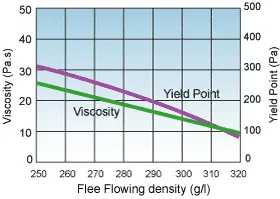
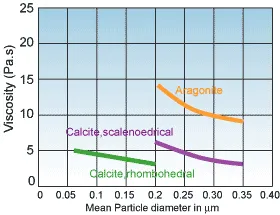
Certain grades of PCC offer benefits in rheology control in polyester molding compounds where the bright color, positive effect on the viscosity and much improved surface finish and sandability are valuable property improvements.
The figures below show the particular effects that the fineness, the crystal structure and the free-flowing density have on the viscosity of the polyester resins.
Liquid Resins
Due to its ultrafine particle size and hydrophobic surface treatment, CPCC allows improvements in the control of the rheology in a range of liquid resin systems. The mechanism of effect results from the hydrophobic/hydrophilic balance of fatty surface treatment and the flocculated nature of the crystalline structures present in the product.
Grades are easily dispersed in a liquid system and the rheological effects do not require further addition of synergists or activators to be effective. Improved viscosity stability can be seen with time when compared to the use of other rheological control agents and CPCC presents fewer handling problems in use.
Thermoplastics
In polyolefins, CPCC is used as an acid scavenger. Beneficial properties are also seen in polyolefin compounding where low-level addition of the high surface area grades will improve the anti-blocking properties of thin-film applications.
Where injection moldings are produced from PE or PP, Socal® increases service temperature and gives the materials a high degree of brightness. The adding of 2 % to 4 % by weight makes PP film easier to splice while, at the same time, reducing PP deposits on fast-moving machine parts.
Free-flow Agent for Powders
Coated ultrafine PCC acts to improve the flow properties of problem powders. The beneficial effect is seen when either the product is added into the final stages of a production stream as in the case of spray drying isolation or alternatively the CPCC can be added into a final product mix.
The free flow and anti-caking improvements seen require only 1-2% addition of the high surface area CPCC which helps to coat the surface of the bulk material reducing interparticle attractions. There is also a positive effect on the absorption of moisture from the particle interfaces, which also assists in the anti-caking and free powder flow improvements observed.
Liquid Carrier
The relatively high surface area of PCC can allow these products to be used as inert carriers for liquid catalysts.
One example of this is where reactive organic peroxides can be absorbed onto the calcium carbonate, allowing the production of an easy-to-handle catalyst paste for use in combination with reactive liquid resin components.
The calcium carbonate has no adverse effect on any of the adhesion properties, which can be adversely affected by other thixotropic control agents.
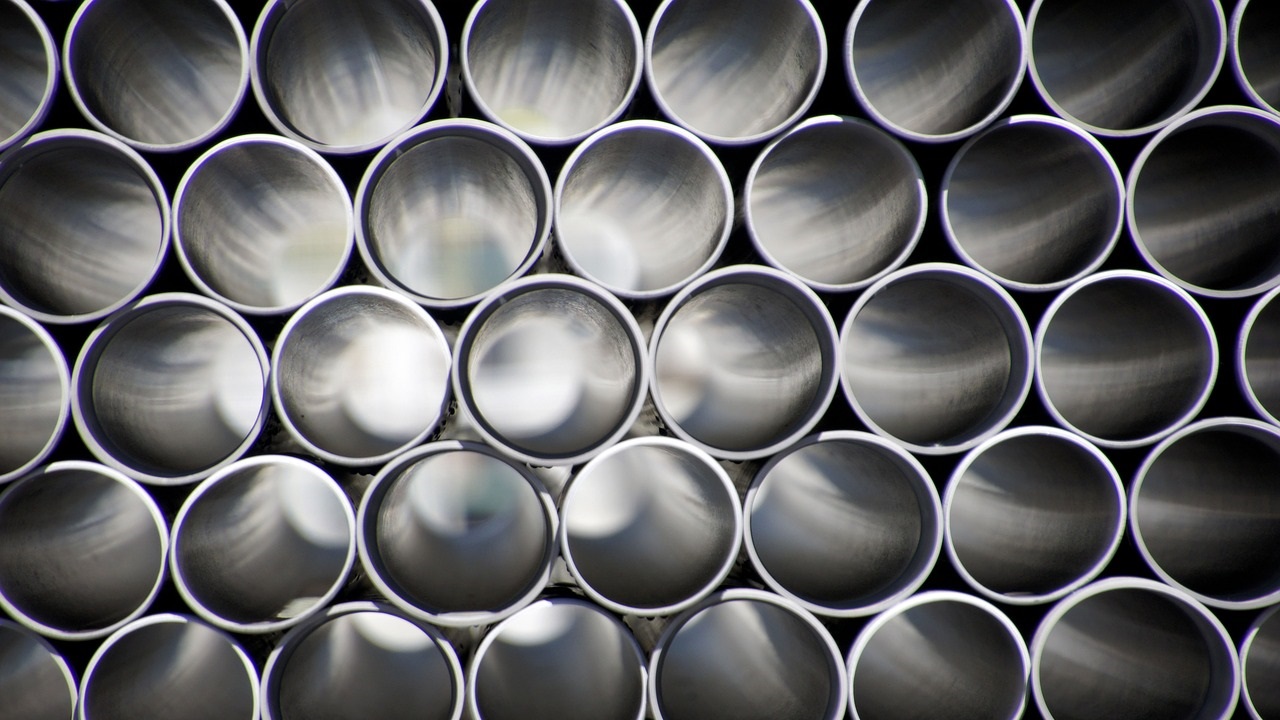
Coated ultrafine precipitated calcium carbonate can be included in formulations intended for use in pressure pipe applications

Practical cable formulations rely on high surface area activity of synthetic calcium carbonate for HCl capture and in combination with other additives

The relatively high surface area of PCC can allow these products to be used as inert carriers for liquid catalysts