

IncroMax™ 100: A Biobased Process Aid Improving Efficiency in PET Bottle Manufacturing
Last update on Sep 20, 2024
This is a sponsored article by Cargill.
Today, both manufacturers and consumers make eco-conscious use of plastics. In the quest for more efficient and sustainable PET bottle manufacturing, innovations like IncroMax™ 100 are transforming industry practices. Developed by Cargill, this bio-based process aid offers a suite of benefits.
addresses multiple pain points in PET bottle production. It improves the manufacturing process by reducing energy consumption and operational costs with a smaller environmental footprint. The key benefits and features include:
- reduced friction improving de-nesting and packing of preforms,
- improved mold release,
- enhanced optical clarity,
- improvements to output rate and reduction to temperature and extruder speeds in processing
As sustainability becomes a critical focus, the bio-based composition of IncroMax™ 100 and its compatibility with rPET further strengthen its value proposition for the circular economy.
Let's explore how IncroMax™ 100 process aid by Cargill emerges as a game-changer in PET bottle production, aligning efficiency with environmental responsibility for a sustainable future in packaging.
An Introduction to IncroMax™ 100 by Cargill
In the evolving landscape of polyethylene terephthalate (PET) bottle manufacturing, improving efficiency and sustainability has become paramount. A significant advancement in this field is the introduction of bio-based process aids like IncroMax™ 100.
- This innovative additive, developed by Cargill, presents multiple benefits for PET processing, including enhanced output rates, reduced energy consumption, and improved product handling.
- This unique additive for polyesters minimizes friction on the polymer surface even at very low addition levels resulting in a range of product and efficiency improvements, such as increased output rate, enhanced slip performance, improved packing and de-nesting, and increased scratch resistance.
- Additionally, it reduces processing temperature and mold release force (by up to 60%) and minimizes scuffing. It is suitable for enhancing product quality and process efficiency in film and sheet extrusion, as well as injection molding applications.
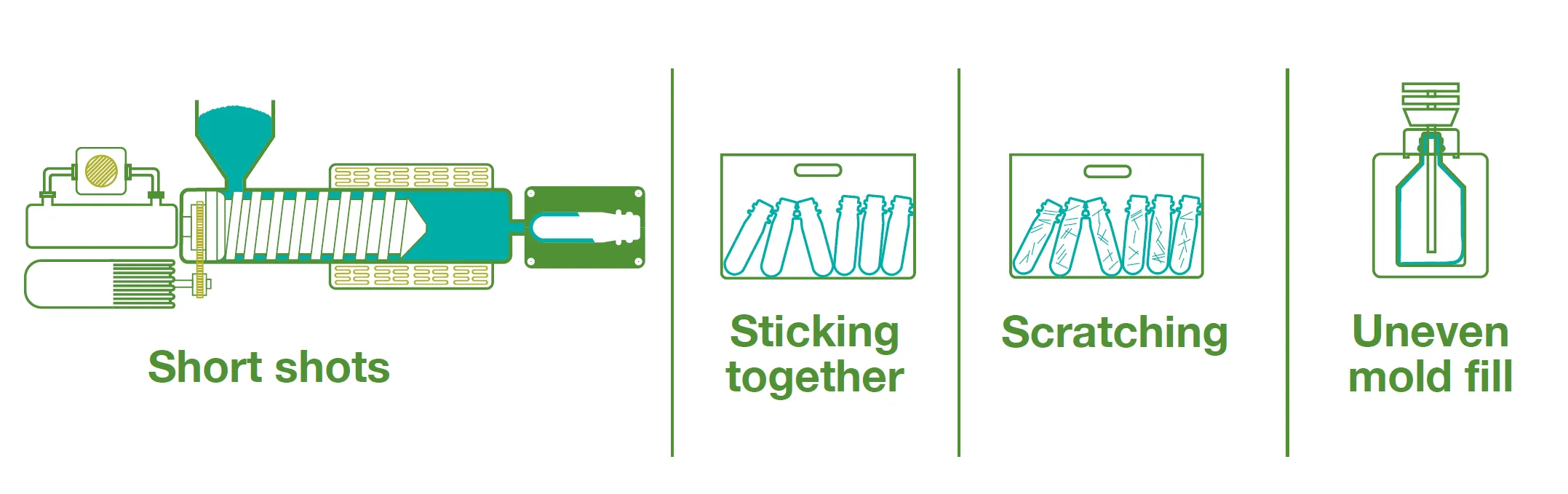
Several Inefficiencies and Challenges with PET Bottle Production Improved by IncroMax™ 100
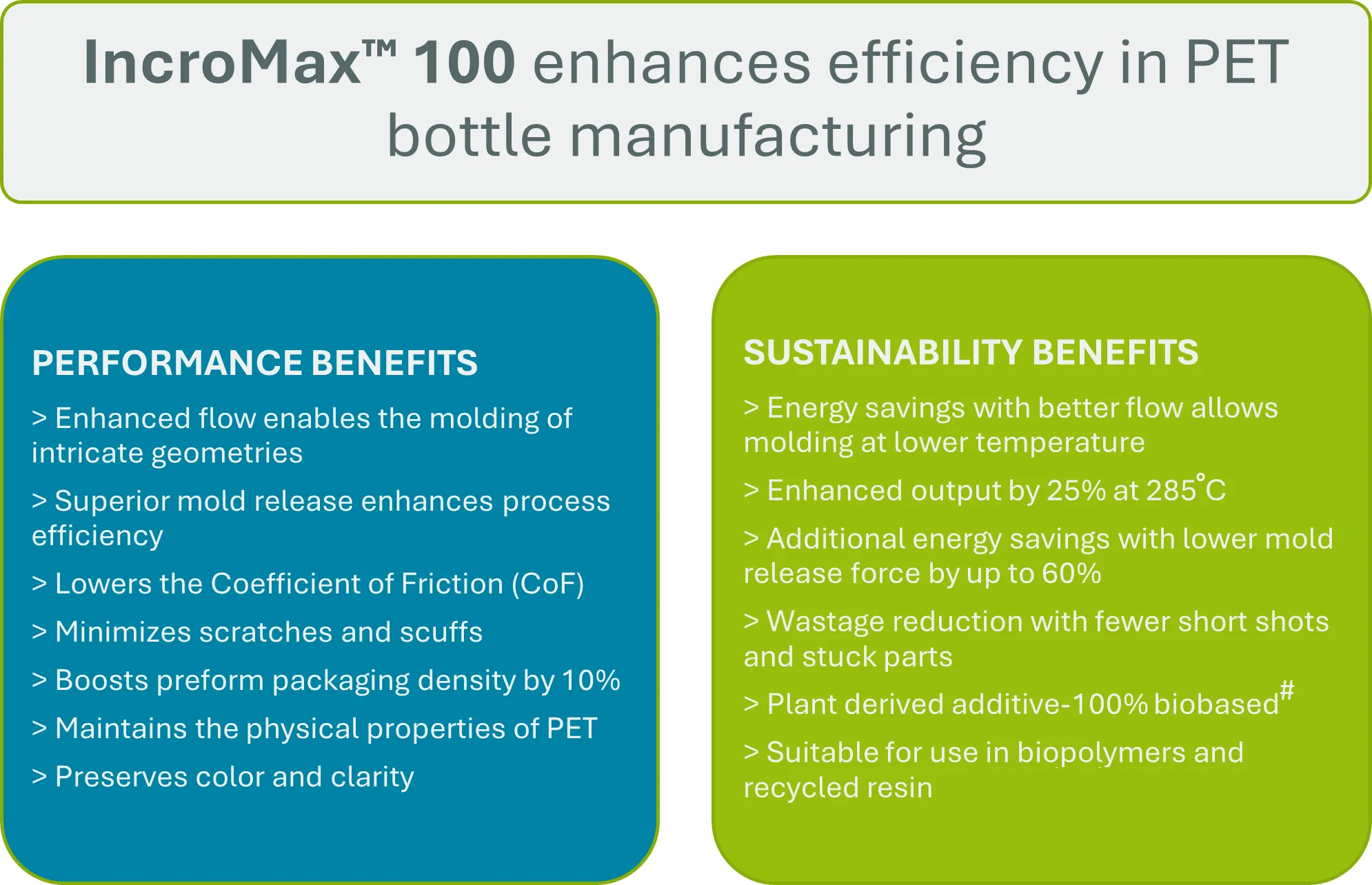
Benefits of IncroMax™ 100 in PET Bottle Production
Enhanced Output Rate and Energy Savings
One of the most compelling advantages of IncroMax™ 100 is its ability to enhance the output rate during the manufacturing process. The improvement in flow and extrusion is due to the reduction in friction within the polymer melt, rather than at the surface. Only when it cools does the additive migrate to the surface and give surface friction reduction leading to:
- improved mold release and
- anti-scratch properties
IncroMax™ 100 facilitates a smoother and faster flow of materials through the extruder. This improvement not only boosts production efficiency but also allows for a notable reduction in processing temperature and extruder speeds. Lowering these parameters directly translates into energy savings, which is a critical factor in reducing operational costs and environmental impact.
The use of IncroMax™ 100 can lead to a reduction in processing temperatures by reduced friction within the polymer melt resulting in increased flow at lower temperatures. This layer minimizes the energy required to process the PET material, further enhancing the overall efficiency of the manufacturing process.
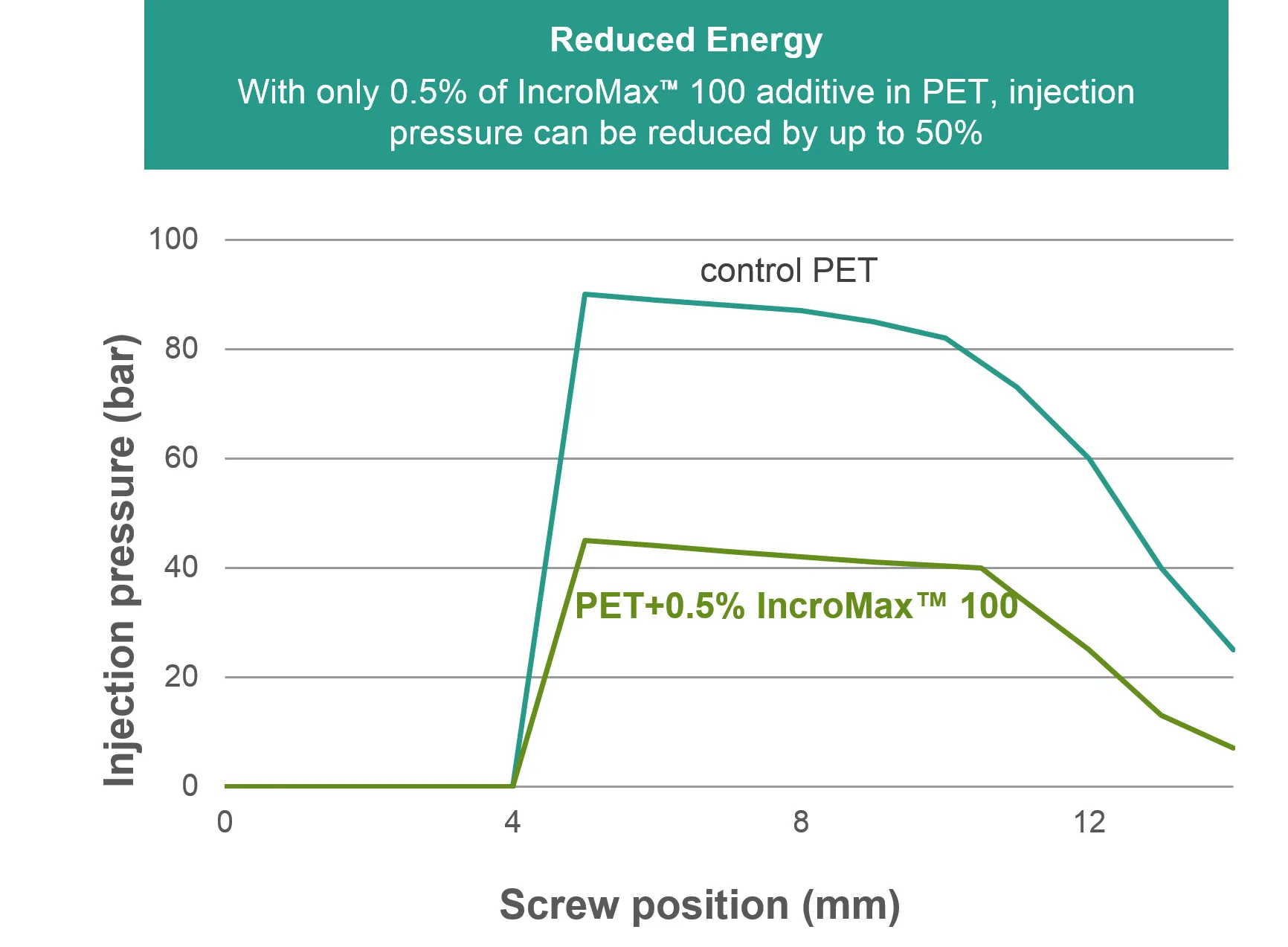
Reduced Injection Pressure with the Inclusion of IncroMax™ 100
Improved De-nesting and Packing of Preforms
In PET bottle manufacturing, the handling and packing of preforms are essential steps that can significantly impact the overall cycle time. IncroMax™ 100 addresses these challenges by reducing the coefficient of friction (CoF) on the polymer surface, which facilitates easier de-nesting and packing of preforms. This reduction in friction ensures that preforms do not stick together, allowing smoother and faster handling operations.
The friction-reducing properties of IncroMax™ 100 also contribute to decreased cycle times in the production process allowing:
- processing at lower temperatures,
- reduced cooling time, and
- shorter cycle time
By enabling more efficient de-nesting and packing, manufacturers can achieve faster turnaround times, thereby increasing their production capacity and reducing downtime. There is an added benefit of reduced waste due to parts getting stuck in the mold or being stuck together.
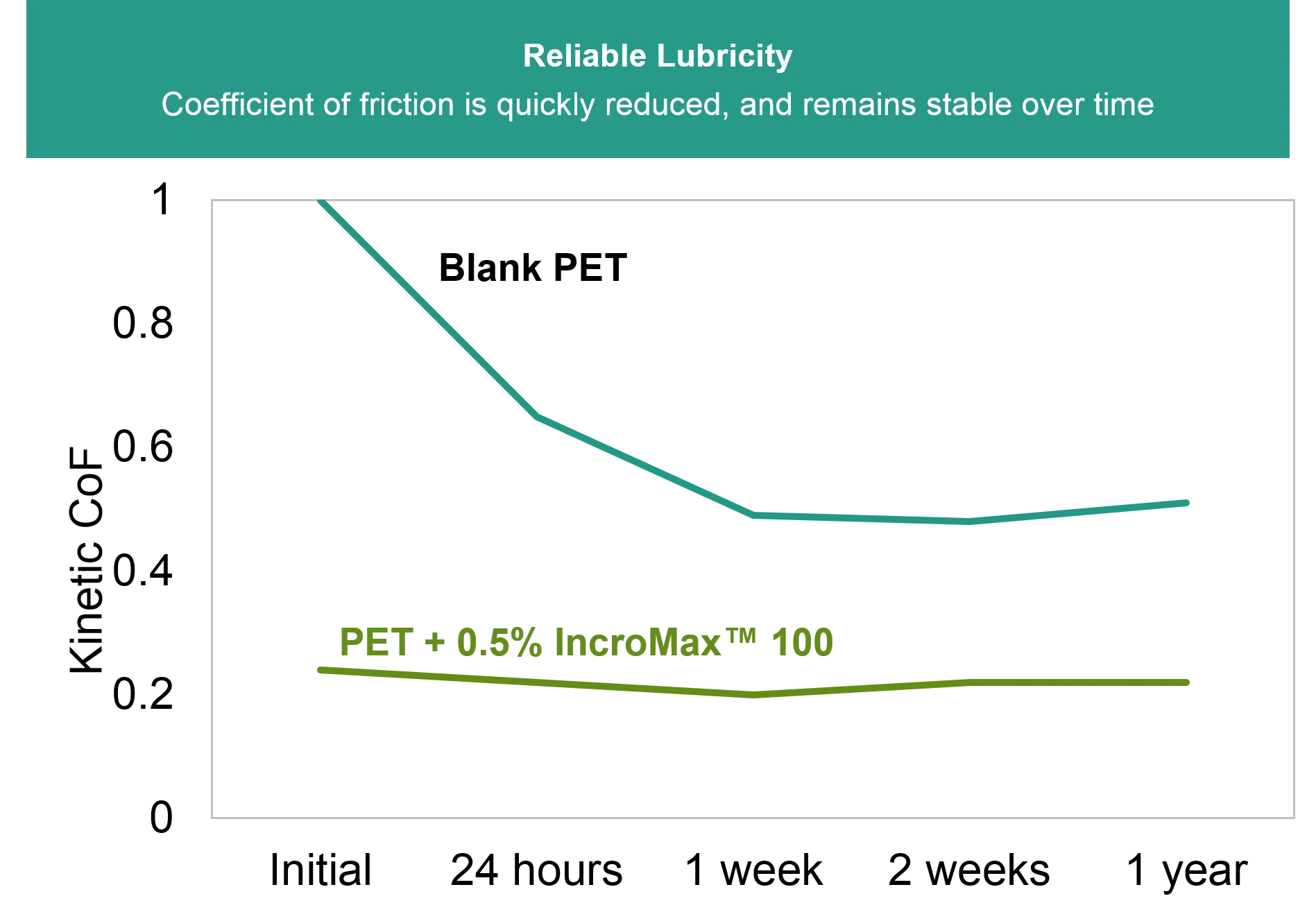
Comparison of CoF in Various Polymers with and without IncroMax™ 100
Enhanced Mold Release
Mold release is a critical aspect of PET bottle manufacturing, and any improvements in this area can lead to significant efficiency gains. IncroMax™ 100 enhances mold release by up to 60%, as stated in the product's technical data sheet. This improvement is achieved by the formation of a lubrication layer that reduces adhesion between the polymer and the mold surfaces.
Enhanced mold release not only facilitates easier and quicker removal of the molded preforms but also reduces wear and tear on the molds. This can lead to longer mold life and lower maintenance costs, further contributing to the overall efficiency and cost-effectiveness of the manufacturing process.
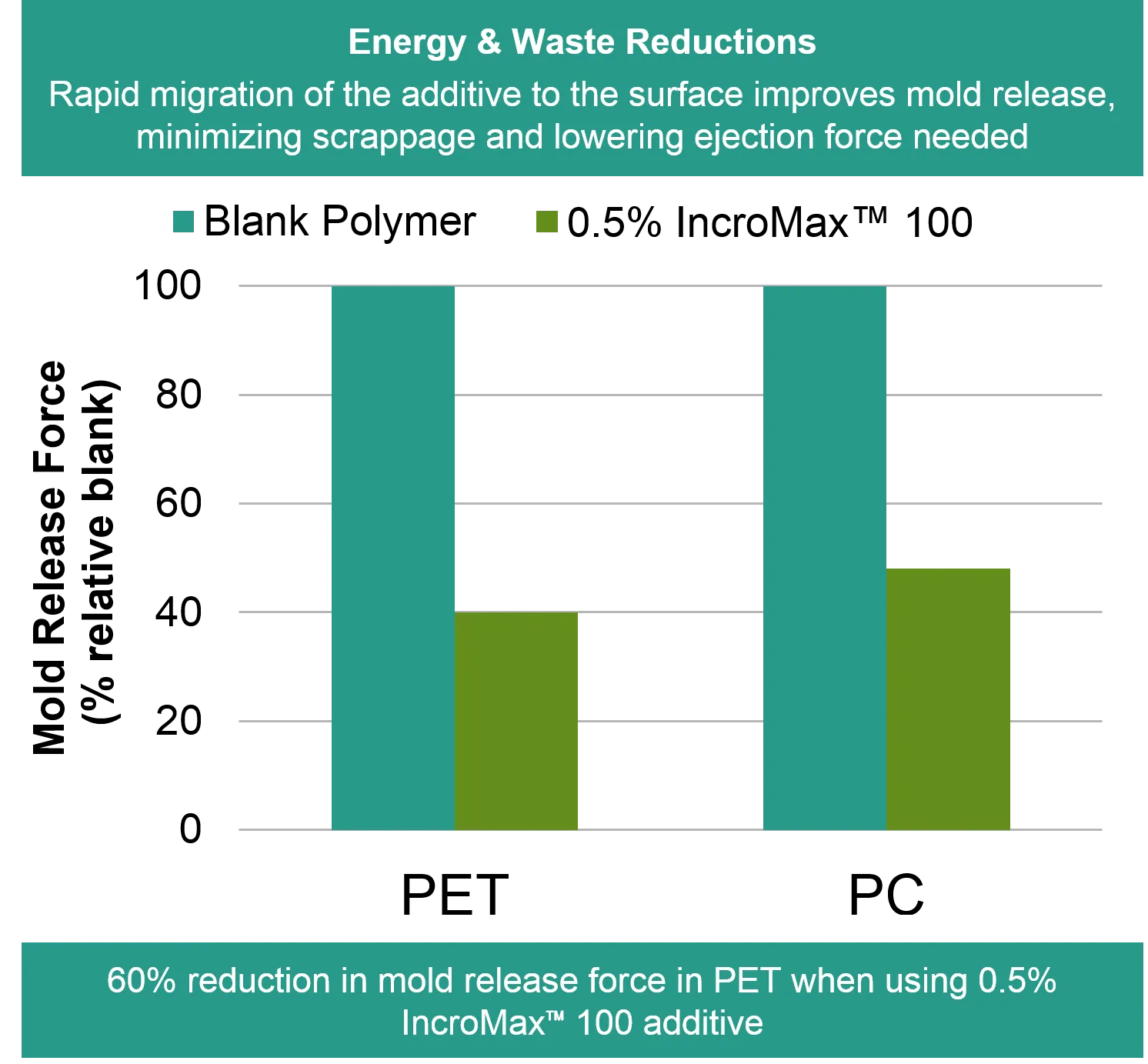
Mold Release Force Comparison with and without IncroMax™ 100
Optical Clarity and Recycled PET Compatibility
One of the primary concerns in using process aids in PET manufacturing is the potential impact on the optical clarity of the final product. IncroMax™ 100 addresses this concern effectively, as it does not affect the optical clarity of the PET bottles. This ensures that the aesthetic and functional qualities of the bottles remain uncompromised, making them suitable for a wide range of applications, including those requiring high transparency.
Additionally, IncroMax™ 100 is effective in processing 100% recycled PET, which is crucial in today's sustainability-focused market. By enabling the use of recycled materials without compromising on quality or efficiency, IncroMax™ 100 supports circular economy initiatives and helps manufacturers meet their environmental goals.
The table below shows the comparison of optical clarity in PET and rPET with IncroMax™ 100. Even at higher stretch ratios, IncroMax™ 100 additive does not impart haze/color or affect the overall barrier properties of PET or rPET. Moreover, the product integrity is maintained with unchanged water vapor and oxygen transmission rates.
| Materials | Stretch Conditions | With 0.25% IncroMax™ 100 | |
| Δ Haze (D1003-97) | Overall Color ΔE*ab(C) | ||
| Virgin PET | Standard SBM bottle | 0.03 | 0.10 |
| Virgin PET | Free blown | 0.22 | 0.13 |
| 75/25 PET/rPET | Free blown | 0.28 | 0.32 |
| 100% rPET | Free blown | 0.05 | 0.6 |
Comparison of Optical Clarity in PET and rPET with IncroMax™ 100
Easier Stretching of PET in Blow Molding
IncroMax™ 100 facilitates easier stretching of PET during the blow molding process, resulting in lighter but stronger bottles. With the inclusion of just 0.25% IncroMax™ 100 additive, bottle volume can increase by 15%, and wall thickness can be reduced by up to 25% without any reduction in tensile or barrier properties.
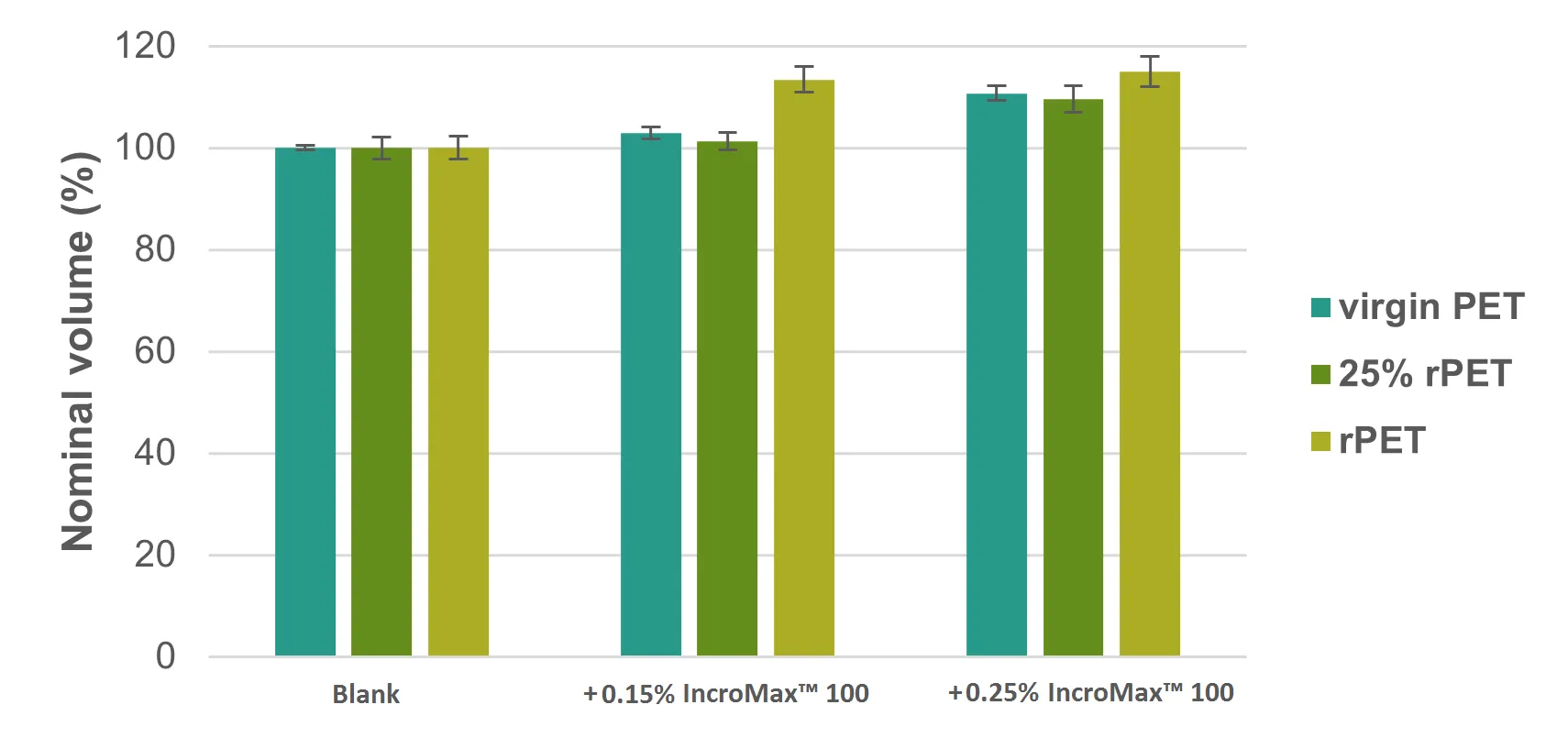
Effect of IncroMax™ 100 on Bottle Volume and Wall Thickness
IncroMax™ 100 does not act as a plasticizer and maintains the structural integrity of PET. The following three charts represent three integral properties of PET for easier stretch.
Stiffness
The below figure demonstrates that the addition of 0.25% IncroMax™ 100 has no significant effect on the stiffness (Young's modulus) of PET in both axial and hoop directions.
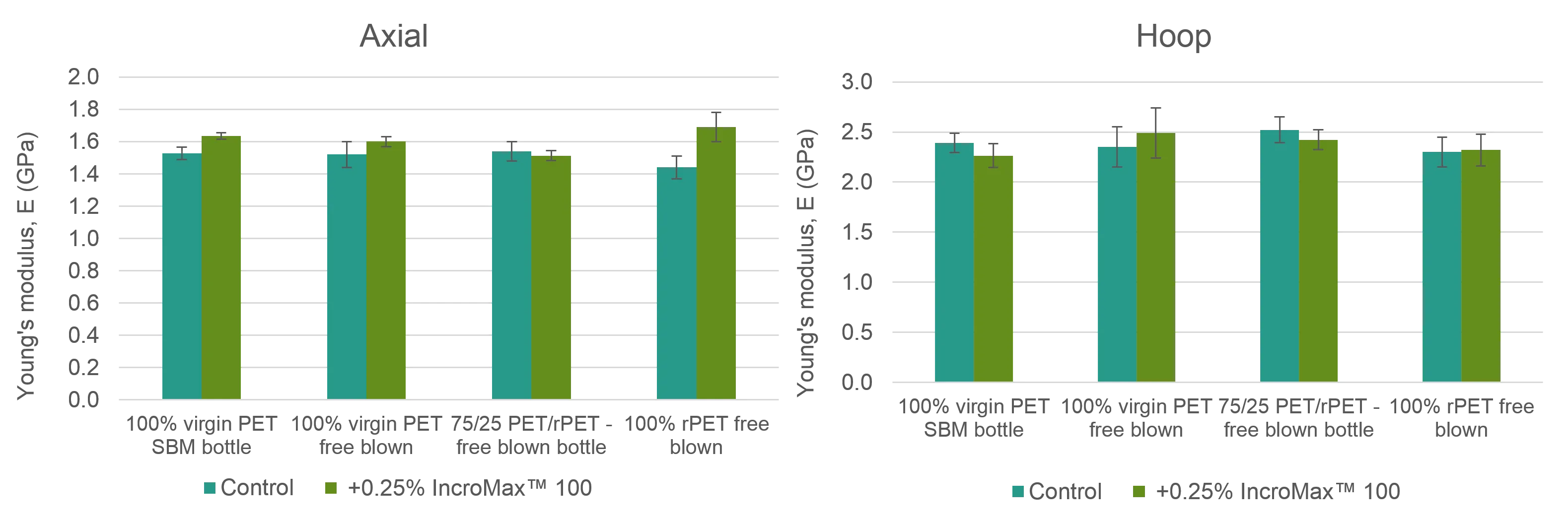
Easier Stretching of PET in Blow Molding – Stiffness
Strength
The below figure shows that the ultimate tensile strength of PET with 0.25% IncroMax™ 100 is comparable to the control samples. This suggests that IncroMax™ 100 does not compromise the tensile strength of PET, ensuring that the material retains its durability and resistance to breaking under tension.
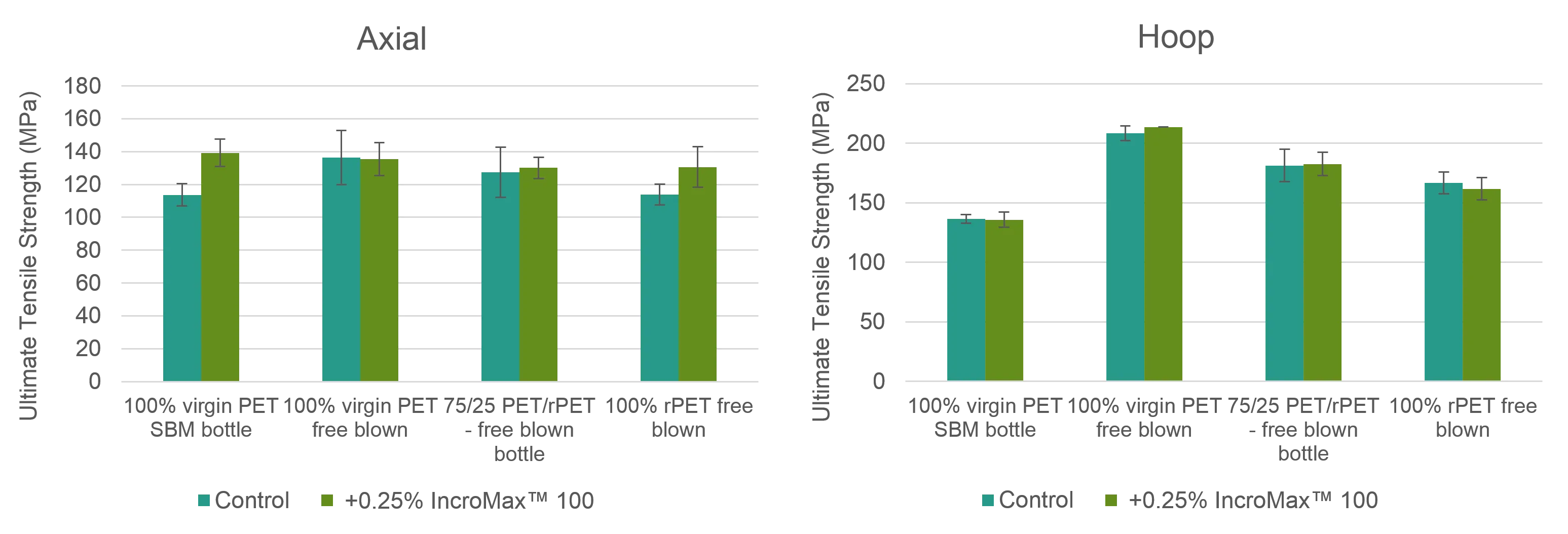
Easier Stretching of PET in Blow Molding – Strength
Ductility
The strength (ultimate tensile strength) of PET with 0.25% IncroMax™ 100 is comparable to the control samples. This suggests that IncroMax™ 100 does not compromise the tensile strength of PET, ensuring that the material retains its durability and resistance to breaking under tension.
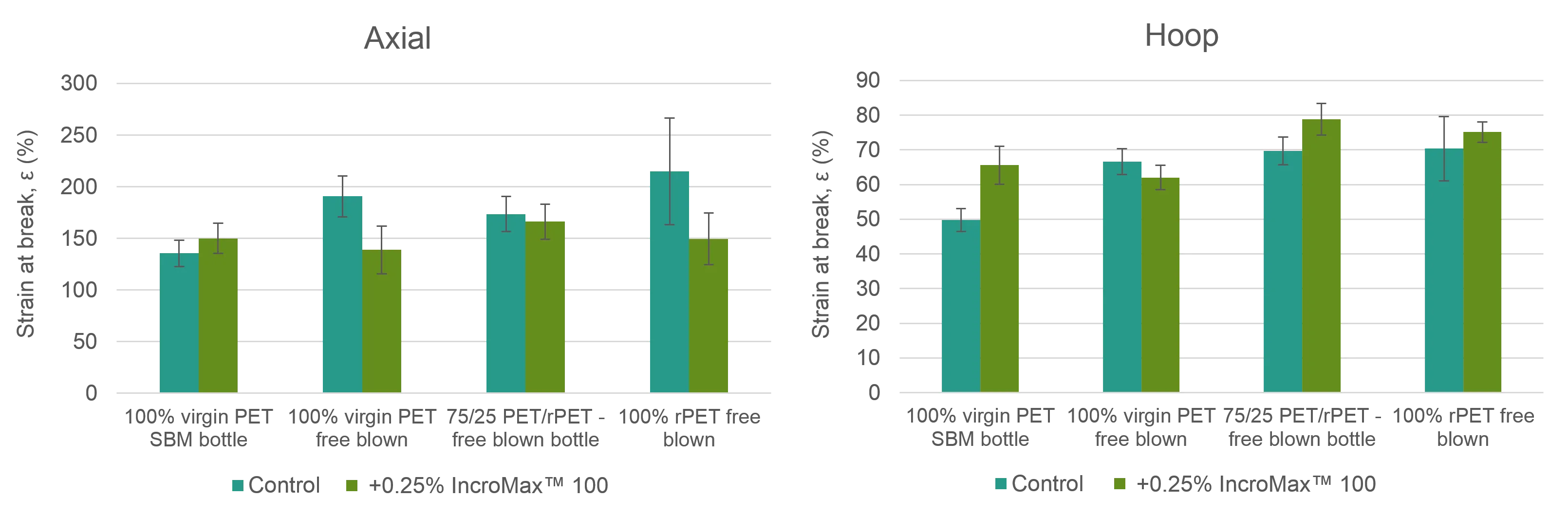
Easier Stretching of PET in Blow Molding – Ductility
IncroMax™ 100 additive in stretch blow molding
| Detailed Description | |
| Performance Benefits of IncroMax™ 100 | ➤ Prevents stress-whitening: Solid phase lubrication prevents stress-whitening during the stretch blow molding process. |
| ➤ Enhanced stretchability: Reduces pearlescence, opalescence, and rocker's bottoms by improving polymer stretchability. | |
| ➤ Consistent quality: Maintains clarity, gas barrier, and mechanical properties of blown articles. | |
| Sustainability Benefits of IncroMax™ 100 | ➤ Energy efficiency: Reduces blow molding temperature, leading to lower energy consumption. |
| ➤ Material optimization: Increased stretchability allows for lighter preforms to be used, optimizing material use and reducing waste. | |
| ➤ Eco-friendly: Made from 100% biobased, plant-derived ingredients, ensuring sustainability and compliance with ASTM D6866 standards. |
Performance and Sustainability Benefits of IncroMax™ 100 in Stretch Blow Molding
Conclusion
Incorporating bio-based# process aid - IncroMax™ 100 into PET bottle manufacturing processes offers numerous benefits. From enhanced output rates and energy savings to improved handling and mold release, IncroMax™ 100 addresses key challenges in the industry. Its compatibility with recycled PET and lack of impact on optical clarity further solidify its value proposition.
As manufacturers strive for greater efficiency and sustainability, innovative solutions likeIncroMax™ 100 is set to play a pivotal role in shaping the future of PET bottle manufacturing. By leveraging the unique properties of IncroMax™ 100, manufacturers can achieve higher productivity, reduced operational costs, and a smaller environmental footprint, positioning themselves competitively in the market while contributing to a more sustainable industry.

#Bio-based carbon content tested according to ASTM D6866
DISCLAIMER: All images, tables, and graphs used in this article are copyright of Cargill.