

FutureChem® SSIPA: Sulfonated solutions for advanced polymer applications
Last update on Jan 7, 2026
An interview with Cody Canote, Research and Development Scientist at FutureFuel
FutureFuel Chemical Company has led sulfonation chemistry for over 40 years. The company delivers solutions that improve functionality, sustainability, and performance across industries.
One such product is FutureChem® SSIPA, a sulfonated monomer that is used as a polymer modifier. This water-soluble, white solid has a high melting point and is utilized in textiles, coatings, adhesives, and high-tech applications.
We interviewed Dr. Cody Canote, Research and Development Scientist at FutureFuel. He highlights the key benefits and uses of this innovative product. He also explains how FutureFuel's expertise and quality help manufacturers achieve sustainable formulations.
#1. Could you share a quick overview of FutureFuel Chemical Company?
FutureFuel is a U.S.-based contract manufacturer specializing in custom and specialty chemicals. Headquartered in Batesville, Arkansas, the company’s chemicals division leverages strong technical capabilities, flexible production assets, and decades of experience in complex chemical manufacturing.
Alongside its Custom Manufacturing services, FutureFuel provides a wide range of Performance Chemicals, highlighted by its long-established portfolio of sulfonated aromatics, including FutureChem® SSIPA, which is used across multiple applications and markets.
#2. Please tell us about FutureChem® SSIPA and the value it brings to different end-use applications.
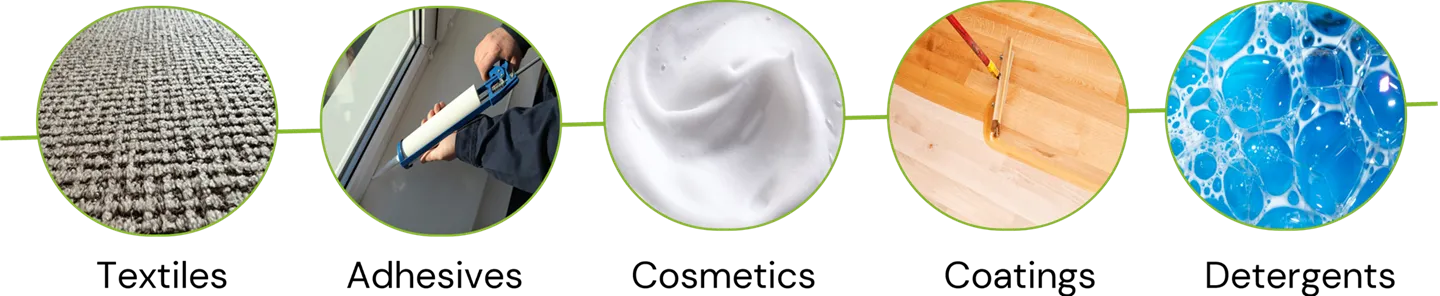
FutureChem® SSIPA is a sulfonated diacid that is used primarily as a polymer modifier. It offers a wide range of applications across various industries. A few examples include the following:
- Textiles: SSIPA is an important component in textile dyeing and finishing processes. It has successfully been used for decades in polyesters and polyamides for textiles, plastics, and resins to improve dyeability and stain resistance.
- Coatings and specialty adhesives: Enables the production of water-dispersible polyester resins used in coatings and adhesives.
- Detergents and cleaning agents: As consumers become more environmentally conscious, demand for sustainable cleaning solutions is growing. SSIPA enables the formation of water-dispersible, biodegradable polyester polymers used as soil-release agents in detergents and cleaning formulations.
- Cosmetics and personal care: SSIPA is used as an emulsifier and foaming agent in cosmetics and personal care products, contributing to their stability and texture.
- Pharmaceuticals: SSIPA serves as a pharmaceutical intermediate, facilitating the formulation of water-soluble drugs and enhancing their bioavailability.
- Material science and engineering: SSIPA can be incorporated into smart materials capable of responding to external stimuli, such as pH, temperature, or light. Nanostructure materials based on SSIPA have gained attention for their potential applications in advanced materials and nanotechnology. These materials exhibit unique properties such as high surface area, improved reactivity, and enhanced mechanical strength.
- Amine-free polyurethane resins: Used in amine-free waterborne polyurethane dispersions for coatings with exceptional hardness and high gloss.
#3. What specific benefits are unique to FutureChem® SSIPA that potential customers can benefit from?
From polymers to textiles, FutureChem® SSIPA’s adaptability makes it a valuable asset for a wide range of industries. Manufacturers can leverage their diverse functionalities to improve product quality and performance, whether in the form of coatings, adhesives, or fibers.
- The addition of a sulfonic acid containing group such as FutureChem® SSIPA into the backbone of the polyester imparts substantial cationic dyeability to the polyamide even at low levels (typically 0.5 to 2 % by weight) by providing sites for the cationic dye to react. Due to the diacid structure of SSIPA, it can be used with virtually all polyamide types including nylon 6 (caprolactam type monomer) or nylon 66 (HMDA / adipic acid type monomers) since it reacts into the polymer backbone to form a linear polymer.
- In addition to improving the cationic dyeability of the polyamide, FutureChem® SSIPA also provides substantial stain resistance against acid-type dyes typically found in foods and beverages. This feature of SSIPA in polyamides is particularly important in the carpet and textile industries.
- FutureChem® SSIPA offers stability and high performance under a wide range of environmental conditions, making it ideal for both indoor and outdoor applications. This stability enables manufacturers to create products that remain effective even in challenging conditions, such as fluctuating temperatures and exposure to moisture and chemicals.
- As industries shift toward more sustainable practices, SSIPA’s compatibility with waterborne and amine-free formulations positions it as a forward-thinking choice.
- Optimized adhesion and durability: Whether in textiles, coatings or adhesives, SSIPA provides strong adhesion, ensuring that products last longer and maintain their intended properties over time. This durability adds value to end products, helping manufacturers reduce costs associated with repairs or replacements.
#4. How does FutureFuel ensure quality and consistency in SSIPA production, particularly for customers requiring certain performance specifications?
FutureFuel is committed to consistently meeting the quality expectations of our customers, as demonstrated by our ISO 9001:2015 certification. Our quality focus is supported by our on-site laboratory and dedicated quality control staff. FutureFuel has also earned an EcoVadis Bronze Medal across all product lines, showing our dedication to consistent operations and sustainable chemistry.
FutureFuel works closely with customers to understand critical performance requirements, ensuring it meets product specifications for assay, water content, sulfate level, acidity, and iron levels. Every shipment meets the agreed-upon performance criteria, offering customers confidence in both reliability and product consistency.

#5. FutureFuel has decades of experience with sulfonation chemistry. How has this expertise shaped the development and production of FutureChem® SSIPA?
FutureFuel has been producing sulfonated monomers, particularly FutureChem® SSIPA, for over forty years at the site. Production began as a batch process with limited capacity and has grown into a semi-continuous dedicated process designed to meet the ongoing growth of SSIPA and SSIPA derivatives.
FutureFuel’s decades of successful aromatic sulfonation experience includes the safe and controlled handling of hazardous raw materials and reaction conditions. This expertise allows us to confidently evaluate and execute other complex sulfonation chemistries, enabling us to launch next-generation Performance Chemicals based on SSIPA chemistry as well as Custom Manufacturing projects involving sulfonation.
#6. What capabilities set FutureFuel apart when it comes to partnering with customers for custom product development or process optimization involving sulfonated compounds?
FutureFuel has expanded its research to explore other sulfonated compounds that can act as modifiers for various polymer families. FutureFuel’s R&D team has successfully developed multiple synthetic pathways to potential polymer modifiers through the post-sulfonation modification of the SSIPA molecule. FutureFuel has a dedicated team of development and analytical chemists with the skills, capabilities and expertise to work with customers to design, develop and commercialize new SSIPA based derivatives to meet new and growing markets.
#7. Looking ahead, what trends do you see in the polymer or textile industries that make SSIPA and sulfonated monomers more broadly increasingly relevant to formulators and manufacturers?
A key trend is the active research in both academia and industry to install functionality into polymer backbones. Specifically, the ability to introduce high charge densities to enhance performance properties is growing significantly.
Highly charged polymers are crucial for revolutionary conductive membranes in next-generation battery technologies. While SSIPA remains relevant in textiles, FutureFuel is focused on this growing opportunity for sulfonated polymer modifiers in high-tech applications like batteries.
 About Cody Canote
As a PhD Research and Development Scientist at FutureFuel, Cody Canote leads a team of chemists dedicated to process validation, optimization, and commercialization.
He is recognized for leading and executing a range of Custom and Performance Chemical projects within the plant, driving improvements in process efficiency, product quality, and overall operational reliability. Cody holds a PhD in Chemistry from the University of Arkansas. |
DISCLAIMER: All images used in this article are copyright of FutureFuel.