

Boost polyolefin processing with Cargill’s Incroflo™ P50 additive - without added PFAS
Last update on Nov 21, 2025
This is a sponsored article by Cargill.
Polyolefin film producers face a major challenge today. They need to keep production high and quality strong. But they also must prepare for new global rules on fluorinated polymer processing aids (FPPAs). For decades, these additives have been essential. They help overcome melt fracture and sharkskin in LLDPE extrusion. But these same materials now face growing scrutiny for their persistence in the environment.
Cargill recognizes this need. They created Incroflo™ P50 as a next-generation solution. This bio-baseda polymer processing aid contains no added per- or polyfluorinated substances. It delivers both performance and compliance. Cargill combines deep R&D expertise with sustainable chemistry. This gives converters a clear path forward. They can achieve smooth, defect-free films. They can maintain operational continuity without the regulatory trade-offs of traditional FPPAs.
Find more about Cargill's Incroflo™ P50, the next-generation alternative to fluorinated polymer processing aids (FPPAs) for polyolefins.
The problem: Sharkskin, melt fracture, & mounting regulations
In LLDPE extrusion, melt fracture is commonly recognized as sharkskin. It is manifested as fine ridges or distortions on film surfaces. These irregularities are not merely cosmetic. They degrade film clarity, impair sealing and printing. They also force operators to reduce line speeds, blend incompatible resins, or raise extrusion temperatures.
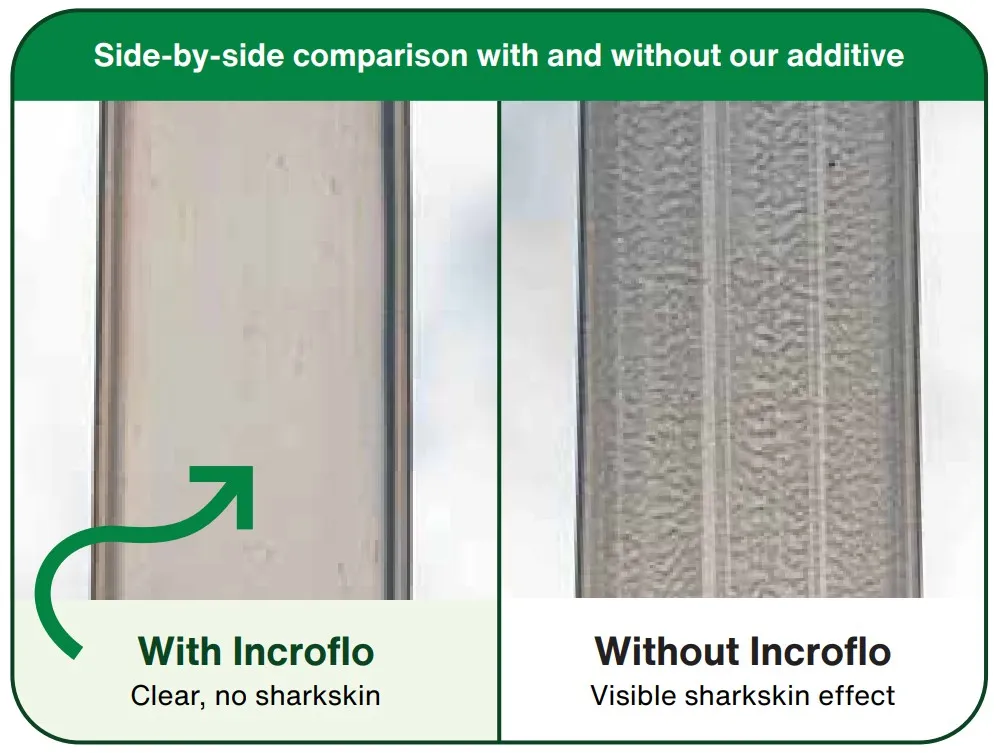
Figure 1: Sharkskin effect with and without Incroflo™ P50
FPPAs historically provided an effective fix by forming a lubricating layer on die surfaces. But their reliance on fluorinated chemistry is now a liability. Governments across regions from the EU to North America and Asia are tightening PFAS (per- and polyfluoroalkyl substances) restrictions. For many processors, the risk of supply disruptions and compliance gaps has become too significant to ignore.
The challenge, therefore, isn’t just finding an alternative. It’s finding one that performs equally well while ensuring regulatory security and sustainability.
Incroflo™ P50: The Cargill solution
Internal lubrication that works
Cargill’s Incroflo™ P50 addresses this challenge at its core. Unlike external surface modifiers, this polymeric processing aid works through internal lubrication. It disperses easily during the polymer melt phase, where it coats the die surfaces at the microscopic level. This creates a mobile, omni-phobic lubricating layer. This layer allows the polymer layer nearest the die wall to move at a speed comparable to the bulk melt stream.
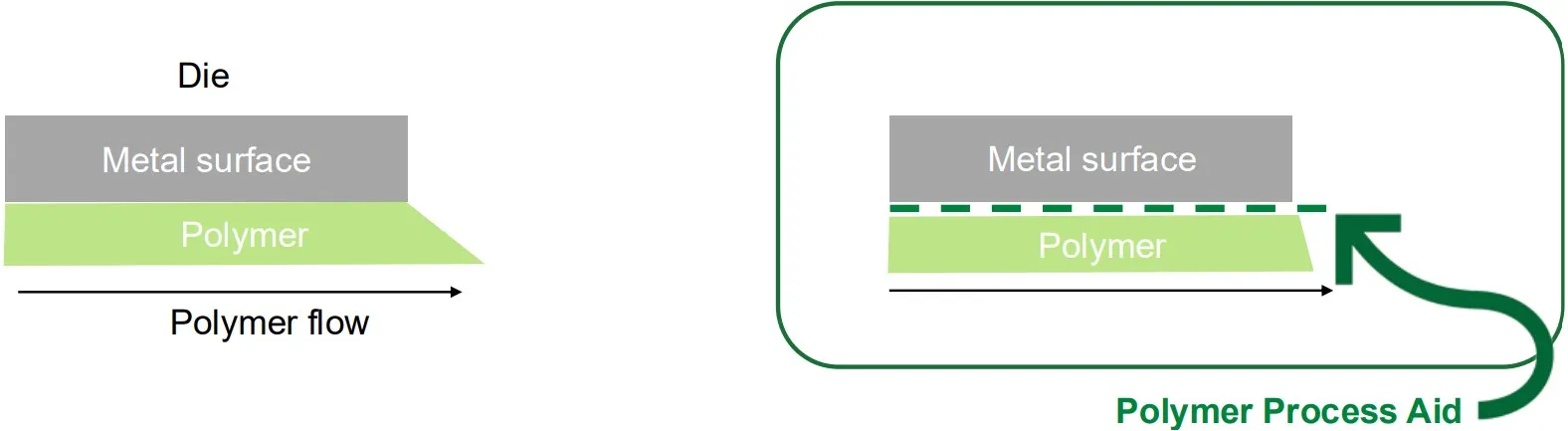
Figure 2: Internal lubrication stabilizes flow with Incroflo™ P50
The result is stabilized flow, lower die pressure, and reduced shear stress, even under high-speed extrusion. Films produced with Incroflo™ P50 exhibit visibly improved gloss and transparency. It eliminates sharkskin without compromising mechanical strength.
In comparative extrusion runs, Incroflo™ P50 demonstrated over 5 % higher throughput versus virgin resin. This grade also maintained consistent melt flow and lowered energy demand.
Proven performance in LLDPE film lines
Extensive benchmarking across various LLDPE grades confirms the versatility and robustness of Incroflo™ P50.
Key results observed:
Elimination of surface melt fracture and sharkskin
> 5 % throughput boost with unchanged dosage
Reduced die pressure, minimizing torque, and energy use
Smoother surface finish with higher optical clarity
No adverse interaction with additives influencing slip, sealability, or printability
Even under demanding shear conditions, Incroflo™ P50 maintains stable viscosity control. It also prevents flow variations that typically occur across grades of LLDPE. These results position it as a drop-in, performance-matched alternative to traditional FPPAs.
Designed for simplified processing and handling
Operational simplicity is another area where Incroflo™ P50 stands out. The additive is supplied as a 100 % active, solid pellet that is clean, non-tacky, and easy to feed. Liquid alternatives pose dosing challenges or require dilution. However, the pellet format ensures precise metering and compatibility across direct dosing, masterbatch, or compounding systems.
Chemical and physical analysis | Typical value | Units of measurement |
| Melting point | 80-90 | °C |
| Color (b* value), CIELAB | 0-6 | - |
| Melt flow index (MFI) | 30-60 | g/10min |
Table 1: Chemical and physical analysis of Incroflo™ P50
Recommended at 500-2000 ppm, Incroflo™ P50 is highly efficient at relatively low concentrations, reducing the overall cost-to-perform ratio. It is non-hazardousb according to both EU and U.S. regulatory agencies. This combination of high activity, safe handling, and renewable origin makes Incroflo™ P50 an ideal choice for producers seeking to align with ESG and circular-economy goals.

Sustainability meets performance
For Cargill, innovation in polymer additives isn’t just about process efficiency. It’s about building responsible value chains. By leveraging renewable feedstocks and bio-baseda chemistry, Incroflo™ P50 supports measurable progress toward sustainability objectives without requiring reformulation or equipment changes.
| Bio-based content |
|
| Melting point |
|
| Physical form |
|
| Recommended dosage |
|
| Addition method |
|
Table 2: Product details of Incroflo™ P50
In a market where “PFAS-free” is becoming a procurement requirement, Incroflo™ P50 ensures regulatory peace of mind while maintaining the optical and mechanical integrity that converters expect from high-performance LLDPE films.
It represents a shift from reactive compliance to proactive innovation, helping manufacturers prepare for the future rather than react to it.
The science behind smoothness
To visualize its mechanism, imagine polymer flow through a die channel.
Without a processing aid, the polymer layers near the wall move more slowly than the central stream, creating shear stress and surface distortion.
With Incroflo™ P50, a thin lubricating film forms between the polymer and the metal die, equalizing velocity gradients and allowing a smooth, uninterrupted melt flow.
This principle is illustrated in Cargill’s internal performance studies (Figure 3), showing a significant reduction in shear stress across increasing shear rates.
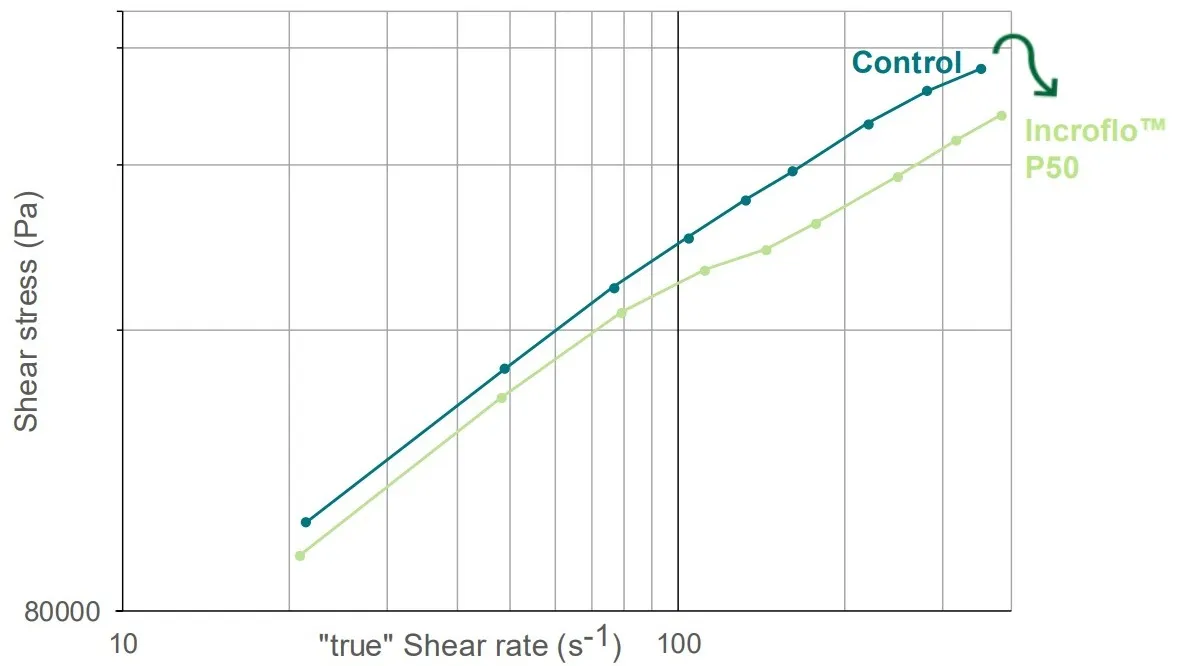
Figure 3: Incroflo™ P50 reduces shear stress across increasing shear rates, improving flow uniformity in LLDPE extrusion
Similarly, the five-minute runtime comparison (Figure 4) highlights higher output and visual clarity for films processed with Incroflo™ P50 compared to untreated resin.
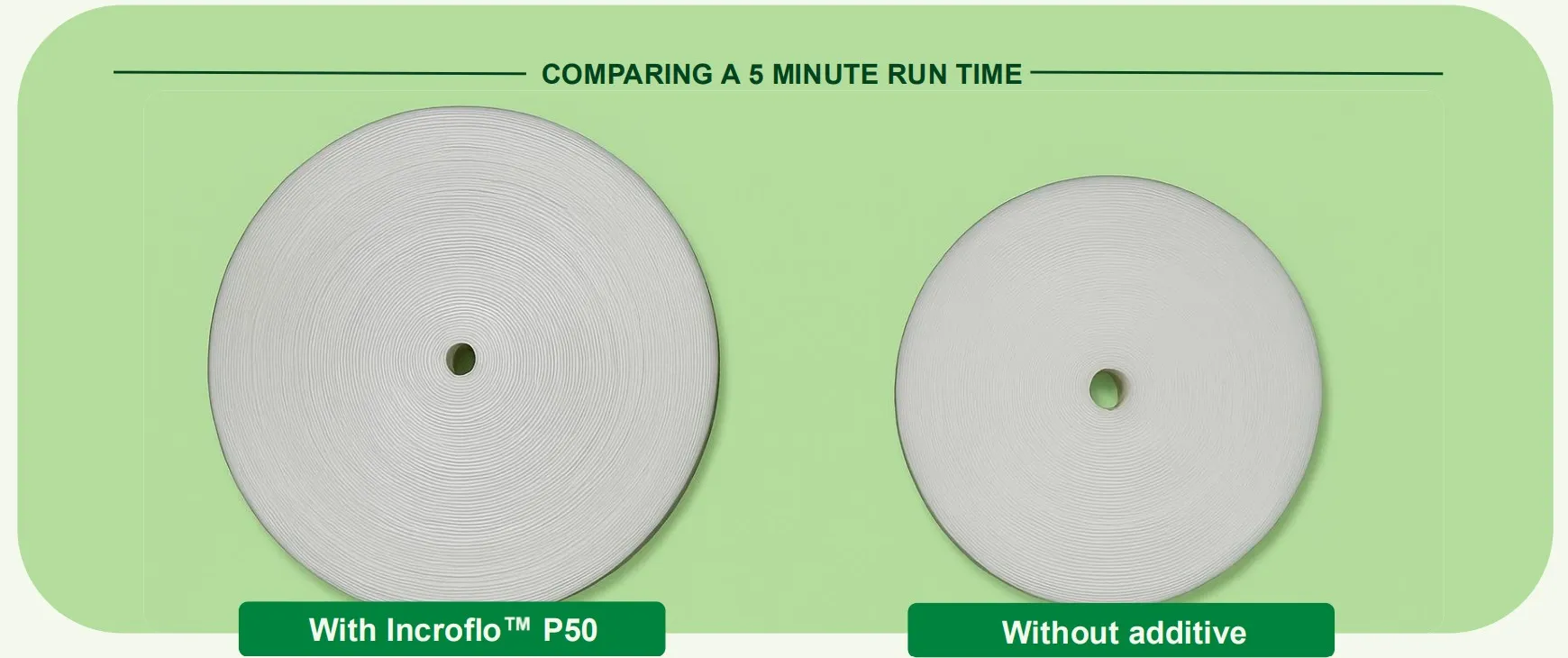
Figure 4: A 5-minute run time comparison with Incroflo™ P50 compared to untreated resin
No compromises on product integrity
Another advantage of Incroflo™ P50 lies in its inert compatibility with downstream processes.
Tests confirm no negative impact on:
- Thermal stability
- Slip and anti-block properties
- Heat sealing
- Printability
- Color or transparency
This ensures that converters can adopt the additive seamlessly without requalifying materials or altering film formulations, an important factor for maintaining supply continuity in fast-paced packaging and industrial film markets.

Figure 5: Incroflo™ P50 maintains slip, sealing, printability, and color with no negative impact on film properties
Cargill’s global expertise and technical reach
Beyond product innovation, Cargill brings decades of experience in specialty additive chemistry and a global infrastructure built for reliability.
With R&D centers in the United States, the United Kingdom, and China, the company provides localized technical service and formulation support. Its integrated logistics and supply network ensures consistent availability, while dedicated experts guide customers through evolving regional regulations.
By choosing Incroflo™ P50, film producers tap into more than a new additive. They partner with a team that bridges chemistry, compliance, and commercial performance.
Future-proofing polyolefin production
The countdown for PFAS phase-outs has already begun, and converters need solutions that minimize disruption.
Incroflo™ P50 gives manufacturers the confidence to transition away from FPPAs swiftly and safely, ensuring their operations remain compliant, efficient, and competitive.
As global markets push toward safer, circular materials, Cargill’s approach demonstrates that environmental responsibility doesn’t have to come at the cost of production performance.
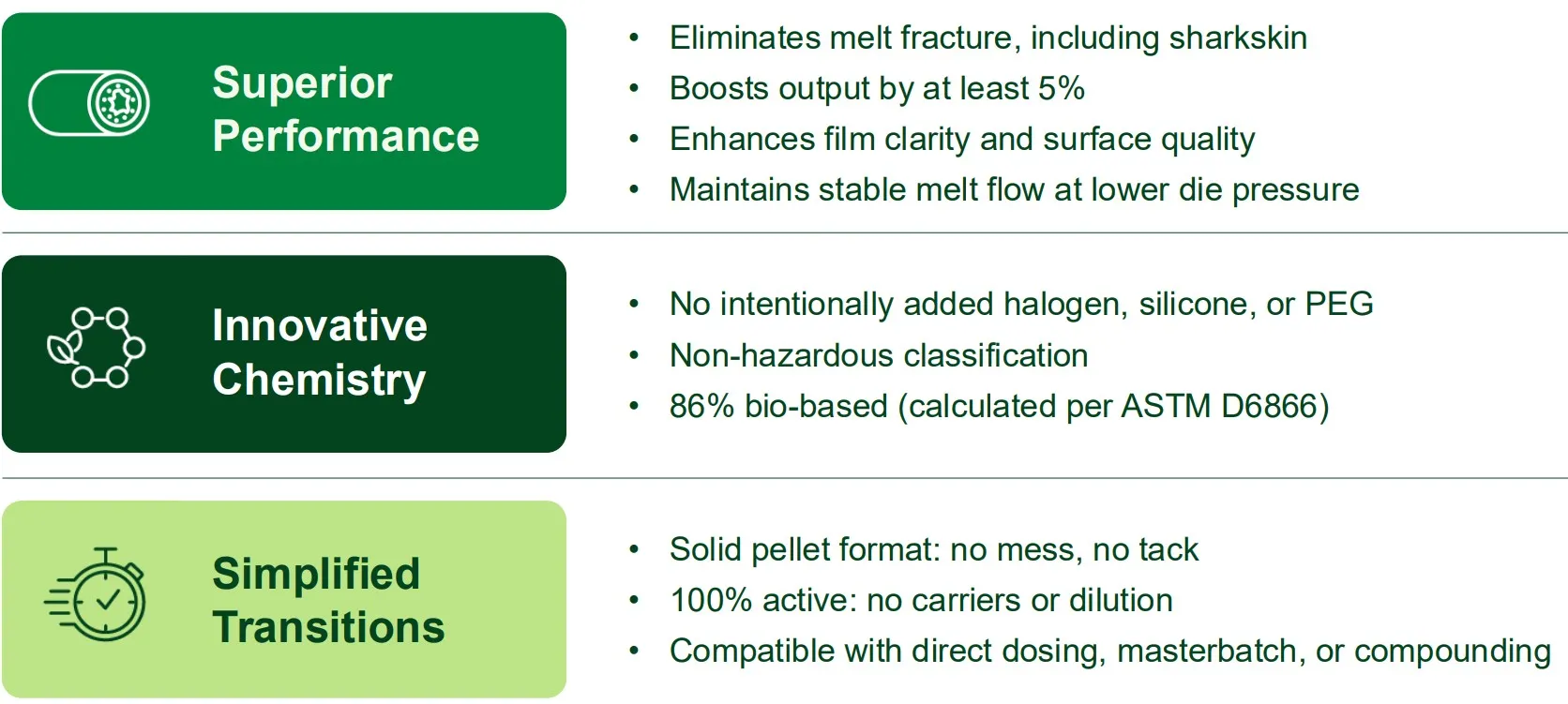
Figure 6: Summary of Incroflo™ P50 features
The difference is clear
Incroflo™ P50 represents more than just a processing aid, it embodies a philosophy of clarity: in films, in production, and in purpose.
By merging cutting-edge polymer science with renewable chemistry, Cargill empowers LLDPE film producers to run faster, cleaner, and smarter, achieving both technical excellence and regulatory assurance.
As the industry enters a new era of PFAS-free processing, one thing is evident with Incroflo™ P50: the difference is clear.

aCalculated per ASTM D6866
bAccording to Regulation (EC) No. 1272/2008 and 29 CFR 1910.1200