
Nittobo Flat Fibers
Last update on Nov 13, 2024
Nittobo is the pioneer in flat glass fiber production. The oval cross-section of flat glass fibers helps reducing warpage in molded products. Flat fibers are added as a reinforcement to a wide range of polymers to improve dimensional stability, enhance physical properties, and provide a smooth surface finish as compared to conventional glass fibers.
About Flat Fibers
Composites are replacing metals and alloys in high-performance applications that require high material strength with heat and chemical resistance. The issue of warpage, however, is troublesome for engineers who wish to produce precision parts for sensitive applications. In injection molding, warpage is the bending, twisting, or bowing of the molded part. This distortion causes the molded part to deviate from design specifications.
Glass fiber has been widely used in FRP for its strength, resistance to heat and chemicals, nonflammability, and electrical insulation properties. Nittobo offers a range of chopped glass fiber strands with a flatter cross section. These flat fibers (FF) are produced using Nittobo's proprietary technology. Nittobo flat fibers have an oval cross-section in contrast with conventional fibers that have a circular cross-section. Due to their unique geometry, Nittobo flat fibers offer some extremely useful benefits, in addition to reduced warpage, when used as a reinforcement material for injection molding.
Fillers, in powdered or flake form, have been used to reduce warpage in composite materials. These fillers sacrifice physical properties of the composite to reduce warpage. Fillers like Mica and glass flakes have a poor reinforcement effect due to their non-fiber like structure. Flat fibers, on the other hand, help reduce warpage while improving the reinforcement properties of conventional glass fiber.

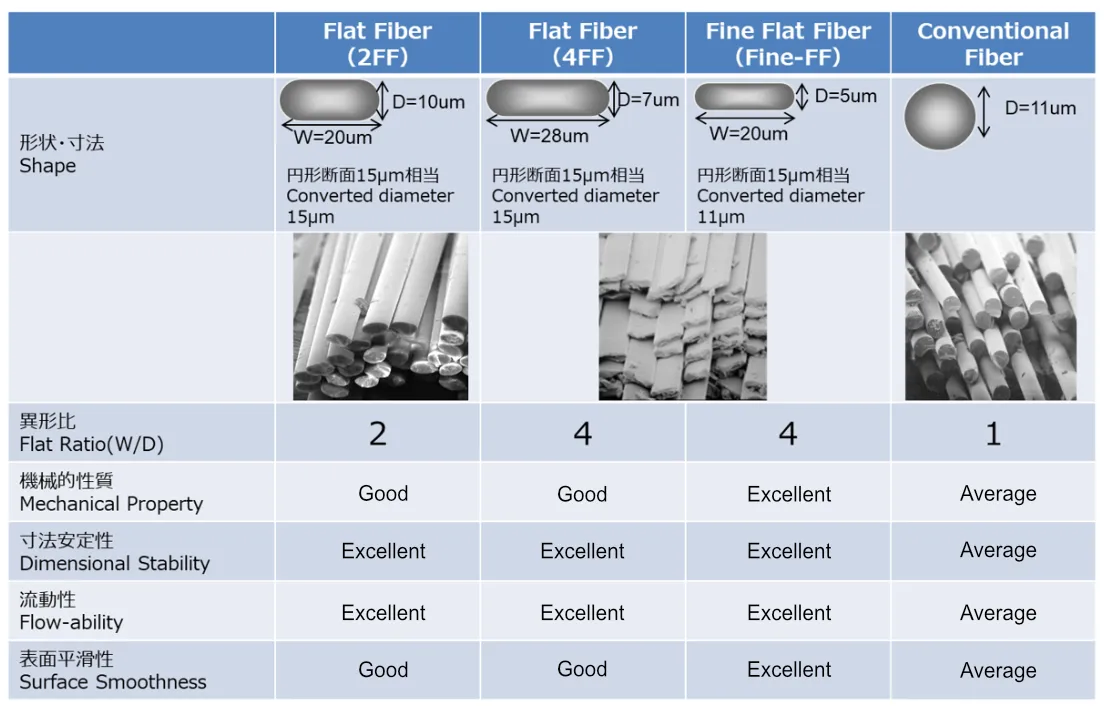
Nittobo flat fibers are available in two different flat ratios of 2 (2FF) and 4 (4FF). The flat ratio is defined as the ratio of the length of the major axis to the length of the minor axis of the oval cross section. A finer flat-fiber, with a flat ratio of 4 but smaller cross-sectional area, (Fine-FF) is also available for special applications.
Glass fiber has been widely used in FRP for its strength, resistance to heat and chemicals, nonflammability, and electrical insulation properties. Nittobo offers a range of chopped glass fiber strands with a flatter cross section. These flat fibers (FF) are produced using Nittobo's proprietary technology. Nittobo flat fibers have an oval cross-section in contrast with conventional fibers that have a circular cross-section. Due to their unique geometry, Nittobo flat fibers offer some extremely useful benefits, in addition to reduced warpage, when used as a reinforcement material for injection molding.
 Fig. 1 Conventional glass fibers Fig. 1 Conventional glass fibers
|
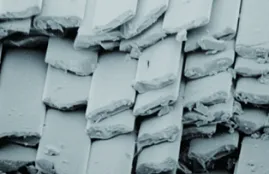 Fig. 2 Nittobo flat glass fibers Fig. 2 Nittobo flat glass fibers |
Fillers, in powdered or flake form, have been used to reduce warpage in composite materials. These fillers sacrifice physical properties of the composite to reduce warpage. Fillers like Mica and glass flakes have a poor reinforcement effect due to their non-fiber like structure. Flat fibers, on the other hand, help reduce warpage while improving the reinforcement properties of conventional glass fiber.
Fig. 3 Glass flakes and mica fillers reduce warpage at the cost of physical properties of the composite;
Nittobo flat fibers reduce warpage without sacrificing physical properties
Nittobo flat fibers reduce warpage without sacrificing physical properties
Nittobo flat fibers are available in two different flat ratios of 2 (2FF) and 4 (4FF). The flat ratio is defined as the ratio of the length of the major axis to the length of the minor axis of the oval cross section. A finer flat-fiber, with a flat ratio of 4 but smaller cross-sectional area, (Fine-FF) is also available for special applications.
Table 1.
Main Features
Design engineers are looking to replace metal parts with FRPs to reduce the weight and production cost of products. Reinforced polypropylene Plastics , like Polyamide, Polypropylene and etc. (PP) has proved to be a very useful material in this regard. However, for some applications that require good thermal resistance and superior physical properties, conventional glass fiber reinforced Plastics PP is not enough. Use of long glass fiber with Plastics PP is a solution to the problem but the issues of warpage and surface roughness still remain. Nittobo's long flat fiber technology offers superior physical properties with low warpage and surface smoothness.
Warpage is produced due to non-uniform shrinkage along different axes during the Molding cooling process. It can lead to residual stresses in FRP parts that cause bending or twisting of the molded product. FRPs made with conventional fiber show a large difference in shrinkage between the molding direction and the transverse direction. The shrinkage in the transverse direction is normally much larger than the shrinkage in the molding direction. The use of flat fibers reduces the shrinkage in the transverse direction, and hence reduces the degree of warpage as compared to conventional fibers. Flat fiber composites show outstanding dimensional stability & superior mechanical properties.


The reduced anisotropy of mold shrinkage leads to lower warpage and does not depend on mold thickness.


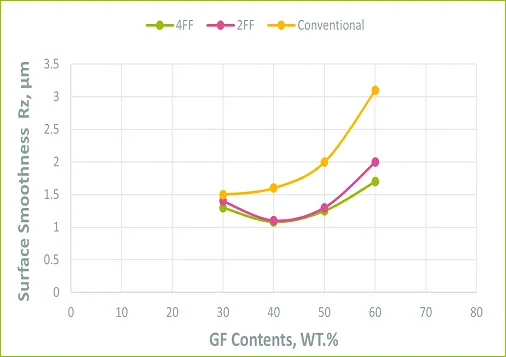
Flat Fiber composite materials show extraordinary surface smoothness, even with higher glass fiber content. The excellent surface finish is produced because fibers are oriented parallel to the mold surface. The lack of protrusions from the surface produces a smoother texture when compared to conventional glass fiber composites. The surface smoothness is important for applications like air intake components, where the smooth surface helps improve air intake efficiency.

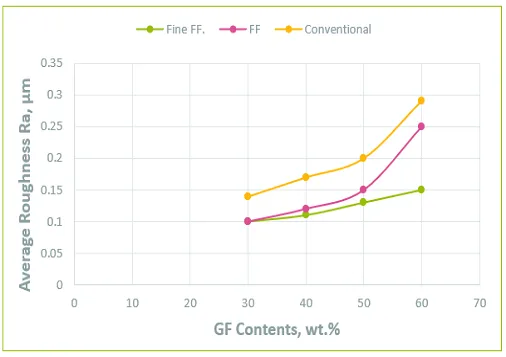
Nittobo's Fine-FF, which has a flat ratio of 4 and a thickness of only 5µm, provides an even smoother finish. It is suitable for use in applications where surface smoothness is critical.

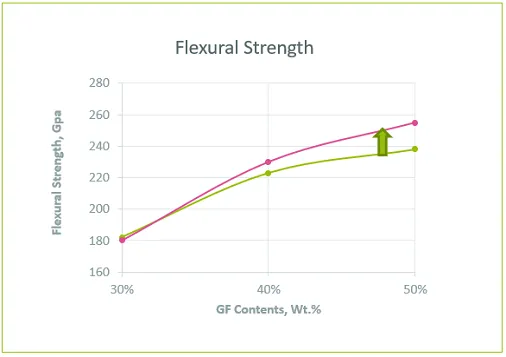
Flat fiber produces a greater reinforcement effect, than conventional glass fiber, due to its wider specific surface area and aspect of major axis length. The enhanced reinforcement effect not only strengthens the material in the molding direction but also increases the strength in the transverse direction.

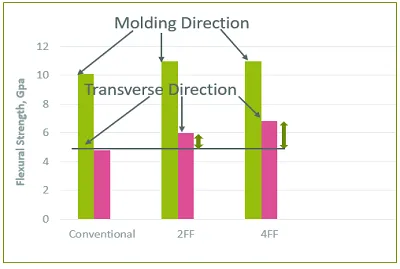
It is important to note that flat fibers show only a small improvement in the tensile strength and flexural modulus in the molding direction. However, in the transverse direction flat fibers show a 15 – 20 % higher modulus as compared to conventional fibers. This means that the anisotropy of physical properties is smaller and the overall modulus is larger.



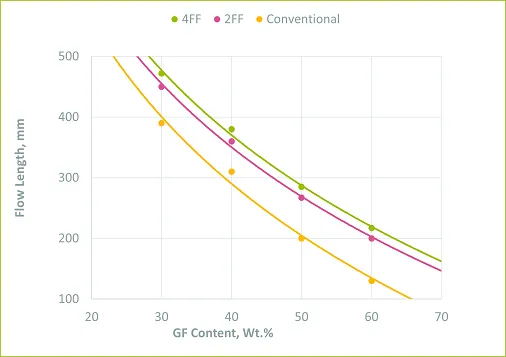
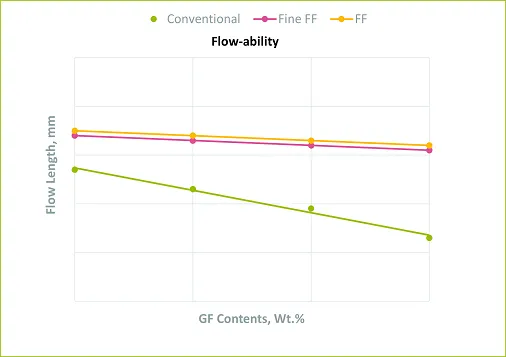
Flat fibers show good flowability, that improves processability and does not require use of any special processing equipment. Flat fibers with 2FF and 4FF flat ratios exhibit better molding flowability than conventional glass fiber, even with higher fiber content.
Flat fiber technology is not only useful for conventional applications, but also finds new applications in automotive C.A.S.E fields. Low dielectric performance is needed for car connectivity, autonomous or assisted driving and electrified powertrains and components. Nittobo's low dielectric flat fiber shows similar performance with respect to warpage, physical properties, processability, as well as dielectric performance, as E-glass flat fiber.
Low Warpage - Reduced Anisotropy of Properties
Warpage is produced due to non-uniform shrinkage along different axes during the Molding cooling process. It can lead to residual stresses in FRP parts that cause bending or twisting of the molded product. FRPs made with conventional fiber show a large difference in shrinkage between the molding direction and the transverse direction. The shrinkage in the transverse direction is normally much larger than the shrinkage in the molding direction. The use of flat fibers reduces the shrinkage in the transverse direction, and hence reduces the degree of warpage as compared to conventional fibers. Flat fiber composites show outstanding dimensional stability & superior mechanical properties.
Fig 4. Flat Fibers reduce the degree of warpage in molded products
The reduced anisotropy of mold shrinkage leads to lower warpage and does not depend on mold thickness.
Fig 5. 2FF and 4FF fibers show reduced shrinkage anisotropy as compared to conventional fibers due to their flatter shape.
Fig 6. Use of Nittobo's Fine-FF produces a similar warpage reduction
as FF across a range of glass fiber weight percentage
as FF across a range of glass fiber weight percentage
Smooth Surface Finish
Flat Fiber composite materials show extraordinary surface smoothness, even with higher glass fiber content. The excellent surface finish is produced because fibers are oriented parallel to the mold surface. The lack of protrusions from the surface produces a smoother texture when compared to conventional glass fiber composites. The surface smoothness is important for applications like air intake components, where the smooth surface helps improve air intake efficiency.
Fig 7. Flat fibers show smaller protrusions at the surface producing a smooth finish
Nittobo's Fine-FF, which has a flat ratio of 4 and a thickness of only 5µm, provides an even smoother finish. It is suitable for use in applications where surface smoothness is critical.
Fig. 8
Superior Mechanical Properties
Flat fiber produces a greater reinforcement effect, than conventional glass fiber, due to its wider specific surface area and aspect of major axis length. The enhanced reinforcement effect not only strengthens the material in the molding direction but also increases the strength in the transverse direction.
Fig 9. Flat fibers increase the tensile and flexural strength in both the molding and transverse directions (PA6/GF40%, Mold thickness: 3mm)
It is important to note that flat fibers show only a small improvement in the tensile strength and flexural modulus in the molding direction. However, in the transverse direction flat fibers show a 15 – 20 % higher modulus as compared to conventional fibers. This means that the anisotropy of physical properties is smaller and the overall modulus is larger.
Fig. 10 Tensile strength and flexural modulus for each orientation in the mold. 0° means the molding direction, in which the glass fiber is oriented, and 90° means the transverse direction of glass orientation. (Mold thickness: 3mm)
Fig 11. 2FF & 4FF flat fibers show similar reinforcement effect with
significant improvement over conventional glass fiber (Transverse direction, PA6/GF40%)
significant improvement over conventional glass fiber (Transverse direction, PA6/GF40%)
Reinforcement with Nittobo's Fine-FF can further improve the mechanical properties of FRP's for high-performance applications.
Fig 12. Fine-FF (blue) achieves even higher tensile and flexural strength than standard FF (Red) (Resin: PC)
A PP composite produced with long flat fiber technology shows higher tensile strength, improved flexural strength and superior impact strength with reduced warpage, when compared to conventional glass fiber reinforced PP.
| Property | Method | Unit | Flat Fibers | Conventional |
|---|---|---|---|---|
| Tensile strength | ASTM D638 |
Mpa | 145 | 135 |
| Flexural strength | ASTM D790 |
Mpa | 285 | 260 |
| Izod(Notched) | ASTM D256 |
kJ/m2 | 26 | 18 |
| Warpage | - | mm | 1.9 | 9.6 |
| Fiber length in reinforcement | - | µm | 930 | 720 |
Table 2. Flat fiber PP composites show superior mechanical
properties compared to conventional glass fiber (GC 50%)
properties compared to conventional glass fiber (GC 50%)
Polyamide (PA6) is also an important polymer for the production of high-performance components. Long flat fiber technology, when applied to PA6, improves the physical properties of the composite material.
 |
Shape | Flat Fiber | Conv. | ||||
| Diameter | 19 | 17 | |||||
| GF Content (wt%) | 44 | ||||||
| Properties | Method | Unit | |||||
| Tensile Strength | ISO527 | MPa | 250 | 250 | |||
| Flexural Strength | ISO178 | MPa | 400 | 380 | |||
| Flexural Modulus | GPa | 14 | 13.5 | ||||
| Charpy Impact | Notched Un-notched |
ISO179 | kJ/m2 | 45 110 |
40 105 |
||
| Warpage | - | mm | 7 | 15 | |||
Table 3. Comparison of the physical properties of a PA6 composite made with long
flat fibers compared to those of a composite made with conventional glass fiber
flat fibers compared to those of a composite made with conventional glass fiber
Good Flowability
Flat fibers show good flowability, that improves processability and does not require use of any special processing equipment. Flat fibers with 2FF and 4FF flat ratios exhibit better molding flowability than conventional glass fiber, even with higher fiber content.
Fig 13. 2FF and 4FF flat ratio fibers exhibit better molding
flowability than conventional glass fiber (Thickness: 3mm)
flowability than conventional glass fiber (Thickness: 3mm)
Fig. 14 Nittobo's Fine-FF shows the same improved
flowability exhibited by standard flat fibers
flowability exhibited by standard flat fibers
Low Dielectric Flat fiber
Flat fiber technology is not only useful for conventional applications, but also finds new applications in automotive C.A.S.E fields. Low dielectric performance is needed for car connectivity, autonomous or assisted driving and electrified powertrains and components. Nittobo's low dielectric flat fiber shows similar performance with respect to warpage, physical properties, processability, as well as dielectric performance, as E-glass flat fiber.


Fig. 15 Low Dk Glass (30%) Flat fibers shows a lower dielectric constant as compared
to E-glass, with similar or superior physical properties (PBT/GF 30Wt%)
to E-glass, with similar or superior physical properties (PBT/GF 30Wt%)
Applications
The oval cross-section of flat glass fiber prevents molded products from warping or twisting, when used as reinforcement in composites. Nittobo flat fibers find several applications in the automobile industry. The industry is in transition towards electronic vehicles (EV) and is also facing increasingly stringent legislation regulating fuel economy. These factors are driving car manufacturers to replace heavy metal parts with lighter FRPs. Metal parts that are subjected to extreme conditions during operation, such as the engine head cover, can be successfully produced using Nittobo's flat fiber technology. Flat fibers are also ideal for use in the production of casings for small electronic devices, such as smartphones. These casings must be strong, light-weight and need to be produced without even the slightest distortion.








Sample Application: Cylinder Head Cover
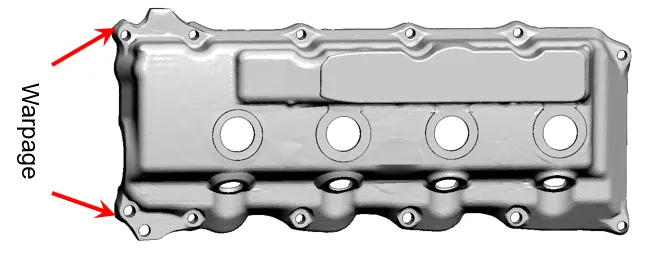
In high-performance engines, aluminum cylinder head covers are being replaced with those made from glass fiber reinforced polyamide, to reduce the weight of the vehicle. FRP head covers have a tendency to show high warpage; the resulting distortion can cause oil leakage and may lead to residual stress in the molded part. A simulation study was conducted to investigate if warpage can be reduced by replacing conventional glass fibers with Nittobo flat fibers in the production of a cylinder head cover. The figure below shows the simulation model of the head cover and the locations that are most affected by warpage.
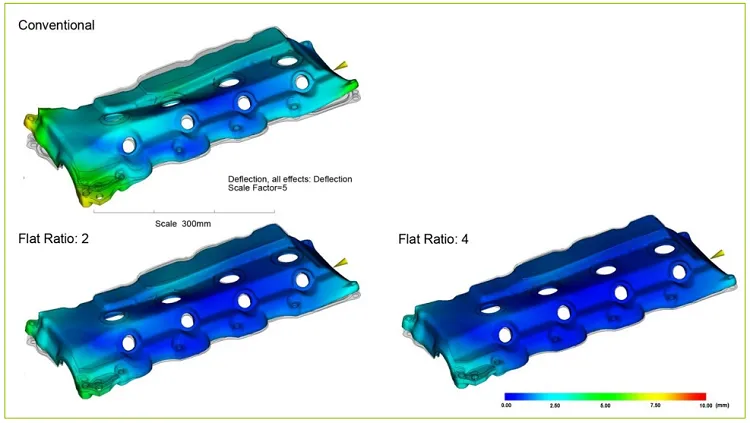
The simulation analysis was carried out using AUTODESK Moldflow®, a simulation software used to troubleshoot problems with plastic injection molding. The figure below shows the comparative warpage analysis results of the head cover, injected from the side gate of the mold. The dark blue regions indicate no warpage whereas the yellow region indicates warpage of around 7mm. The results for conventional fiber glass showed the greatest warpage. The warpage was maximum at the corners of the molded part. Nittobo glass fiber with a flat ratio of 2 showed significantly less warpage. The warpage was minimized in the part molded with Nittobo flat glass fiber with a flat ratio of 4.
The graph below shows that warpage is reduced with increasing flat ratio of Nittobo flat fiber. The reduction of warpage is consistent whether the mold is injected from the center single or double gates, or from the single side gate.

Greater Tensile Strength
In addition to reducing warpage, the smaller anisotropy, resulting from the use of flat glass fiber, also enhances the physical properties of the composite material. Moldflow® software was also used to simulate and visualize the tensile modulus distribution in the molded cylinder head cover. Figure 9 shows that the flat fiber composite material, with a flat ratio of 4, exhibited the highest overall modulus. The modulus for the composite with flat glass fiber ratio of 2 was also higher than for the conventional glass fiber part. This result is important because it offers engineers greater flexibility in product design. It means that flat glass fiber composites can match the tensile modulus of conventional glass fiber components with a thinner layer or reduced glass fiber content. Thinner components can help engineers achieve further weight reduction leading to increased fuel efficiency of vehicles.

Test results show that the tensile strength of Nittobo flat fibers is greater than the tensile strength of conventional fibers with a circular cross section. Figure shows that replacing round glass fibers with Nittobo flat fibers increases the tensile strength of FRP products. Nittobo fibers produce consistently greater tensile strength across a range of glass fiber weight percentages.
The tensile strength of polymer reinforced with Nittobo flat fibers was found to be greater than the tensile strength of FRP reinforced with conventional fibers having a circular cross section. The graph below shows that replacing round glass fibers with Nittobo flat fibers increases the tensile strength of FRP products. Nittobo fibers produce consistently greater tensile strength across a range of glass fiber weight percentages.

The study shows that Nittobo flat glass fibers can help reduce warpage in molded composite products. Nittobo flat fibers help achieve low shrinkage and reduced anisotropy which makes them suitable for a wide range of applications that require good dimensional stability. Nittobo's flat glass fiber technology offers new opportunities to automobile manufacturers as they evolve their products towards electrification and high fuel efficiency.
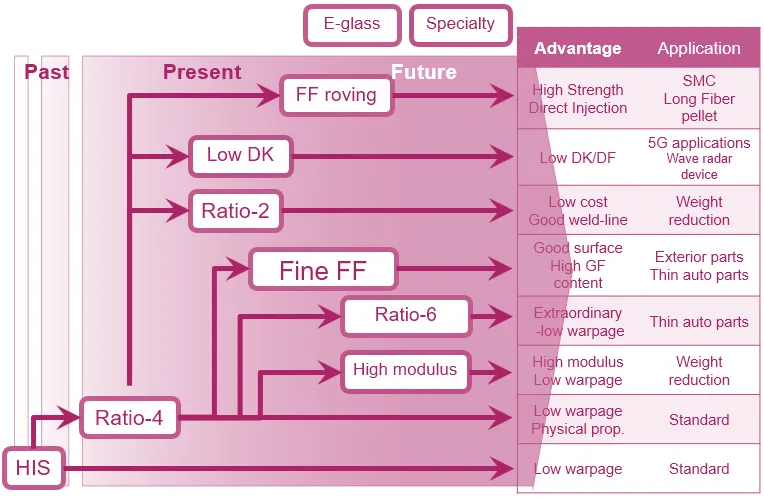
Fig. 16 The table below summarizes the suitability of Nittobo flat fibers for various applications.
Sample Application: Cylinder Head Cover
In high-performance engines, aluminum cylinder head covers are being replaced with those made from glass fiber reinforced polyamide, to reduce the weight of the vehicle. FRP head covers have a tendency to show high warpage; the resulting distortion can cause oil leakage and may lead to residual stress in the molded part. A simulation study was conducted to investigate if warpage can be reduced by replacing conventional glass fibers with Nittobo flat fibers in the production of a cylinder head cover. The figure below shows the simulation model of the head cover and the locations that are most affected by warpage.
Fig. 17 Suitability of present and future Nittobo flat fibers for various applications
Fig. 18 Simulation model of the head cover identifying the
locations that are most affected by warpage
locations that are most affected by warpage
The simulation analysis was carried out using AUTODESK Moldflow®, a simulation software used to troubleshoot problems with plastic injection molding. The figure below shows the comparative warpage analysis results of the head cover, injected from the side gate of the mold. The dark blue regions indicate no warpage whereas the yellow region indicates warpage of around 7mm. The results for conventional fiber glass showed the greatest warpage. The warpage was maximum at the corners of the molded part. Nittobo glass fiber with a flat ratio of 2 showed significantly less warpage. The warpage was minimized in the part molded with Nittobo flat glass fiber with a flat ratio of 4.
Fig 19. Replacing conventional glass fiber with Nittobo flat fiber
reduces warpage in molded products
reduces warpage in molded products
The graph below shows that warpage is reduced with increasing flat ratio of Nittobo flat fiber. The reduction of warpage is consistent whether the mold is injected from the center single or double gates, or from the single side gate.
Fig 20. The magnitude of warpage decreases with increasing flat ratio
Greater Tensile Strength
In addition to reducing warpage, the smaller anisotropy, resulting from the use of flat glass fiber, also enhances the physical properties of the composite material. Moldflow® software was also used to simulate and visualize the tensile modulus distribution in the molded cylinder head cover. Figure 9 shows that the flat fiber composite material, with a flat ratio of 4, exhibited the highest overall modulus. The modulus for the composite with flat glass fiber ratio of 2 was also higher than for the conventional glass fiber part. This result is important because it offers engineers greater flexibility in product design. It means that flat glass fiber composites can match the tensile modulus of conventional glass fiber components with a thinner layer or reduced glass fiber content. Thinner components can help engineers achieve further weight reduction leading to increased fuel efficiency of vehicles.
Fig 21. Simulation results of tensile modulus distribution in the molded part; flat fiber with a flat ratio of 4 shows the highest overall modulus
Test results show that the tensile strength of Nittobo flat fibers is greater than the tensile strength of conventional fibers with a circular cross section. Figure shows that replacing round glass fibers with Nittobo flat fibers increases the tensile strength of FRP products. Nittobo fibers produce consistently greater tensile strength across a range of glass fiber weight percentages.
The tensile strength of polymer reinforced with Nittobo flat fibers was found to be greater than the tensile strength of FRP reinforced with conventional fibers having a circular cross section. The graph below shows that replacing round glass fibers with Nittobo flat fibers increases the tensile strength of FRP products. Nittobo fibers produce consistently greater tensile strength across a range of glass fiber weight percentages.
Fig 22. Nittobo fibers increase the tensile strength across
a range of glass fiber weight percentages
a range of glass fiber weight percentages
The study shows that Nittobo flat glass fibers can help reduce warpage in molded composite products. Nittobo flat fibers help achieve low shrinkage and reduced anisotropy which makes them suitable for a wide range of applications that require good dimensional stability. Nittobo's flat glass fiber technology offers new opportunities to automobile manufacturers as they evolve their products towards electrification and high fuel efficiency.
Benefits
Nittobo flat glass fibers can help reduce warpage in composite products. It can help manufacturers realize molded products that do not easily distorted despite their thinness. Nittobo flat fibers can help achieve low shrinkage and reduced anisotropy which makes them suitable for a wide range of applications that require good dimensional stability. Nittobo flat fibers offer the following benefits over conventional glass fiber:
The 4FF (flat ratio 4) fibers offer a very low anisotropy of shrinkage and the best performance in terms of reduced warpage and physical properties. The 2FF (flat ratio 2) grade offers the best balance of overall performance and cost. The Fine-FF grade is available for applications that require extra surface smoothness or further improved mechanical properties.
- Low warpage
- Good dimensional stability (Small anisotropy)
- Smooth surface finish
- Improved mechanical and physical properties
- Good Flowability
- Low Dielectric Grade
- Good balance between cost and performance
- Suitable for Polyamide, ABS, PPS, Polyamide, PA, Nylon and other super engineering plastics
The 4FF (flat ratio 4) fibers offer a very low anisotropy of shrinkage and the best performance in terms of reduced warpage and physical properties. The 2FF (flat ratio 2) grade offers the best balance of overall performance and cost. The Fine-FF grade is available for applications that require extra surface smoothness or further improved mechanical properties.
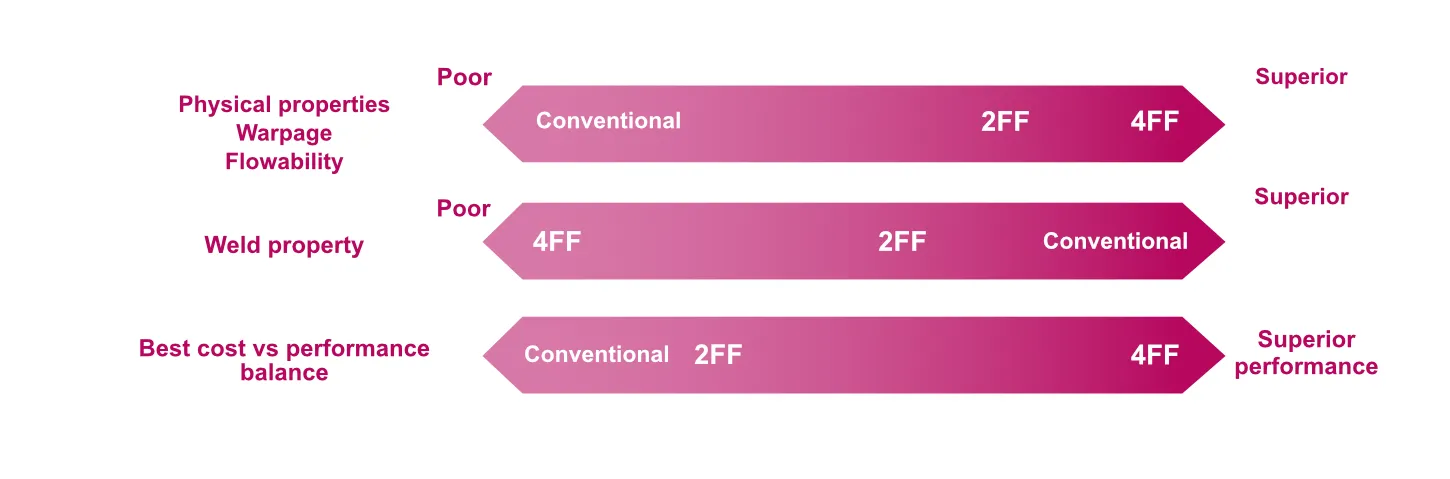
Fig. 23 Nittobo's 4FF grade offers the best performance in terms of warpage, flowability and physical properties. The 2FF grade offers a good balance of performance and cost.