
Mitsubishi Chemical’s TPS selected for SANPLATEC's cell culture tubes
Last update on Apr 30, 2026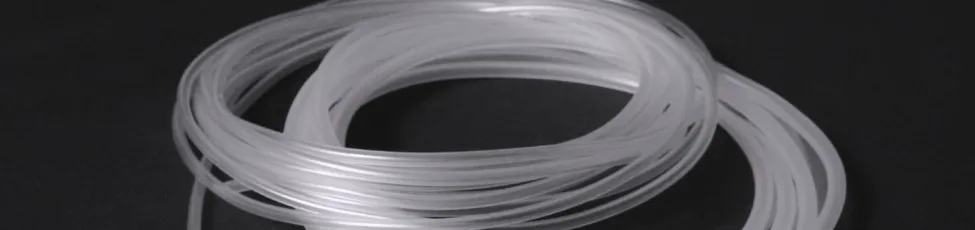
Mitsubishi Chemical Corporation reports that its ZELAS™ TPS has been adopted for cell culture tubes in the iP-TEC® series developed by SANPLATEC CORPORATION.
Interested in Mitsubishi Chemical's product developments? Visit their profile!
Higher iPS cell proliferation compared to PVC
According to Mitsubishi Chemical, ZELAS™ TPS is a styrenic thermoplastic elastomer designed for medical applications, combining rubber-like elasticity with processability. The supplier reports that the material has been used in tubing for medical devices and pharmaceutical packaging. For regenerative medicine applications, the company states that ZELAS™ TPS demonstrates higher induced pluripotent stem (iPS) cell proliferation compared with polyvinyl chloride (PVC), based on its internal evaluations.
Mitsubishi Chemical further reports that the material was assessed for compatibility with autoclave sterilization and gamma irradiation (25 kGy), as well as for heat-sealability—properties considered relevant for closed-loop cell culture systems. These characteristics, according to the company, supported its selection for use in SANPLATEC’s iP-TEC® cell culture and transportation solution.
The iP-TEC® series is positioned by SANPLATEC as a system for cell culture and live transport in regenerative medicine workflows. In this application, ZELAS™ TPS is used as the base material for thermoplastic elastomer tubing integrated into the system presented at the 25th Congress of the Japanese Society for Regenerative Medicine, Kobe, March 2026.
Engineers and product developers working on closed-system cell culture equipment can use this selection as a reference point for evaluating sterilization compatibility, sealability, and cell interaction performance in thermoplastic elastomer tubing.
You can compare thermoplastic elastomer grades for medical applications in the Master Catalog of Plastics.
Image credits: Mitsubishi Chemical group