
LEHVOSS Group Introduces New Laser Sintering Flame Retardant Polyphenylene Sulfide
Last update on May 17, 2024
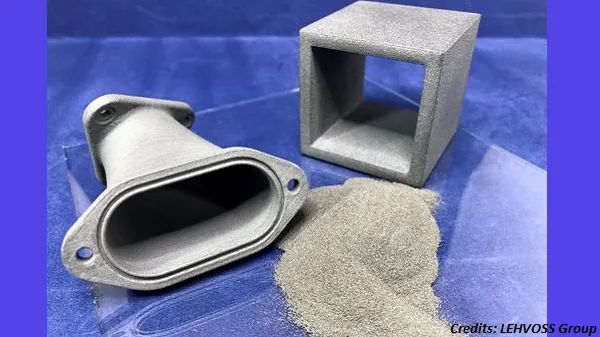 LEHVOSS Group launches new laser sintering material in close cooperation with SIEMENS Mobility: LUVOSINT® PPS 9268 BK.
LUVOSINT® PPS 9268 BK is based on a . Although PPS is inherently flame-resistant, it does not inherently meet the requirements of the highest hazard classes of EN 45545. This was achieved by additionally modification of the polymer.
Explore LUVOSINT® grades from Lehmann & Voss.
Components do not Absorb Moisture and are Dimensionally Stable
In laser sintering, the PPS powder offers a comfortable process window at part bed temperatures of around 250°C. The inherently high flowability of PPS supports the pressure-free sintering of the powder into dense components during laser sintering. These show typical PPS mechanics with high rigidity and strength. Components do not absorb moisture and are therefore dimensionally stable.
PPS is also chemically and thermally very stable, and as a consequence used part bed powders can be completely recycled. The material is colored black and can be processed with CO2 lasers as well as fiber lasers. The latter bring speed without loss of precision and thus high productivity for industrial production. All factors together enable component costs that were previously unthinkable for EN 45545-compliant components using laser sintering.
A declaration of conformity from SIEMENS Mobility shows that printed components from LUVOSINT® PPS 9268 BK meet the requirement sets R1HL3, R7HL3 and R17HL3 according to DIN EN 45545-2. Nevertheless, the price level of the material corresponds to that of conventional polyamide powder for laser sintering.
The use of the LUVOSINT® PPS 9268 BK is not just limited to railway applications. The material also meets the flame retardancy requirements placed on components for use in aircraft and buses. Aside from flame retardant applications, an HDT A of 196°C enables use in high temperatures. If chemical resistance is part of the requirement profile, PPS is particularly suitable. Up to 200°C there is no known solvent that could attack PPS. Printed components made from LUVOSINT PPS 9268 BK even exceed the chemical resistance of those made from PEEK and PEKK.
Source: LEHVOSS Group



Source
LEHVOSS Group