
Achieve loadings of up to 50% by weight in composites with SABIC's new oligomer
Last update on May 7, 2026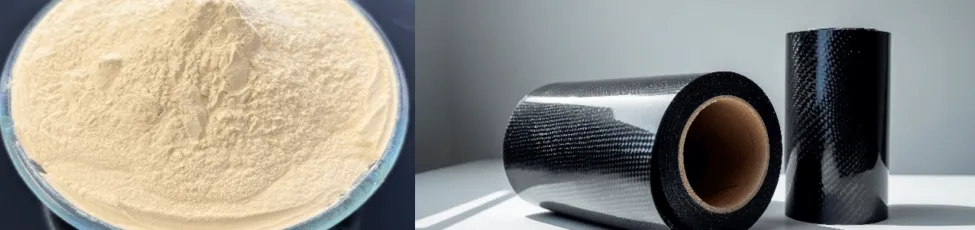
Achieving high toughener loadings in thermoset composites for aerospace structures – without compromising formulation viscosity or processing efficiency – has remained a persistent constraint for composite manufacturers. A newly introduced polyetherimide (PEI) oligomer from SABIC addresses several of these formulation challenges simultaneously.
SABIC's ULTEM™ SU3102P reactive oligomer is designed for thermoset composites used in primary and secondary aerospace structures, including wings, fuselage frames, spoilers, and interior components.
Access SABIC's full polymer portfolio in the Master Catalog of Plastics.
Improves toughness-stiffness balance by up to 140% vs rPES
According to SABIC, the material supports loadings of up to 50 percent by weight – a level the company describes as unachievable with current thermoplastic alternatives. Reactive polyethersulfone (rPES), a commonly used reference, typically permits loadings of 7 to 12 percent by comparison.
The toughness-stiffness balance is a central formulation concern in aerospace composites, where resistance to fracture and impact damage directly affects part durability, maintenance intervals, and safety margins. SABIC reports that ULTEM SU3102P improves toughness-stiffness balance by up to 140 percent versus rPES under tested conditions.
“As global air traffic increases significantly with more passengers and cargo, the industry faces pressure to build capacity and throughput within its existing footprint, while still meeting cost, safety and sustainability goals,” said Sergi Monros, vice president, SABIC Polymers, Specialties BU. “Our new ULTEM oligomer can help designers create lighter, thinner and tougher composite structures, increase manufacturing efficiency and cut emissions. This addition to our ULTEM portfolio builds on a long history of success in aerospace applications and demonstrates our strong commitment to materials innovation.”
Maintains low formulation viscosity and consistent cycle times
Processing compatibility is a stated design objective of the material. Despite its high loading capacity, ULTEM SU3102P is reported to maintain low formulation viscosity, supporting consistent cycle times and processing efficiency. SABIC indicates it can enable productivity and energy efficiency gains of up to 30 percent in thermoset composite prepreg manufacturing. The oligomer is described as compatible with a wide range of thermoset resin systems and drop-in capable within existing manufacturing processes.
Like other materials in the ULTEM portfolio, the SU3102P grade offers inherent flame retardance, high heat and chemical resistance, and a low coefficient of thermal expansion (CTE). The material received a Gold award at the 2026 Edison Awards and is available globally for sampling and in commercial quantities.
You can review the full ULTEM™ portfolio, access technical data and request samples directly in the Master Catalog of Plastics.
Image credits: SABIC