

Navigating plastic recycling: Challenges, innovations, and regulations
Last update on Aug 23, 2023
Plastic waste mounting over the face of our planet is a real crisis! Since plastics are ubiquitous in daily use as well as in high-end applications, there is a need to address the plastic pollution problem. That is where recycling comes up as a tangible solution, providing an avenue to:
- reduce waste,
- conserve resources, and
- lessen the environmental footprint of our plastic-dependent world.
Modern recycling approaches, ranging from the traditional mechanical recycling to the emerging chemical recycling, help recover valuable polymers and integrate them into manufacturing cycles.
Governments are also accelerating this transition through regulatory measures. Several countries, including France and Taiwan, have introduced bans or fees on single-use plastic bags to encourage reusable alternatives. In the EU, the Packaging and Packaging Waste Directive (PPWD) requires that all packaging must be made of at least 30% recycled materials by 2030. These regulations make recycling a mandate and not an option anymore.
On top of that, according to a study by the University of California, Berkeley1, recycling polymer can reduce greenhouse gas emissions by up to 70% compared to making new plastic from oil. The study also found that recycled plastic can save up to 50% of the energy used to produce virgin plastic.
In this article, we will explore how plastic recycling works in practice, from collection to extrusion. The methods available today, the role of additives, and the regulations are pushing the industry toward a truly circular model.
What is plastic recycling?
Plastic recycling is the process of collecting, sorting, and reprocessing discarded polymer materials into new products or raw materials for future use. Therefore, it helps reduce waste, conserve resources, and minimize environmental impacts associated with polymer disposal.
The recycling process is different for pre-consumer and post-consumer materials:
➤ Pre-consumer plastic recycling — It is the process of recycling plastic waste that is generated during the manufacturing process. This waste can include items like plastic scrap, offcuts, and rejects. Pre-consumer plastic is typically of higher quality than post-consumer plastic, allowing it to be recycled into a wider range of products.
➤ Post-consumer plastic recycling — It is the process of recycling polymer waste that has been used by consumers. This waste can include items like plastic bottles, bags, and packaging. Post-consumer plastic is often contaminated with other materials, including food, dirt, and debris. This can make it slightly difficult to recycle.
Finding the right commercial-grade options for both pre-consumer and post-consumer recycled polymers is simple on our advanced platform. Download technical datasheets for free and request samples with a click.
 |  |
Steps involved in recycling
The specific recycling process for pre-consumer and post-consumer plastic varies depending on the type of polymer and the equipment available. However, the general steps involved are discussed in detail in the section below.

Step 1: Collection and distribution
Post-consumer plastics are collected from homes, businesses, and institutions. The local government or private companies can do this. Polymers can also be taken to recycling bins or facilities, ranging from bottle banks to larger waste sites.

Step 2: Sorting and categorizing
Recyclers separate different types of plastics from one another. Polymers are sorted based on properties like color, thickness, and use. Machines at the recycling plant handle this process to improve efficiency and prevent contamination of end products.

Step 3: Washing
Washing is a crucial step in removing impurities that can hinder the recycling process or compromise a batch of recycled polymer. Impurities such as product labels, adhesives, dirt, and food residues are targeted for removal. While plastics are often washed during recycling, it is important to minimize impurities even before disposal and collection.

Step 4: Shredding
Plastic is fed into shredders that break it down into smaller pieces, making further processing and reuse manageable. The shredded polymers can be reused directly in other applications, like added to asphalt or sold as raw material. Shredding helps identify remaining impurities, including metal, which can be collected using magnets.

Step 5: Identification and separation of plastics
In this step, the plastic pieces are tested for their class and quality. Density-based segregation is performed by floating the plastic polymer in water, while "air classification" determines the thickness of the pieces. Thinner pieces float, while larger or thicker pieces sink.

Step 6: Extruding and compounding
In this final step, the shredded polymer particles are transformed into usable products. The polymer is melted and crushed to form pellets. Not all plastic types, classifications, and qualities can be processed at a single recycling plant. Thus, different grades of plastic may be sent to other facilities for this final step.
With the recycling steps in mind, let's take a closer look at the main types of plastics that can be recycled and how they compare.
Which plastics are recyclable?
Technically, every type of plastic can be recycled. However, the actual recycling potential varies depending on economic and logistical considerations. The most commonly recycled plastics are polyethylene terephthalate (PET/PETE) and high-density polyethylene (HDPE). These are used in soft drink bottles and milk bottles. In addition to plastic packaging, durable plastics can also be recycled.
The table below depicts the properties of 7 most used recyclable plastics in the market.
Property | PET | HDPE | LDPE | PVC | PP | PS | Other polymers |
| Clarity | Clear | Translucent | Translucent | Clear | Translucent | Clear | - |
| Moisture barrier | Fair to good | Good to excellent | Good | Fair | Good to excellent | Poor to fair | |
| Oxygen barrier | Good | Poor | Poor | Good | Poor | Fair | |
| Maximum temperature | 120°F | 145°F | 120°F | 140°F | 165°F | 150°F | |
| Rigidity | Moderate to high | Moderate | Low | Moderate to high | Moderate to high | Moderate to high | |
| Impact resistance | Good to excellent | Good to excellent | Excellent | Fair to good | Poor to good | Poor to good | |
| Heat resistance | Poor to fair | Good | Fair | Poor to fair | Good | Fair | |
| Cold resistance | Good | Excellent | Excellent | Fair | Poor to fair | Poor | |
| Sunlight resistance | Good | Fair | Fair | Poor to good | Fair | Poor to fair | |
| Common uses | Soft drink bottles, food containers, clothing fabrics | Plastic rulers, hula hoop rings, toiletry packaging containers, roadside curbs, benches, tables, cargo truck liners | Flexible container lids, squeezable bottles, and frozen food bags | Packaging containers, electricity installation cables, rigid pipes, credit cards, synthetic leather | Reusable microwave containers, kitchen utensils, disposable food containers, soft drink bottles | Disposable cups, trays, packing containers, egg cartons | Polycarbonate, polylactide, etc., are used in baby milk bottles, riot shields, plastic toys, sunglasses lenses, automotive headlamps |
| Recycling information | It can be mechanically recycled wherein PET bottles are cleaned, shredded, and melted to form a new plastic resin. Chemical recycling is also explored from which high-quality recycled PET resin can be extracted. | Due to its rigidity, it is difficult to shred and melt. HDPE products are collected, separated, cleaned to remove contaminants, shredded, melted, and then molded into new products, such as bottles, crates, and toys. | The process is mostly similar to HDPE but its high flexibility makes it difficult to sort as it gets tangled up with substances. LDPE items are also more prone to contamination. | After collection, sorting, and cleaning, it is shredded into small pieces (flakes and granules). After that chlorine is removed chemically, then cleaned again to reprocess into new PVC materials. | After collection, sorting, cleaning and shredding, the shredded PP is melted at a high temperature and then extruded through a machine to create uniform plastic resin. | After collection, sorting, cleaning, and shredding, EPS foam especially is compacted or densified to reduce its volume. For this, the foam is melted & compressed into denser blocks. It is then extruded through a machine to create uniform plastic resin pellets. | Based on several factors such as rigidity or flexibility, it may be difficult or easy to recycle several plastics. |
| Recycling codes | 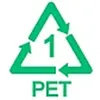 | 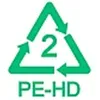 | 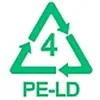 | 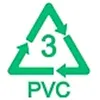 | 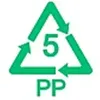 | 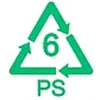 |  |
| Commercial recycled grades | - |
Environmental benefits
- Energy conservation: Recycling 1 ton of polymer saves approximately 5.774 kWh, equivalent to the energy consumed by two people in a year.
- Reduced petroleum use: Recycling polymer waste has the potential to reduce oil consumption by up to 40%. This saves 16.3 barrels of oil per ton of recycled plastic.
- CO2 emission reduction: Recycling plastic leads to decreased CO2 and greenhouse gas emissions associated with the production of new plastics.
- Reduced landfill use: Recycling reduces the amount of plastic in landfills. This results in lower emissions of carbon dioxide and methane, which can cause environmental damage and public health issues.
Key challenges
While theoretically, the recycling of almost all plastic is possible, there exist various obstacles that impede this process. Regrettably, recycling is not always justifiable from environmental, economic, or technical standpoints. Here are some reasons that hinder the feasibility of recycling:
- Complex composition: Frequently, items consist of multiple plastic types and layers. Thus, rendering their separation arduous and expensive, thereby compromising recyclability.
- Contamination: Plastics often become tainted with food and other substances, rendering the resins insufficiently clean for reuse.
- Costly recycling facilities: Constructing and operating recycling facilities necessitates significant financial investment. This often amounts to millions of dollars. These facilities can only be financially viable when processing large quantities of plastic on a daily basis. Consequently, recycling small amounts of plastic becomes economically and practically unfavorable due to low efficiency and high costs.

With a clear picture of recyclable polymers, their benefits, and the hurdles they face, the next step is to explore the main methods used to recycle these polymers effectively.
Methods for recycling polymers
Mechanical recycling
The traditional form of recycling is called "mechanical recycling". Here, plastics are physically broken down without altering their chemical structure. In this approach, plastic waste is collected, sorted, washed, shredded, and melted to produce recycled plastic granules.
The granules can be used as secondary raw materials in manufacturing. As the polymer chains remain largely intact during the process, the recycled material retains the basic properties of the original plastic. Thus, allowing it to be reused in new products.
The process works most effectively with clean and well-sorted thermoplastics. For example, PET, HDPE, and polypropylene. These materials can be melted and reshaped multiple times. However, repeated processing may gradually degrade polymer properties due to thermal and mechanical stress. As a result, the quality of recycled plastics may decline over multiple cycles. This limits their applications when compared to virgin polymers.
Chemical recycling
"Chemical recycling" is a newer method called that modifies the chemical structure of the plastic. This technology allows mixed batches of various plastic types to be recycled, including food-grade packaging. It is an innovative approach in the plastic waste recycling sector, targeting plastics that are currently sent to landfill or incineration.
Chemical recycling involves processes such as pyrolysis, catalytic and non-catalytic gasification, solvolysis, and hydrothermal treatment. These technologies offer the following benefits and advancements:
- Successful application to PET, HDPE, polystyrene (PS), and nylon-6
- Conversion of polymer waste back into monomers through pyrolytic, catalytic, or enzymatic depolymerization processes
- Chemical separations are performed to refine the chemical feedstocks for reuse
- Although energy-intensive and generating waste, it recirculates refined carbon in circular manufacturing systems for extended periods
- The emergence of new chemically recyclable polymers, such as dynamic covalent polymer networks.
These newly emerged polymers feature dynamic covalent bonds and can be thermally processed like thermoplastics. They exhibit performance advantages similar to thermosets due to their networked architecture.
Most of these polymers can be solvolyzed into small molecules or oligomers. However, the recovered monomers usually cannot be directly repolymerized into fully networked resins with similar properties, except for dynamic covalent polymer networks based on polydiketoenamines (PDKs). Furthermore, chemical recycling includes various specific technologies, such as:
- Feedstock recycling — It converts mixed residual plastic waste into raw materials for steam-cracker feedstock and industrial waxes.
- Depolymerization — It breaks down polymers into monomers.
- Plastic to fuel — It is the process that generates fuels.
Chemical recycling contributes to higher recycling rates. This allows the petrochemical industry to produce new virgin-quality and food-grade polymers with recycled content. It serves as a complementary solution to mechanical recycling for hard-to-recycle plastic waste, particularly films, multi-layered, and laminated plastics. Thus, it provides an alternative to landfilling and incineration.
Advantages of chemical recycling over mechanical recycling
Some of the key advantages of the chemical recycling process are as follows:
- Separation of additives, fragrances, and dyes: Chemical recycling allows the separation of additives, fragrances, and dyes from the packaging material. This means that these elements can be effectively removed, leading to higher purity levels in the recycled material.
- Separation of combined materials and plastics: Unlike mechanical recycling, chemical recycling enables the separation of combined materials and plastics within a single packaging item. This capability allows for a more efficient recycling process and the recovery of valuable components.
- Expanded possibilities for recycled packaging in the food sector: Chemical recycling provides greater opportunities for utilizing recycled materials in food packaging. By altering the chemical structure of plastics, it becomes possible to produce high-quality recyclate suitable for packaging food products, meeting safety and regulatory requirements.
In the next section, we will explore how the specialty polymer additives make recycled plastics stronger, more durable, and more versatile.
Additives for polymer recycling
The recycling sector is gaining increasing importance in society, with a growing interest in specialty additives. These additives not only facilitate the recycling process but also help enhance the performance characteristics of certain recyclates.
In fact, some recyclates can achieve superior qualities compared to virgin products. This concept is known as upcycling, where materials are upgraded rather than downgraded. Below is a table representing the common plastic additives for virgin and recycled plastic materials.
Additives | Functions |
| UV inhibitors | Protect plastic products from UV light and prevent chemical degradation caused by sunlight exposure |
| Impact modifiers | Improve impact resistance, making plastics more durable, less brittle, and less prone to cracking |
| Pigments | Added to achieve specific product colors by mixing with the base plastic raw material |
| Compatibilizers | Used to increase stability and mechanical properties of recycled plastic blends, ensuring consistent product quality |
| Stabilizing agents | Added to prevent degradation and improve the mechanical properties of recycled plastics, maintaining product specifications |
Functions of commonly used polymer additives for virgin and recycled materials
Examples of functional additives
- Functional additives for high-quality PET recycling — PET is a recyclable plastic with distinct advantages. Mechanical recycling of PET is cost-effective and yields uncontaminated pellets. However, PET recyclates have had limited applications due to low melt strength. BASF's functional additives, like Joncryl® ADR, address this issue. They repair broken polymer chains, restoring melt strength and enabling the production of high-grade packaging materials. These additives also create new properties, such as increased tensile strength. Thus, expanding the possibilities for recycled PET in various applications.
- Increased aging and weatherability resistance — BASF offers a range of additives designed to facilitate the recycling of plastics. Joncryl® ADR is just one example. The Recyclostab® line enhances the processing stability and aging resistance of polyolefins. This enables the recycling of LDPE films and automotive battery casings. Recycloblend® products are ideal for recycling PP/EPDM bumpers. Whereas, Recyclossorb® enhances the weatherability of polyolefins, allowing for outdoor use of recyclates.
- Petra® 7030 — High-performance recycled PET in the USA — BASF introduces Petra® 7030, a unique easy-flow injection-molding PET with 30% glass fiber content, exclusively available in the USA. This innovative material combines exceptional strength, stiffness, and dimensional stability. It offers low creep and excellent high-temperature properties. Thanks to its superior flow properties, products made from Petra® 7030 exhibit a high-quality surface finish, eliminating the need for painting.
Now let’s finally learn the rules and regulations that guide plastic recycling and help make the circular economy a reality.
Regulations governing plastics recycling
European strategy to tackle the plastic waste problem
Plastics are often used only once and then discarded, causing pollution and economic loss. Europe faces a loss of 70-105 Bn Euros due to the limited value retained in plastic packaging. The long decomposition time and massive ocean pollution from unrecycled plastics demand a joint European response. Currently, most plastic in Europe is landfilled or incinerated instead of being recycled.
The EU has taken initial steps to combat plastic waste, but the European strategy aims to ensure all plastic packaging is reusable or recyclable by 2030. This strategy aligns with Europe's goals for a low-carbon and circular economy and contributes to sustainable development and climate agreements.
Contribution to the circular economy
The European Commission has been actively promoting the transition to a circular economy, and the plastics strategy is an integral part of these efforts. In 2015, the EU adopted the action plan for the circular economy, signaling its commitment to transforming the economy and creating new business opportunities. In line with this, new waste rules were proposed and agreed upon, including:
- a target of 55% recycling for polymer packaging waste by 2030,
- a ban on landfilling separately collected waste, and
- stronger arrangements for Extended Producer Responsibility (EPR) schemes.
The plastics strategy aligns with these measures and supports the EU's goal of achieving a circular economy.
By 2030, all plastic packaging must be recyclable or reusable. The European Commission will revise legislative requirements, focusing on recyclability in design. The goal is to:
- reduce waste,
- prevent littering, and
- address over-packaging
Quality standards for sorted polymer waste and recycled materials will be developed. Packaging producers will receive support for sustainable and circular practices. Improved EPR schemes will incentivize innovation. The polymer industry is encouraged to participate and support the pledge for 10 million tons of recycled plastics in new products by 2025.
Funds provided by the commission for the plastic strategy
The plastics strategy requires significant investments in research and innovation. Existing EU funding sources, such as Structural Funds, the European Fund for Strategic Investments, Circular Economy Finance Support Platform, and Horizon 2020, will support businesses and Member States in advancing recyclable polymers and upgrading waste management infrastructure.
Horizon 2020 has already allocated over €250 million for relevant R&D, with an additional €100 million dedicated to priority actions until 2020. The Commission will develop a Strategic Research Innovation Agenda for polymers, covering production, use, and environmental and health impacts.
Furthermore, stakeholders will collaborate to explore the potential of a privately led fund for financing investments in innovative solutions and technologies to mitigate the negative impact of primary plastic production.
RecyClass protocol for assessing plastic packaging recyclability
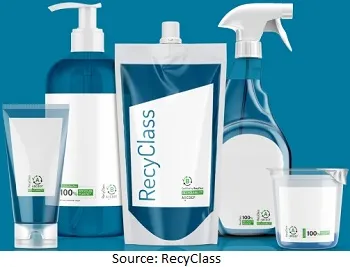
The RecyClass Protocol is a guidance document developed by RecyClass. It is an initiative led by Plastics Recyclers Europe (PRE) to assess the recyclability of polymer packaging. It provides a standardized methodology for evaluating the design and composition of plastic packaging in terms of its recyclability and compatibility with existing recycling processes.
The protocol helps packaging designers, manufacturers, and recyclers determine the potential recyclability of a specific packaging design. It considers various factors such as:
- the type of polymer used,
- the thickness, color, and shape of the plastic, and
- the presence of additives or other materials.
By following the RecyClass protocol, stakeholders can assess whether a packaging design can be effectively sorted, processed, and recycled within existing recycling facilities. The evaluation conducted using the RecyClass Protocol results in a recyclability rating. This indicates the level of compatibility with current recycling practices.
The rating provides valuable feedback to packaging producers, enabling them to make informed decisions to improve the recyclability of their products. It also promotes the use of packaging designs that are more environmentally friendly and compatible with circular economy principles. The RecyClass Protocol plays a crucial role in advancing the recycling of polymer packaging and promoting a more sustainable approach to polymer waste management.
- Aliyah Kovner. (2021). The Future Looks Bright for Infinitely Recyclable Plastic. UC Berkley.
- (2021). Which Plastic Can Be Recycled?. Plastics for Change.
- Baral, Christensen, Demarteau, Helms, Keasling, Scown, Vora. (2021). Leveling the cost and carbon footprint of circular polymers that are chemically recycled to monomer. Science.org.
- UBQ Editorial Team. (2020). Plastic Recycling Technology: What are the Environmental Benefits? UBQ.
- (n.d.). Plastics Recycling. British Plastics Federation.