

Master Bond’s thermally conductive epoxies: The key to reliable, high-performance electronic assemblies
Last update on Nov 11, 2025
This is a sponsored article by Master Bond.
As electronic devices become more powerful, compact, and multifunctional, the challenge of thermal management has never been greater. Excessive heat is a silent threat that can:
- degrade performance,
- shift operating parameters, and
- even lead to premature failure
Discover how Master Bond’s advanced thermally conductive epoxy systems are engineered to meet these challenges enabling reliable, long-lasting performance in next-generation electronics.
Heat: The hidden limitation in modern electronics
Excessive heat poses significant challenges to modern electronics. High-intensity LED arrays and densely packed microprocessors suffer from component degradation and failure. Elevated junction temperatures damage LEDs in specific ways. It reduces light output and shifts their color. Overheating in transistors or power semiconductors can cause irreversible damage.
The transistor densities exceed eight million per mm² in advanced 22 nm architectures. Today’s devices offer more functionality in smaller footprints but less surface area for heat dissipation. Compact chip-scale packages, ball grid arrays (BGAs), and stacked system-on-chip (SoC) designs all concentrate heat in small spaces. This makes thermal control mission-critical.

Beyond heat sinks: Thermal management at the interface
Traditional cooling solutions such as heat sinks remain essential, but their effectiveness depends heavily on what happens at the interface, the microscopic gap between a device and its cooling element. Even the smallest air pocket acts as an insulator, limiting heat transfer. This is where thermal interface materials (TIMs) such as greases, phase-change compounds, and thermally conductive epoxies come into play.
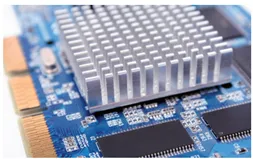
Figure 1: Heat sinks transfer thermal energy away from power devices into the surrounding air. Proper interface bonding with thermally conductive epoxies ensures efficient heat flow.
Thermally conductive epoxies stand out among these options because they do more than conduct heat; they bond, seal, encapsulate, and protect. This multifunctionality reduces assembly complexity, saves space and weight, and enhances reliability.
| Material | Thermal conductivity at room temperature (W/m-K) |
Air (insulator) | 0.022 |
Unfilled epoxy | 0.14 |
Filled epoxies | 1.5 - 4.0 |
Thermal greases | 0.5 - 10.0 |
Aluminum (conductor) | 200 |
Table 1: Thermal conductivity values of various materials highlight the advantages of filled epoxy systems over conventional insulators.
The multifunctional advantage of thermally conductive epoxies
Master Bond’s thermally conductive polymer systems are formulated with metal, ceramic, or nano-scale fillers to achieve conductivity values typically in the 1.5 – 3.0 W/m-K range and up to 4.0 W/m-K in specialty grades.
These compounds deliver far more than just heat transfer:
- Structural bonding and adhesion: Eliminate mechanical fasteners while maintaining strong, reliable joints.
- Environmental protection: Resist moisture, chemicals, shock, and vibration even under extreme temperature cycling.
- Wide service temperature range: Grades available for cryogenic conditions and for continuous service above 500 °F.
- Application flexibility: Offered as one- or two-part formulations, with varied viscosities, moduli, cure schedules, and other performance properties.
- Specialty performance: Options available that meet NASA low-outgassing standards or combine thermal and electrical conductivity for grounding applications.

Optimizing thermal paths: From formulation to application
Thermal conductivity alone doesn’t guarantee effective heat management. Application technique and curing conditions are just as crucial. Parameters that help reduce thermal resistance and create a more efficient thermal path include:
complete polymerization,
precise bond-line control, and
elimination of voids
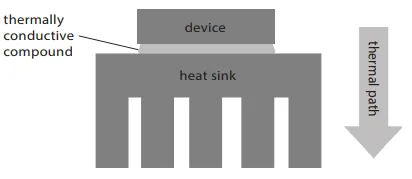
Figure 2: Minimizing bond line thickness, achieving complete polymerization, and eliminating voids reduces thermal resistance and improves heat transfer efficiency.
Master Bond can formulate its thermally conductive adhesives with specialty fillers to enable thinner bond lines, without sacrificing bond strength. This directly lowers thermal resistance and maximizes heat transfer from the device to the environment.
Real-world applications across industries
Thermally conductive epoxies are widely used across high-performance electronics manufacturing, including:
- Semiconductor die attach in power devices and ICs
- Heat sink bonding for microprocessors, LED arrays, and power modules
- Thermal staking of temperature-sensitive components on PCBs
- Thermal interfaces in BGA packages between the die and heat spreaders
- Potting and encapsulation of transformers, coils, and power supplies to dissipate heat and provide environmental protection
- Sealing of sensors and connectors while managing thermal loads

Enabling the future of compact, high-power electronics
The trend toward more compact, power-dense, and feature-rich devices shows no sign of slowing down. As thermal challenges intensify, engineers must rethink how they manage heat. This should be done not just at the macro level but at every critical interface.
Master Bond’s thermally conductive epoxy systems are designed to meet these demands. They combine high thermal conductivity with robust mechanical strength, environmental durability, and multifunctional performance. This enables the next generation of electronic assemblies to operate cooler, last longer, and perform more reliably.
Contact Master Bond’s technical experts to find the right thermally conductive adhesive that can meet the requirements of your most demanding thermal management applications.
DISCLAIMER: All images used in this article are a copyright of Master Bond.