Bioplastics Performance Thrusts
Last update on Feb 26, 2007| Don Rosato IntroductionAt the recent Commercializing Bio-Resins Conference held in San Antonio, Texas, USA the entrepreneurial Oliver Peoples of Metabolix spoke on and answered questions from SpecialChem Plastics & Elastomers regarding the emerging trends in bioplastics performance thrusts.
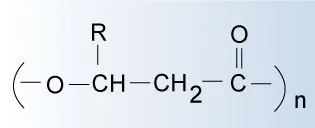
Question 1: How are bioplastics manufactured?There are two general approaches to the production of , production in microbial factories and production in plants. Current production uses fermentation to produce PHA. There are two main types of biopolymers namely, those that come from living organisms, and those which need to be polymerized but come from renewable resources. Both types are used in the production of bioplastics. Biopolymers that are present in, or created by living organisms include carbohydrates and proteins, and can be used in the production of plastics for commercial purposes. Examples include polyester, starch, cellulose, and soy protein. Molecules from renewable natural resources can be polymerized to be used in the manufacture of biodegradable plastics. Examples here include lactic acid, triglyceride, and polyoxoester. Question 2: What exactly are PHA bioplastics?Polyhydroxyalkanoates (PHAs) are a broad versatile family of polyoxoesters that are produced as energy storage compounds by a wide range of bacteria through fermentation of sugar or lipids.
The resulting polymers give rise to materials with extremely different properties ranging from rigid to highly elastic. They can be either thermoplastic or elastomeric, with melting-points ranging from 40 to 180°C, making them suitable for films, fibers, adhesives, coatings, molded goods, and a variety of other applications. No other family of polymers based on renewable resources spans so much as a fraction of the property space of PHA which can in some cases extend even beyond the performance characteristics achievable with conventional polymers. This makes PHAs potential candidates to replace in the order of 50% of the polymer materials now synthesized from natural gas and oil. In the future, production of PHA in non-food plant crops will bring product costs lower. Question 3: How would you define PHA biodegradability?PHAs are biodegradable in microbial active environments (i.e., soil, freshwater, seawater, compost, etc.), even under anaerobic conditions but do not break down in water alone.
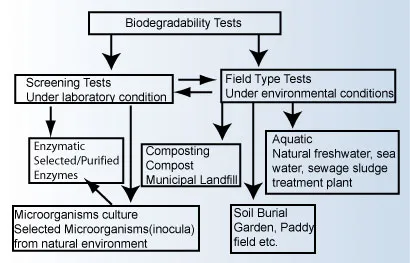
They are also biocompatible. That is they are not toxic nor do they cause any known allergic reaction. Given these features, PHAs are of interest in the newly emerging field of biopolymer engineering. The most common type of PHA is poly-(3-hydroxybutyrate), or PHB in which 'R' is a methyl group. PHB has properties similar to those of polypropylene however it is stiffer and more brittle. A PHB copolymer called PHBV (polyhydroxybutyrate-valerate) is less stiff and tougher, and it is used as packaging material. New environmental regulations, societal concerns, and a growing environmental awareness throughout the world have triggered the search for new biocompatible products and processes that are compatible with the environment. Polymeric materials whose organic constituents undergo complete biological degradation are termed biodegradable. Biodegradation is "... a process caused by biological activity that, accompanied by changes to the chemical structure of the material, leads to naturally occurring metabolic end products." The ambient conditions and the rate of biodegradation have to be determined in standardized test methods." The very fact that a material is biodegradable is not good enough on its own when it comes to industrial processes for recycling biodegradable products. Much more important is verifiable degradation within the typical timeframe of the method. Question 4: What is the strategic development focus for Metabolix PHA?Founded in 1992, Metabolix with its proprietary PHA technology protected by over 130 issued and pending US patents is a world leader in applying the advanced tools of metabolic engineering and molecular biology to efficiently produce PHA biobased plastics in microbial systems and directly in non-food plant crops. Through the design and development of new metabolic pathways the company has produced a significant range of polymers and copolymers based on polyhydroxyalkanoates. By varying carbon feeds and fermentation conditions the company can alter the alkyl side group R from hydrogen to dodecyl and the number of main chain methylene units from 1 to 3. It can also make homopolymers, copolymers and terpolymers. The metabolic pathways for comonomer incorporation have been engineered and demonstrated for several copolymer families with others in development. While still investigating the broad design space associated with this range of structures, Metabolix has already produced polymers with properties comparable to that of acrylic polymers marketed by companies such as BASF and others.
However, these PHAs have the additional benefits of ultra high molecular weight and crystallinity. Metabolix can provide material with molecular weights ranging from less than 1000 to 1,000,000 or more. The crystallinity of these polymers can also be modified from 10% to 60-70% by altering their composition, and adhesion properties can also be modified by varying polymer structure to alter hydrophobicity to between that of PET to that of PP. Question 5: What are some of the unique PHA application features?Considering PHA versatility, they are unique candidates for total packaging solutions. In addition to molded and film products, they can also provide biodegradable adhesives, inks and coatings. Moisture vapor permeability is also critical to food packaging. Moisture vapor barrier resistance of PHAs is an order of magnitude greater than other biodegradable polymers and comparable to that of PET. Metabolix PHA can also potentially be formulated as hot melt adhesive that can compete with existing high speed hot melt laminating adhesives based on EVA, SBR and styrene isoprene styrene resins and also have the ability to be recycled via paper pulping or composting processes. Elsewhere, biodegradable yet hydrolytically stable Metabolix PHA also offers great potential in non wovens as flushable personal hygiene products. The market size in this area is considerable or well over 1 billion lbs/year and growing greater than 5-6%/year. The company has entered into a strategic alliance with Archer Daniels Midland Company (ADM) to commercialize PHA. It has also entered into a joint development arrangement with BP to research and develop grass crops containing high levels of naturally grown polymers which can be used to produce biodegrading plastic materials with co-product biomass that can be converted into energy. It also has a collaborative arrangement with BASF to explore applications for its PHA bio-based plastics. |