

How to formulate hair repair products?
Last update on Jun 5, 2025
Hair damage occurs when the protective outer layer of your hair, the cuticle, is attacked by aggressors such as friction, heat, and harsh chemical treatments. This lifts the cuticle and leaves cracks in its exterior. This makes the hair look dull, dry, or frizzy.
How to differentiate between dry hair and damaged hair?
Dry hair results from a deficiency or loss of natural oils that lubricate the hair fiber. Damaged hair breaks easily when pulled and exhibits visible split ends due to weakened bonds. Dry hair is often characterized by white skin flakes and a coarse, rough texture.
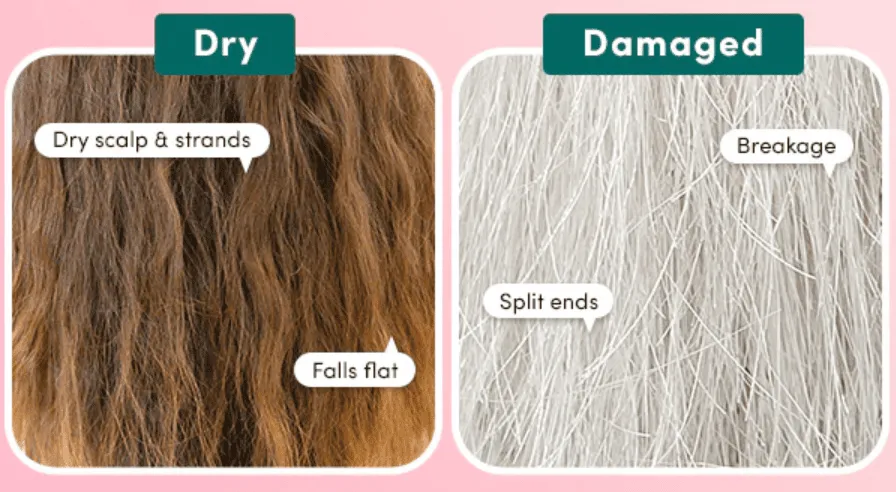
Comparison of dry hair and damaged hair
Pre-requisites
Proper hydration: Dehydration affects hair texture and strength. Proper hydration provides hair with its protective barrier and natural shine.
Clean scalp: A well-nourished scalp is crucial for maintaining healthy hair. An unhealthy or compromised scalp often results in hair that is rough, brittle, and lackluster. Even new growth from a troubled scalp can look damaged. Thus, focusing on enhancing scalp health is essential for treating and preventing hair damage.
Formulation strategies
- Jarvis, Iris. (2025). What is Dead Hair? How to Tell if You Have Dry vs Damaged Hair and What You Can Do. Coco&Eve.
- Montemurro. (n.d.). Damaged Hair: 9 Ways to Keep It Under Control. Function of Beauty.
- (n.d.). What is damaged hair? L'Oréal Professionnel Paris.
- McDougall. (2023). Understanding How Dehydration Affects Your Hair. The Independent Pharmacy.
- (n.d.). How to Repair Damaged Hair in Three Easy Ways. Clear.
- Trüeb, Henry, Davis, Schwartz. (2018). Scalp Condition Impacts Hair Growth and Retention via Oxidative Stress. NCBI.
- Jacob. (n.d.). How Can I Get Healthy Hair Naturally? MedicineNet.
- (n.d.). Protein for Hair. Carol's Daughter.
- (n.d.). Hyaluronic Acid for Hair: Benefits and How to Use. L'Oréal Paris.