
Seppic releases new sensory characterization data for emollients, polymers & emulsifiers
Last update on May 27, 2025
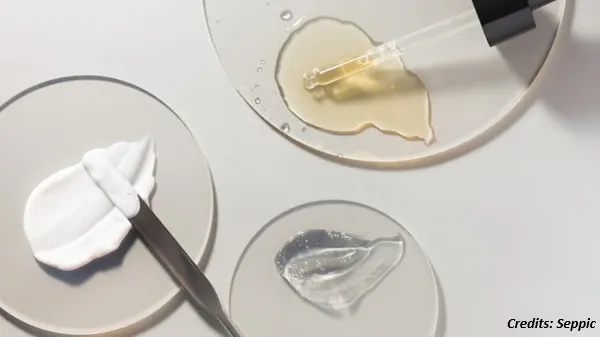 Excipients are the cornerstone of a product’s sensory experience: that’s why formulators are increasingly expressing their need for sensory data to find the most suitable ingredient for their product.
 To answer this need, leveraging its deep formulation expertise and understanding of customer needs, Seppic has released comprehensive new sensory characterization data for its emollients, polymers and emulsifiers ranges. This detailed analysis provides formulators with insight into the visual aspect, texture and skin feel of key ingredients.
Outlining visual texture, pick-up, consistency & skin feel
Going into detail, Seppic has conducted in-depth profiling of its emollient ranges Emogreen™ and Emosmart™ against benchmarks like mineral oils, silicones or squalane. This study highlights variations in glide, playtime, viscosity, and overall skin feel. Emosmart™ L15 (INCI: C13-15 Alkane), for example, offers the lightest touch and evanescent feeling, displaying the same sensory profile as isododecane.
In contrast, Emogreen™ HP 40 (INCI: C15-19 Alkane, Hydrogenated Polyfarnesene) offers extended playtime thanks to its higher viscosity and enhanced skin adhesion, resulting in a rich and comfortable sensory experience similar to dimethiconol or dimethicone. This sensory mapping provides formulators with all the information they need to replace certain ingredients and better meet consumer expectations.
A comparative sensory analysis of Seppic's polymers was also performed, uncovering a range of visual characteristics in gel formulations. This advanced analysis provides a detailed sensory map, outlining the visual texture, the consistency, the pick-up, the playtime and the skin feel of these polymers.
Finally, the characterization of Seppic's emulsifiers reveals their significant influence on formula sensoriality. Going beyond primary function, the analysis covers the entire application experience, from initial texture touch to the sensory effects during and after application, including attributes like penetration, comfort, and skin feel.
Seppic enables formulators to create innovative cosmetic products with its wide range of ingredients tailored to today's formulation needs.
Source: Seppic
Outlining visual texture, pick-up, consistency & skin feel
Going into detail, Seppic has conducted in-depth profiling of its emollient ranges Emogreen™ and Emosmart™ against benchmarks like mineral oils, silicones or squalane. This study highlights variations in glide, playtime, viscosity, and overall skin feel. Emosmart™ L15 (INCI: C13-15 Alkane), for example, offers the lightest touch and evanescent feeling, displaying the same sensory profile as isododecane.
In contrast, Emogreen™ HP 40 (INCI: C15-19 Alkane, Hydrogenated Polyfarnesene) offers extended playtime thanks to its higher viscosity and enhanced skin adhesion, resulting in a rich and comfortable sensory experience similar to dimethiconol or dimethicone. This sensory mapping provides formulators with all the information they need to replace certain ingredients and better meet consumer expectations.
A comparative sensory analysis of Seppic's polymers was also performed, uncovering a range of visual characteristics in gel formulations. This advanced analysis provides a detailed sensory map, outlining the visual texture, the consistency, the pick-up, the playtime and the skin feel of these polymers.
Finally, the characterization of Seppic's emulsifiers reveals their significant influence on formula sensoriality. Going beyond primary function, the analysis covers the entire application experience, from initial texture touch to the sensory effects during and after application, including attributes like penetration, comfort, and skin feel.
Seppic enables formulators to create innovative cosmetic products with its wide range of ingredients tailored to today's formulation needs.
Source: Seppic
Source
Seppic