

UV absorbers in cosmetic packaging
Last update on Apr 26, 2007
In cosmetics it protects the color of the product even if the product itself does not contain UV absorbers. This has become very important in the natural products market where sunscreens, especially the chemical variety, must be avoided. Inorganic sunscreens such as titanium dioxide and zinc oxide can be used, however there is the issue of opacity and whiteness that will contribute to the color of the package which may not be a desirable feature.

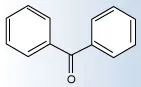
Some of the most common and popular UV absorbers for product packaging are the Benzophenones. There are many variations of benzophenone in use in numerous applications. Different variations are used depending on the solubility and how well it bonds with the plastics use in packaging. For example, benzophenone-2 (2,2',4,4'-tetrahydroxy benzophenone) is used for alcohol-based product packaging, while benzophenone-5 (2-hydroxy-4-methoxy-5-sulfonyl benzophenone sodium salt) is used for water-based product packaging.
Benzophenone-6 (2,2'-dihydroxy-4,4'-dimethoxy benzophenone) is used in nail polish packaging, and benzophenone-9 (2,2'-dihydroxy-4,4'-dimethoxy benzophenone) is used in bath product and skin care product packaging. Others are Benzophenone-3 (2-hydroxy-4-methoxybenzophenone) which is oil soluble, Benzophenone-4 (2-benzoyl-5-methoxy-1-phenol-4-sulfonic acid) which is used for hairsprays and hair dyes packaging, and benzophenone-bx-ahbp (4-Allyloxy-2-hydroxy benzophenone) which bonds with plastics to prevent this migration into a product.
Suppliers of sunscreens work very closely with package producers to develop the optimum combination of UV absorbers to adequately protect the product and at the same time be safe for the package as well as the product inside. Many sunscreens are the same as what are used in products themselves while others are not approved for use as sunscreens in cosmetics and personal care products. There are, however, no restrictions to their use in polymers, plastics and other packaging materials.
Some of the newer UV absorbers used in the packaging industry will be mentioned here just to show the type of applications they are used in and to show how closely they are related to the sunscreen development we work on as cosmetic formulators. Carbon Black, or D&C Black# 2, is an inorganic pigment which has a very minute particle size and extremely high surface area. It readily absorbs ultraviolet light and converts it into heat energy. Because of this, carbon black is widely used in thermoplastics and other resins to prevent ultraviolet degradation. The degree of protection is a function of the carbon black concentration in the plastic. Low Density Polyethylene (LDPE) containing as little as 2.5% of a 20-25 millimicron particle-size carbon black is said to survive as long as 20 years of outdoor weathering without showing excessive degradation. There are a number of suppliers of carbon black, with Cabot Corporation being one of the largest.

Another inorganic pigment which sees wide use as a sunscreen is micronized zinc oxide. Zinc Corporation of America supplies several grades of zinc oxide. Two such grades are Kadox-911 and its surface-treated counterpart, Kadox-911C. These are said to enhance ultraviolet stability in High Density Polyethylene (HDPE), Low Density Polyethylene (LDPE), Polypropylene (PP) and flexible polyvinyl chloride (PVC).
Studies conducted by the company have shown that polyolefins containing zinc oxide in combination with certain antioxidants act in synergy and exhibit significantly better ultraviolet resistance than those with conventional organic UV stabilizers. Company sources say that, although adequate use life can be obtained with organic stabilizers at 0.3-0.6 %, at least three times greater protection can be attained with Kadox-911 or Kadox-911C zinc oxide systems.
Tennessee Valley Chemical Corporation also has two sunscreens based on inorganic materials. They are nickel-based UV stabilizers for polyolefins and are called Conservator 125N nickel dibutylthiodicarbamate (NBC), which is used in Polypropylene (PP) cotton bale wrap, and Conservator 77N, containing 7½% nickel for Polypropylene and synthetic grass.
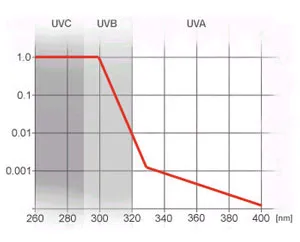
On the organic side we have some very recognizable companies. Dow Chemical Company offers Salol phenyl salicylate stabilizer, a colorless solid that can be added to monomers before polymerization, dissolved in a plasticizer or solvent, or used as a liquid additive above its melt point of 107º F. It is offered for use in acrylics, cellulosics, Polyethylene, Polypropylene and unsaturated polyesters. The product is said to be particularly effective in the 300-325 nanometer ultraviolet range, which is said to be the most detrimental region to plastics.


Ciba has developed some new and exciting sunscreens in the past year or so for both cosmetic applications and packaging. Their product line includes UV stabilizers for all polymer applications. In the hindered amine family, Tinuvin 770 reportedly imparts weatherability to polyolefin, polyurethanes and styrene plastics beyond levels obtainable with conventional UV stabilizers.
Tinuvin 765 is a liquid-hindered amine specifically designed for coatings, while Tinuvin 622LD, approved by the FDA for food contact applications, is particularly recommended for polyolefins. For synthetic fibers and polyethylene film, Chimassorb 944FL, which is also FDA approved, is recommended. Tinuvin P, one of several Ciba substituted hydroxyphenyl benzotriazoles, is effective in polyesters, polyvinyl chloride (PVC), impact Polystyrene, polycarbonates and acrylics. Tinuvin 326, 327 and 328 are other substituted benzotriazoles that provide long term protection against ultraviolet light for polyolefins, coatings, urethanes, adhesives and other substrates.

One of the hardest applications to protect from UV degradation is crystal clear plastics. ClearShield additive, which is supplied by Milliken Chemical Company, was developed for polyethylene terephthalate (PET) containers and can absorb ultraviolet light at wavelengths up to 390 nanometers while still maintaining clarity of the package. It can be incorporated during the resin manufacturing segment or the container conversion process without interfering with production.
ClearShield is FDA compliant for most foods and beverages, with no possibility of migration into product, which is a concern for all cosmetic formulators and marketers. It is a UV absorber that protects delicate flavors and fragrances, vitamins, nutrients and most of all colors, in custom packaging applications. There is no harder job than to maintain the stability of FD&C Blue 1 in a clear tube knowing that it will fade quickly when exposed to even the smallest amount of UV light.
There are many other UV absorbers and sunscreens being developed for cosmetic packaging and the ones mentioned here are just representative of the many other sunscreens in use today for this purpose. They are being designed to be multifunctional, where they will have good compatibility with a number of different types of plastics and packaging materials, as well as protecting different attributes of the cosmetic product: odor, color, appearance, etc. These are characteristics that you really don't want to see change as the product goes to market and is purchased and used by the consumer.