
Tracking the Rise of the Indie Brands
Last update on Mar 12, 2020
Knowing and understanding your customers' needs is at the center of every successful business. And because of the deep understanding of what today's consumers(and especially the millennials!) want, Indie Beauty brands have emerged strongly into the spotlight.
Their entry into the mainstream has been largely driven by the fact that they areinnovative and are aligned with the ever-growing natural, sustainable & clean beauty segment. Some of the big positives include:
- Majority of the products are organic
- Use of indigenous ingredients that are sourced locally and sustainably
- Simple ingredients, simple formulations with transparent claims
- Equal importance given to the packaging - often biodegradable, recyclable and having a low carbon footprint
So, when did this boom begin? Here are some of the landmark events that got the whole industry talking about them:
→ 2018: Amazon launches the Indie Beauty Shop
→ 2019: in-cosmetics global launches the Indie Trail
Here's an interesting statistical fact to understand the scale of their growthbetter: From 2015 to 2019, IBE reported that it has seen an 814.63%increase in exhibiting brands!
To track the rise of one of the fastest growing segments in the beauty industry, I attended theIndie Beauty Expo (IBE) in London (October 2019). This gave me an opportunity to talk to the beauty entrepreneurs(happy to see that the majority were women!) and understand more about their success stories & challenges. And, it also helped me get a sneak peek into the popular claims and innovative ingredients.

So, let's dive in!
Indie Beauty Products: Innovative Ingredients & Popular Claims
Seaweeds: Opening Up an Ocean of Possibilities
One of the first-time exhibitors at the IBE London was Maiiro. In 2019 itself, they introduced a unique skin-care line featuring ablend of five food-grade seaweeds (patent-pending) at its core.
Using the 5 (Haematococcus Pluvialis, Oarweed, Bladderwrack, Wakame and Thong Weed), they formulated their own ingredient,Kelpogen5™. It is packed with several bioactives highly beneficial for the skin, including:
The team at Maiiro has designed products using their star ingredient to meet concerns likewrinkles, dry skin, sensitive skin (acne, blemishes…), & sun-damaged skin.
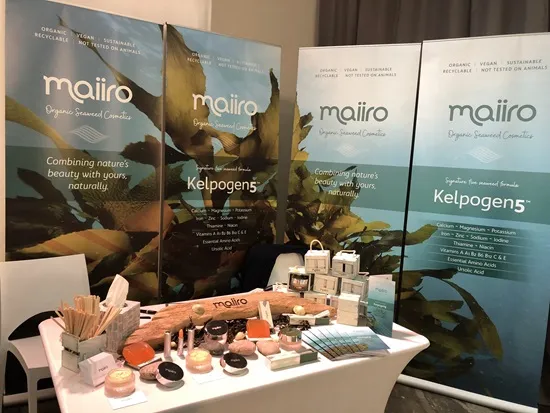
Maiiro made its debut at the IBE London 2019
In addition to making their products as organic and vegan as possible, they put strong emphasis on:
- Ethical sourcing of seaweeds, and
- Sustainable packaging: In fact, they chose to integrate seaweeds within their packaging material as well!
Botanical Blend: Boosting Hair Growth & Scalp Health
I found the backstory of US-based CRIA one of the most interesting ones with a serendipitous discovery of a hair-care formulation. Combiningorganic chemistry, ethnobotany and homeopathy, parents of CRIA Founder developed this organic formula.
CRIA's formula (patent pending) contains powerful antioxidants, vitamins, minerals… that helpsboost scalp health & promote hair growth.
All its constituent ingredients (listed below) are organic.
- Sesame seed oil
- Lavender oil
- Grain alcohol
- Jaborandi herb
CRIA was chosen as one of the nominees of Best in Show – IBE 2019
 |
CBD - The Most Trendy!
Taking the top spot in terms of popular ingredients was Cannabidiol or CBD. Many marketresearch firms have predicted a big growth in its use. CBD is known for several benefits(anti-aging, anti-inflammatory...) for the skin (especially sensitive skin) and overall well-being. Ithas also been found to be beneficial for hair care (nourishes scalp, promotes hair growth…).
A point of attention here is w.r.t regulations around the use of cannabinoids in cosmetics.
- There are specific restrictions on Tetrahydrocannabinol or THC, themain psychoactive compound in marijuana.
- And, so far, hemp-derived or synthetically produced CBD is allowed for use in cosmetics.
→ In the EU, more clarity is needed w.r.t CBD use in cosmetics as each member state has specific requirements.
Anyway, following the trail of this star ingredient at the event, I stopped by at thePura Vida Organic booth. Active since 2015, it is an organic-certified CBD skin-care brand. The CBD is derived fromHemp and is THC-free.
 | |
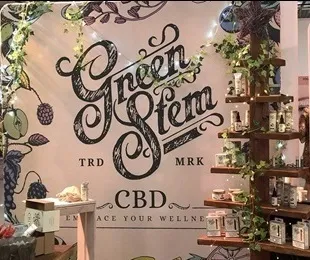 | 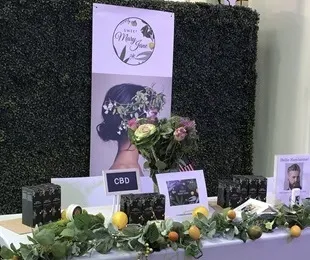 |
| IBE London 2019 featuring several exhibitors with CBD-based products | |
Outside the Indie brand space, we've also seen some developments from big players as well:
- Dec 2019: Collaboration between IFF and Neptune to co-develop hemp-derived CBD with product launch expected in 2020.
- March 2020: MyCHELLE Dermaceuticals' new CBD-based ENHANCE skin care line
I'm sure we'll see more developments going forward…and now, let's look into the claims in focus at the event.
From Vegan to Waterless: Popular Indie Claims
Coming back to the point about understanding the pulse of today's consumer, Indie brands are making sure that their claims catch user attention.
Following were the most popular claims:
- 100% Organic
- Natural
- Vegan
- Gluten-free
- Health and wellness
- Sustainable - ethical sourcing, waterless...
- Recyclable packaging
- Cruelty free / Not tested on animals
- Unisex
One of the interesting exhibitors promoting their 100% organic, sustainable and natural skincare line was Inlight Beauty. Usingalchemy and modern techniques, they've designed innovative formulations using oils.

Unique skincare line from Inlight Beauty
100% organic, waterless, preservative-free
Inlight's products are free from water, alcohol, synthetics and chemical preservatives. Water-based creams often require additional chemicals like preservatives to increase shelf-life. This is not the case with oils. They also improve the efficacy of the cream by storing specific liposoluble botanical ingredients (herbal extracts and essential oils).
And lastly, it is important for the industry to understand the issues this growing segment is faced with...
Key Challenges Faced by Indie Brands Today
From my conversations with various Indie brand owners, there were two main challenges that came forth:
Purchase of Low-quantity of Raw Materials
Unlike big brands that usually order raw materials in bulk quantities, Indie brands need smaller volumes. This can prove to be more expensive and also reduces the list of suppliers that can cater to their specific needs.
So far, either these brands pay extra for smaller quantities or partner with other brands to make a combined purchase of larger volumes.
Now, with the inclusion of the Indie-trail at the in-cosmetics events, we can expect better synergies between these brands and raw material suppliers to address this challenge.
Certification Process: Costly & Tedious
Not in possession of big budgets, often the certification process can take a toll on the finances of these start-up brands. In some cases, they need to apply for multiple certification, which further increases the challenge.
Some of the exhibitors at the event were of the opinion that there should be specific monetary concessions when applying for these certifications.
Also, some certifications like COSMOS are relatively new and one requires a full understanding to ease compliance.
If you are just starting out, here's some useful & practical resources that can help you boost your chances to achieve the certification at one go!
→ COSMOS Standard: How to Get Organic or Natural Certification Today?