

Formulation of powders
Last update on Feb 2, 2007
This article was originally published on February 2, 2007 and revised in 2025.
Binders and grinding for texture, color, and oil control
The binder is usually used at levels between 4% and 8% but can vary depending on the formula. Obviously pressed powder poses a bit more difficulty in the formulation process. Since the pressed cake in the pan has to be subject to more rigorous testing procedures, the powder binder ratio must be such that the product will pass drop testing. But this sufficient ratio will still yield the proper payoff upon application without pimpling or glazing when the cake is rubbed with a sponge or finger. Both product forms must be ground in order to reduce the particle size. This allows for optimum color development and better feel characteristics with even product lay down and better pressing qualities.
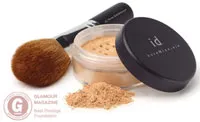
The grinding process is usually performed by hammer mills or pulverizers that break down the particles to their proper 4 to 5 micron size. Powder blending is done in either P-K blenders, ribbon blenders or similar processing apparatus. Jet mills can significantly reduce the particle size even further, as small as 2 to 3 microns. This further reduction allows for reduced fill weight and lower pan filling pressure - both are cost savings advantages. Although the jet mill process itself is more costly than conventional grinding, in the long run it saves money in the final product.
For oil control in either the loose or the pressed variety, absorbent materials must be used to help absorb the excess oils on the skin. These ingredients can be clays such as kaolin or bentonite, or absorbent silicas that come as hollow spheres in various particle sizes and oil absorbance ranges. Once again the balance of oil binder and total powder level must be controlled in order to yield the proper characteristics for the final product.
Powders, whether they are loose or pressed, contain an assortment of powder fillers that have functionality and well as excellent physical properties. You will see many different fillers on an ingredient label with the top ingredient being either talc or mica. The ingredients are very easy to come by and most are quite inexpensive. Many are mineral-based and used to make all natural claims. Sometimes you will even see a starch-type material such as rice starch or corn starch as the number one ingredient on the label. These are most prevalent in bath and body powders because of their feel and absorbency.
Fillers, surface treatments, and pigments for performance and effects
Other ingredients that can be used at various levels for feel and application are:
Metallic soaps such as zinc stearate or magnesium stearate are excellent for skin adhesion and keeping the product on for longer wear. They are used at levels of 5% to 6%. Various surface treatments deposited on the surface of the powder ingredients also aid in the feel, functional and physical properties of the product. The most common surface treatments and coatings used today are based on silicone chemistry, but others are available and custom treatments can be requested if desired.
This list of filler ingredients that appear on a powder product ingredient label can also be used to make marketing claims. Antioxidants are very important as free-radical scavengers, even in powder products. Many extracts in the form of powders can be used for anti-aging claims, or other claims such as anti-wrinkle or anti-inflammatory. Powder products can even contain active ingredients for OTC drug claims.

In powders, micronized versions of titanium dioxide and zinc oxide can be used as non-chemical sunscreen agents at levels of up to 25% each as per the FDA sunscreen monograph. These are important in creating a point of difference for various products.
Wet-dry type makeup powders only differ in that the binder is usually a surfactant that allows water to emulsify and blend with the powder in a moist pool and apply evenly on the skin with a sponge applicator. Here, adequate preservation is critical with water being introduced into the product. As with all cosmetics, loose and pressed powders must be adequately preserved to protect the product and the consumer.
The colors of choice for powders depend on the type of product. Makeup powders use titanium dioxide and iron oxides just as in regular conventional foundations. Cheek colors use mostly organic colorants while eyeshadows use inorganic colorants and approved FD&C lakes. Pearls are mainly used for effect and are available from a number of suppliers (Rona/EM Industries, Engelhard/BASF, Eckart America, Kobo Products, and Presperse, just to name a few). They are available in many different colors and many different particle sizes offering an almost unlimited variety of effects for powders.